
Isolate the pot. Do not handle your other African violets after this one. If the crown is crippled — tiny, brittle, extra-hairy new leaves that will not open — bag the plant and throw it away. You will not see these mites. A spray that misses the crown folds will not finish this.
Cyclamen mites are not insects. They are thread-footed mites, Phytonemus pallidus, about a hundredth of an inch long. They hide in buds and unfolding leaves, and they inject saliva that distorts the next flush. They do best in cool, humid air, around 60°F. African violet, florist cyclamen, strawberry, ivy, fuchsia, begonia, geranium, and delphinium show it first at the growing point, not on old, open leaves.
- Move the pot off the shelf. Wash your hands before you touch another plant.
- New leaves at the crown are cupped, thick, and brittle. That is the confirm. The mites stay invisible.
- A crippled crown goes in the trash. Soap or heat is only for a plant you can still save.
Isolate the pot, then throw a crippled plant
These mites crawl from leaf to leaf and ride on hands and clothes. The first move is to stop the spread. Then decide whether the plant is still worth saving. A crippled African violet on the same tray as clean ones will hand the mites to the next crown.
- Isolate. Move the pot away so leaves do not touch. Handle this plant last. Wash your hands and tools before you go back to the rest of the shelf.
- Confirm from the crown. New leaves are stunted, cupped, thickened, and brittle. On African violet they look extra hairy and gray. Flower buds stay shut or open misshapen. You will not see the mites without a strong lens.
- Bag a crippled plant and put it in the trash. Do not compost it. Do not take cuttings from it. Scrub the pot. Soak it 30 minutes in one part household bleach to nine parts water if you mean to reuse it.
- Space the rest so foliage does not touch. Reject new plants with curled or deformed tips at purchase. Keep a new African violet or cyclamen off the main shelf for a few weeks and watch the next flush.
- Save only light damage. Cut off the worst shoots, then wet the crown folds with labeled insecticidal soap, or use the hot-water last resort below. Fail if you keep a crippled crown on the same shelf because a few old leaves still look green.
How do I get rid of cyclamen mites?
Isolate the pot, then throw a plant whose crown is already crippled. Soap only if you can wet the folds. 110°F water for 30 minutes is a last resort for a plant you cannot replace.
Can I save an African violet with cyclamen mites?
Only if the center is not already a tight, gray, hairy wad. A crippled crown will not uncurl. Isolate it so you do not hand the mites to the next violet.
New leaves at the crown tell you; you will not see the mites
The mites are about one-fourth the size of spider mites. A 20× lens on unfolding tissue is the only gardener check that shows them. Pale yellow, pink, or translucent mites with nearly parallel sides sit in the folds. Eggs are smooth ovals, about half as long as the adult, tucked in dark, moist crevices. Most people never see them. The next flush is the confirm.
On African violet, the center stays small. New leaves curl, thicken, and look gray and extra hairy. Flower buds die or open twisted. On florist cyclamen, buds fail and leaves at the heart stay dwarfed. On strawberry, unfolding leaves fold along the midrib, petioles stay short, and the plant looks dense. Fruit from those buds is small and dry. On delphinium, leaves can go black and brittle and the flower stalk twists.
| Where you see it | What it is | Try this |
|---|---|---|
| New leaves at the crown cupped, thick, brittle; buds fail | Cyclamen mites | Isolate. Throw a crippled plant |
| African violet center gray, extra hairy, will not open | Cyclamen mites in the folds | Isolate. Discard if the crown is gone |
| Stipple and silk on older leaves | Spider mites | See spider mites — not this mite |
| Leaves curl down; bronzed undersides; warmer room | Broad mites, same family | Same isolate-and-discard job |
| Soft, mushy crown; young leaves black from wet mix | Crown rot | See crown rot — not this mite |
What do cyclamen mites look like?
You will not see them. They are about 1/100 inch, pale yellow to pink, with smooth eggs hidden in crown folds. The confirm is cupped, thick, brittle new leaves and buds that fail.
Silk and stipple are spider mites; bumpy eggs are broad mites
Fine webbing and pale stipple on older, open leaves are spider mites. Those mites live on the undersides in hot, dry air, and you can often see them with a 10× lens. Do not hose this African violet on a spider-mite calendar. The crown job here is different.
Broad mites are the same family. They are a bit smaller, more tapered, and often show a pale stripe on the back. Their eggs have rows of white bumps and sit more in the open. Leaves often curl downward and bronze on the underside. They like warmer, still humid rooms, about 70 to 80°F. Cyclamen mites prefer cooler air, about 60°F, and they hide deeper in the bud. For a home pot the first move is the same: isolate, then throw a plant whose growing point is already crippled. Do not hunt a second pest name before you move the pot.
Angular wet spots bounded by veins, especially after a wet leaf, are foliar nematodes, not mites. A mushy, black center in a wet African violet is crown rot. Cottony clumps in the leaf joints are mealybugs. Pollen spilled on the flowers is often thrips. Pearly mites inside a tulip or garlic clove are bulb mites, not this pest. A twisted flush can also follow a herbicide drift or a boron problem. If the new leaves are not cupped and brittle, this is not your mite.
Are cyclamen mites the same as spider mites?
No. Spider mites stipple older leaves and spin silk in hot, dry air. Cyclamen mites hide in cool, humid buds and cripple the next flush. See spider mites for that pest.
Are cyclamen mites the same as broad mites?
They are close relatives. Broad mite eggs are bumpy and the leaves often curl down. Cyclamen mite eggs are smooth and sit in the bud. Isolate and discard are the same first moves.
A spray that misses the crown folds will not finish this
The mites sit inside buds and inside already-distorted tissue. A mist on open leaves misses them. Labeled insecticidal soap, horticultural oil, neem oil, or wettable sulfur can kill mites the spray actually wets. Hairy African violet leaves make that hard. By the time the damage shows, the mites may already have moved on, and the twisted leaves will not uncurl.
Take a plant you mean to save outdoors in mild weather. Cut the worst shoots. Spray until the crown, the leaf undersides, and the shoot tips drip. Repeat two to four times at three to five days, following the label. Then wait for new, clean leaves. Cut the old distorted ones off as they are replaced. Skip the brand aisle of greenhouse miticides as the home plan. A kitchen dish soap mix is more likely to burn the leaf than to wet every fold.
Will insecticidal soap kill cyclamen mites?
Only the mites the spray wets. You have to soak the crown, the undersides, and the shoot tips, then repeat. Hairy African violet leaves hide them. A crippled plant still goes in the trash.
110°F water is a last resort for a plant you cannot replace
These mites die in hot water if you can hold the temperature. The whole plant, pot and all, goes in. Cut the worst shoots first. Hold 110°F for 30 minutes. Cooler water leaves mites. Hotter water, or a longer soak, can cook the plant. This is for a named cyclamen or violet you cannot replace, not for a tray of crippled plants. If you cannot keep the water at 110°F, throw the plant away instead of guessing.
Does hot water kill cyclamen mites?
Yes if you hold 110°F for 30 minutes with the pot immersed. Hotter or longer can damage the plant. If you cannot hold the temperature, discard instead.
Related reading
- Spider mites — stipple and silk on older leaves, not a crippled crown.
- Bulb mites — pearls with brown legs inside a soft bulb, not a houseplant bud.
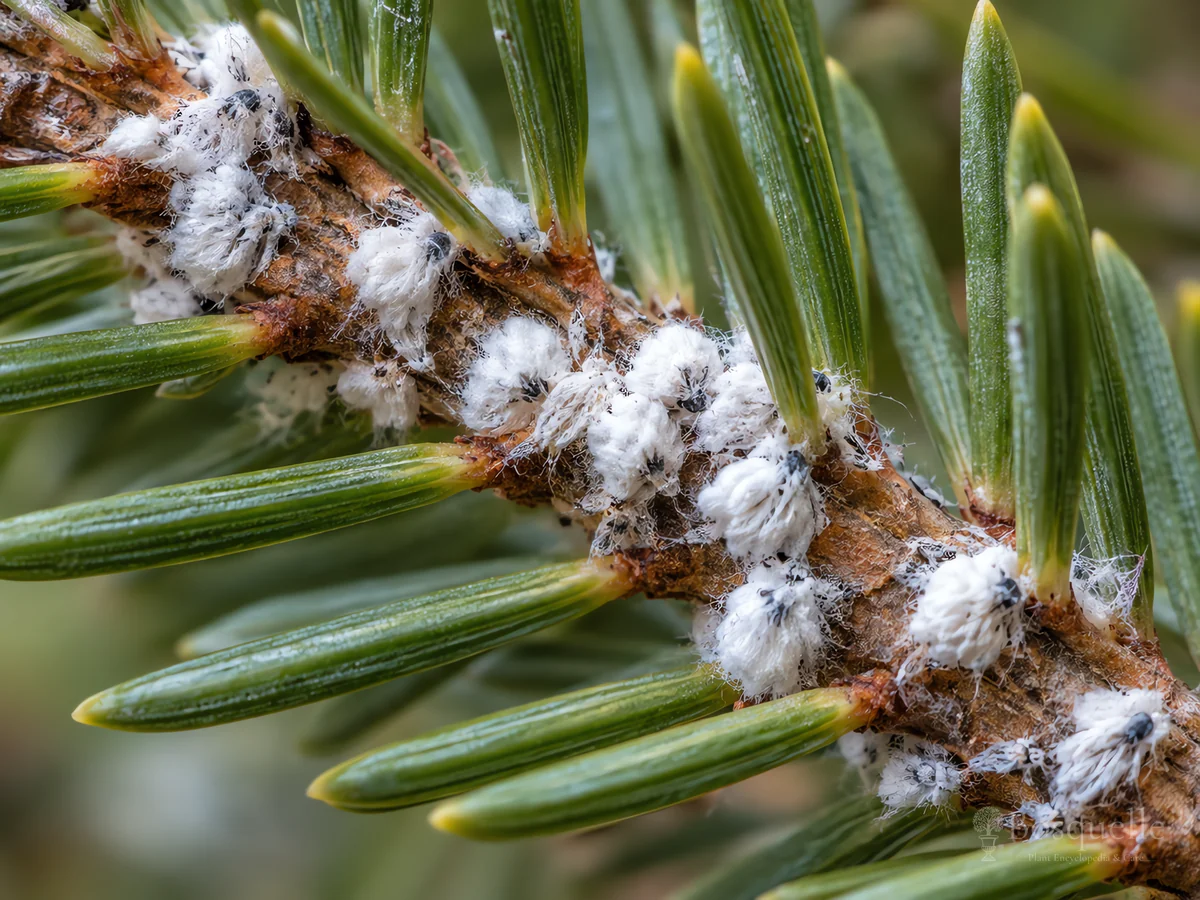
- Mealybugs — cotton in the leaf joints of an African violet.
- Thrips — pollen spilled on flowers, not a gray, hairy crown.
- Crown rot — a wet, mushy center, not brittle new leaves.
- Gray mold (Botrytis) — fuzzy blight that often follows mite injury on African violet.
- How to grow cyclamen — watering and rest for the florist pot, not this mite.
FAQ
Will dish soap kill cyclamen mites?
Skip a kitchen mix. It can burn foliage and still miss the folds. Use a labeled insecticidal soap, or throw the plant away.
Do cyclamen mites bite people or pets?
No. They feed on tender plant tissue. They do not live on skin. Wash your hands so you do not move them to the next pot, not because they bit you.
Do cyclamen mites attack strawberries?
Yes, in humid weather. Unfolding leaves fold, petioles stay short, and fruit stays small. Pull badly infested plants. Do not walk from those plants into a clean bed. This is the same mite, not a second pest.
How long should I isolate a new plant?
A few weeks is enough to see the next flush. Keep new African violets and cyclamen off the main shelf. Reject curled or deformed tips at purchase.
Should I compost an infested plant?
No. Bag it and throw it out. A home pile does not get hot enough, and the mites crawl.
Will predatory mites finish this on a windowsill?
Greenhouse growers sometimes release them. On a home shelf, isolate and discard still come first. Do not buy predators as a finish for a crippled crown.
Will the twisted leaves go back to normal?
No. Cut them off after new, clean leaves appear. The saliva already changed that tissue. Time and new growth are the repair, not a spray on the old leaf.
Related pests



Related diseases




Updated: Reviewed by Bosquelle Editors