Rock a large agave. If the rosette wiggles, peel back a lower leaf. A sour, fermented smell and cream grubs with brown heads mean agave snout weevil. That is not a watering miss you can wait out.
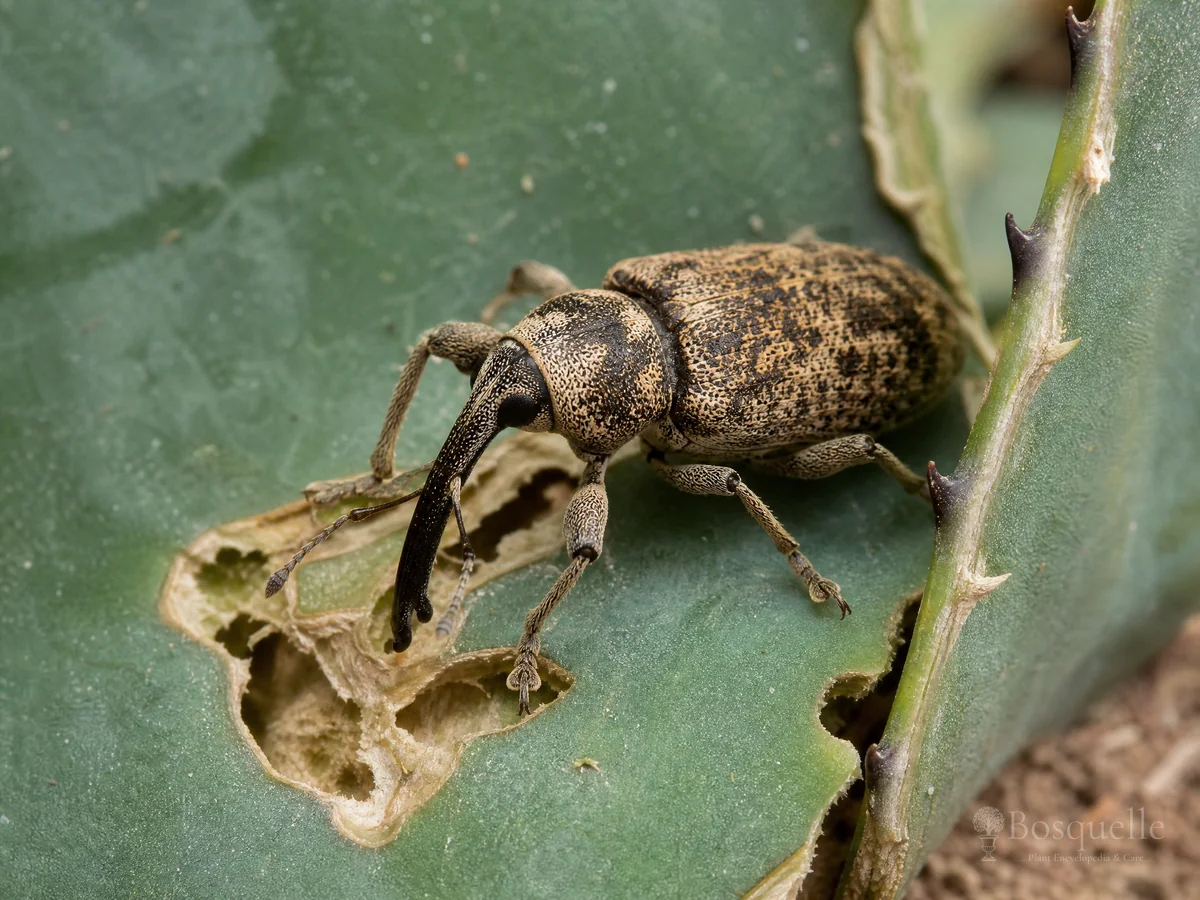
The adult is a black beetle with a long snout. It is also called agave weevil or sisal weevil. It bores a small hole at the base and lays eggs. The larvae tunnel the crown and the upper roots. Rot bacteria ride those wounds. The plant can look fine, then fall over in a few days.
- Rock the plant. A healthy agave stays put.
- A pencil-sized hole at a leaf base is an egg tunnel.
- Pull a collapsing plant. Bag it. Do not compost it.
Rock the plant: sour crown and cream grubs are this weevil
Adults are black, about half an inch to three-quarters of an inch, with a long snout. They hide at the base, under lower leaves, from late winter through summer. Chewed spots on a leaf do not kill the plant. The larvae do.
The larvae are cream, legless, and up to an inch long, with a brown head. You find them in the crown, the upper roots, and the mush inside. Press the base. If it yields or smells like fermenting agave, open it. The confirm is the grub plus that sour rot, not a beetle on the driveway.
| Where it shows | What it is | Try this |
|---|---|---|
| Plant rocks; lower leaves wilt; pencil hole at the leaf base | Adult egg tunnel | Open the crown; look for grubs |
| Sour fermenting smell; cream legless grubs in the heart | Larvae in the crown | Pull the plant; this one is done |
| Rosette leans, then falls; mushy core | Larvae plus rot bacteria | Dig plant and nearby soil |
| Wet crown, no holes, no grubs | Wet-soil rot leftover | See crown rot — not this weevil |
| Greasy streaks; plant still firm | Agave mite leftover | Not a snout weevil job |
How do I know if my agave has snout weevil?
Rock it. If it wiggles, peel a lower leaf. A sour fermenting crown and cream grubs with brown heads, or a pencil hole at the base, confirm this weevil.
That collapse is not just wet-soil rot
A drowned crown can go soft without a weevil. If there are no holes, no galleries, and no grubs, that is a watering and drainage job. See crown rot and bacterial soft rot. Do not run those methods here. On this insect, the rot rides the wound. The confirm is still the grub.
Greasy streaks on a standing plant are mite feeding, not a snout weevil. Aloe galls are a different leftover; aloe is not a host for this weevil. Cream grubs in a heuchera pot are vine weevil, not this agave crown insect. Yucca weevil looks the same. On chaparral yucca the job is still pull and bag.
Is this the same as root rot?
No. Wet-soil rot can collapse an agave with no insects. This weevil leaves holes, galleries, and grubs, and the rot often follows those wounds. See crown rot if you find no grubs.
Wide-leaf agaves go first
Large, fleshy, wide-leaf plants take the worst of this. Century plant is the usual target in a dry landscape. Narrow, compact agaves are hit less often. No agave is guaranteed safe. If weevils keep finishing century plants on your street, plant a smaller narrow-leaf type next, or something that is not an agave.
A stressed plant, a buried crown, or a drip line that never shuts off makes the job easier for the beetle. A new plant from the nursery can already carry a grub. Check the base before it sits next to a clean plant.
Why did my century plant collapse overnight?
The feeding was already inside. Wide-leaf plants hide a lot of brood before the rosette leans. Rock the neighbors the same day.
Once the heart is mush, pull the plant
If the growing point is soft, foul, filled with larvae, or already off the roots, the plant will not grow back. Spraying the leaves will not reach the brood inside. Dig the whole plant, including the crown and the roots.
Take the soil around the base too. Mature larvae leave the plant to pupate in the top few inches. Leaving that soil in the bed hands the next agave the same insects. A still-firm plant with one adult at the base is a different job: pick the beetle, watch the crown, and do not wait for jelly.
Can an agave recover from snout weevil?
Only if you catch it while the crown is still firm. Once the heart is mush, foul, or off the roots, pull the plant. A spray will not grow a new growing point.
Bag it. Do not compost a weevil plant
Seal the plant, the grubs, and the soil you dug in a heavy bag. Put it in the trash, or follow local disposal rules. A home compost pile does not get hot enough. Larvae and pupae come out as adults and walk to the next rosette.
Work on a tarp so you can see cream grubs in the dirt. Crush what you find. Clean the tools you used on the mush. Tell a neighbor with agaves. One collapsed plant is a breeding pile if you leave it in the bed.
Should I compost an agave killed by snout weevil?
No. Home compost does not kill larvae and pupae. Bag the plant and the soil you dug, and put it in the trash.
Keep the crown dry after it is established
Agave wants sun and fast drainage. Plant on a mound if the soil stays wet. Once the plant is established, give it little or no extra water. After any irrigation, let the topsoil dry. A dripper aimed at the heart keeps the crown wet and invites rot through every weevil wound.
Do not bury the crown when you plant. Do not pile mulch against the base. Skip extra fertilizer that pushes soft tissue. Those are the same conditions that keep the beetle coming back, even after you pulled the first plant.
A bottle will not rewind a collapsed agave
Larvae feed inside the plant. A spray on the leaves does not reach them. Where this weevil keeps coming, a labelled systemic on a still-firm plant, before it is infested, is the prevention some landscapes use. Follow the label in your hand. Skip that aisle if the plant is already jelly.
If the agave is about to send a bloom stalk, wait on a systemic leftover. Pollinators work those flowers. Dish soap, cinnamon, and a kitchen mix do not finish larvae in the heart. Pheromone traps catch adults for monitoring. They do not replace pulling a mush plant. Fail if the plan is one drench on a plant that already rocks.
Will imidacloprid save a collapsed agave?
No. A labelled systemic is prevention on a still-firm plant, before it is infested. It will not rewind a collapsed crown. Follow the label. Skip the brand aisle as a rescue.
Confirm, then pull, bag, and watch the neighbors
- Confirm the weevil. Rock the plant. Peel a lower leaf. Sour crown plus cream grubs, or a pencil hole at the base, is this insect.
- If the heart is mush, dig the whole plant and the soil around it. Do not wait for the rest of the bed.
- Bag it. Seal the trash. Do not compost it. Crush grubs you see on the tarp.
- Watch the neighbors. Pick adults at the base of firm plants. Check again after a few days.
- Dry the crowns of plants you mean to keep. Skip extra water and extra feed. Fail if a bottle on a collapsed rosette is the whole plan.
Related reading
- Crown rot — wet brown base with no weevil grubs.
- Bacterial soft rot — wet foul mush; here the bacteria ride weevil wounds.
- Vine weevil — cream grubs in container plants, not an agave crown.
- Root weevils — notching and root feeding on many shrubs, not this desert collapse.
FAQ
Do agave snout weevils bite people?
No. They feed on agave tissue. The snout is for boring the plant, not a sting.
Do they attack aloe?
No. Aloe is not a host for this weevil. Galls and bumps on aloe are a mite leftover, not snout weevil.
Is this the same as black vine weevil?
No. Vine weevil is a different beetle, usually in containers and on plants like heuchera. See vine weevil for that grub. This one kills agave from the crown out.
Will dish soap kill agave snout weevil?
A kitchen mix is leftover. It does not reach larvae inside the crown. Pull a mush plant. Use a labelled product only on a firm plant, and only as prevention.
Do nematodes finish this in my yard?
Researchers test them on larvae in dishes and in fields. They are not a substitute for pulling a collapsed plant and bagging it.
Can I replant agave in the same hole?
Wait until you have removed the soil where pupae sit. If century plants keep dying there, put a narrow-leaf agave or a plant that is not an agave in that spot.
Is the worm in mezcal this weevil?
Sometimes a larva is bottled as a novelty. That is not a control method. In the garden, the larva is the thing that turns the crown to mush.
Do pheromone traps get rid of them?
Traps can show that adults are flying. They do not replace digging a mush plant. Use them as a watch, not as the finish.
Related pests

Related diseases





Updated: Reviewed by Bosquelle Editors