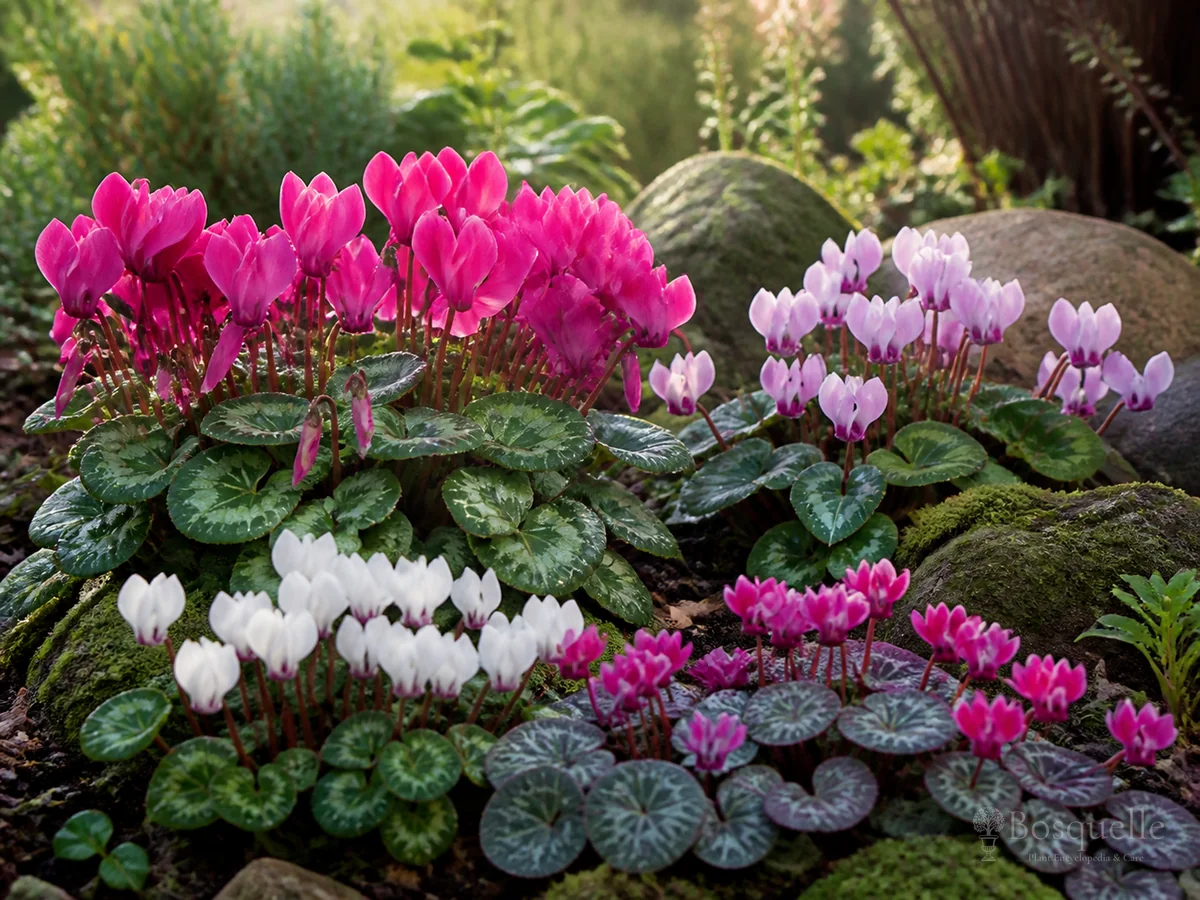
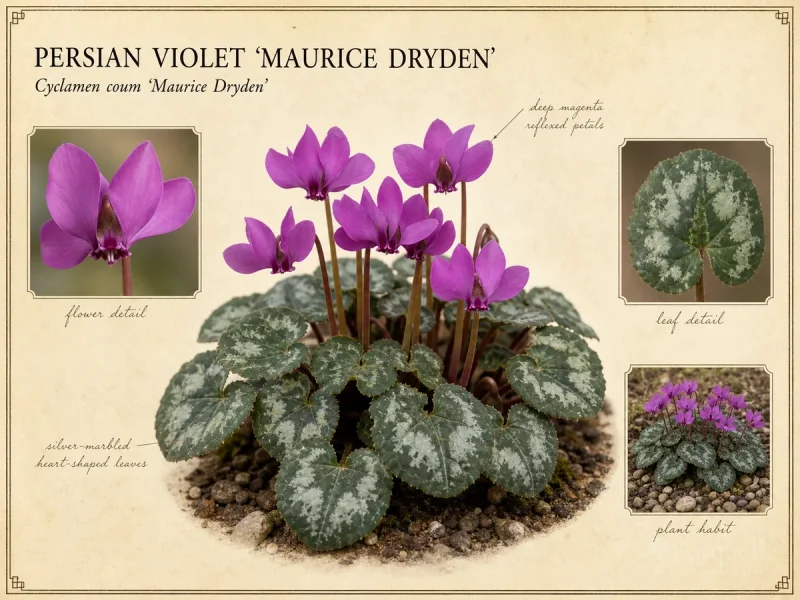
Florist cyclamen wants a cool bright room and water that never sits in the tuber crown. A warm vent and a wet saucer cut the show short. After bloom, leaves yellow because the plant is going dormant — not because it needs a soak. Hardy C. coum and C. hederifolium belong in drained shade outdoors. Compare kinds on Types of Cyclamen.
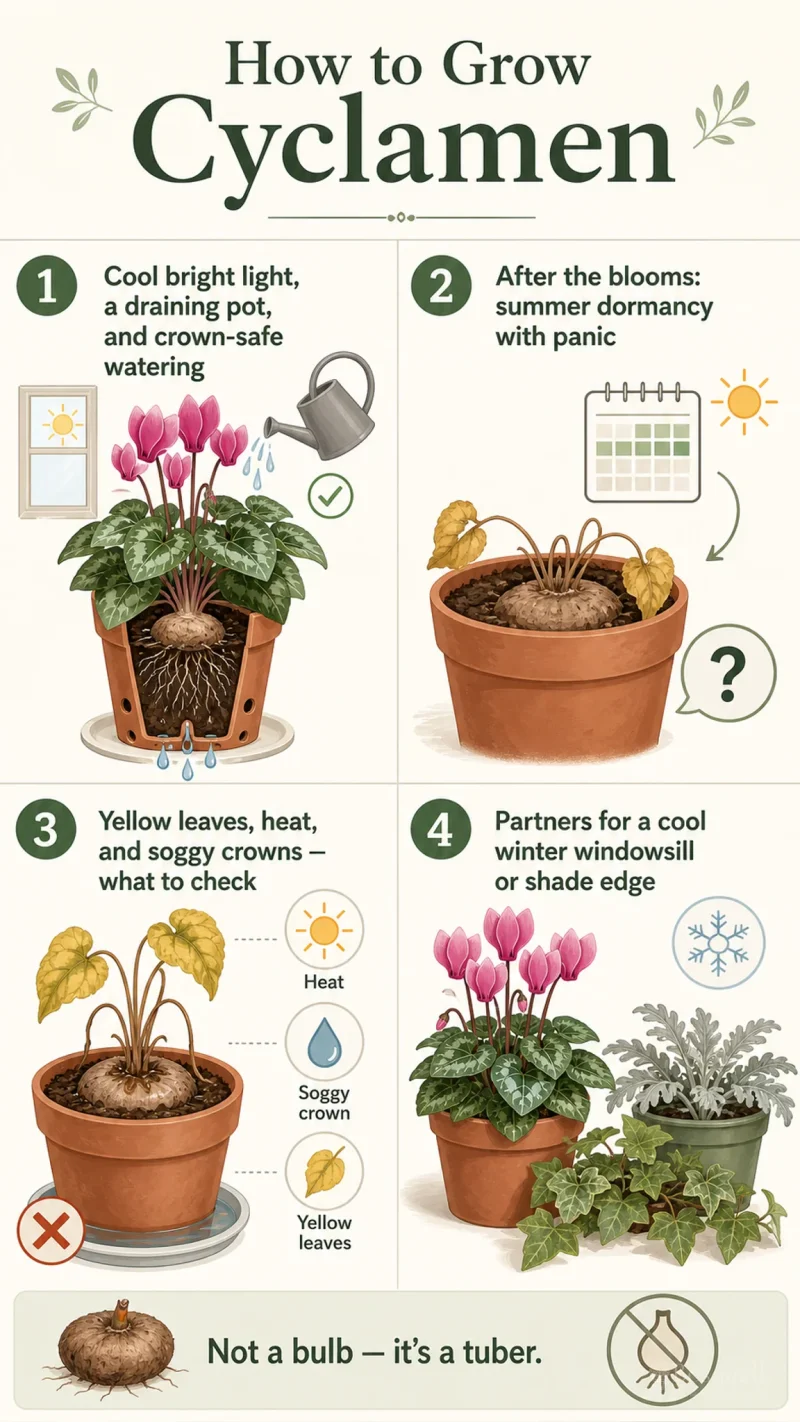
Cool light, drain, and crown-safe watering
| Factor | Recommended | Avoid |
|---|---|---|
| Light | Bright, indirect; an east window is often kinder than a hot south sill | Heat vents, radiators, harsh midday sun in a heated room |
| Temperature | About 60–65°F by day and near 50°F at night | Rooms above about 70°F that abort buds |
| Water | When the surface feels dry; along the pot edge or from below | Water in the crown; a saucer left full |
| Pot | Holes; fast-draining mix; foil sleeve off the day it comes home | Gift wrap that traps water against the pot wall |
| Hardy outdoors | Part shade, humus, sharp drain | Summer-wet clay; a florist gift pot left for a hard freeze |
Set a florist pot in the coolest bright room you have. Water only when the surface feels dry. Soak along the rim or from below, drain, and empty the saucer within a few minutes so the crown stays dry. Clemson Extension: daytime about 60–65°F, nights near 50°F; buds fail above about 70°F. Keep the pot off radiators and away from a dryer vent. An unused spare room is often cooler than the main living room at night.
Pull spent flower stems from the crown rather than snipping stubs. The same pull works for a yellow leaf that has already loosened. Do not carve into the tuber. Feed lightly while the plant is in growth. Heavy nitrogen makes leaves and fewer flowers. Humidity helps bloom last; a tray of wet gravel under the pot (pot on the stones, not in the water) is enough. Do not mist the crown as a substitute for a cool room.
Gift foil and a plastic sleeve trap water against the pot wall. Slide the nursery pot out the day it comes home. If the saucer is glued to a decorative cachepot, lift the inner pot after every soak. In bloom, water well, drain, and leave the pot in the coolest bright spot. A sitter who soaks once when the surface is dry beats daily dribbles.
- Choose the job: a winter indoor florist pot, or a hardy outdoor tuber. They do not share frost or heat rules.
- Give florist plants bright indirect light in a cool room.
- Water when the surface feels dry. Prefer bottom-watering or a careful edge soak. Check the mix with a finger, not a calendar.
- Drain fully. Empty saucers within a few minutes.
- Twist spent stems and pull them clean from the base.
florist cyclamen (C. persicum) is the winter gift pot. Hardy C. coum and C. hederifolium are woodland plants. Slide the nursery pot out of foil the day it comes home. If the saucer is glued to a cachepot, lift the inner pot after every soak. Outdoors, hardy tubers want part shade and soil that drains after rain — leaf mold under deciduous trees, not a summer-wet clay pocket. Plant the growing point up and shallow. Do not leave a florist gift pot out for a hard freeze. Water new hardy plantings through the first dry spring; established woodland clumps often ride on rainfall plus a light leaf mulch. Do not copy florist bottom-watering onto a garden bed — soak the soil around the tuber, not the crown.
Summer dormancy and rebloom
Mediterranean cyclamen grow cool and moist, then rest through summer heat. After winter or spring bloom, leaves yellow and drop while the tuber recharges. That rest is normal. Taper watering as foliage fades. Keep the pot cool and mostly dry for about six to twelve weeks. Wisconsin Extension: leave the tuber in its pot if the mix stays on the dry side, or store a cleaned tuber in dry vermiculite around 50°F. When new leaves show in fall, move to bright light, water thoroughly, and resume a light feed. A pot on its side in a sheltered outdoor shade can shed summer rain if you keep it outdoors; bring it in before a hard freeze. Indoors, a cool basement or unused room beats a warm windowsill for the rest.
- As leaves yellow after a long bloom, stretch the days between waterings. Stop feeding.
- Leave the tuber in the pot unless you are checking for rot or moving it on How to Repot Cyclamen.
- Wake signal: small new leaves. Then increase water and return to bright cool light.
- A soft, foul tuber is rot. A firm, slightly wrinkled tuber can still be asleep.
A grocery-store show is grown under greenhouse light. A windowsill second winter is possible, not guaranteed. Cool nights and a real rest beat fertilizer as a fix. Cool air-conditioned homes sometimes skip a deep rest. Still ease off forcing endless growth. Do not ask a sitter to keep a dormant pot “moist.” When new leaves appear, water thoroughly once, drain, and return the pot to bright cool light. Resume a light blooming-houseplant feed only after those leaves are moving. If you stored the tuber in vermiculite, pot it with the upper half above the mix before that first soak.
Yellow leaves, heat, and rot
Yellow leaves after a long bloom are often dormancy. Taper water; do not soak harder. Yellow or flop while the mix is still wet is overwatering. Tip saucers, lengthen the dry-down, and keep the crown dry. The Cyclamen Society: more water makes that worse. Buds aborting in a warm room is heat — move cooler before you fertilize. A soft, mushy tuber is rot. Firm, plump tubers can look wrinkled in dormancy; discard only the soft, sour ones. Spent flowers that collapse in a hot room are the same heat story, not a missing feed.
If nothing wakes in fall, inspect the tuber. A light scratch that shows green or pale tissue means life. Brown-gray mush does not. Aphids, mealybugs, spider mites, and thrips show up on occasion. Wipe early. Plants with cyclamen mite are usually discarded rather than sprayed into recovery. Yellow leaves in midwinter while the mix is wet, in a warm room, is heat plus overwater — move cooler and dry down before you buy a larger pot. A bigger pot does not cool a room. If you missed the rest and kept watering through June, check the tuber before you throw the pot out.
Outdoor hardy plants want drained shade under deciduous trees, not a summer-wet clay pocket, and not a florist gift pot left for a hard freeze. Firm and a little wrinkled can still wake. Soft and sour cannot. A second florist show is a cool room plus that rest — not a stronger feed. Do not treat a midwinter collapse in a 72°F living room as a mystery pest until you have moved the pot cooler and dried the mix.
Florist vs hardy, and the pot
- Choose florist florist cyclamen versus hardy C. coum / C. hederifolium on Types of Cyclamen.
- Step the florist tuber into a slightly larger pot with the upper half above the mix — and wait for new shoots before soaking a leafless tuber — on How to Repot Cyclamen.
Home seed is slow and erratic, and cutting tubers often rots. Most gardeners buy plants or tubers. What usually decides success is a cool bright room, a wet-then-dry soak that never floods the crown, then a real summer rest. What usually fails is a heat vent, a year- round wet saucer, or treating florist persicum as a frost- hardy woodland plant. Once the tuber is firm, the room is cool, and the saucer is empty, match florist pots to indoor winter and hardy tubers to drained shade — then let the cycle run. If yellowing has already started in midwinter while the mix is wet, dry down before you buy a larger pot. A bigger pot does not cool a room. Hardy outdoor clumps thicken slowly; do not slice the tuber at home to speed a carpet.
Keep florist cyclamen cool and bright, water when the surface is dry without flooding the crown, then let the tuber rest through summer heat. Hardy kinds stay in drained shade, not a heated living room. Empty the saucer after every soak.
FAQ
How often should I water cyclamen?
When the surface feels dry — soak, drain, and wait. In dormancy, water much less. More plants die from constant wet than from a short dry spell.
Should I water cyclamen from the bottom?
Yes — bottom-watering or a careful edge soak keeps the crown dry. Empty saucer water within a few minutes.
Do cyclamen go dormant?
Yes. Florist and hardy Mediterranean types rest in summer heat. Leaves fade; keep the tuber cool and mostly dry until new growth in fall.
How do I get cyclamen to rebloom?
Allow a dryish summer rest, then resume water and bright cool light when new leaves appear in fall. Home light is often weaker than the first florist show.
Why are my cyclamen leaves turning yellow?
After flowering, yellowing is often normal dormancy — reduce water. If the mix is wet and the plant is still in full growth, overwatering or heat is likelier.
Can florist cyclamen live outdoors year-round?
Not in hard-frost climates. Florist types are Cyclamen persicum cultivars. For outdoor beds, choose hardy species such as C. coum or C. hederifolium.
What temperature does cyclamen like?
Cool: about 60–65°F by day and near 50°F at night for florist plants. Hot rooms shorten bloom and push early dormancy.
Should the tuber sit above the soil?
For florist pots, keep the top of the tuber at or slightly above the mix. The pot-step lives on How to Repot Cyclamen. Hardy garden tubers sit shallow with the growing point up.
When should I stop watering cyclamen?
As leaves yellow after bloom, taper watering into a mostly dry summer rest. Resume when new growth shows in fall.
Why won’t my cyclamen bloom?
Usually too warm, too dark, or a plant that never got a proper rest. Cool bright light and a dormancy period fix most misses.
Can I propagate cyclamen at home?
Home seed is slow and erratic, and cutting tubers often rots. Buy plants. We do not run a propagate how-to for this genus.
Is the storage organ a bulb or a corm?
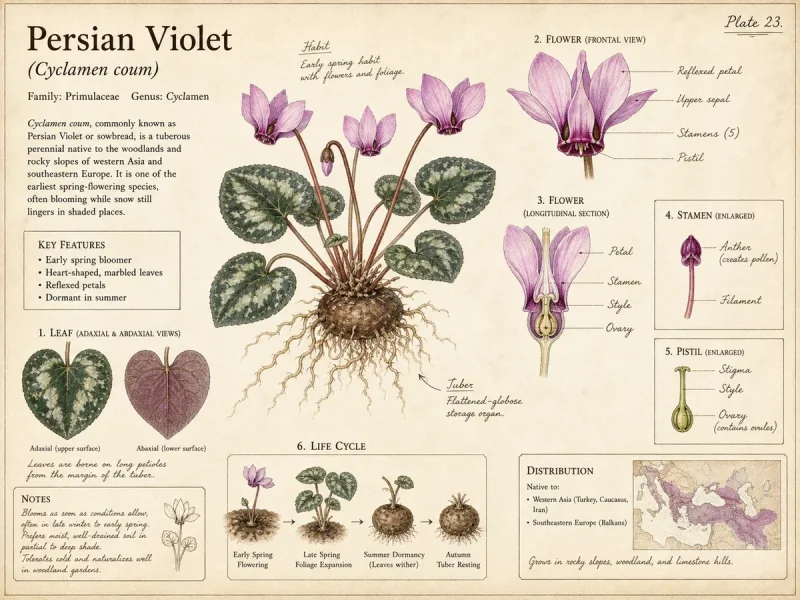
It is a tuber, not a corm or a bulb. Plant the growing point up.
Do hardy cyclamen want the same indoor care?
No. Hardy coum and hederifolium are outdoor woodland plants for drained shade. Florist persicum is the cool indoor winter pot.
Should I fertilize a dormant cyclamen?
No. Hold feed through the rest. Resume a light blooming-houseplant feed when new leaves appear.
Related guides

Recommended plants



This note is part of Cyclamen Guides.
More first-season notes by plant are gathered in How to Grow Guides.
Updated: Reviewed by Bosquelle Editors