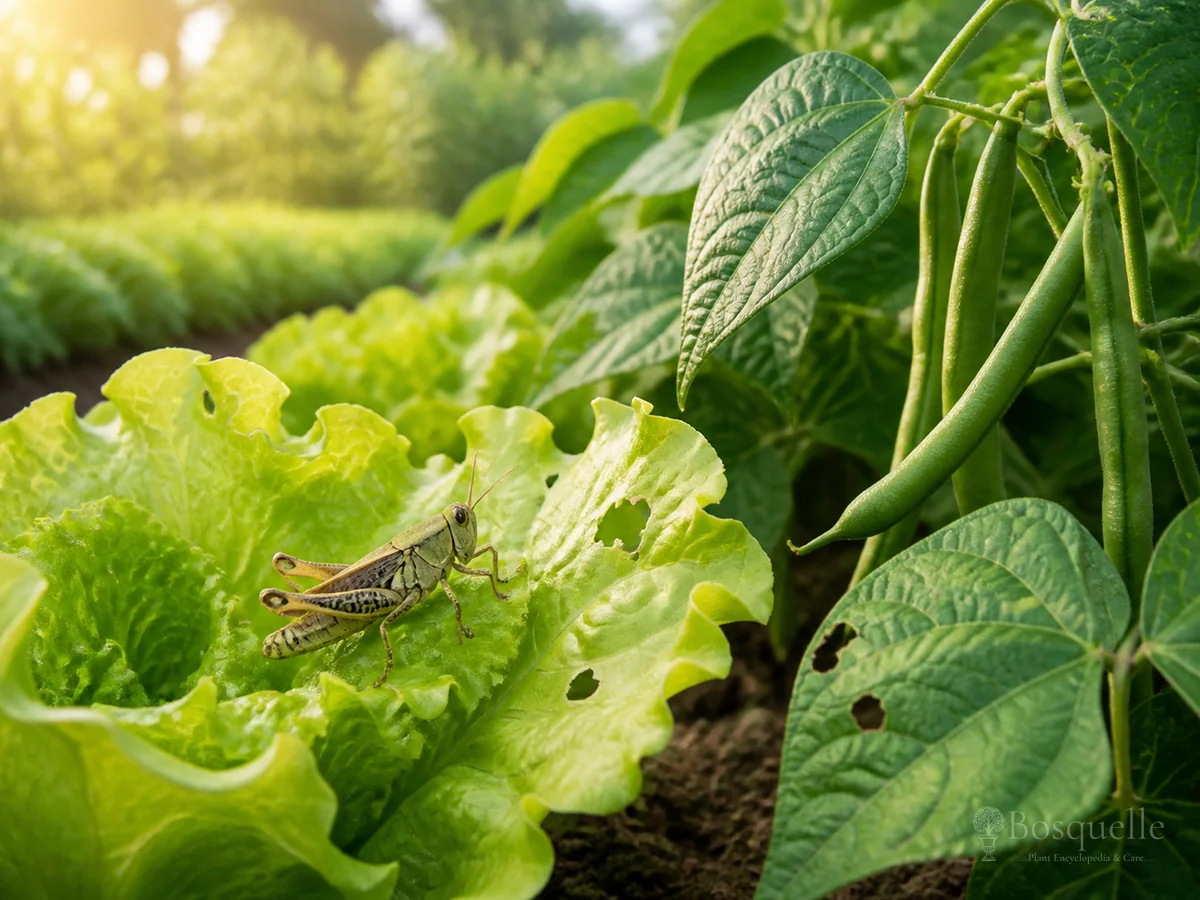
You walk the lettuce at noon and something pings off your shin. That is the usual first notice — not a hole you studied at the desk.
Grasshoppers chew. They take ragged bites from the leaf edge, then jump with those oversized hind legs. Color is a poor ID. Green, brown, yellow-and-black — same job.
Most summers a few holes are just lunch. After a wet spring, when the field next door dries, they can walk in as a crowd. Then lettuce and beans go first.
- Catch them in the cool morning, while they still sit.
- Cloth row cover is a snack if they are hungry. Window screen holds.
- A flying adult shrugs most garden sprays.
Ragged edges, and they ping off the path
Shot-holes from a tiny jumping beetle are a different chew. A leafhopper is a speck that sidesteps under the leaf and sucks. This one is big enough to see from the path, and the leaf looks torn, not stippled.
A few chewed margins on a stout corn plant you can live with. A lettuce that is more hole than blade is kitchen loss. A seedling eaten to the stub is done.
| What you see | What it is | Start here |
|---|---|---|
| Ragged bites on the leaf edge, a hopper jumps when you walk | Grasshopper | Come back at dawn with a jar |
| Tiny round holes, a hard beetle that springs | Flea beetle | See that pest |
| Fine stipple, a wedge that hops sideways | Leafhopper | See that pest — sap, not a chew |
| Long thread-like antennae, night song | Katydid or cricket | Different insect; short antennae are this job |
| Stem snipped at the soil overnight | Cutworm | See that pest |
Big thighs, short antennae
The tell is the hind femur — thick, built to jump. Antennae are short compared with a katydid’s threads. Nymphs look like small adults and cannot fly yet. That is the week they are easiest to catch.
- Adults: about an inch, sometimes more, depending on the species.
- Eggs: pods in the top couple of inches of untilled soil, often outside the cultivated bed.
- They are day insects. Afternoon they hop. Morning they sit.
You do not need the Latin name on a lettuce row. Match the jump and the chew. Species lists are for the extension office if a whole county is moving.
How do I identify grasshoppers in the garden?
Oversized hind legs built to jump, short antennae, and ragged bites on the leaf edge. Color varies. You usually notice them when they ping off the path in the afternoon.
Cool morning is when they sit still
Gloves help. The brown “tobacco spit” stains a hand and does not wash off in one rinse. A jar of soapy water, or a net if they still ping. Drop them. Do not squeeze over the salad.
One quiet dawn pass beats a noon chase. They fly short, erratic hops once the sun is up. You will waste the hour and still miss half of them.
Birds take some. That is useful, not a plan you wait on while the lettuce disappears.
When should I hunt them?
Cool morning. They sit. By afternoon they hop and the chase is mostly wasted.
Cloth they can chew through
Floating row cover helps on a small bed if numbers are ordinary. If they are hungry they eat the fabric and keep going. Window-screen or metal mesh is the leftover that actually holds.
Cover lettuce and young beans before the verge dries. Peek underneath so heat does not cook the crop. Pull the cloth at flower if you need pollinators — beans still set under a screen if you leave bees a gap at the end of the row.
Can they chew through row cover?
Yes, if they are hungry. Window screen or metal mesh holds better than thin cloth.
The verge is how they walk in
They hatch in grassy banks, ditches, and untilled edges. When that forage browns, they move toward the watered garden. A weedy strip against the lettuce is an on-ramp.
Mow a buffer next to the bed. If you keep a tall green strip on purpose, put it away from the vegetables — a lure, not a hotel against the row. Let that lure dry out and you have just herded them onto the beans.
Field-edge gardens take the first wave. A town plot with mown lawn all around usually sees fewer.
How do I keep grasshoppers out of the garden?
Mow the weedy verge so they have no on-ramp. Screen young lettuce. Catch at dawn. They walk in from drying grass, they do not hatch in every cultivated row.
Eggs wait in untilled soil
Females lay pods in late summer and fall, often in ground you do not till — fencerows, pasture, the strip you never dug. Cultivated beds are a poorer nursery. That is why a clean vegetable row can still be eaten: they walked in.
Nymphs hatch when the soil warms. Five or six molts, usually one generation a year. Cool, wet stretches knock them back with fungus. Warm, food-rich springs build the next crowd.
Turning a weedy edge in fall disturbs some pods. It will not rewind a flight that already arrived from the next property.
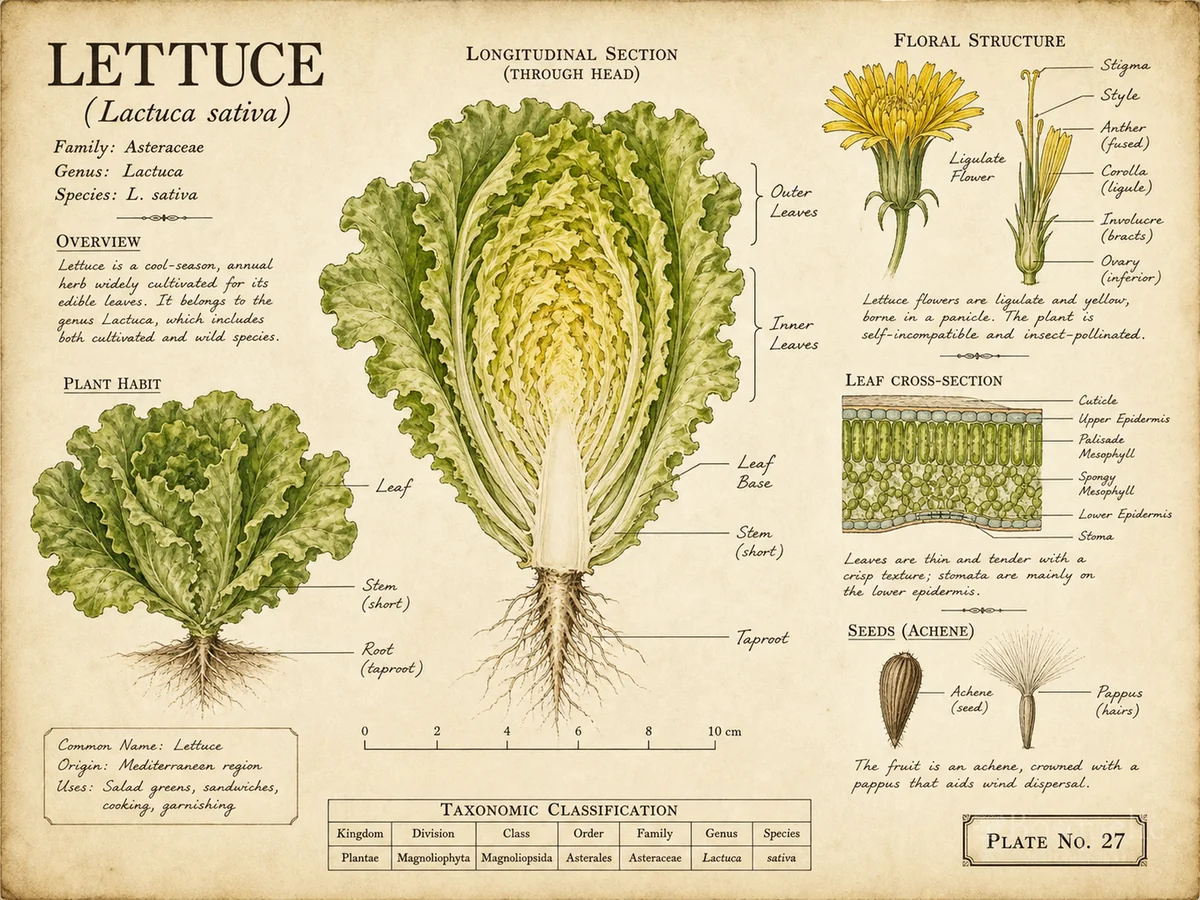
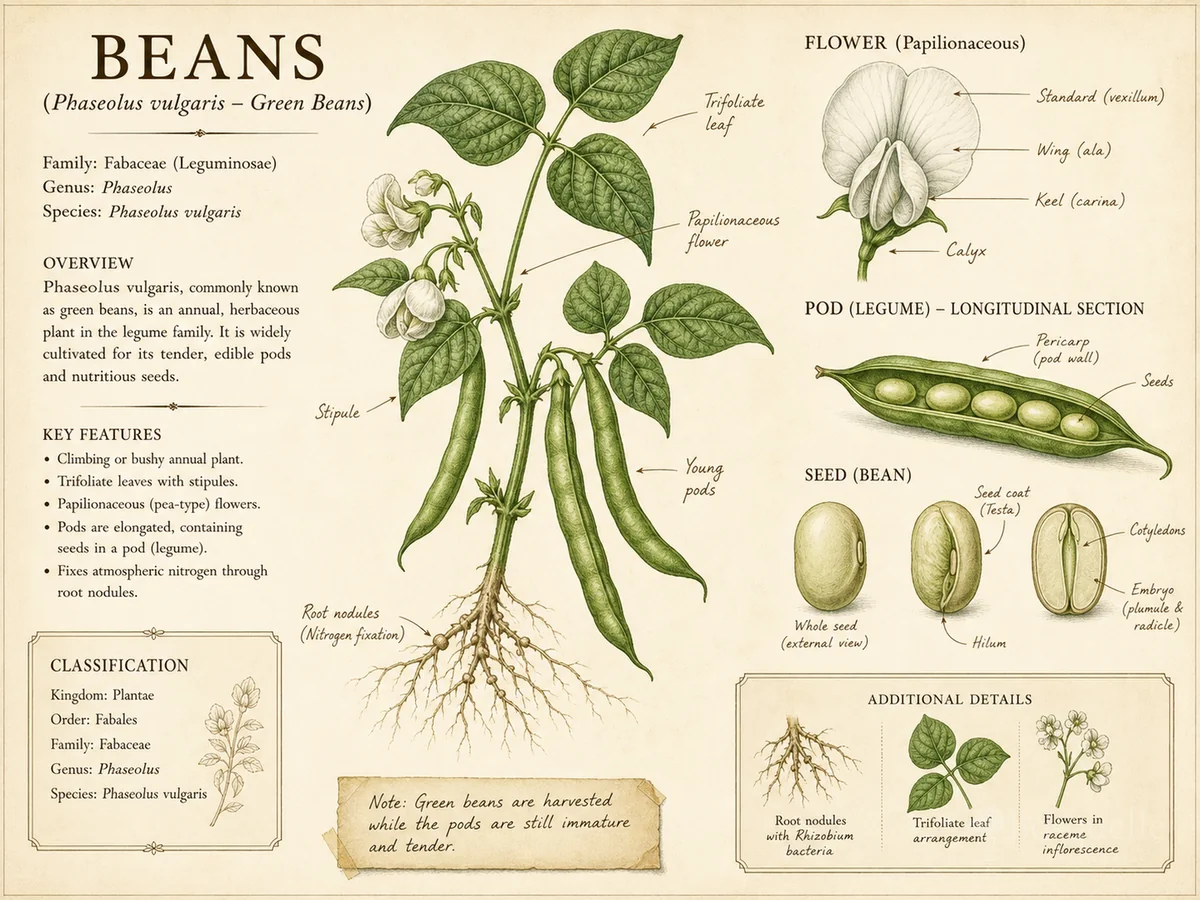
Lettuce, beans, and corn
Those are the plants this job is written on. Young green tissue first. Lettuce can vanish. Beans lose leaf. Corn loses chunks of blade and, in a bad year, silk.
Tomato and squash leaves are often skipped. Pea foliage too, unless they have already eaten everything else. That is not a reason to plant those as a fence — hungry years they chew almost anything green.
Carrot and onion show up in textbooks. They are not extra cards here. One bean — green bean — is enough. Lima and runner stay off this list.
Do grasshoppers eat lettuce?
Yes. Lettuce, beans, and corn are favorites. Tomato, squash, and often pea leaves get skipped unless they have already cleaned the rest.
A locust swarm is a different year
A few grasshopper species can switch into a crowded, flying swarm. Most of the hoppers on a backyard lettuce never do that. One insect in the path is not a plague. A sky that moves as a sheet is a leftover you will not solve with a jar.
In some regions people also call cicadas “locusts.” Those are a different insect. If the noise is trees in June, that is not this chew.
Fail if you treat a single green hopper like a desert swarm and fog the whole block.
Are grasshoppers the same as locusts?
A few species can swarm and then people call them locusts. The hopper on your lettuce usually never does that. One insect in the row is this job, not a plague.
Walk the verge at dawn — a bottle will not rewind a stripped leaf
- Match the jump. Big hind legs, short antennae, ragged chew. A tiny sideways hopper is a different pest.
- Walk at dawn with soap or a net while they sit. Afternoon chasing is mostly theatre.
- Screen lettuce and young beans if the field next door is drying. Skip cloth you know they eat.
- Mow the on-ramp beside the bed. Keep any green lure well away from the crop.
- Leave adult sprays. They shrug them. Nymph baits are a spring leftover on untilled ground you actually own — not a noon fog on flying adults. Skip the brand aisle. Fail if the plan is one bottle after the lettuce is already lace.
Will insecticide kill adult grasshoppers?
Flying adults shrug most garden sprays. Catch them at dawn while they sit. A bottle will not rewind a stripped leaf.
Related reading
- Leafhoppers — tiny wedges that suck and stipple, not a ragged chew.
- Flea beetles — shot-holes from a hard jumping beetle.
- Cutworm — stems snipped at the soil line overnight.
- Mexican bean beetle — lacy bean leaves from a copper ladybug-shaped chewer.
FAQ
Are grasshoppers good for the garden?
Birds eat them. A few holes on a stout plant are lunch, not a crisis. They are not a beneficial you stock on purpose when the lettuce is disappearing.
Does flour or vinegar get rid of them?
Those are kitchen leftovers, not a plan. Dawn catching and a mown verge do more than a dusting you will rinse off.
Are they dangerous to people?
They chew plants. They do not make this a medical page. The spit stains skin. Wash after you pick.
Do garden grasshoppers form locust swarms?
Almost never. Swarming is a rare switch in a few species under crowding. Your backyard hopper is this chew.
Are locusts a different insect?
Locusts are certain grasshoppers in a swarming phase. Cicadas called locusts in some regions are not this pest.
Host plants
A few garden examples where soft new growth invites early colonies.

Related pests



Related diseases




Updated: Reviewed by Bosquelle Editors