Pull the tent out of the fork while the caterpillars are still inside, because that is when the whole colony is home. Twist the silk around a stick or a broom, dump it in a bucket of soapy water, and do not burn it on the tree, because fire injures the bark worse than the chewing.
People still say tent worm, then tent caterpillar. In spring, look at the V of a cherry, apple, or crabapple. Dense, cottony silk sits in that crotch. Hairy black caterpillars with a white stripe down the back leave that tent to eat the new leaves, then they come back when it rains or when the day heats up. A healthy tree usually puts out a second flush. A young cherry that is going bare cannot wait.
Pull the tent off the fork while they are inside
The colony sleeps in the silk. Early morning, evening, or a cool rainy day, they are packed in there, so that is when a twist finishes the nest. Wrap the tent around a stick, a broom, or a pole with a nail across the end, and the caterpillars come with it. Drop the mass in soapy water. Wear gloves, because the hairs can itch.
On a small cherry or a newly planted apple, prune that small fork if the cut will not wreck the shape. The silk is temporary, so a hard prune on a mature tree is the lasting injury. Do not reshape a canopy to chase a nest you could have twisted off.
A hole in the tent still helps, because birds and wasps cannot hunt through intact silk. A strong hose that tears it open does the same job. Do not torch the nest on the tree. Fire injures bark and buds worse than the caterpillars, and it is a fire hazard.
- Confirm this moth. Spring. Dense silk in a fork. Hairy caterpillars with a white stripe, leaving the tent to feed.
- Pull or prune a tent you can reach while they are inside. Twist it off. Dump it in soapy water. Do not burn it on the tree.
- If this is a tent or two on a healthy mature tree, wait, or tear the silk open for birds and wasps. Water through dry weather.
- Bt only while they are still small and you can wet the leaves they eat, if the tree is young, already stressed, or going bare.
How do I get rid of tent caterpillars?
Pull the tent out of the fork while the caterpillars are still inside. Dump the silk in soapy water. Do not burn the nest on the tree. Bt only while they are still small, and spray the leaves they eat. In winter, scrape the varnish egg mass off the twig.
Should I burn tent caterpillar nests?
No. Fire injures bark and buds worse than the caterpillars, and it is a fire hazard. Pull, prune, or tear the silk open instead.
A healthy tree puts out a second flush
They eat early, right as the buds open, so a mature cherry, apple, or crabapple usually leafs out again in a few weeks. One spring of tents is looks, not a take-down. The chewed leaves will not green up, so the tree looks ragged until that second flush covers it.
Act when the tree is young and most of the canopy is inside silk, or when the same small cherry is stripped year after year in drought. A couple of tents on a bearing apple is looks. A newly planted crabapple going bare is the year to pull, or to spray while they are still small. Black cherry in a fencerow wears this insect most years and still leafs out; do not take the wild cherries down as the plan, because that fencerow feeds a lot more than this moth.
Water through dry weeks. Do not take the tree down for one April of silk. When they finish feeding they wander off to spin cocoons on fences, siding, and litter, so the empty tent stays until you pull it. Rain does not take this silk the way it takes a late-summer web on the tips.
Will tent caterpillars kill my tree?
A healthy mature cherry, apple, or crabapple usually leafs out again after one spring of this feeding. They eat early, so the tree has time for a second flush. A young tree, or the same small canopy stripped year after year in drought, is the real risk.
Will the tents fall off on their own?
No. Once the caterpillars wander off to pupate, the empty silk stays until you pull it. A spray will not take it down.
The tent sits in a fork in spring, and they leave it to feed
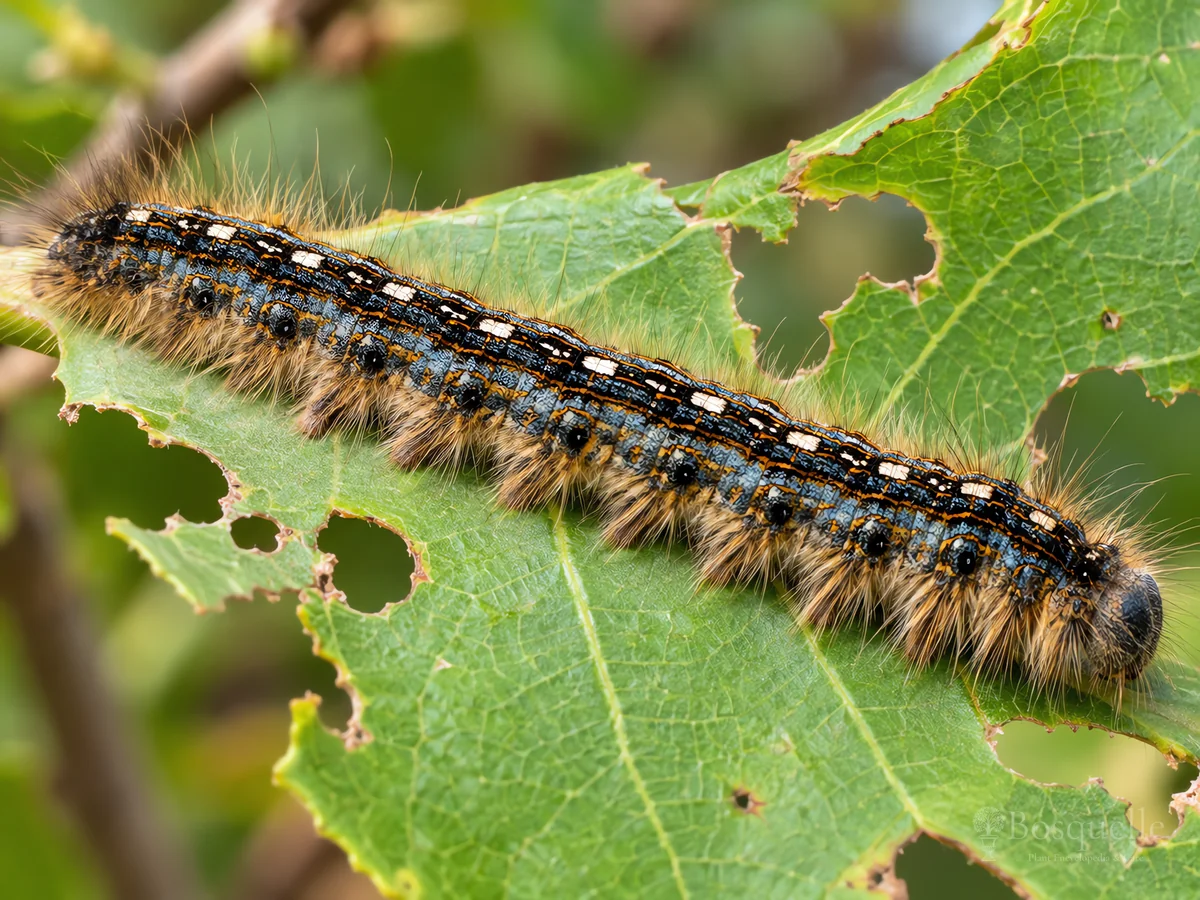
Confirm is location and season, not how hairy the worm looks. Dense silk in a branch crotch in spring. Hairy caterpillars, black, with a white stripe down the back, blue spots along the sides, and sparse long hairs. About two inches when grown. They leave the tent to feed, then they come home. Tap the tent in the heat of the day, and they are packed inside.
Eggs sit in a shiny, varnish-like band around a pencil-size twig. One mass holds about 150 to 400 eggs and feels like styrofoam. They hatch as wild cherry buds open, so a small tree can look as if it never leafed. One generation a year. The moth is reddish-brown with two pale stripes on the forewing. They spend most of the year as that egg mass.
In the West, western tent caterpillar also makes a crotch tent and leaves it to feed, so the same pull works. Forest tent caterpillar is a cousin with keyhole marks down the back. It spins a silk mat on the trunk, and it does not build a tent.
| Where you see it | What it is | Try this |
|---|---|---|
| Dense cottony silk in a branch fork, spring, larvae leave to feed | Tent caterpillar | Pull or prune while they are inside; wait on a healthy tree |
| Loose dirty web wrapping branch tips, late summer, caterpillars eat inside | Fall webworm leftover | See fall webworm — not this tent |
| Hairy caterpillars with keyhole spots, silk mat, no tent | Forest tent leftover | Not this nest — no tent to twist |
| Individual spindle of silk plus needles, often on arborvitae | Bagworm leftover | See bagworm — not this tent |
| Hairy, five blue spots then six red, no tent | Spongy moth leftover | See spongy moth — not this tent |
| Smooth worms, six extra legs, often an S in a group | Sawfly leftover | See sawfly — Bt will not work |
| Shiny varnish band on a pencil-size twig, winter | This moth's eggs | Scrape into soapy water |
What do tent caterpillars look like?
Hairy, black, about two inches when grown, with a white stripe down the back and blue spots along the sides. The tent sits in a branch fork in spring. They leave it to eat, then they come home.
What do eastern tent caterpillars eat?
New leaves on cherry, apple, crabapple, plum, and chokecherry first. If they run out, they wander onto other hardwoods. They do not eat pine needles, and they do not eat the fruit.
A dirty web on the tips in August is a different moth
Fall webworm wraps the outer tips in late summer and eats inside that silk. That is not a dense nest in a fork in April. See fall webworm. Do not run their tip-pull here.
Forest tent caterpillar has a row of white keyhole marks down the back and does not build a tent. It rests on a silk mat on the trunk or a limb. There is no nest to twist. Do not run a fork-pull on a tree that has no tent.
Bagworms are individual spindles of silk dressed in the plant's own foliage, often on arborvitae and juniper. See bagworm. Do not pick bags here.
Spongy moth — people still say gypsy moth — is hairy, with five pairs of blue bumps and then six pairs of red, and it does not spin a communal tent. See spongy moth. Do not run their burlap skirt here.
If the worms are smooth, rear into an S in a group, and you count six or more fleshy extra legs, that is a sawfly, related to wasps, so a Bt spray made for moth caterpillars will not kill them. See sawfly.
Are tent caterpillars the same as fall webworms?
No. Tent caterpillar spins a dense nest in a fork in spring and leaves the tent to feed. Fall webworm wraps the tips in late summer and eats inside the silk. See fall webworm.
Are forest tent caterpillars the same as eastern tent caterpillars?
No. Forest tent caterpillar has keyhole marks down the back and does not build a tent. It rests on a silk mat. Eastern tent caterpillar has a solid white stripe and a dense nest in a fork.
Bt on the leaves they eat, while they are still small
Bacillus thuringiensis (Bt, the kurstaki strain) has to be eaten, so spray the foliage they are chewing, not the water-repellent silk. Use it when the tents are first showing and the caterpillars are still young, about an inch or less, because large ones shrug it off and have already done most of the eating. They leave the tent to feed, so a fog on the outside of the nest does not reach them. Follow the label in your hand.
Skip the brand aisle if a stick would have finished the nest. A spray after they have wandered off to pupate will not rewind the leaves, and it will not pull the empty silk down. If the tree is in bloom, skip a product that kills bees, because those flowers are the day's work for pollinators, not this moth's nest.
Does Bt kill tent caterpillars?
It kills young ones that eat treated leaves. Use it while the tents are still small, on the foliage, not on the water-repellent silk. It will not pull an empty tent off the tree.
Scrape the varnish egg mass off the twig in winter
After the leaves drop, walk the cherry, apple, and crabapple and look for a shiny dark band wrapping a pencil-size twig. It looks varnished and feels like styrofoam. That mass is next spring's tent. Scrape it with a thumbnail into soapy water, or prune that twig if the cut is one you would make anyway. One mass is one colony.
On a tree with many masses, a labeled dormant oil can smother eggs you cannot reach with a thumbnail, because the oil has to coat them. Motor oil is leftover. It injures the bark. Leave the empty brown tent if you already pulled the worms; rain will not take it, so twist it off when you scrape if it still bothers you.
Will tent caterpillars come back next year?
They overwinter as egg masses on the twigs, so the same cherry can show tents again. There is one generation a year. Numbers rise and fall. Scraping this winter's varnish mass still helps this tree.
Related reading
- Fall webworm — loose silk wrapping branch tips in late summer; larvae eat inside the web.
- Bagworm — individual spindle of silk plus the plant's own foliage, often on evergreens.
- Spongy moth — hairy, blue then red spots, no communal tent in a fork.
- Fall cankerworm — looping inchworm in spring; no communal nest in a crotch.
- Sawfly — six extra legs, often an S in a group; Bt made for moths will not kill them.
FAQ
Do tent caterpillars bite people?
No. They eat leaves. They do not sting. The hairs can itch on sensitive skin, so wear gloves when you pull a tent. Keep pregnant mares off cherry with tents, because eating the caterpillars is linked to pregnancy loss in horses.
Will dish soap kill tent caterpillars on the cherry?
A kitchen mix sprayed into the canopy is leftover. Dump pulled tents in soapy water. Do not wash a tree with dish detergent. That can burn the leaves. Labeled insecticidal soap has to hit the insect.
Why are tent caterpillars crawling on my house?
When they finish feeding they leave the tree to spin cocoons on fences, siding, and litter. Sweep them into soapy water. They are done eating that cherry. A sticky trunk wrap is leftover; it is not the finish, and glue on bark injures the tree.
Related pests



Related diseases




Updated: Reviewed by Bosquelle Editors