
Open the foam with a finger. A pale green, yellow, or orange nymph sits inside, and that is a spittlebug. Hose the stem, or wipe the blob and the insect together, because the bubbles are a shelter, not a disease. Most rosemary, lavender, and strawberry plants do not need a bottle for a few masses.
People still call the foam spit, or cuckoo spit. It is not saliva. The nymph drinks watery xylem sap, then mixes the leftover fluid with air and pulls the bubbles over its back so it stays wet and hidden. Adults are stout jumpers, also called froghoppers, and they look like fat leafhoppers without the foam. Meadow spittlebug, Philaenus spumarius, is the usual garden species. Two-lined spittlebug, Prosapia bicincta, is the one that can brown a thatchy centipede lawn.
Hose the foam. The nymph sits inside
A hard stream from the hose washes the bubbles off and knocks the nymph down, so it has to crawl back up in the open where birds and assassin bugs can find it. Wipe a few blobs by hand if you would rather not wet the whole plant. The insect is in the mass. If you only rinse the stem and leave the nymph, it will froth again within minutes, because the foam is a shelter it can rebuild as soon as it starts feeding.
A bottle of insecticidal soap or horticultural oil is last, and only after you have broken the foam, because the bubbles shed most sprays. Kitchen dish liquid is not a plant product and can burn the leaf. Neem and a garlic-pepper mix do not finish a nymph that is still wrapped. Cut infested weeds and tall grass in spring before the nymphs mature and walk onto the woody plants, because that is where the next foam often starts.
- Open the foam. A pale nymph confirms this insect. Dry cotton with no bubbles is mealybugs, not this job.
- Hose or wipe the mass and the nymph together. A rinse that leaves the insect on the stem lets it froth again.
- Check nearby weeds and tall grass, then cut those stems in spring before the nymphs mature and move onto rosemary, rose, or pine.
- Wait on a healthy herb or perennial with a few blobs. Treat a strawberry row that is stunting, or a pine with many foam masses and dying shoot tips.
How do I get rid of spittlebugs?
Hose the foam or wipe the blob and the nymph together. The insect sits inside the bubbles. A spray on intact foam usually slides off. Most plants do not need a bottle for a few masses.
A few blobs on rosemary do not kill the plant
A few foam masses on rosemary, lavender, sage, or rose almost never kill the plant, because the nymph is sipping dilute xylem, not chewing the leaf. The bubbles look worse than the feeding. Stunting and shortened internodes show up when many nymphs sit on the same tender stem, especially on strawberry in dry weather, so that is when you hose them and watch the new fruit. Established woody shrubs and trees in a landscape usually keep growing even when the foam is obvious.
Pine is the exception worth watching. Heavy feeding, and the wounds adult females cut when they lay eggs in thin shoots, can kill shoot tips and leave resinous spots that let other trouble in. If Scotch, Austrian, or white pine has many masses and browning tips, hose what you can reach and ask Extension before you fog the canopy. A healthy mature pine with a few blobs can wait. New growth that stays green around the foam is the usual garden picture, so do not treat the foam as a death sentence.
Do spittlebugs kill plants?
Rarely. A few blobs on rosemary, lavender, or rose are looks, not a death sentence. Heavy numbers can stunt strawberry and, on pine, help kill shoot tips. Established woody plants in a landscape almost never die from this feeding.
Purple streaks in centipede thatch need dethatching, not a rosemary hose
Two-lined spittlebug is the same family, and a different job, because the nymphs live down in wet thatch on warm-season lawns, especially centipedegrass, then also Bermuda, St. Augustine, and zoysia. Adults inject saliva that streaks the blade purple, brown, red, or white, and the patch can wilt and brown as if it were drought. Part the grass. Foam sits near the soil, not on the tips. A squishy walk after a wet week is the mass packed in the thatch. Late-summer adults can also speckle holly, especially Burford and American holly, after they leave the lawn.
Chronic patches come back where the thatch stays thick and the lawn stays wet at night, so dethatch the worst spots, water in the morning, and skip a heavy nitrogen push that makes lush, wet crowns. A labeled turf spray is last, after you mow, bag the clippings, and water so the product can reach the thatch in the evening. Do not run the rosemary hose-and-wait plan on a centipede lawn that is already streaked and squishy.
- Part the thatch. Foam near the soil plus purple or brown streaks on the blade confirm this insect, not a missed watering.
- Dethatch the worst patches and water in the morning so the crown can dry. Extra nitrogen and evening irrigation keep the thatch wet, which is what this insect wants.
- A labeled turf spray is last, only if the patches are still spreading after you have opened the thatch. Skip the bottle if you only found a few blobs on the lawn edge.
Will spittlebugs kill my lawn?
Two-lined spittlebug can brown patches of centipedegrass when the thatch stays wet. Dethatch first. A labeled turf spray is last. A few blobs on the lawn edge are not a reason to fog the yard.
Poke the foam: a pale nymph is inside
The mass is wet, sticky, and about the size of a dime to three quarters of an inch. It sits where a leaf meets the stem, on a flower stalk, or at the base of a strawberry clump. Pull the bubbles apart. One or more stout nymphs hide inside. They start orange or yellow, turn green as they grow, and show red eyes on the sides of the head. They feed face-down on the stem for about a month or two, then crawl out as winged adults.
Adults are about a quarter to a third of an inch, stout, and tan, brown, gray, or mottled. They hop hard when you touch them and rarely fly, which is why people call them froghoppers. The two-lined adult is black with two orange or red bands across the wings. Eggs overwinter in stems, leaf litter, or thatch, then hatch in spring. Meadow spittlebug usually has one generation a year. Two-lined on southern lawns can run two, and the second generation in late summer is the one that browns the grass.
| Where you see it | What it is | Try this |
|---|---|---|
| Wet white foam on a green stem; pale nymph inside | Spittlebug | Hose or wipe the nymph with the foam |
| Dry cotton in a leaf joint, sticky film, no bubbles | Mealybugs | See mealybugs — not this foam |
| Stout jumper, no foam, stipple on the leaf | Leafhopper | See leafhopper — not this hose |
| Foul foam or wet streak from a tree trunk | Slime flux leftover | Leave the trunk; this hose will not fix wetwood |
| Sticky shine, no bubbles, ants farming | Aphids or soft scale | Find the drip; this is not spittle |
| Purple streaks in wet centipede thatch, squishy walk | Two-lined spittlebug | Dethatch first; the rosemary hose is the wrong job |
What is the foamy stuff on my plants?
It is the nymph's shelter, mixed from plant sap, air, and fluid from the insect's rear, not saliva and not someone spitting on the stem. Open it. A pale insect inside confirms spittlebug.
Dry cotton is mealybugs; trunk ooze is not this insect
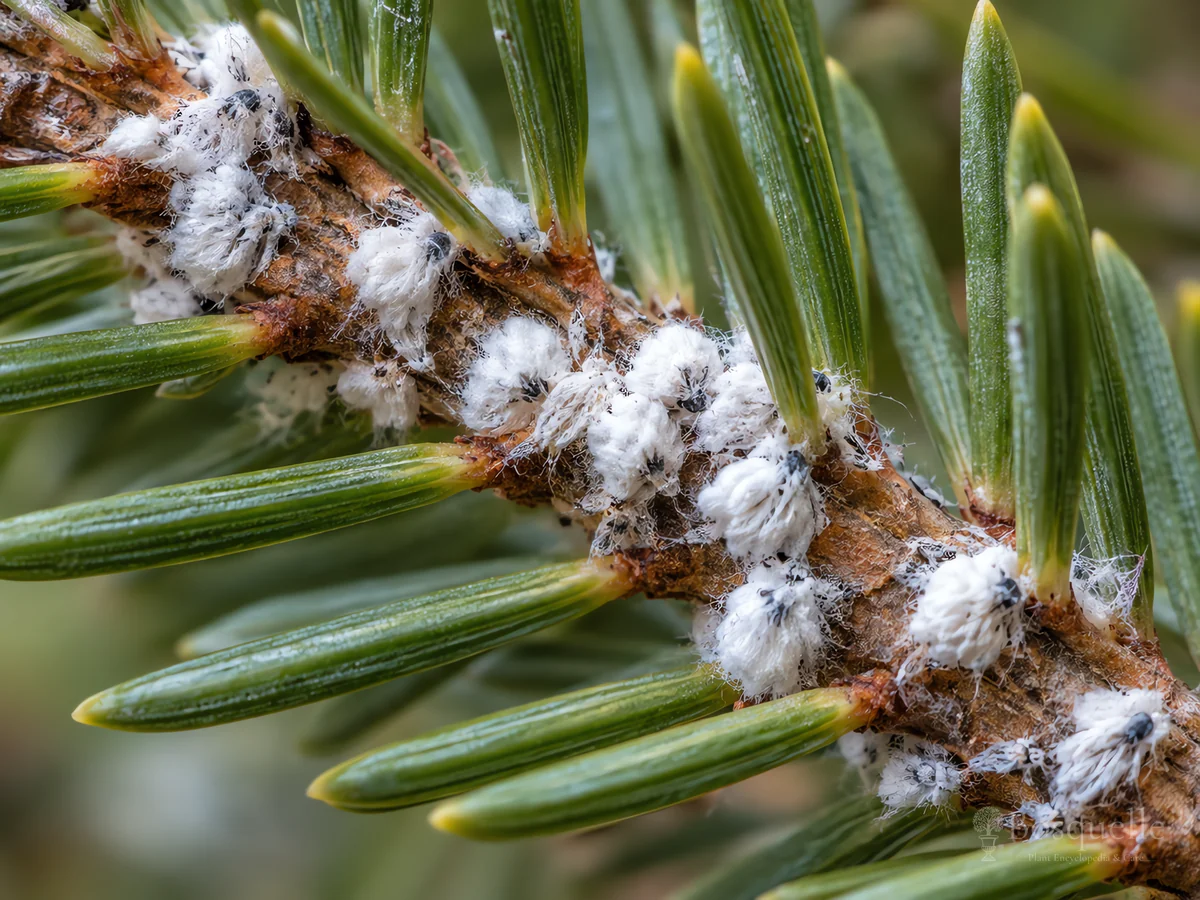
Cotton tucked in a leaf joint, with a sticky film and often sooty mold, is mealybugs. That wax is dry. It does not wash off as a bubble mass, and you will not find a green nymph inside a spit glob. Do not run their alcohol wipe here. Open the foam first. If there is no insect in bubbles, this is not the job.
Adults look like stubby leafhoppers. Leafhoppers have rows of spines along the hind shin and they do not sit in foam. They stipple from the leaf and hop off the top. See that insect if you have stipple and no bubbles. Do not paste their hopperburn calendar onto a rosemary stem.
Foul foam or a wet brown streak coming through bark is bacterial wetwood, sometimes called slime flux. It comes from inside the wood, often on elm, maple, oak, or willow, and it smells sour. There is no nymph in those bubbles. Leave the trunk. Do not drill it, and do not hose it as if it were this insect. Sticky shine without bubbles is honeydew from aphids or soft scale. White powder on the leaf surface is powdery mildew, not spit.
Are spittlebugs the same as mealybugs?
No. Mealybugs look like dry cotton in a joint and leave sticky honeydew. Spittlebug foam is wet and holds a nymph. See mealybugs if you find wax and no bubbles.
Related reading
- Leafhopper — stout jumper without foam; stipple from the leaf, not a spit mass on the stem.
- Mealybugs — dry cotton in the joints, not wet bubbles with a nymph inside.
- Pierce’s disease — grape xylem plug; sharpshooters are the usual vineyard vector, not a foam blob on rosemary.
FAQ
Do spittlebugs bite people or pets?
They feed on plant sap, not blood. They do not bite or sting. The foam is mostly filtered sap and air. It tastes bitter, so a child or a dog usually does not try it twice, but it is not a poison.
Will dish soap kill spittlebugs?
Kitchen dish liquid can burn the leaf and has no plant label. The foam also sheds sprays until you break it. Hose or wipe first. A labeled insecticidal soap is last, and only after the nymph is exposed.
Can spittlebugs spread Pierce’s disease?
Meadow spittlebug can move the Xylella bacterium in research. In U.S. vineyards the usual vector is still the glassy-winged sharpshooter and related leafhoppers. Foam on rosemary is not a grape-disease job. See Pierce’s disease if a vine is scorching. Do not soap a grape as if this foam were the whole problem.
Will they come back next year?
Eggs overwinter in stems, litter, or thatch, then hatch in spring. Cutting nearby weeds before nymphs mature, and dethatching a wet centipede lawn, cuts the next round. A fall spray on empty foam does not reach the eggs.
Are froghoppers a different pest?
Froghopper is the adult name for the same insect. The nymph makes the foam. The adult hops. A jumper with no foam on the stem may be a leafhopper instead. Check for bubbles before you treat.
Related pests



Related diseases




Updated: Reviewed by Bosquelle Editors