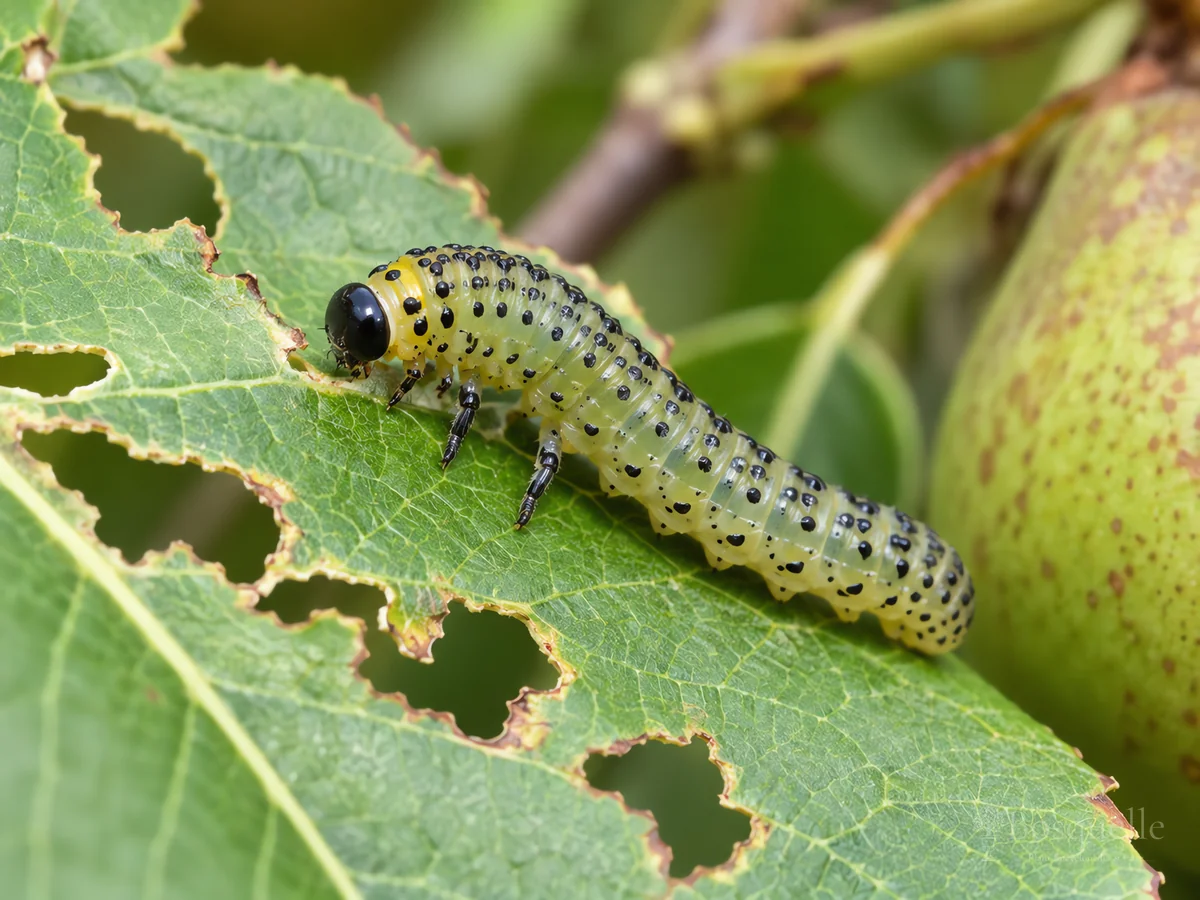
Look at the top of a pear or cherry leaf. A tiny olive-green tadpole sitting in its own slime is pear sawfly, the insect people call a pear slug. Wipe it off, crush it, or hose it into the grass, because it dries out once it leaves the leaf. A Bt spray made for moth caterpillars will not kill it, and the fruit itself is not what it eats.
Pear sawfly is a small, glossy black wasp relative, Caliroa cerasi. The adult does not sting. The larva is the one you see. It coats itself in olive-green slime, sits on the upper surface, and chews the green between the veins, so the leaf turns brown and lacy. Cherry slug is the same insect on cherry. Two generations a year, and the late-summer hatch is usually the louder one.
Wipe or hose them off the top of the leaf; skip Bt
They sit on the upper surface of pear and cherry leaves, so you do not have to flip the foliage to find them. Wipe a slimy larva into a bucket of soapy water with a gloved finger or a cloth, or crush it on the leaf. A hard stream from the hose knocks them off, and they dry out on the ground because that coating that makes them look like a slug also leaves them easy to desiccate. On a small tree you can finish the job in one pass. On a tall pear, reach what you can, then skip a spray you cannot actually cover.
Bt, the Bacillus bottle sold for moth and butterfly caterpillars, does not kill this insect. It is a sawfly, related to wasps, not a moth. A soil drench does not reach larvae on the leaf, and it does not kill the pupa in the soil either. If the brown lace is already there and the larvae have dropped, a spray will not put the green back. Watch the next hatch in late summer, because the second generation is usually the one that browns a whole canopy.
How do I get rid of pear slugs?
Wipe or hose them off the top of the leaf into soapy water. Skip Bt. A spray only helps while the larvae are still sitting on the leaf.
Does Bt kill pear slugs?
No. Bt kills moth and butterfly caterpillars. This is a sawfly. Use your fingers, a hose, or a labeled soap on the upper surface.
They sit on the upper surface like a tiny tadpole, not a garden slug
The confirm is a wet, olive-green to almost black larva on the top of the leaf, swollen at the head end and tapered at the rear, about three-eighths to a half inch when full grown. Newly hatched and newly molted larvae are yellow until they put the slime back on. The last stage loses that coating, turns yellow-orange, and drops into the soil to pupate a few inches down. You rarely need the adult. It is a glossy black, fly-sized wasp that does not sting, and it inserts eggs as tiny tan blisters in the leaf.
Wipe the slime and you will see short true legs and several fleshy extra legs. A garden slug has no legs and no separate head capsule. Gardeners on cherry call the same insect a cherry slug. It also shows on plum, cotoneaster, hawthorn, mountain ash, quince, and serviceberry. Eggs sometimes land on peach, but the larvae do not thrive there. First larvae show in late spring or early summer. The second hatch, often August into September, is the one that can brown a tree overnight.
| Where you see it | What it is | Try this |
|---|---|---|
| Olive-green slime tadpoles on the upper leaf; brown lace between the veins | Pear sawfly (pear slug / cherry slug) | Wipe or hose into soapy water |
| Yellow, then slimy again after a molt; last stage yellow-orange and dropping | Same insect, different age | Wipe while they are still on the leaf |
| Night holes, slime trail, no legs, no separate head | A true slug | See slugs; beer traps will not finish this sawfly |
| Yellow-green slime larvae on a rose, not pear or cherry | A rose slug, a different sawfly | Do not copy a rose method onto this tree |
| Metallic beetle chewing irregular holes in daylight | Japanese beetle | See that pest; this larva does not fly |
| Bright green larva, no slime, round holes or only the midrib left on pear | California pear sawfly, a different insect | Still a sawfly, so skip Bt; this URL is the slimy one |
Are pear slugs real slugs?
No. They are the larvae of pear sawfly. Wipe the slime and you will see legs and a head. A garden slug has neither.
Is a cherry slug the same insect?
Yes. Cherry slug, pear slug, and pear sawfly are the same species on different hosts. The method does not change.
Brown lace on pear is not a rose slug or a Japanese beetle
A true slug is a mollusk. It has no legs, it works at night, and it leaves a slime trail across holes in soft leaves. Pear sawfly feeds in daylight on the upper surface and leaves a brown, lacy network of veins. Beer traps, boards, and slug bait will not finish it. See slugs for that animal, then come back if the larva on the pear still has a head and hidden legs.
Rose slugs are different sawflies on rose, usually yellow-green and sometimes bristly. They are not this insect, even though both get called slugs. Do not paste a rose spray calendar onto a pear. Japanese beetle is a metallic adult that chews ragged holes in daylight. See Japanese beetle. White powdery worms on dogwood are dogwood sawfly. An S-shaped group on a birch leaf edge is dusky birch sawfly. Other sawflies have their own names. This insect is the slimy larva on pear and cherry. Brown, wilted shoots that look scorched after bloom are more often fire blight, not this chew. A maggot inside the fruit is not this insect either. Pear fruit sawfly and apple maggot work the fruit, not the upper leaf.
Late skeletonizing on a healthy tree can wait
On an established pear or cherry, late-summer brown lace is usually ugly, not a dead tree. The tree has already made most of its food for the year, so one round of skeletonizing seldom kills it. Fruit size can drop that season if a lot of leaf is gone while the fruit is still filling, and a heavy second generation can cut bloom the following spring, so a young tree or a newly planted ornamental is the case to wipe this year instead of waiting.
If the larvae have already dropped and only brown lace is left, a spray does nothing useful. Water a young tree that lost most of its leaf. Watch again in June and again in August, because two generations are the usual pattern, and the second is the one that browns a canopy in a week. A 25-foot pear you cannot wet from the ground is a wait, not a ladder-and-pyrethroid job.
Will pear sawfly kill my tree?
Almost never on a healthy, established pear or cherry. Late lace is ugly. A young tree stripped while fruit is still filling can lose size this year and bloom next spring, so wipe that one.
Soap and oil only work while the larvae are still on the leaf
Labeled insecticidal soap or horticultural oil has to wet the larva. Aim at the upper surface, because that is where this insect sits. A spray on the undersides, the way you would treat lace bugs, misses them. They are easy to kill while they are small and slimy. Once they have turned yellow-orange and gone into the soil, the bottle is too late.
Soap can burn cotoneaster, plum, and cherry foliage, so wipe those by hand, or test a few leaves and wait a day before you wet a whole shrub. Spinosad is a later contact option if you can still see larvae and you cannot wipe them, but skip it during bloom because it can hurt bees for hours after it dries. Skip the brand aisle of carbaryl, malathion, and pyrethroids as the plan. A soil drench does not reach this insect on the leaf.
Can I use dish soap instead of insecticidal soap?
Wipe them into a bucket of soapy water. Do not fog the tree with dish detergent. Those products can strip the leaf wax. Use a labeled insecticidal soap if you spray, and go easy on cherry, plum, and cotoneaster.
Confirm the slime, then wipe or wait
- Look at the upper surface. Olive-green tadpoles on brown, lacy pear or cherry leaves confirm pear sawfly. Hidden legs under the slime mean insect, not a garden slug.
- If it is a night hole with a slime trail and no legs, stop. See slugs. If the larva is on a rose, it is a different sawfly. If a metallic beetle is chewing in daylight, see Japanese beetle.
- If you can reach them, wipe or crush them into soapy water, or hose them off. Skip Bt. Do not wait for a soil drench.
- If they are already gone and only brown lace is left, skip the spray. Water a young tree. Watch June and August for the next hatch.
- If larvae are still present and you cannot wipe a large flush, wet the upper surface with labeled insecticidal soap or horticultural oil. Wipe cherry, plum, and cotoneaster by hand if soap has burned those leaves before. Skip bloom if you reach for spinosad.
- Leave a healthy, established tree alone once the larvae are off. Brown late lace on a mature canopy is cosmetic. A young tree that lost most of its leaf is the one to tend.
Related reading
- Slugs — a mollusk with no legs and a night slime trail, not a sawfly on the leaf.
- Japanese beetle — a metallic adult chewing irregular holes, not a slimy larva.
- Dogwood sawfly — white powder worms on dogwood undersides, not olive slime on pear.
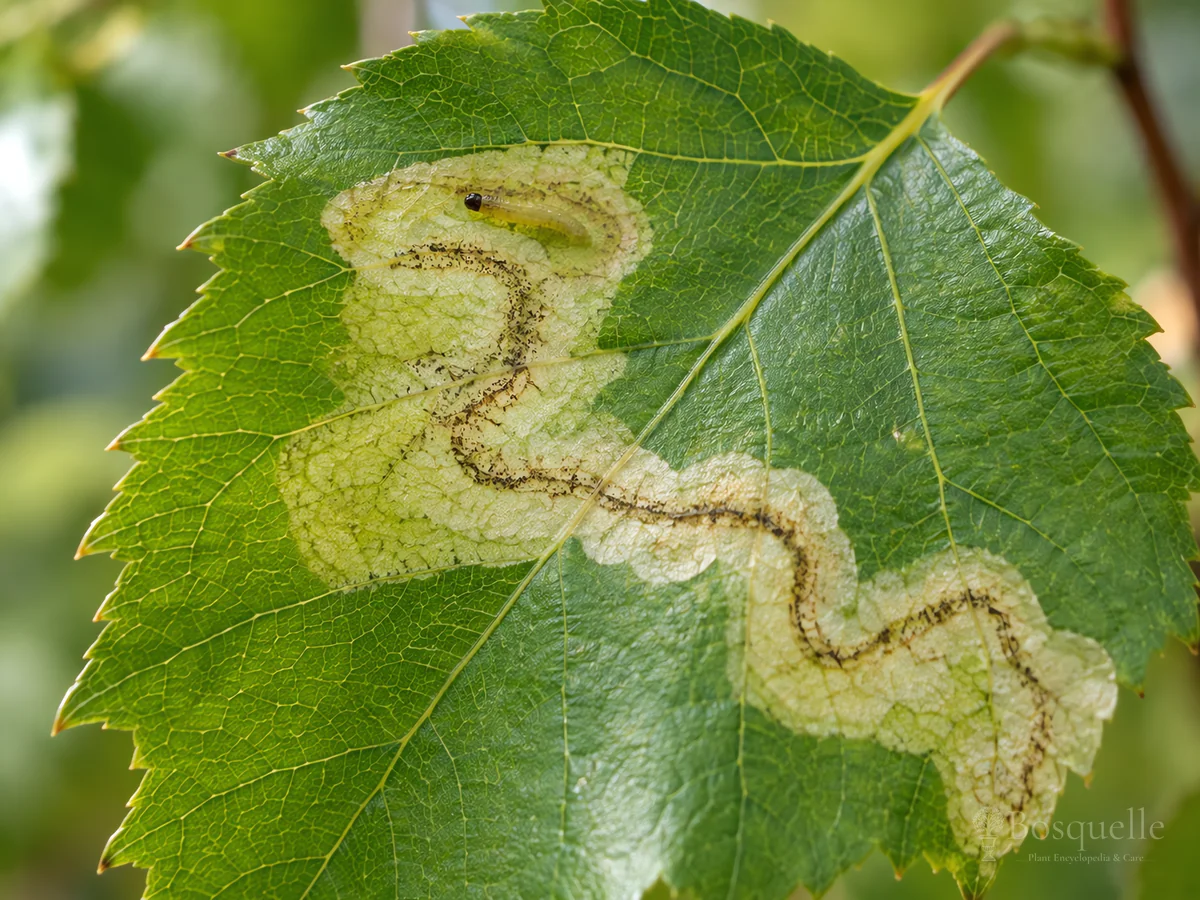
- Dusky birch sawfly — an S-shaped group on a birch leaf edge.
- Fire blight — scorched, wilted shoots after bloom, not brown lace from chewing.
FAQ
Do they eat the pears or cherries?
No. They chew the upper leaf. Heavy leaf loss can still shrink fruit that season because the tree has less green to work with. The maggot inside a fruit is a different pest.
Do pear sawflies sting?
No. The adult looks like a small black wasp and does not sting. The larva chews leaves. It does not live in houseplant mix.
Will wood ashes or dust kill them?
They dry out easily, which is why a hose works. Throwing ash or road dust on a fruit tree is not the method. Wipe or hose, then a labeled soap if you still see larvae.
Will they come back next year?
They overwinter in the soil and often run two generations. A loud August does not lock in the same year next time, but watch June and late summer anyway.
Related pests



Related diseases




Updated: Reviewed by Bosquelle Editors