
A blackened shoot bent like a shepherd's crook is fire blight. Cut well below the blight on a dry day, then bag or burn the wood, because a bottle will not rewind a shoot that is already black. Streptomycin only protects open flowers.
People name it for the scorched look. Then the real name: fire blight, Erwinia amylovora. It is a bacterium of apple, pear, crabapple, and a few other rose-family plants, not a leaf-spot fungus and not a dry wilt from thirst. In a warm wet bloom, bees and rain move sticky ooze from last year's cankers onto the flowers, the bacteria run down the spur, and the tip hooks while the brown or black leaves hang on. Pear shoots often go black; apple leaves often go brown. The same canker that oozed this spring will still be in the bark next year if you leave it.
Cut well below the blight in dry weather, then get the wood off the property
The finish is a saw on a dry day, not a July bottle. Walk the tree as soon as you see a hooked, hanging shoot, because the bacteria move ahead of the black bark while the wood is still growing. In the growing season, cut at least eight to twelve inches below the lowest discolored bark, into two-year wood if the limb can spare it, and twelve to fifteen if the strike is running fast on a young pear or Gala. In late winter, when the tree is dormant and the bacteria are quieter, you can come in closer, four to eight inches below a canker whose margin you can see. Wipe the blades with 70 percent rubbing alcohol, or a 10 percent bleach mix, between cuts if you are not sure you stayed in healthy wood, then rinse and oil if you used bleach so the steel does not rust. Do not shape the tree in the same pass, because a heading cut that invites succulent shoots is another door, and a dirty blade will walk the blight down the scaffold.
Get the wood off the property. Bag it for trash, burn it where the town allows, or bury it, because a pile under the pear still oozes in the next warm rain. Do not toss clippings as you walk. Pull suckers at the graft so blight cannot drop into a susceptible rootstock. Skip the heavy nitrogen that makes long, watery shoots, and keep the sprinkler off the flowers, because wet bloom is how this bacterium multiplies. If strikes are so many that you would strip the canopy, wait until dormancy to finish the cleanup, because a hard summer prune on an older tree grows more tender wood and spreads ooze on the tools.
- Confirm. A wilted tip hooked like a shepherd's crook, with brown or black leaves still hanging, is this bacterium. Amber or creamy droplets after rain, or reddish-brown sapwood under a sunken canker, close the check. Olive velvety spots, or a dry wilt with dropping leaves and no ooze, are different jobs.
- Cut on a dry day, well below the blight, into wood that still looks healthy. Come in closer in late winter on a canker you can see. Disinfect the blades if a cut might have hit ooze.
- Remove the wood the same day. Bag, burn, or bury it. Do not leave it under the tree, and do not drop it in a cold backyard compost heap.
- Walk it again after the next warm rain, and again at leaf drop, because a canker you cannot see this week will ooze next spring.
How do I get rid of fire blight?
Cut well below each blighted shoot on a dry day, then bag, burn, or bury the wood. A spray will not rewind a shoot that is already black. Streptomycin only protects open flowers.
How far below the blight should I cut?
In the growing season, at least eight to twelve inches below the lowest discolored bark, farther on a young tree, into two-year wood if the limb can spare it. In late winter, four to eight inches below a canker you can see is enough, because the bacteria are not running as fast.
A young tree with blight in the trunk will not outgrow it
A few hooked shoots on an older apple that still leafs out, and whose trunk bark is still sound, can be cut and lived with, because mature wood walls the bacteria off more slowly than a whip. Act when the blight has reached the trunk or a major scaffold you cannot spare, when a young tree is loading up after bloom, or when the bark at the graft union is sunken and wet, because rootstock blight girdles from below and the top will not save it. Pull that tree and the stump, then plant something less eager, such as Liberty or Haralson if you still want an apple, rather than another Bartlett or Gala on a highly susceptible dwarfing stock. Bradford and other Callery pears can still take fire blight when the bloom stays wet, so do not treat that name as a promise. A cotoneaster hedge that is mostly dead stems can be cut to about six inches in late winter and allowed to break again, which is a hedge reset, not a fruit-tree method.
Will fire blight kill my apple tree?
A few strikes on an older tree that still leafs out usually will not, if you cut them out. A young tree, or blight that has reached the trunk or the graft union, can die in a season. Pull that tree and the stump so the cankers are not still oozing onto the next bloom.
A spray will not rewind a shoot that is already black
A labeled product can keep bacteria out of this year's open flowers. It does not green up a crook that is already hanging. If last year's blight was bad and the forecast for bloom is warm and wet, a copper at silver tip to green tip, and no later than half-inch green, lowers the load on the bark. Copper on young leaves and petals can russet fruit, so stop before the flowers are showy. Streptomycin is a bloom shield on trees named on the label, used while flowers are open, then stopped when fruit is visible, with the harvest wait printed on that bottle, often fifty days. Do not put it on actively oozing shoots, and do not use it as a summer rescue, because that does not stop a canker and it selects for bacteria the antibiotic no longer kills. Ohio backyard advice skips the antibiotic and leans on pruning and a less susceptible tree, which is the practical call for one pear in a lawn: the useful job is still the saw. Do not spray insecticide while bees are in the bloom, even though bees can carry ooze, because you still need those bees for fruit.
Does streptomycin get rid of fire blight?
No. It can keep bacteria out of open flowers in warm wet bloom if the tree is on the label. It does not save a blackened shoot or a canker. Do not spray oozing shoots, and do not use it as a July rescue.
A shepherd's crook with hanging leaves is fire blight
Look at this year's tips about a week after bloom, and again after a hailstorm. The useful picture is a shoot that wilted from the end, bent over, with leaves that browned or blackened along the midrib and then hung instead of dropping. Flowers go water-soaked, then brown or black, and they stay stuck in the cluster. On a humid day you may see sticky droplets, pale at first and amber as they dry, on the spur, the fruit, or the edge of a canker. Peel back bark at a sunken, cracked patch: the sapwood is reddish brown. Infected fruit stay firm, turn brown or black, may ooze, and dry into mummies that cling. The same tree can look scorched on one side and green on the other, because the bacteria follow the wood they entered, not the whole canopy at once.
| Where you see it | What it is | Try this |
|---|---|---|
| Wilted shoot hooked like a shepherd's crook; brown or black leaves hanging on; amber ooze after rain | Fire blight | Cut well below on a dry day, then get the wood off the property |
| Olive-green velvety spots on the leaf, then corky fruit | Apple scab | See apple scab — not this crook |
| Bright orange-yellow spots, often with a red border | Cedar-apple rust | See cedar-apple rust — not this bacterium |
| Wilted tips after a dry spell, leaves dropping, no ooze, no flower start | Drought or winter injury | Water and wait — do not strip the tree as if it were blight |
| Sunken dead wood without a scorched hanging cluster | Fungal canker | See Botryosphaeria canker — a shorter cut, a different fungus |
| Late-summer brown leaf edges on oak or elm, tree leafs out in spring | Bacterial leaf scorch | See bacterial leaf scorch — not a pear crook |
| Hard black spindle on plum or cherry wood | Black knot | See black knot — not this hanging shoot |
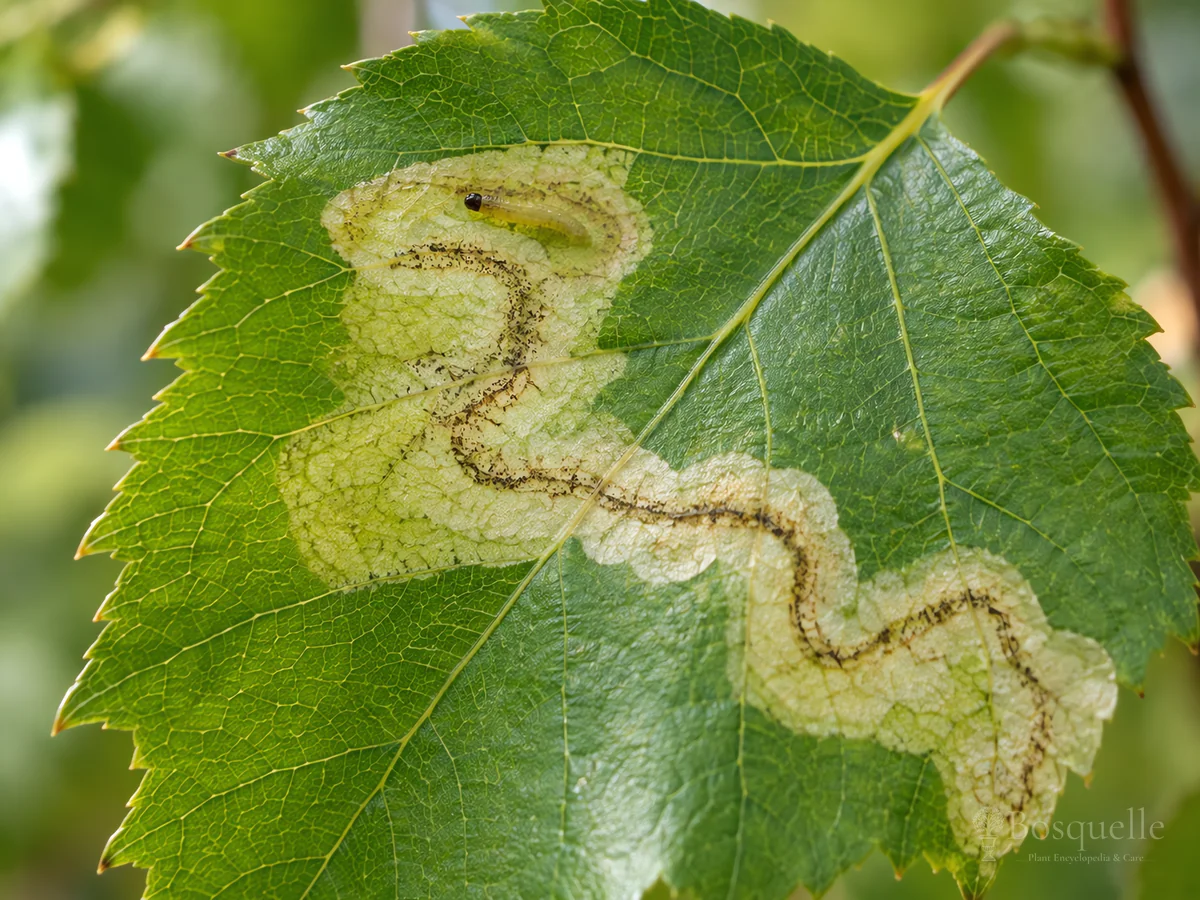
| Skeletonized pear leaves, green shoot still standing | Pear sawfly | See pear sawfly — a chew, not a blight |
What does fire blight look like?
A wilted shoot hooked like a shepherd's crook, with brown or black leaves still hanging. Flowers and fruit in that cluster stay stuck. After rain you may see amber or creamy ooze, and the sapwood under a canker is reddish brown.
Olive spots, orange rust, and a dry wilt without ooze are not this bacterium
Olive-green velvety spots that turn corky on the fruit are apple scab. That fungus waits in last year's leaves. Do not run that rake-and-green-tip calendar here. Bright orange-yellow spots that need a juniper nearby are cedar-apple rust. Do not cut galls off a redcedar for this crook.
A wilted tip after a dry week, with leaves that drop and no sticky droplets, is often thirst or a winter-injured root, not fire blight. A shepherd's crook by itself only says the shoot ran out of water. Look for ooze and a start in the flower cluster before you cut twelve inches into healthy wood. Sunken dead limbs without the scorched hanging leaves are often a fungal canker such as Botryosphaeria canker and dieback. Late-summer leaf-edge brown on oak or elm is bacterial leaf scorch, a different bacterium in different trees. A hard black spindle on plum or cherry is black knot. Skeletonized pear leaves with a green tip still standing are pear sawfly, not this blight.
Related reading
- Apple scab — olive-green velvety spots and corky fruit, not a hooked black shoot.
- Cedar-apple rust — orange leaf spots that need a juniper, not this bacterium.
- Botryosphaeria canker and dieback — sunken fungal canker and wilt, not a scorched hanging cluster.
- Bacterial leaf scorch — late-summer leaf-edge brown on oak and elm, not a pear crook.
- Black knot — a hard black spindle on plum or cherry wood.
- Pear sawfly — skeletonized leaves, not fire blight.
- How to grow pear — pear care. Keep nitrogen modest so new shoots are not a wet, easy target, and inspect bloom after warm rain.
FAQ
Can I eat apples from a tree with fire blight?
Yes, if the fruit itself is sound. The bacterium is not a food-poison for people. Skip fruit that is shriveled, oozing, or brown-black, and wait out the label's harvest interval if you sprayed.
Can I compost fire blight prunings?
Do not drop them in a cold backyard heap. Cankers and mummies can still ooze. Bag them for trash, burn where the town allows, or bury them. A hot municipal pile is not what most home compost is.
Will bleach or vinegar on the tree cure fire blight?
No. Bleach or rubbing alcohol is a dip for the pruners, not a bark drench that kills bacteria inside the wood. Vinegar on the tree is not a control.
Should I prune in summer or wait until winter?
Cut a few new strikes in dry weather as soon as you see them, well below the blight, so they do not run into the trunk. If the tree is covered with strikes, wait until dormancy to finish, because a hard summer prune grows more tender wood and moves ooze on the tools.
Why does fire blight come back the next spring?
Bacteria spend winter at the edge of cankers and in mummies. Warm wet bloom brings the ooze back out, and bees and rain move it onto new flowers. Walk the dormant tree for sunken bark, and cut those cankers before the flowers open.
Is a shepherd's crook always fire blight?
No. Any shoot that runs out of water can hook. Look for hanging scorched leaves, a start in the flower cluster, and ooze or reddish sapwood before you treat it as this bacterium. A dry wilt with dropping leaves is often drought.
Should I spray insecticide during bloom to stop the bees?
No. Bees can carry ooze, but they also set the fruit. Keep insecticide off the open flowers. The control during bloom is a labeled bloom shield on a tree that needs it, plus cutting strikes after petal fall on a dry day.
Related diseases




Related pests



Updated: Reviewed by Bosquelle Editors