
Feel a pale swelling on the leaf. Cut a suspect bulb across. Brown rings or arcs, and no maggot, are this nematode. Dig that clump and the daffodils within about three feet. Bag them. Do not compost them.
People still call it narcissus eelworm. Then the real name: stem and bulb nematode, Ditylenchus dipsaci. It is a microscopic worm, not an insect and not a maggot. It feeds inside daffodil leaves, stems, and bulbs. You will not see it on the soil. A spray on the foliage will not reach it. Inner scales go brown in rings. Roots stay clean. A patch of twisted, yellow plants spreads a little farther each year.
- Feel the leaf. Raised pale swellings, called spickels, confirm the job on foliage.
- Cut the bulb across. Brown rings with no maggot confirm the job inside.
- Throw the bulbs away. Do not compost them. Leave that bed without host bulbs for three years.
Throw out the infested bulbs
There is no home spray that kills nematodes already inside a daffodil. The job is done when the infested bulbs are in the trash, not in the compost pile, and not back in the same hole.
- Mark the patch while the leaves are still up. A circle of stunted, twisted, or late plants is the usual pattern. It widens a little each spring.
- Feel a leaf between finger and thumb. Pale yellowish swellings on the underside, the margin, or the flower-stem keel are spickels. They show best before bloom.
- Cut a suspect bulb across. Brown rings or arcs in the inner scales, often starting at the neck and working down, confirm this nematode. There is no maggot.
- Dig the infested clump and the apparently healthy host bulbs within about three feet. Nematodes crawl that far in a season. Bag bulbs and foliage. Put them in household trash. Do not compost them.
- Wash tools, trays, and boots before you work a clean bed. Do not move that soil. Plant only firm, sound stock next, in a different bed.
Fail if you pull only the worst clump, compost the waste, or replant a daffodil in the same hole this fall.
How do I get rid of narcissus eelworm?
Dig the infested clump and the host bulbs within about three feet. Bag bulbs and foliage. Put them in the trash. Do not compost them. Plant the next daffodils in a different bed.
Feel the leaf, then cut the bulb across
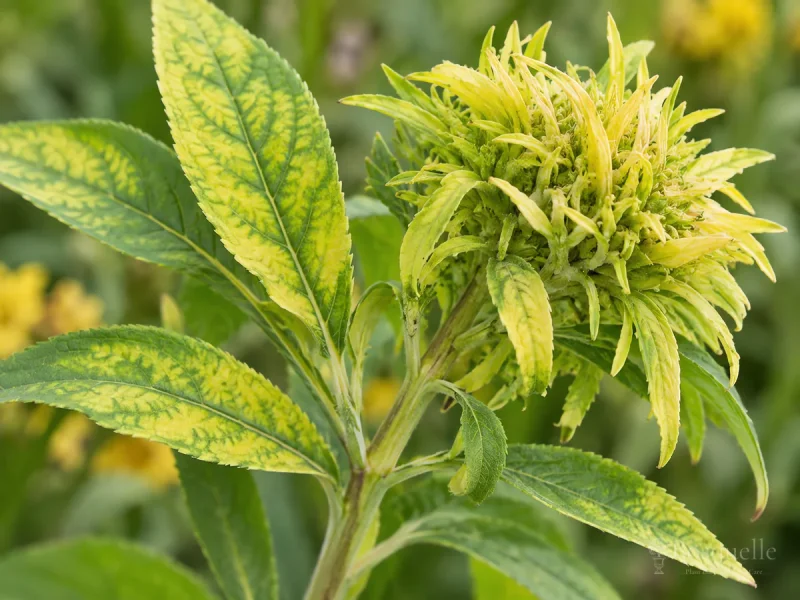
Spickels are small, pale, raised patches. Run the leaf between finger and thumb before the flowers open. You can often feel them before you see them. Later they may join into twisted, yellow, or brown tissue. Flowers come late, or they do not come. In a row, the damage sits in a patch, not on every plant at once.
The bulb is the second check. Inner scales are hit harder than the outer ones. Cut across: brown rings or arcs in the concentric tissue. Cut lengthwise if you need to: the brown often runs down from the neck. A drying bulb may push pinhead blobs of off-white wool from the basal plate. That wool is dormant nematodes. It can wait years, then wake when it gets wet. Bag it with the bulb. Roots are not the feeding site, so do not hunt knots on the roots for this pest.
| Where you see it | What it is | Try this |
|---|---|---|
| Pale raised swellings on the leaf; feel them before bloom | Spickels from this nematode | Mark the clump. Cut a bulb across |
| Brown rings or arcs in a cut bulb; no maggot | Stem and bulb nematode | Dig the patch. Bag it. Do not compost |
| Off-white wool at the basal plate on a drying bulb | Dormant nematodes | Bag the bulb. Do not shake dust into a clean crate |
| One plump maggot and a hollow center | Narcissus bulb fly | See narcissus bulb fly — not this nematode |
| Uniform reddish-brown mush from the basal plate | Basal rot, a Fusarium fungus | See bulb rot — not brown rings |
| Pearly mites with brown legs under the scales | Bulb mites | See bulb mites — not this nematode |
What do narcissus eelworm symptoms look like?
Pale raised swellings on the leaves, called spickels, and brown rings or arcs when you cut the bulb across. There is no maggot. Flowers may be late or missing.
A maggot or a mushy base is a different problem
One plump, creamy maggot in a hollow daffodil, with muddy frass in the center, is narcissus bulb fly. That insect leaves no brown rings. See narcissus bulb fly for that maggot. The check for this nematode is rings and spickels, then discard.
Uniform reddish-brown rot that starts at the basal plate and moves up, often with poor roots and no spickels, is basal rot. Many daffodils that simply fail to come up in the second year are that fungus, not this worm. See bulb rot and crown rot. Do not dip a basal-rot bulb in hot water. That spreads the fungus.
Slow, pearly mites with brown legs under the scales are bulb mites. They sit in clusters you can see with a lens. Round knots on washed roots are root-knot nematode, a different worm. Fine yellow streaks the length of a new leaf, with no swellings, are more often a virus. See mosaic viruses. Foul mush with no rings is bacterial soft rot.
Is a maggot in my daffodil this nematode?
No. One plump maggot in a hollow bulb is narcissus bulb fly. Brown rings with no maggot are this nematode.
A spray will not reach nematodes inside the bulb
The nematode lives in the leaf and in the scales. Insecticidal soap, horticultural oil, and neem have to touch the pest. They do not. Home garden labels do not offer a nematicide for this job. Washington State lists no chemical for stem and bulb nematode on daffodil. Skip the brand aisle.
Beneficial nematodes from a bottle are a different animal. Those products target fungus-gnat larvae and some soil grubs. They do not rewind a daffodil whose inner scales already show brown rings. A kitchen dish-soap mix on the leaves is not a method. Dig, bag, and move the next planting.
Will insecticidal soap or neem kill it?
No. The nematode sits inside the leaf and the bulb. Soap, oil, and neem have to touch it. Home labels do not offer a nematicide for this job. Discard is the control.
Hot water is a commercial tank, not a kitchen pot
Commercial growers kill this nematode in dormant bulbs by holding water at about 111°F for three or four hours in a thermostatic tank. Too cool, and the nematodes live. Too hot, and the bulb cooks. The next year's flowers and leaves can come out twisted even when the temperature is right. A basal-rot bulb in that tank spreads the fungus to the rest of the lot.
A stockpot on the stove cannot hold 111°F for hours. Do not guess. Soft bulbs, bulbs with clear brown rings, and a crate you can replace go in the trash. A lightly infested named cultivar you cannot replace belongs with a commercial hot- water service, then in clean soil, not back in the old hole. Fail if the plan is a kitchen soak and a hope that the thermometer stayed put.
Can I save a bulb with hot water?
Only a lightly infested prized bulb belongs in a commercial tank that holds about 111°F for three or four hours. A kitchen pot cannot do that. Soft or clearly ringed bulbs go in the trash.
Keep daffodils off that bed for three years
Nematodes in moist soil fade when they have no host, often within a year or two. Dry dormant wool in bulb waste lasts much longer. Home guidance is to leave the bed without host bulbs for at least three years. Pacific Northwest commercial advice goes to five. Pull volunteer daffodils and weeds that can carry the pest. Do not slide that soil onto a clean bed on a shovel or a boot.
While you wait, skip tulip, hyacinth, onion, garlic, and phlox in that same patch. The narcissus race can breed slowly in some of those plants. Plant the next daffodils in a different bed, from firm, clean stock. Wash the crates and tools that touched the old bulbs.
How long before I replant daffodils there?
Wait at least three years without host bulbs. Pull volunteers and weeds. Five years is safer on a commercial rotation. Plant the next stock in a different bed.
Related reading
- Narcissus bulb fly — one plump maggot in a hollow daffodil, not brown rings.
- Bulb mites — pearly mites with brown legs under the scales, not a microscopic nematode.
- Root-knot nematode — round knots on washed roots. This pest does not feed on daffodil roots.
- Bulb rot — uniform reddish-brown mush from the basal plate, not concentric rings.
- Crown rot — a wet brown base without spickels or rings.
- Mosaic viruses — yellow streaks without raised swellings.
FAQ
Should I compost infested bulbs?
No. A home pile does not stay hot enough. Dormant nematode wool in dry bulb waste can wait years, then wake when it gets wet. Bag the bulbs and put them in household trash.
Will beneficial nematodes kill this?
No. Those bottles target fungus-gnat larvae and some soil grubs. They do not kill stem and bulb nematode inside daffodil scales.
Do narcissus eelworms bite people or pets?
No. This is a plant-parasitic nematode. It feeds inside leaves and bulbs. You do not treat a person or a pet for this pest.
What is the white wool on the basal plate?
Pinhead blobs of off-white wool are dormant nematodes. They can dry, sit for years, and start again when moistened. Bag that bulb. Do not dust a clean crate with it.
Are onion and garlic the same pest?
They can share this nematode species, but races differ. The narcissus race may breed slowly in onion or garlic. That is a reason to keep those crops off an infested daffodil bed, not a second how-to.
Is basal rot the same as eelworm?
No. Basal rot is a Fusarium fungus. It makes a uniform reddish-brown mush from the basal plate. Eelworm makes concentric brown rings. Many missing daffodils in year two are basal rot.
Related pests





Related diseases



Updated: Reviewed by Bosquelle Editors