
Split a club-shaped swelling on a flowering dogwood twig. If orange maggots sit inside, prune those twigs and bag them before fall. A contact spray will not reach the maggot already inside.
Dogwood clubgall midge is a tiny gall midge. Some gardeners still say club-gall midge. The adult is an orange, mosquito-like fly about a sixteenth of an inch long. It lays into new leaf buds in spring. The maggot spends the summer inside the swelling. One generation a year. It feeds on flowering dogwood.
- Split a club. Orange maggots confirm this insect.
- Prune galled twigs in summer, before the maggots drop.
- A spray in July will not finish maggots sealed in the gall.
Prune the club galls before the maggots drop
The maggot lives in a cavity inside the swelling. Soap, oil, and most foliar mixes sit on the bark and miss it. Cut each galled twig a few inches below the club while the larvae are still inside. Bag the cuttings. Do not compost them. Do not leave them under the tree. Flies still come out of a pile on the ground.
Do this in summer, before September and October, when the maggots chew small round holes and drop into the soil. If the clubs already have those holes, the insects have left. That prune is looks, not a kill. Wipe the pruners if you move to the next dogwood, because anthracnose hitchhikes on tools. A few clubs on a large tree can wait. A young flowering dogwood with dozens of dead tips needs this cut this season, not a bottle from the driveway.
Does insecticidal soap or horticultural oil kill dogwood clubgall midge?
Not once the maggot is inside the gall. Soap and oil sit on the bark. Prune, or time a labelled contact spray to bud break. A kitchen mix on the canopy is leftover.
Can I compost infested dogwood clippings?
No. Bag them or send them with yard waste that will not sit under the tree. Flies still emerge from a home pile. Cut before the maggots drop in fall.
Split a club: orange maggots sit in the swelling
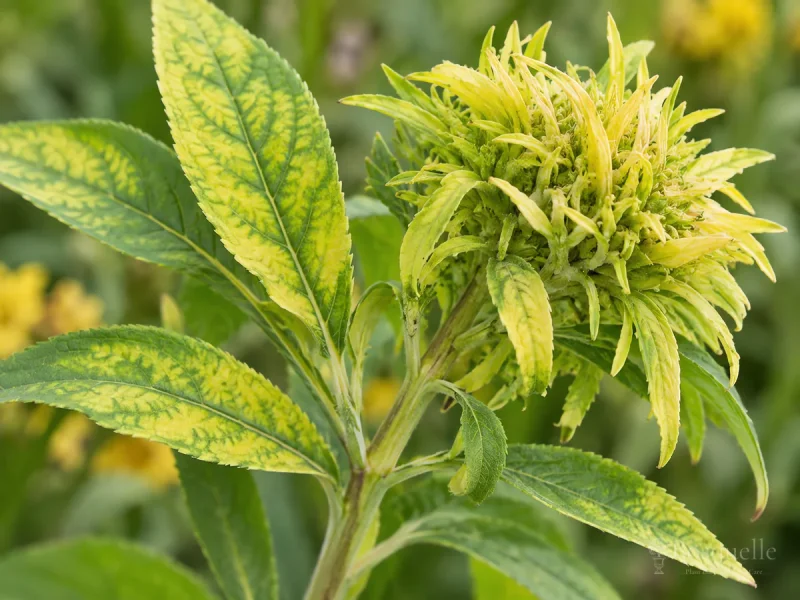
The first clue is often a wilted or deformed pair of leaves beyond a spindle on the new shoot. The swelling is half an inch to an inch long, green to red, at the tip or along the stem. It can sit on a leaf stalk. Split it with a thumbnail or clippers. One to many yellow-orange, legless maggots sit in a central channel. That is this insect. The twig beyond the gall often dies. In fall, a round hole in the side means the maggots already dropped to the soil.
Adults are easy to miss. They are tiny orange flies that show in late spring as the leaf buds open. They do not bite. They lay into the most vigorous tips, where the nodes sit close in the bud. You do not need to see a fly. The club and the orange maggot are the confirm.
| Where you see it | What it is | Try this |
|---|---|---|
| Club or spindle on a twig tip; orange maggots when you split it | Dogwood clubgall midge | Prune and bag |
| Wilted pair of leaves beyond a swelling; no sawdust holes along the twig | Same insect | Confirm, then prune before fall |
| Round holes in the gall in September or October | Maggots already dropped | That prune window has closed |
| Fine boring dust on the trunk; wounded or knotty bark | Dogwood borer leftover | See that pest — not a twig club |
| One twig wilts; the tip girdles and drops; holes along the stem | Dogwood twig borer leftover | See that pest — no spindle |
| Leaves chewed; white-powder worms on the foliage | Dogwood sawfly leftover | See that pest — not a gall |
| Dark leaf spots, blighted hanging leaves, dieback from the foliage | Anthracnose leftover | Not this fly |
| Woody lump at the soil line, not on a twig tip | Crown gall leftover | Different problem; skip this bottle |
Frass on the trunk and chewed leaves are not this fly
Fine boring dust, wet bark, and knotty wounds on the trunk are dogwood borer. There is no club on the twig tip. See dogwood borer. Do not run a trunk spray here as the clubgall method.
One twig that wilts, a girdled tip that drops, and a line of sawdust holes along the stem are dogwood twig borer. See dogwood twig borer. A girdled tip is not a club. Chewed leaves and caterpillar-like larvae with a white powder coat are dogwood sawfly. See dogwood sawfly. Do not run that soap rinse as this midge’s finish.
Dark spots that blight whole leaves, then move into twigs, are dogwood anthracnose, a fungus. See dogwood anthracnose. Tiny purple-border spots on flower bracts are spot anthracnose on dogwood. A woody tumor at the soil line is crown gall, a bacterium, not a twig club. Other leaf galls are a different leftover. See galls. Do not treat those as this dogwood club.
Is this the same as crown gall?
No. Crown gall is a bacterial tumor, usually at the soil line. This midge makes a club on a twig tip. Split the swelling. Orange maggots confirm this fly.
A few clubs can wait; missing flower buds cannot
One light year looks odd and a mature flowering dogwood usually lives. The tree does not need a bottle because you found six clubs on a large specimen. Heavy years thin the new tips, cut bloom, and can stunt a young tree. Those galled tips often fail to set a flower bud. A valued young tree with dozens of dead terminals needs those twigs cut and bagged this summer, then a hard look at next spring’s bud-break window.
This insect usually does not kill a landscape dogwood. It deforms tips, and the tree can skip bloom. If the whole crown is declining, look for borer frass on the trunk or anthracnose on the leaves before you treat the clubs as the whole story.
Will dogwood clubgall midge kill my tree?
A few clubs are looks. Repeated heavy years can stunt a young flowering dogwood and cut bloom. Split a gall before you treat borer or anthracnose as this insect.
A spray after the gall forms will miss the maggot
Once the swelling has formed, a pesticide cannot reach the maggots inside. The only short window a contact product can hit is as the leaf buds begin to open, before eggs go in. If you missed that week, prune. Do not fog the canopy in July because the clubs are already hard.
A labelled product for this pest on dogwood is last, and only on a young tree you mean to keep after a heavy year. Spray in the evening. Skip the brand aisle as the whole plan. Fail if one summer pass is the method and the maggots are already sealed in the gall.
The galls have holes. Is it too late to prune?
Those maggots have already dropped to the soil. Prune is then looks. Watch bud break next spring if last year was heavy. Do not spray a hard gall in October.
Confirm the maggot, then prune or wait
- Confirm. Split a club. Orange maggots in the cavity. No maggot and no spindle means a different leftover.
- Prune galled twigs a few inches below the swelling, in summer, before the maggots drop. Bag the cuttings. Do not compost them.
- Wait on a few clubs on a large, still-dense tree. Do not wait on a young tree that is losing its tips and its bloom.
- Spray last. Contact only as buds break, and only if last year’s galls were heavy. A foliar mix will not kill maggots already inside.
- Skip the bottle if the clubs already have round exit holes. Those maggots are in the soil. Fail if the finish is a spray and you never split a gall.
Related reading
- Dogwood borer — frass and wounded bark on the trunk, not a twig club.
- Dogwood twig borer — wilted individual twigs and girdled tips, no spindle.
- Dogwood sawfly — chewed leaves, not a gall.
- Dogwood anthracnose — blighted leaves and twig dieback from a fungus.
- Scale insects — still bumps on stems, including oystershell on dogwood wood.
FAQ
Do dogwood clubgall midges bite people?
No. This fly lays into flowering dogwood buds. It does not suck blood. No-see-ums are a different midge.
Do they live on houseplants?
No. This fly feeds on flowering dogwood outdoors. A swelling on a houseplant stem is a different leftover.
Related pests





Related diseases



Updated: Reviewed by Bosquelle Editors