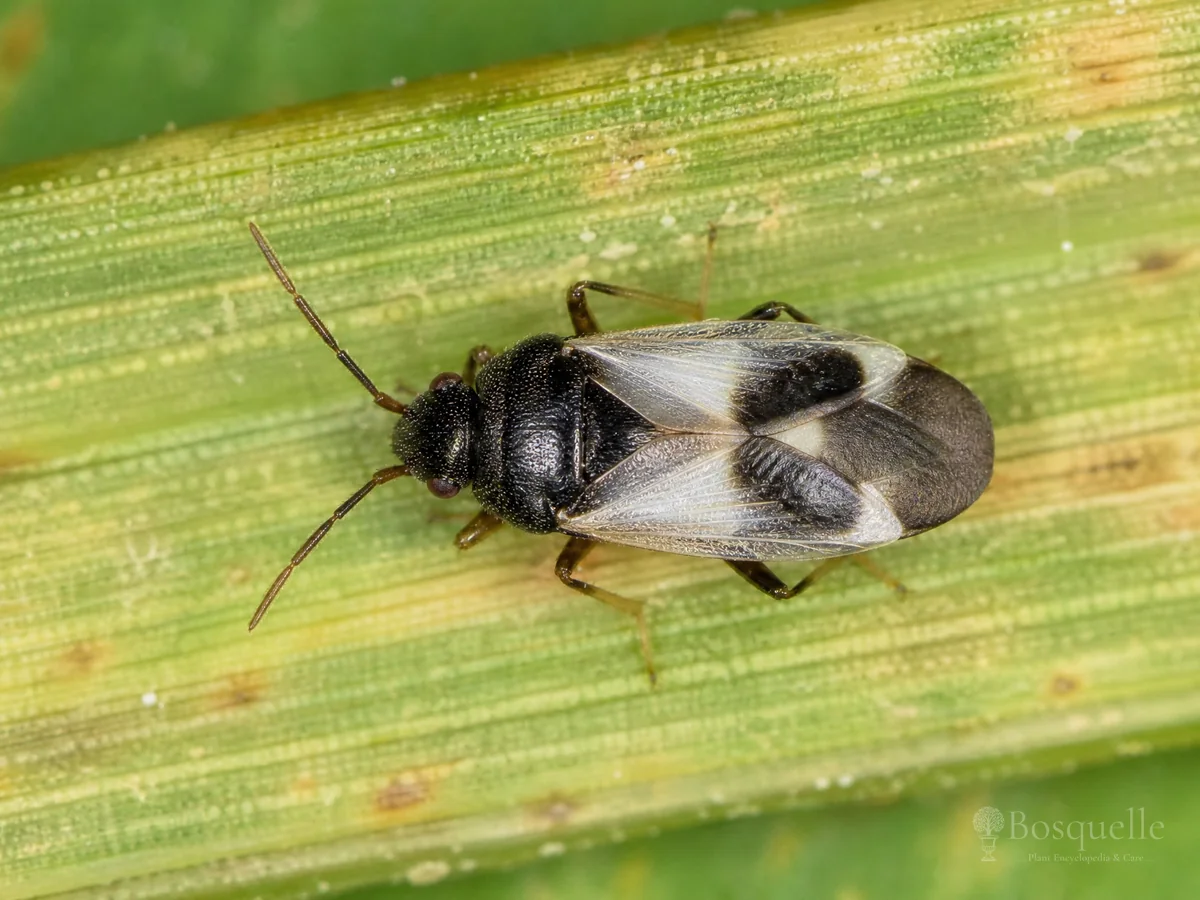
Sink a coffee can at the yellow-green edge of the patch. If small black-and-white bugs float, water the lawn and cut the thatch. Do not spray the dead brown in the middle. Those bugs have already moved onto the living grass. They are chinch bugs. Gardeners also say southern chinch bug on St. Augustinegrass, or hairy chinch bug on a northern cool-season lawn, once. The job is the same.
Chinch bugs are tiny true bugs that suck sap from turf and leave a toxin in the blade. The grass yellows, then browns, in hot, dry sun next to a driveway or sidewalk. A healthy lawn often lives with a few. A thick thatch and heavy nitrogen make the patch spread.
- Sink a can at the yellow-green edge. Count what floats.
- Water deeply. Ease nitrogen. Cut thatch over a half inch.
- A spray on dead brown misses the feeding front.
Sink a coffee can at the yellow-green edge, then water
The bugs feed at the line where yellow grass still meets green, not in the dead center. Cut both ends from a metal coffee can, or use a short piece of pipe. Twist it two to three inches into the soil at that edge. Fill it with water and keep the grass under water for five to ten minutes. Stir the thatch. Adults and orange nymphs float.
A few bugs do not call for a bottle. Extension counts around three bugs in a six-inch can, or about twenty per square foot, as the point to treat. Repeat the can in several spots, because they cluster. If nothing floats and the screwdriver goes in hard, water first and wait a day. Drought often greens up. Chinch damage does not. Fail if you soak the dead brown in the middle and skip the green edge.
Orange nymphs, then a black adult with white wings
The adult is about a fifth of an inch long, black, with white wings that fold flat and a dark triangle on the back. Some adults have short wings. Young nymphs are bright orange or red with a white band across the back. They darken as they grow. They are nymphs, not maggots. People search “larvae” and mean these orange crawlers in the thatch.
Part the grass at the yellow-green edge and look at the crowns. On a hot afternoon you may see adults running on the sidewalk. They hide in thatch in full sun. St. Augustinegrass takes the southern insect hardest. Kentucky bluegrass, fine fescue, perennial ryegrass, zoysiagrass, and bermudagrass can show the same yellow patches in heat.
| Where you see it | What it is | Try this |
|---|---|---|
| Yellow-green edge; orange nymphs or black adults with white wings float in a can | Chinch bug | Water; cut thatch; treat that edge if counts are high |
| Large even brown; blades curl; footprints stay; greens up after a deep watering | Drought | Water; skip the bottle |
| Turf peels like a carpet; spongy; birds digging | White grub leftover | See Japanese beetle for the adult — not this can test |
| Blades chewed short; silk in the thatch; moths zigzag at dusk | Sod webworm leftover | Not this sap feeder |
| Same size, huge bulging eyes, hunting in the same thatch | Big-eyed bug | Leave it; it eats chinch bugs |
| Night chew at the soil line on garden stems, not a spreading lawn halo | Cutworm leftover | See cutworm |
What do chinch bug nymphs look like?
They are nymphs, not maggots. Young ones are bright orange or red with a white band. They darken to brown, then black, before they grow wings. Look in the thatch at the yellow-green edge.
Drought greens up. Grubs peel. This patch stays rooted.
Walk the brown. If footprints stay and a screwdriver fights you, the soil is dry. Water deeply. If the grass greens in a day, that was drought, not this insect. Chinch patches stay yellow at the edge even after you water, because the toxin is already in the blade.
Grab a handful of brown turf. If it peels up like a carpet and you find C-shaped white grubs in the soil, that is a root feeder, not this can test. Adult Japanese beetles chew leaves on other plants. See Japanese beetle for that beetle. Do not run a grub calendar on this yellow halo.
Sod webworms chew blades short and leave silk and green pellets in the thatch. Tan moths fly low at dusk. That is not sap feeding. If stems in the vegetable row are cut at night, see cutworm. A big-eyed bug has eyes that bulge past the sides of the head. Leave it. It hunts this insect. Do not spray it as a chinch bug.
How do I know if I have chinch bugs or drought?
Water deeply once. Drought often greens up within a day. Chinch patches stay yellow at the edge. Sink a coffee can at that yellow-green line. If black-and-white adults or orange nymphs float, it is this insect.
Cut the thatch and ease the nitrogen
Thatch thicker than about a half inch is a dry, warm house for this insect. It also stops a spray from reaching the crowns. Power-rake or dethatch when the grass is growing. Core aeration helps a packed lawn take water. Mow at the height your grass wants, not scalped. Tall blades shade the soil and keep it cooler.
Water deeply and less often so roots go down. Light daily sprinkles keep the surface hot and dry between showers, which this insect likes. Heavy nitrogen makes lush, thick thatch and faster breeding. Use the low end of the rate for your grass. Moisture also favors a fungus that naturally infects these bugs. A wet week often does more than a bottle.
Is Floratam still resistant?
Floratam St. Augustinegrass was bred to resist this insect. In parts of Florida that resistance has broken. Do not count on the cultivar name as a finish. Water, thatch, and the can test still decide the day.
A spray on dead brown misses the feeding front
If the can test hits a damaging count, treat the yellow-green edge and a belt of still-green grass around it. The dead middle is empty. Mow, then irrigate before a labeled lawn product so it reaches the thatch. Follow that label. Many labels then say to keep off the mower for a day.
Skip the brand aisle as the first move. Southern populations have resisted common lawn pyrethroids and some systemic products. If last year’s bottle failed, do not repeat the same active ingredient. Rotate to a different mode of action, or stop and ask your county extension office. Insecticidal soap and a dish-soap mix kill only bugs they wet. They do not finish eggs in the thatch, and a heavy soap drench can burn turf. Soap is a flush test, not a season plan.
Does dish soap kill chinch bugs?
A soap mix can kill bugs it actually wets, and a soap flush can drive them up so you can count them. It does not finish eggs in the thatch. Too much detergent burns turf. Water, thatch, and a labeled product on the edge are the finish when counts are high.
Confirm with a can, then water or treat the edge
- Find the yellow-green edge, not the dead center. Part the grass. Look for orange nymphs and black adults with white wings.
- Sink a coffee can two to three inches into that edge. Fill with water. Wait five to ten minutes. Count what floats. Repeat in a few spots.
- If nothing floats and the soil is hard, water deeply and wait. Drought often greens up. If turf peels like a carpet, stop and see Japanese beetle for the grub leftover.
- If they float, water deeply, ease nitrogen, and cut thatch over a half inch. Mow at a proper height.
- If counts stay high (about twenty per square foot, or a few bugs per can), treat that edge with a product labeled for chinch bugs on your grass. Do not soak the dead middle. Do not repeat last year’s failed chemistry.
- Skip dish soap as the finish. A soap flush can bring bugs up so you can see them. It does not rewind eggs. Skip diatomaceous earth on a lawn you still have to water.
Related reading
- Japanese beetle — adults chew leaves; the white grub leftover peels turf like a carpet, which this can test does not.
- Cutworm — night chew at the soil line on garden stems, not a spreading yellow halo in hot turf.
- Leafhopper — stipple on garden leaves, not this thatch-dwelling lawn bug.
FAQ
Do chinch bugs bite people or pets?
They feed on grass, not on people. They do not spread disease. A rare poke can itch like a small plant-bug puncture. They are not a poison risk to dogs or cats. The lawn is the job.
Will the grass come back?
Yellow blades that still have a living crown can green after you stop the feeding and water. Grass killed to the crown needs seed or sod. If half the patch is bare and the crowns are gone, stop treating dead turf and plan to replace that piece.
Do chinch bugs die in winter?
Cold winters knock numbers down. Adults hide in thatch and along lawn edges and start again in spring. In warm southern lawns they can stay active much of the year and run several generations.
Are these the same as false chinch bugs?
No. False chinch bugs are a different insect on vegetables and weeds. This lawn insect lives in turf thatch. Do not run a vegetable-row spray on the sod.
Do beneficial nematodes finish a lawn outbreak?
Skip nematodes as the plan for this insect. Keep the lawn watered so the natural fungus in wet thatch can work. Big-eyed bugs and ants already hunt here. Do not wipe them out with a blanket spray.
Does diatomaceous earth work on chinch bugs?
Skip the powder. It only works dry, and this insect lives in a lawn you still need to water. Use the can test, then water and thatch.
Related pests





Related diseases



Updated: Reviewed by Bosquelle Editors