Pull a carrot. Narrow rusty tunnels wander the lower half of the root. Cream maggots sit in rusty mush. Cover the seedbed from the day you sow, and bury the edges. Do not cover last year's carrot ground. A spray will not kill the maggot already in the root.
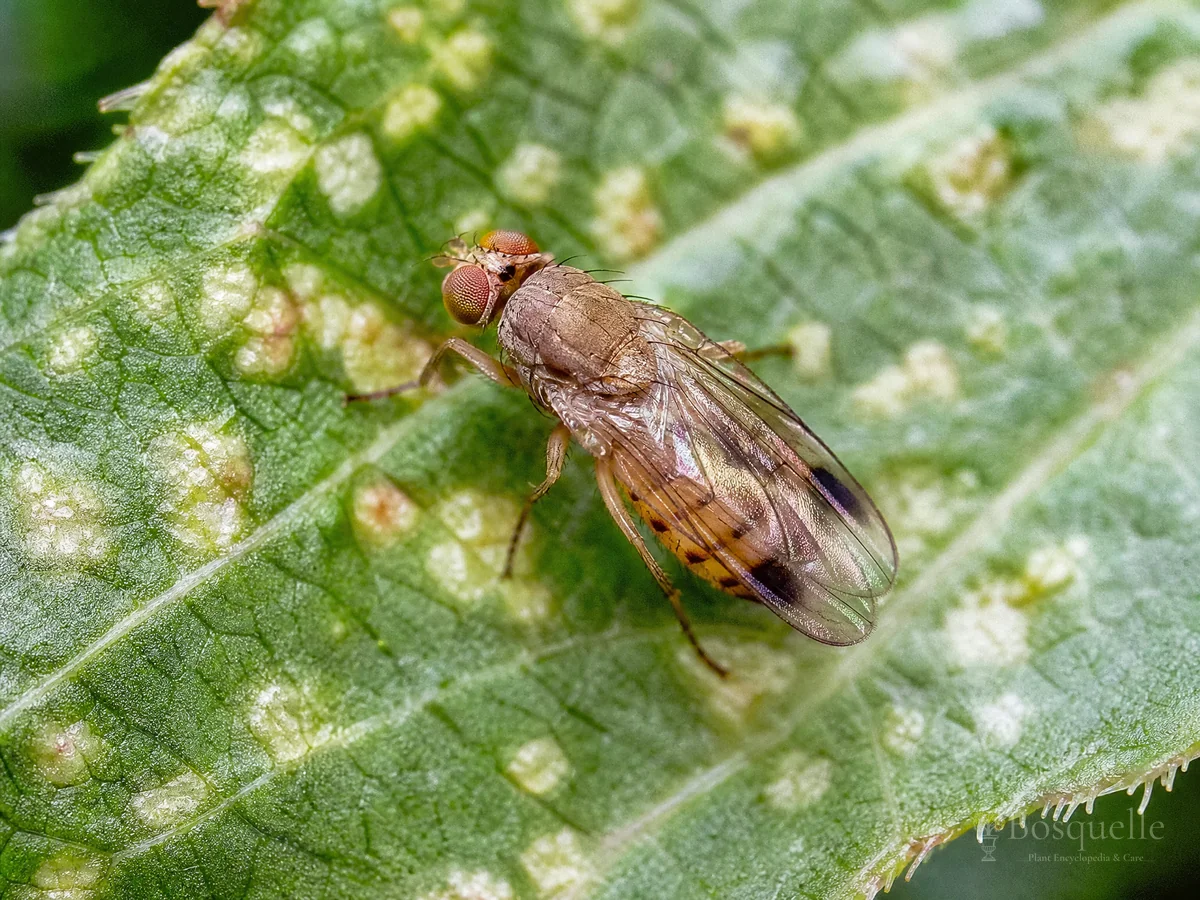
Carrot rust fly is a small black fly with an orange head and yellow legs. Gardeners often call it carrot fly. The adult does not chew the carrot. The maggot does. Tops can look fine while the root is already tunneled. Parsnip, celery, and parsley in the same bed feed the same fly.
- Pull a carrot. Rusty winding tunnels in the lower half confirm it.
- Cover from sowing. Bury the edges so the fly cannot crawl under.
- A spray will not kill the maggot already in the root.
Cover the bed before the fly lays eggs
The fly lays eggs on the soil at the crown. Maggots hatch and enter the root. Once they are inside, you cannot spray them out. Stop the fly from landing, then harvest the row as a block.
- Confirm. Pull one carrot. Look for narrow winding tunnels in the lower two-thirds, filled with rusty mush, and a cream, legless maggot with no brown head.
- Cover at sowing. Floating row cover or insect netting goes on the same day as the seed, or as soon as seedlings show. Pin or bury the edges a couple of inches so the fly cannot crawl under. Leave the cover on until you harvest.
- Move the bed. Pupae overwinter in last year's carrot soil. Covering that same ground traps the flies that crawl out underneath. Fail if the fabric sits on last year's row.
- Sow thin. Bruised foliage and yanked seedlings release the carrot smell that draws the fly. Snip extras at the soil line instead of pulling them.
- Harvest the row as a block when roots are ready. Do not leave carrots in the ground over winter. Bag infested roots. Do not home-compost live maggots.
How do I get rid of carrot rust fly?
Cover the seedbed from sowing, bury the edges, and harvest the row as a block. Move off last year's carrot ground so pupae do not emerge under the fabric. A spray will not kill maggots already in the root.
Pull a carrot: rusty tunnels sit in the lower half
The first thing you notice is often nothing aboveground. Young plants can wilt or yellow if maggots prune the taproot early. Older tops can stay green. Pull a carrot. Surface tunnels ring the root with rusty brown scars. Cut it. Narrow winding galleries sit mostly in the lower half. The maggot is cream to yellow, stiff, about a third of an inch, and legless, with no head capsule. The rust-colored mush in the tunnels is frass. That is how the fly got its name.
The adult is about a quarter inch long, with a shiny black body, an orange head, yellow legs, and clear wings. It flies low, often under two feet. Females lay small white eggs on the soil at the crown. One to three generations a year is normal. The second generation in August and September does the most damage to carrots you meant to store. On parsnip the feeding often sits higher, on the shoulder. On carrot it sits lower.
| Where you see it | What it is | Try this |
|---|---|---|
| Lower two-thirds; rusty winding tunnels; cream maggot; no brown head | Carrot rust fly | Cover the next sowing; harvest this row as a block |
| Upper third; darker, partly open tunnel at the crown; grub with a reddish-brown head | Carrot weevil | See that insect — not this maggot |
| Larger, straighter, hollow holes through the root | Wireworm | See wireworm — not this fly |
| Cabbage or broccoli flags at noon; tunneled brassica root | Cabbage maggot | See cabbage maggot — not a carrot job |
| Tunnels gone mushy, water-soaked, foul | Bacterial soft rot | See that disease — peel or discard |
| Knobby galls on roots; no rusty mush | Root-knot nematode | See that pest — not a tunnel |
What does carrot rust fly look like?
The maggot is cream, stiff, and legless, about a third of an inch, with no brown head. Adults are small shiny black flies with an orange head and yellow legs. Damage is rusty winding tunnels in the lower half of the carrot.
Will carrot rust fly kill my plants?
Young seedlings can wilt and die if maggots prune the taproot. Older carrots usually keep their tops and still look fine aboveground. The crop loss is the tunneled root, not a dead bed.
A tunnel at the crown is a different insect
Carrot weevil chews the crown and the upper third of the root. The larva is a legless grub with a reddish-brown head, not a headless maggot. The tunnel is darker and often partly open after the grub leaves. See carrot weevil. Do not run a weevil trap calendar here.
Wireworms are hard, yellow click-beetle larvae. Holes are larger, straighter, and often hollow. See wireworm. Maggots in a cabbage root that flags at noon are a different fly — see cabbage maggot. Tunnels that turn mushy are rot moving in after the feeding; see bacterial soft rot. Knobby swellings without rusty frass are root-knot nematode.
Is this carrot weevil?
Weevil tunnels sit in the upper third and are darker and often partly open. The grub has a reddish-brown head. Rust fly tunnels are narrower, winding, and rusty, mostly in the lower half. See carrot weevil for that insect.
Sow after the first flight, or harvest before the second
In cold gardens, wait until early summer, after the first flight, often after mid-June, so the young roots miss those eggs. In mild gardens, sow in late winter or late summer. Harvesting the spring row before late August can skip the second generation. Carrots that sit into fall take the worst tunnels.
An early row next to a later sowing feeds the second flight. Keep later carrots farther away if you can. Ask a local extension desk when the first flies show in your county. Do not build a climate table from a national map. Queen Anne's lace and volunteer carrots at the fence still feed this fly, so pull those too.
When should I plant to avoid carrot rust fly?
In cold gardens, sow after the first flight, often after mid-June. In mild gardens, sow late winter or late summer. Harvest the spring row before the August flight if you can.
A spray will not kill the maggot in the root
The maggot feeds inside the carrot. A foliage spray does not reach it. Adults are tiny and do not linger after they lay. Skip the brand aisle. Commercial rows may use labeled products on adults. That is not the home plan after you already have tunnels. If you missed the cover this year, peel what you can eat, then cover the next sowing on clean ground. Fail if a bottle on the foliage is the whole plan after tunnels are already in the root.
Beneficial nematodes watered into the soil are sold for young larvae. They are not a rewind once the maggot is deep in the taproot, and they are not the first move. A complete cover on a clean bed still beats a soil drench.
Related reading
- Carrot weevil — darker tunnels in the upper third, and a grub with a brown head.
- Cabbage maggot — wilt at noon on brassicas, not a rusty carrot tunnel.
- Wireworm — larger, straighter holes in roots and tubers.
- Bacterial soft rot — mush after a tunnel or a bruise.
- How to grow carrots — a bed that can make a root worth covering.
- Planting carrots — sow thin so you do not bruise the row.
- Harvesting carrots — lift the row as a block, not one root at a time.
FAQ
Can I eat a carrot with rusty tunnels?
Yes, if you cut away every tunneled, rusty, soft, or foul piece. Firm orange flesh is fine. Discard a root that has gone mushy. Peel before you cook.
Will a three-foot fence stop carrot rust fly?
A low fence can reduce landings because the fly stays near the ground, but a complete cover is more reliable. Wind lifts the adults over a wall. Cover the bed.
Do beneficial nematodes kill carrot rust fly?
They are sold for young larvae in the soil. They will not rewind a maggot already deep in the taproot. Cover a clean bed first. Do not treat nematodes as the finish.
Do carrot rust flies bite people?
No. They are plant feeders. You do not spray a carrot bed because an adult sat on your sleeve.
Can I compost infested carrots?
No. Bag them or put them in the trash. Maggots and pupae can finish in a cool home pile and fly next spring. Do not leave culls at the edge of the bed.
Are Fly Away carrots immune?
No. Names like Fly Away, Resistafly, and Sytan are less attractive, not immune. Still cover the bed if this fly is already in your garden.
Will onions hide the carrots from the fly?
Some gardeners encircle carrots with onions or leeks. The evidence is mixed. Do not skip the cover because a companion row is in place.
Related pests

Related diseases





Updated: Reviewed by Bosquelle Editors