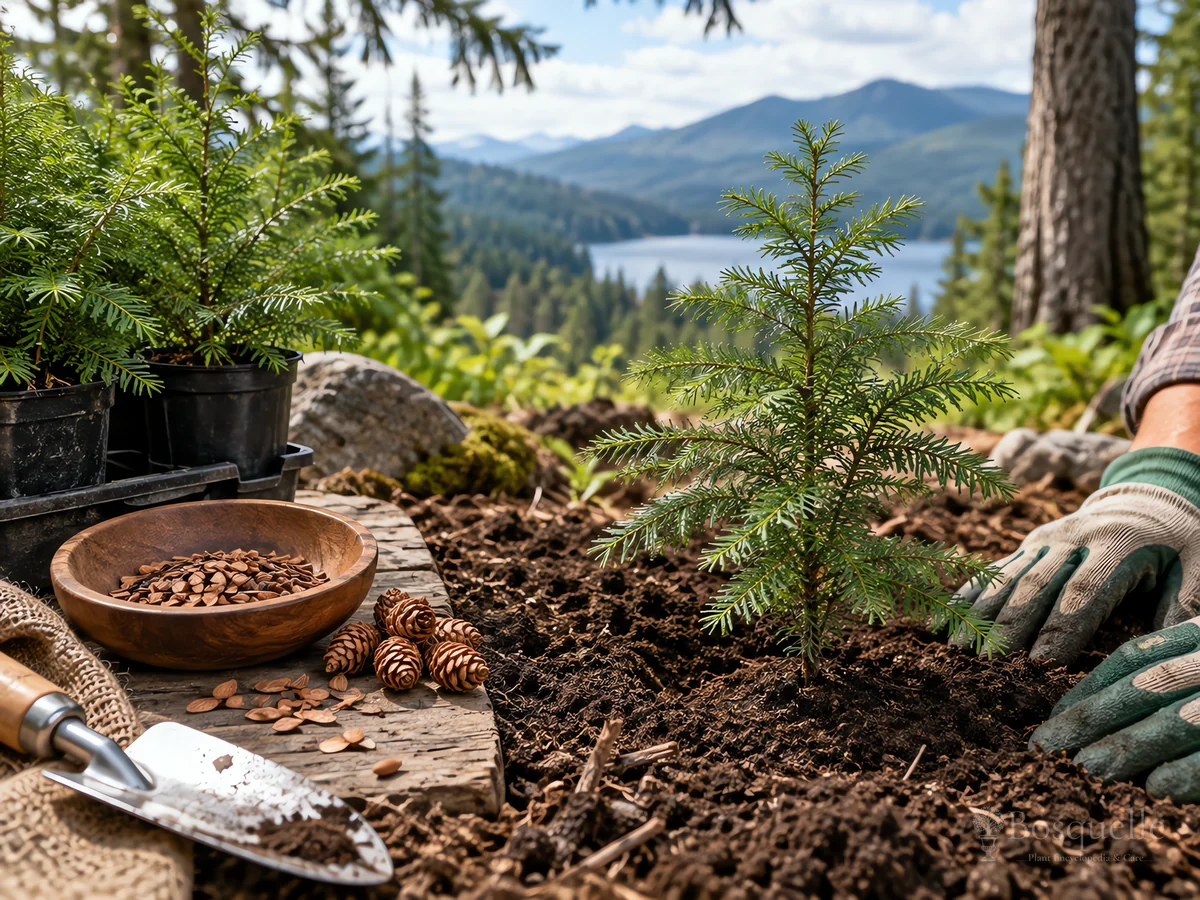
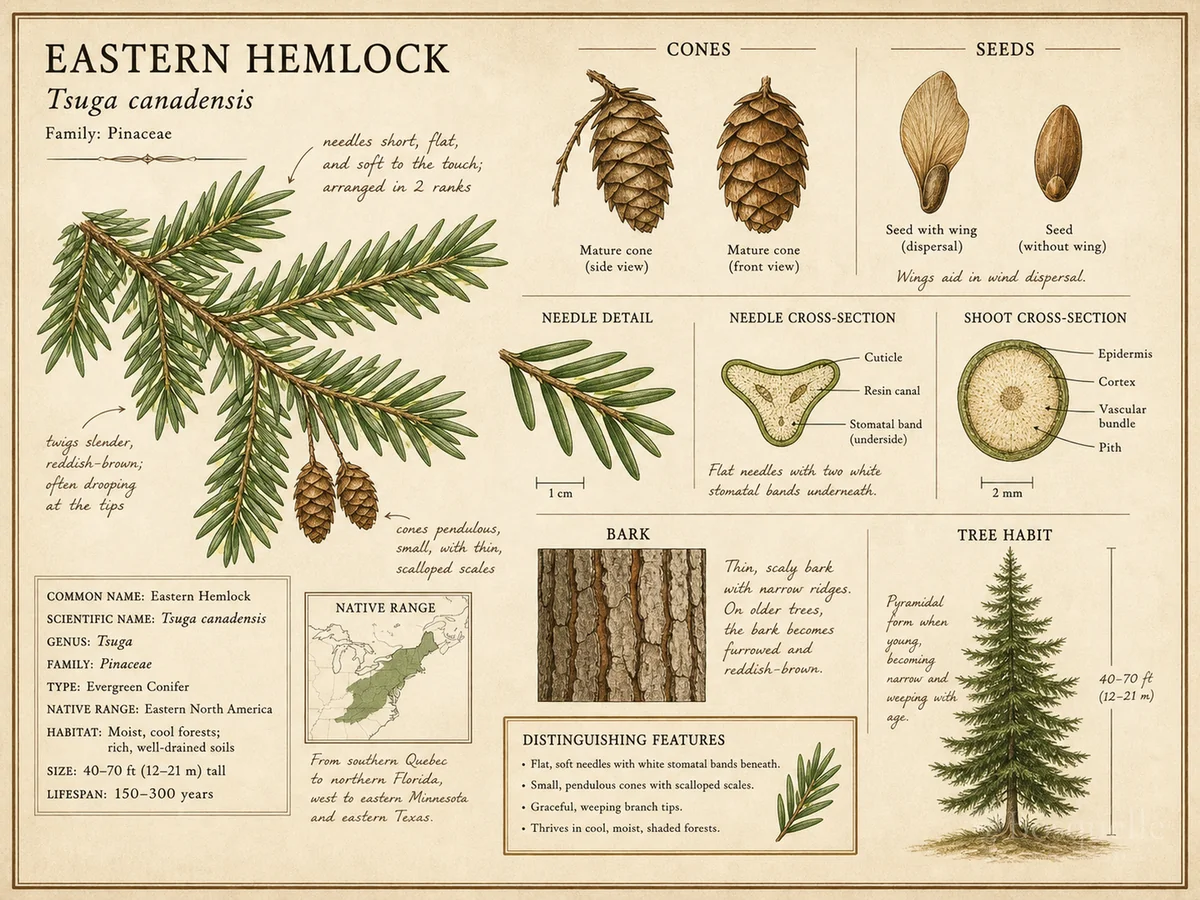
Plant a small balled-and-burlapped eastern hemlock with the root flare at the soil line, leave 24 to 60 feet for a specimen or 3 to 4 feet for a hedge, and water it through the first year.
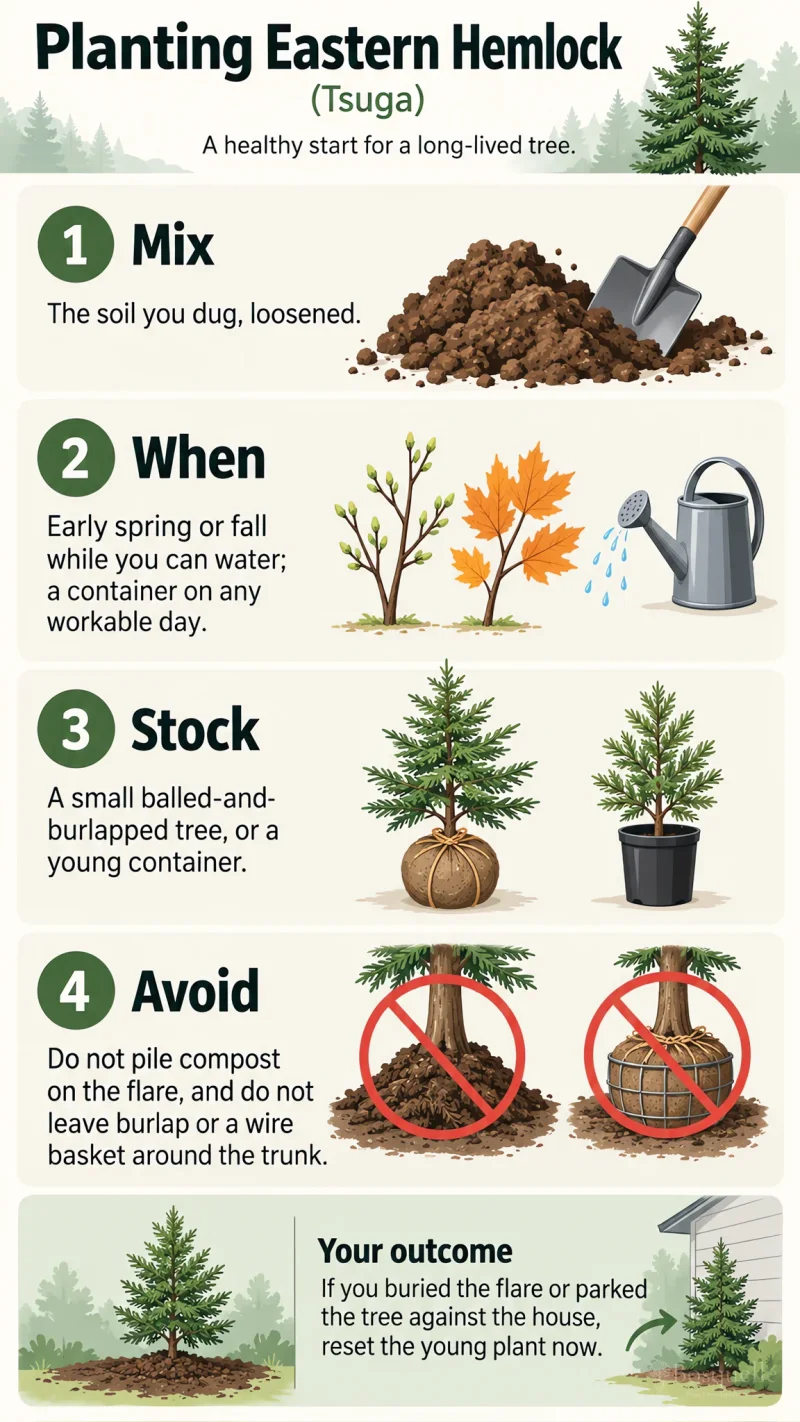
Plant a small balled-and-burlapped tree, with the flare at grade
| Factor | Recommended | Avoid |
|---|---|---|
| When | Early spring or fall while you can water; a container on any workable day | Do not plant in a midsummer drought you cannot soak |
| Stock | A small balled-and-burlapped tree, or a young container | Do not dig a large wild tree, and do not wait until the plant is already a 20-foot specimen |
| Hole | Two to three times as wide as the root ball, and no deeper, with the flare at or slightly above the soil | Do not bury the flare, and do not dig a tight, deep cup that holds water |
| Mix | The soil you dug, loosened | Do not pile compost on the flare, and do not leave burlap or a wire basket around the trunk |
eastern hemlock is sold as balled-and-burlapped stock because the roots are fibrous, and it moves well while it is still small. [1] Find the root flare before you dig, and set that flare at grade so the trunk does not sit in a well. [2] The tree transplants well when you keep the ball intact and the flare at the soil line. [3]
- Choose a day in early spring or fall when you can water. Slide a container plant on any workable day.
- Find the root flare by brushing soil off the top of the ball until the trunk widens.
- Dig a hole two to three times as wide as the ball, and no deeper, so the ball sits on undug soil.
- Set the flare level with the soil, or an inch or two high if the ground settles.
- Cut circling roots. Cut away burlap and a wire basket from the top of the ball so they do not girdle the trunk.
- Backfill with the soil you dug. Do not pile soil on the flare. Soak to the depth of the ball.
How deep do I plant an eastern hemlock?
No deeper than the root ball. The flare sits level with the soil, or a little high.
Leave 24 to 60 feet for a specimen, or 3 to 4 feet for a hedge, and water the first year
Leave 24 to 60 feet from buildings, wires, and other large trees if you want a specimen with its lower branches on the tree. [4] A hedge row can sit 3 to 4 feet apart, then it still needs the same flare at grade. A tree three feet from the foundation will hit the eaves, and cutting those lower limbs later leaves a bare trunk. Mulch two to three inches deep, keep it off the trunk, and water through the first year whenever a week passes without rain. After that, watering follows the grown-plant plan on How to Grow Eastern Hemlock.
- Measure 24 to 60 feet from the house, the driveway, and overhead wires for a specimen, or 3 to 4 feet between plants for a hedge.
- Mulch two to three inches deep, and keep the mulch off the trunk.
- Water the planting hole through the first year when rain fails, enough to soak the ball, then let it drain.
- Do not build a watering saucer that holds a puddle against the trunk.
How far apart should you plant eastern hemlock?
Leave 24 to 60 feet from buildings and other large trees for a specimen. A hedge can sit 3 to 4 feet apart.
If you buried the flare or parked the tree against the house, reset the young plant now.
FAQ
Should I plant eastern hemlock in spring or fall?
Early spring or fall while you can water. Skip a midsummer drought you cannot soak. A container plant can go in on any workable day.
Should I start from seed or buy a nursery tree?
Buy a small nursery tree if you want a landscape plant this decade. Seed is a separate start on Growing Eastern Hemlock From Seed.
Related guides

Recommended plants
References
- [1] Penn State Extension -
https://extension.psu.edu/the-state-tree-of-pennsylvania-eastern-hemlock - [2] Save Georgia's Hemlocks -
https://www.savegeorgiashemlocks.org/Downloads/Resources_page/Other_SGH_Instructions_&_Reference_Materials/SGH_Transplanting_a_Hemlock_2-7-23.pdf - [3] The Morton Arboretum -
https://mortonarb.org/plant-and-protect/trees-and-plants/eastern-hemlock/ - [4] NC State Extension -
https://plants.ces.ncsu.edu/plants/tsuga-canadensis/
This note is part of Tsuga Guides.
More planting notes by plant are gathered in Planting Guides.
Updated: Reviewed by Bosquelle Editors