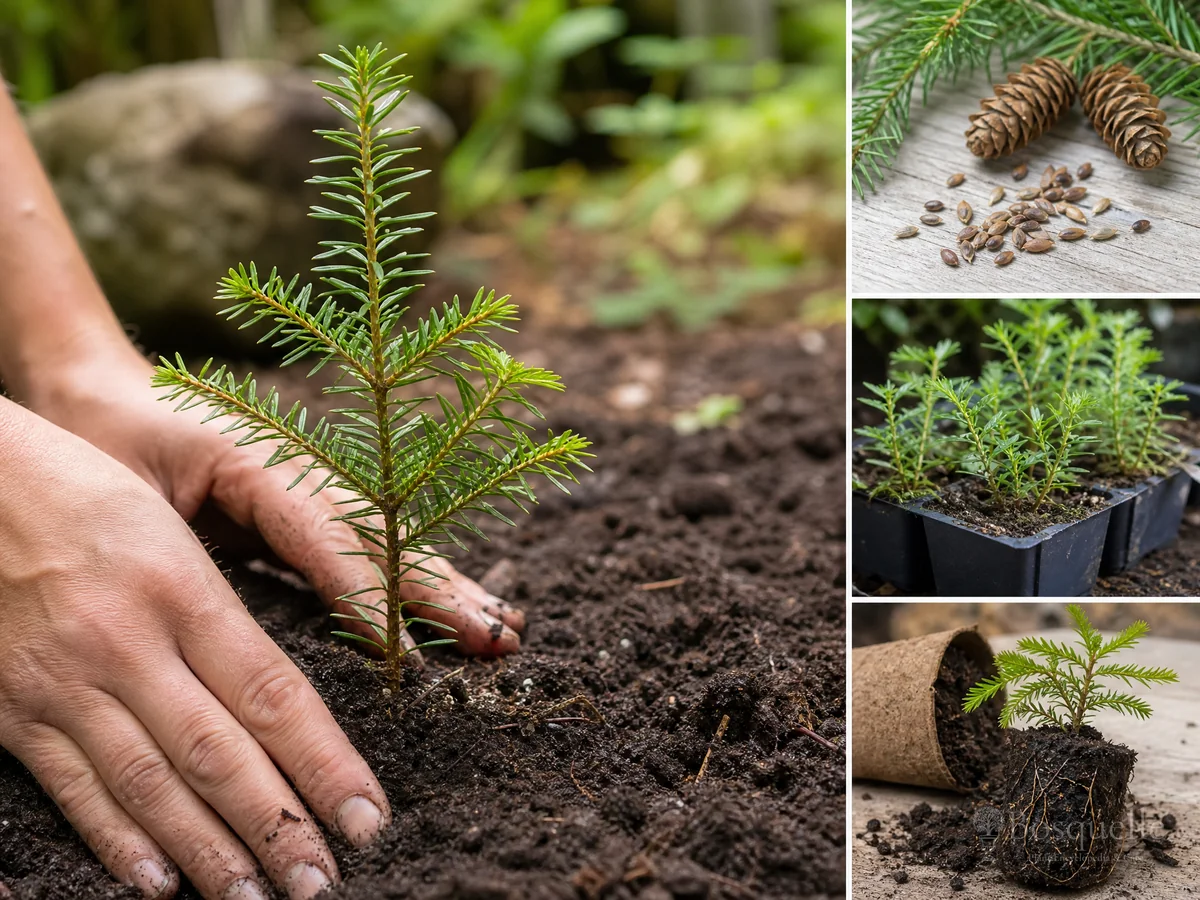
Start eastern hemlock from seed by collecting cones as they begin to open, giving the seed a cold, moist winter, then sowing it in a mix that drains and stays moist.
Collect cones as they open, then give the seed a cold, moist winter
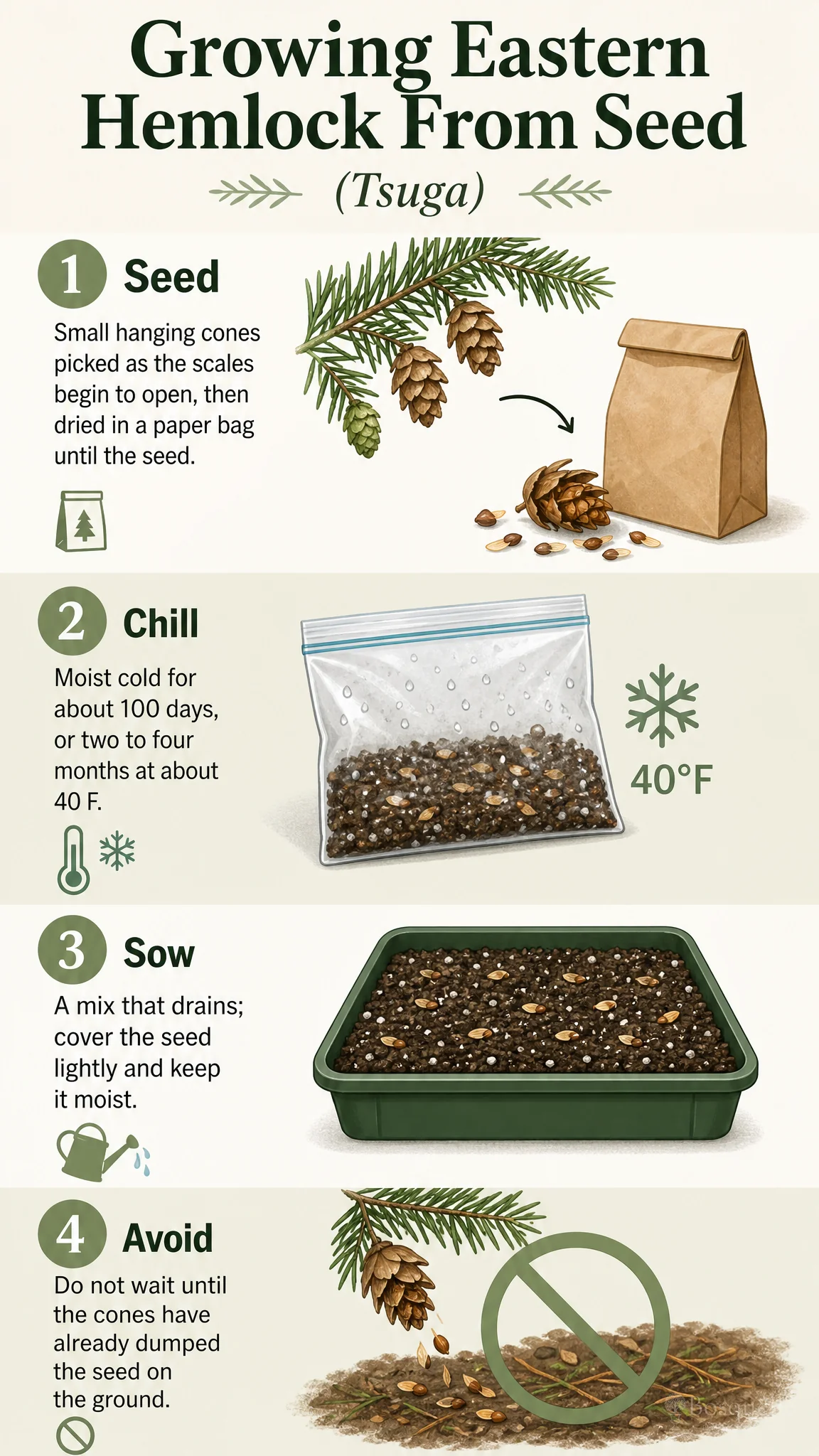
| Factor | Recommended | Avoid |
|---|---|---|
| Seed | Small hanging cones picked as the scales begin to open, then dried in a paper bag until the seed shakes free | Do not wait until the cones have already dumped the seed on the ground |
| Chill | Moist cold for about 100 days, or two to four months at about 40 F | Do not sow dry seed with no cold winter |
| Sow | A mix that drains; cover the seed lightly and keep it moist | Do not let the mix dry out, and do not leave the tray in standing water |
| When | Sow in fall outdoors, or after the chill in late winter under lights or in a cool greenhouse | Do not start a tray on a hot windowsill that cooks the mix |
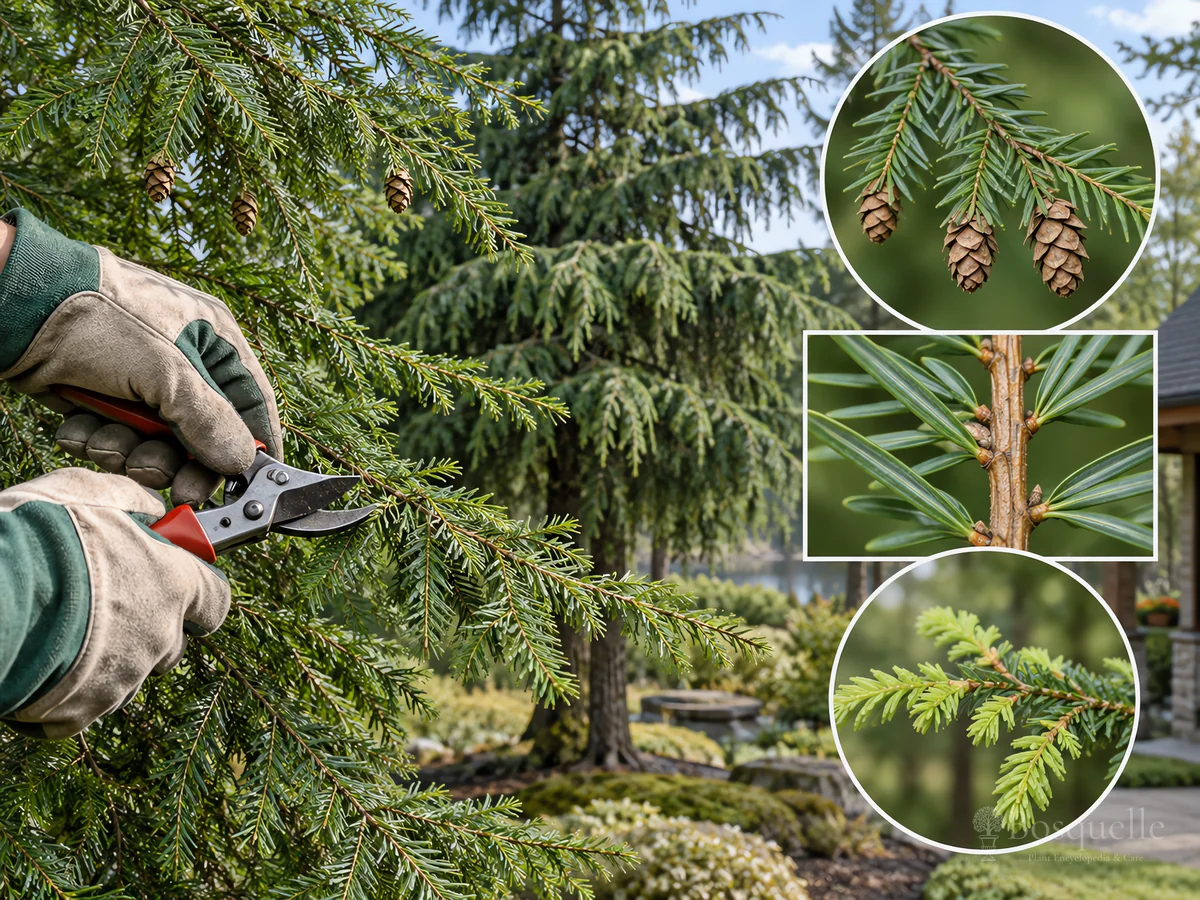
eastern hemlock is started from seed gathered as the cones begin to open, then kept moist and cold for about 100 days. [1] A two-to-four-month stay at about 40 F hastens germination, and you can sow in fall instead of running a refrigerator. [2] The hanging brown cones, about three-quarters of an inch to an inch long, are the ones to collect; they mature in one season. [3] Young seedlings need even moisture and a cool start, or they stall. [4]
- Pick small hanging cones as the scales begin to open, usually in fall.
- Dry them in a paper bag until you can shake out the seed.
- Keep the seed cold and moist for about 100 days, or two to four months at about 40 F, and rinse if mold shows.
- Sow in a mix that drains. Cover the seed lightly, water until the mix is moist, and keep it from drying until the seedlings show.
- Give the tray bright shade, not a hot south window that cooks the mix.
- Thin to one seedling per cell, then grow it on until you have a small tree you can plant.
Can I start eastern hemlock from seed?
Yes. Collect cones as they open, give the seed a cold, moist winter, then sow it in a mix that drains and stays moist.
Cuttings can root on young wood — seed is the home start
Named forms are sometimes started from cuttings of young wood, with the basal needles stripped and a rooting hormone on the cut. That is a humid-bench job, not a jar on the windowsill. For a species tree at home, seed or a nursery plant is the usual start. If you want a landscape tree this decade, buy a small balled-and-burlapped plant and set it as on Planting Eastern Hemlock. The grown-plant sun and water plan stays on How to Grow Eastern Hemlock.
- Take 4- to 6-inch cuttings of young wood in late fall or winter, from the outer part of the crown.
- Strip the needles from the lower inch, and wound the base lightly.
- Dip the base in a rooting hormone labeled for woody cuttings.
- Stick the cuttings in a mix that drains, keep them humid and out of hot sun, and wait several months before you tug.
Do cuttings of eastern hemlock root?
Young wood can root with hormone and a humid bench. Seed is the simpler home start for the species tree.
If the tray dries out before the seed sprouts, start a fresh lot and keep the mix moist through the cold winter.
FAQ
Can I collect my own seed?
Yes, from small hanging brown cones picked as the scales begin to open. Dry them in a paper bag, then shake out the seed.
Related guides


Recommended plants
References
- [1] NC State Extension -
https://plants.ces.ncsu.edu/plants/tsuga-canadensis/ - [2] Lady Bird Johnson Wildflower Center -
https://www.wildflower.org/plants/result.php?id_plant=tsca - [3] The Morton Arboretum -
https://mortonarb.org/plant-and-protect/trees-and-plants/eastern-hemlock/ - [4] Connecticut Agricultural Experiment Station -
https://portal.ct.gov/-/media/CAES/DOCUMENTS/Publications/Bulletins/b620pdf.pdf
This note is part of Tsuga Guides.
More notes on making another plant live in Propagating Guides.
Updated: Reviewed by Bosquelle Editors