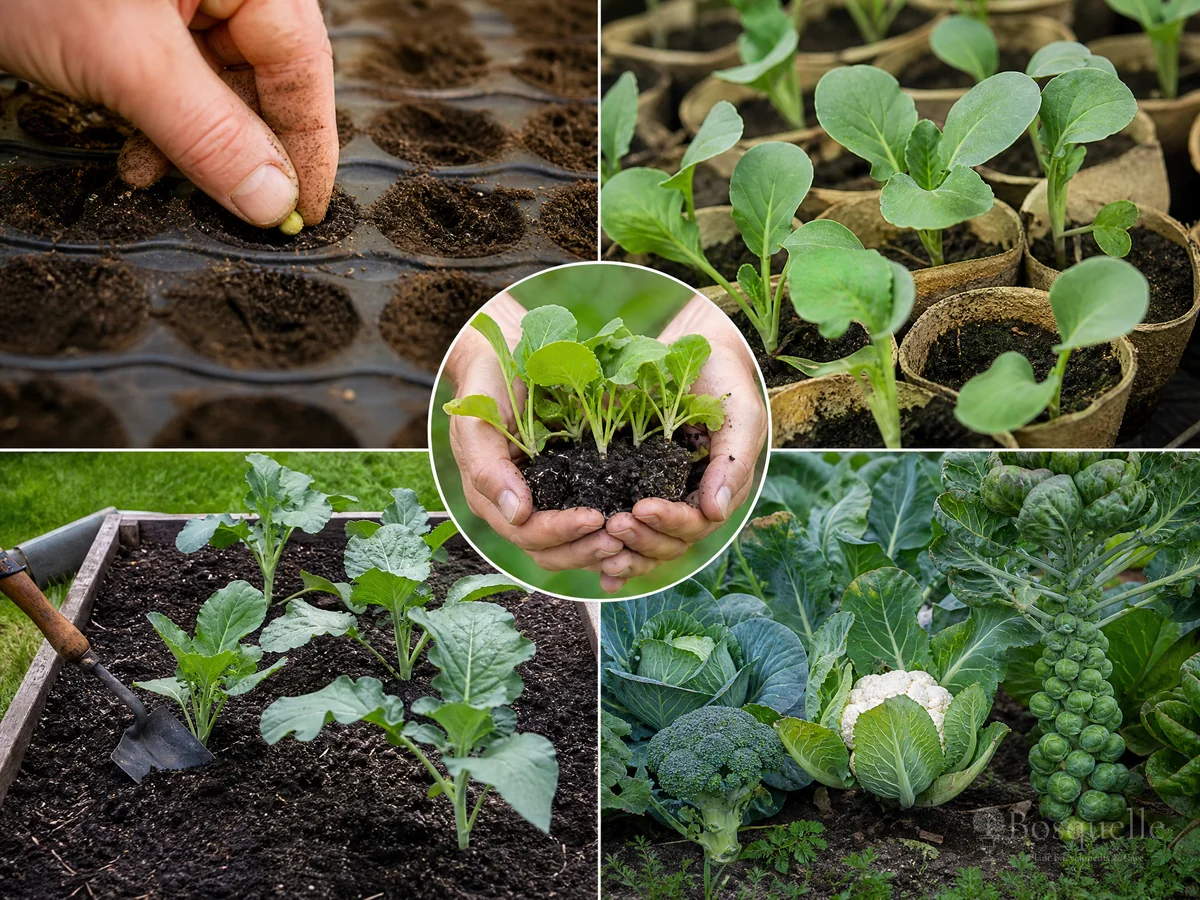
Get cabbage and other brassica transplants in the ground at the right time for spring or fall and they will have cool weather throughout head development. Timing matters more than almost anything else for a solid harvest.

Plant spring transplants 3–4 weeks before the last frost, fall transplants 10–12 weeks before the first frost
| Factor | Recommended | Avoid |
|---|---|---|
| Spring timing | Set transplants outdoors 3 to 4 weeks before your last frost date (hardened plants tolerate light frost) | Transplanting too late, so heads form in summer heat |
| Fall timing | Count 10 to 12 weeks back from your average first fall frost; that is your transplant date | Transplanting into heat above 80°F, which stalls growth |
| Transplant size | 4 to 6 true leaves, stocky stem, roots filling but not circling the cell | Leggy, root-bound seedlings that struggle to establish |
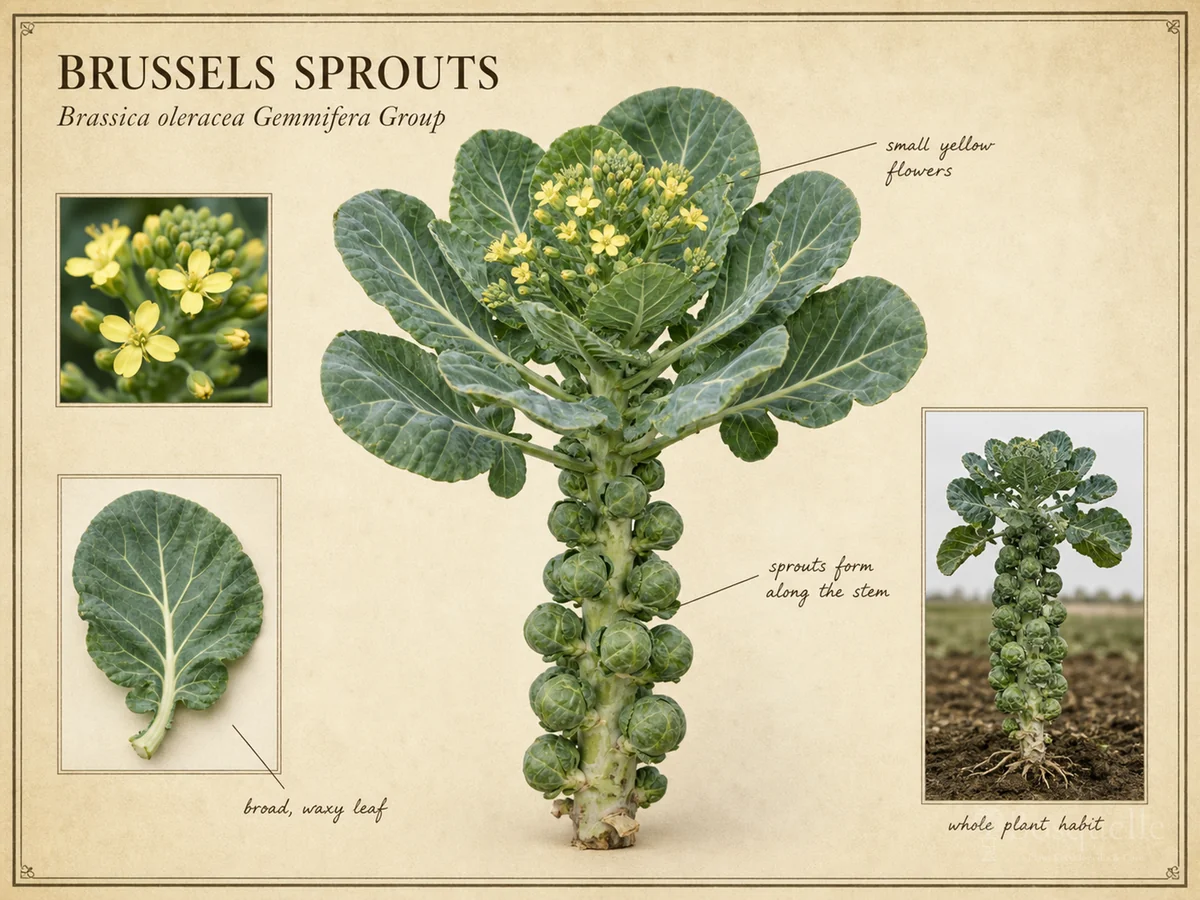
| Spacing | Cabbage and cauliflower: 12–24 in apart; kale and broccoli: 12–18 in; Brussels sprouts: 24–30 in | Crowding, which limits air circulation and head size |
| Depth | Same as or slightly deeper than the transplant cell; bury 1–2 in of stem for leggy transplants | Planting too shallow, leaving roots exposed to dry out |
For a fall crop, start seeds indoors 14 to 16 weeks before first frost, then move transplants outdoors when they reach 4 to 6 true leaves — about 10 to 12 weeks before frost. [1] Starting seeds in midsummer heat is normal for fall brassicas; the transplants go out when it cools enough in late summer. [2]
When should I plant cabbage in spring?
3 to 4 weeks before your last expected frost date. Hardened transplants tolerate a light frost. Do not plant so early that seedlings face 10 or more days below 45°F — that can trigger premature bolting.
How late can I plant fall cabbage?
Count 10 to 12 weeks back from your first fall frost date. That is your last transplant date. Later than that and the heads will not mature before hard freezes arrive.
How to plant cabbage
Work a few inches of compost into the bed and, if needed, lime to bring soil pH to 6.5 to 7.0 a few weeks before planting. [3]
- Water the transplant cell thoroughly an hour before planting so the root ball holds together.
- Dig a hole slightly wider and as deep as the root ball (or an inch deeper for leggy transplants).
- Set the transplant so the first leaf node is at or just below soil level. Firm soil around the roots to remove air pockets.
- Apply a starter fertilizer with a higher phosphorus number to encourage root development. Water in well.
- Mulch around each plant 1 to 2 inches deep to retain soil moisture and keep roots cool.
- If pests or frost are a concern, cover with floating row cover for the first few weeks and remove when heads start to form.
Shallow-rooted cabbage does not want the soil disturbed near the roots once planted. Pull weeds by hand or add mulch early rather than hoeing close to the stem.
How deep should I plant cabbage transplants?
At the same depth as the cell they grew in, or 1 to 2 inches deeper if the stem is leggy. Burying extra stem helps the plant anchor without crowding the roots.
What fails at planting
Planting into warm soil or transplanting during a heat spell stalls brassica growth. If temperatures are above 80°F at planting time, shade transplants for a week with floating row cover and water daily until roots establish. Plants that sit in heat without establishing often bolt when temperatures drop, producing a flower stalk instead of a head. [1]
Clubroot can enter a bed on infected transplants or soil carried from another bed. Inspect transplant roots before buying; avoid any with swellings. Do not reuse soil from a pot where brassicas showed wilting or stunted growth. [4]
broccoli and cauliflower are the most sensitive to timing errors. A heat check during curd or head development — even a few days above 80°F — produces loose, discolored, or bitter heads. For those crops, planting date precision matters more than for kale or bok choy.
Why did my cabbage bolt without forming a head?
Likely bolted from extended cold (below 45°F for 10+ days) when plants were young, or from heat stress at transplanting. Time spring plants to avoid both extremes. Choose a bolt-resistant variety for short cool seasons.
Nail the timing — cool weather throughout head development is more important than any other single factor. Count back from your frost date, harden transplants off first, and check the roots before planting to avoid bringing clubroot into the bed. Ongoing grow care is on How to Grow Cabbage.
FAQ
Can I direct-sow cabbage seed in the garden?
You can, but most gardeners start transplants indoors 4 to 6 weeks ahead. Direct seeding into warm summer soil for a fall crop is difficult because the soil dries too fast. Starting indoors gives seedlings a controlled environment.
How far apart should I space broccoli?
12 to 18 inches in the row, with rows 2 to 3 feet apart, for standard types. Compact varieties can go closer. Crowded broccoli produces smaller main heads and has less air circulation, which increases disease risk.
Related guides
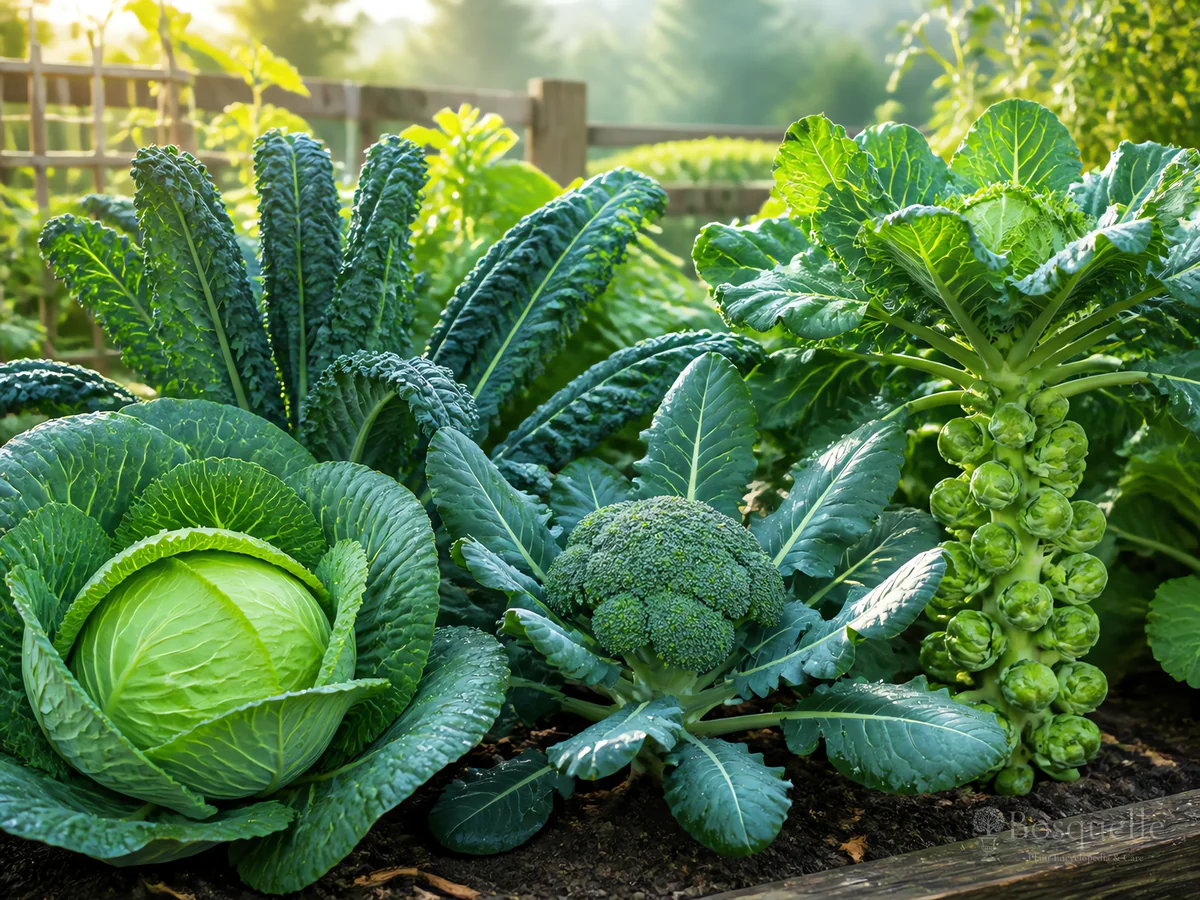


Recommended plants
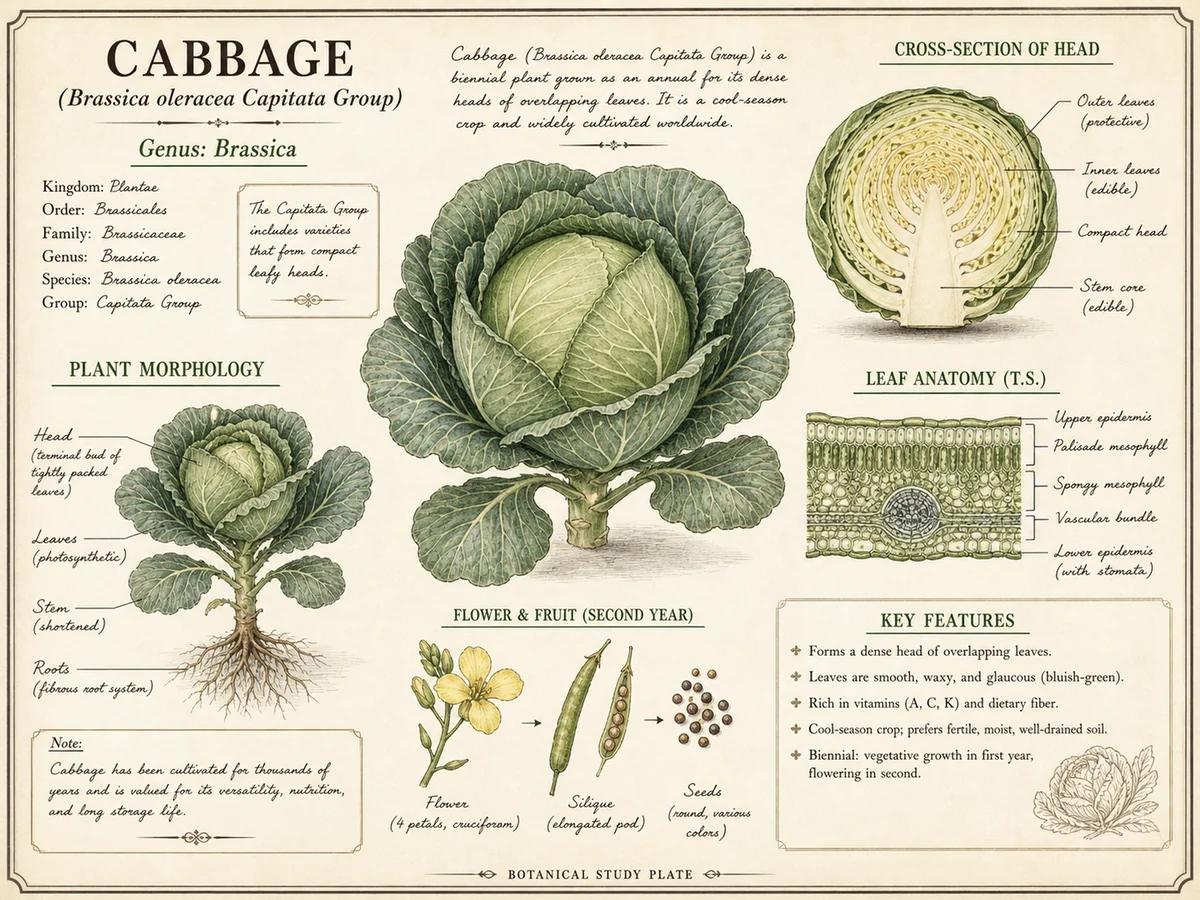
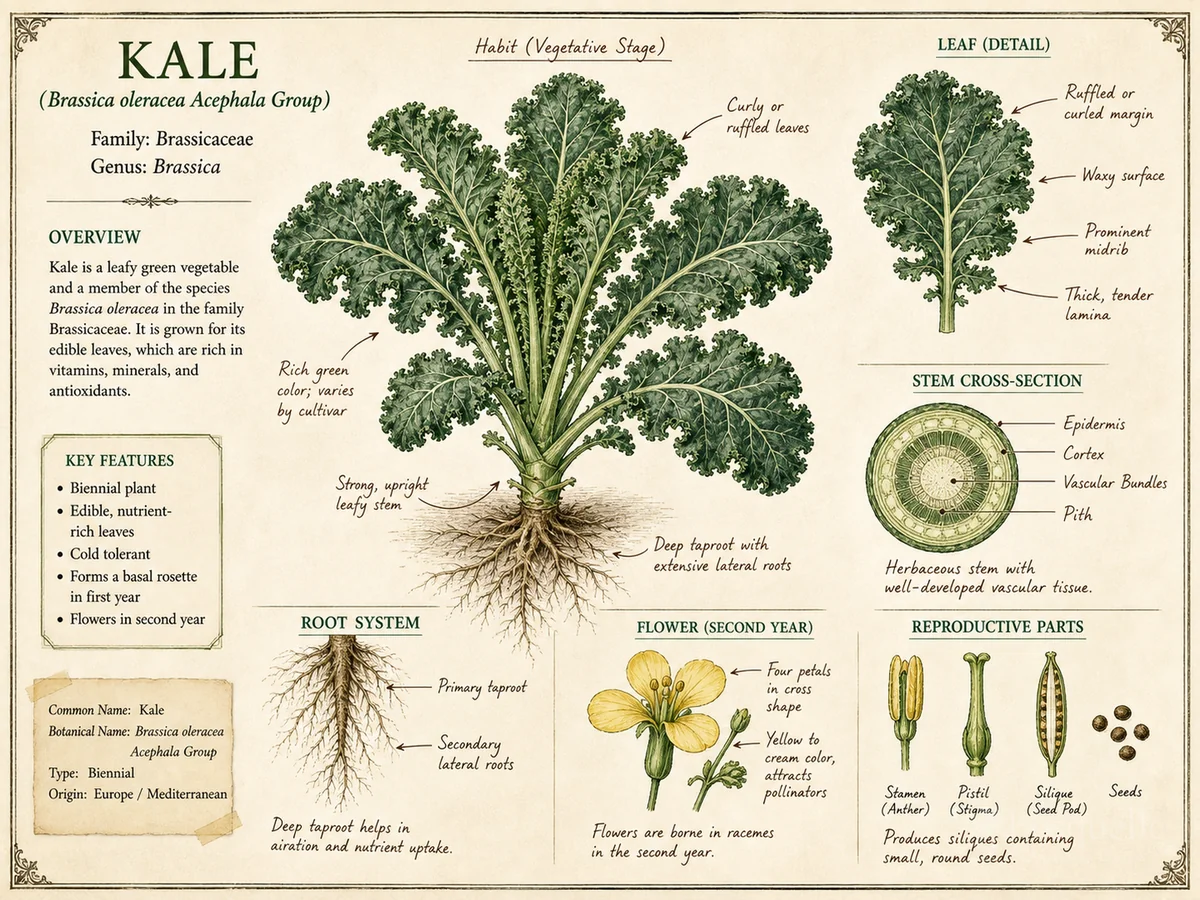


References
- [1] Old Farmer's Almanac -
https://www.almanac.com/plant/cabbage - [2] Joe Gardener -
https://joegardener.com/grow-cabbage/ - [3] Bonnie Plants -
https://bonnieplants.com/blogs/how-to-grow/growing-cabbage - [4] UC Cooperative Extension — Stanislaus -
https://ucanr.edu/blog/stanislaus-sprout/article/growing-brassicas - [5] Harvest to Table -
https://harvesttotable.com/how-to-grow-fall-cabbage-planting-through-harvest/
This note is part of Brassica Guides.
More planting notes by plant are gathered in Planting Guides.
Updated: Reviewed by Bosquelle Editors