
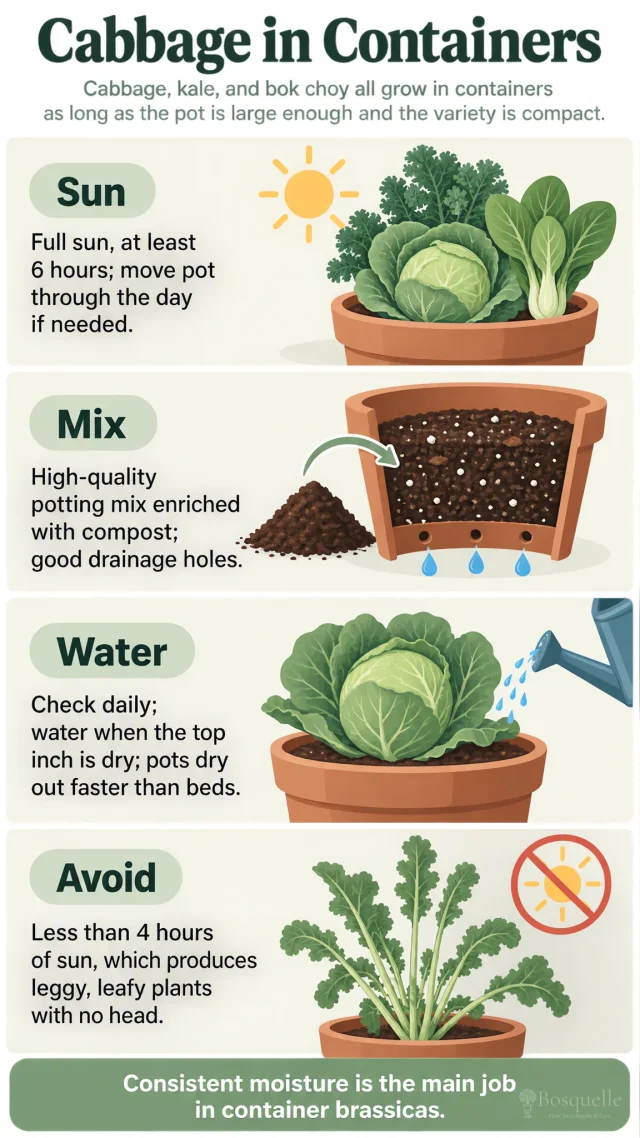
Use a 5-gallon pot and start with a compact or mini variety
| Factor | Recommended | Avoid |
|---|---|---|
| Pot size | At least 5 gallons (one plant per container); 12 in deep minimum | Small pots that restrict roots and produce loose, split heads |
| Variety | Mini or compact types — Gonzales, Katarina, Pixie, or Tiara for cabbage; any kale or bok choy | Large-heading types (Dutch Ballhead) that need more root volume to produce |
| Mix | High-quality potting mix enriched with compost; good drainage holes | Garden soil that compacts and holds too much moisture in a pot |
| Sun | Full sun, at least 6 hours; move pot through the day if needed | Less than 4 hours of sun, which produces leggy, leafy plants with no head |
| Water | Check daily; water when the top inch is dry; pots dry out faster than beds | Letting the pot dry completely, which causes head splitting on rewatering |
Container cabbage roots cannot draw moisture from deep soil the way a bed plant can. In warm weather, a 5-gallon pot may need watering every day or two. Keep the potting mix consistently moist through head development; a dry spell followed by heavy watering splits the head just as it does in the ground. [1]
What size pot does cabbage need?
At least 5 gallons for a single plant, with the pot at least 12 inches deep. Larger containers (7 to 10 gallons) give the plant more moisture reserve and produce fuller heads.
Can kale grow in containers?
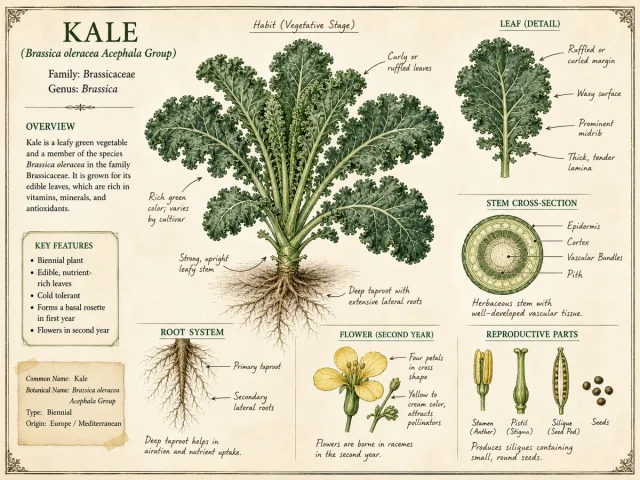
Yes. Kale does not need to form a head, so it tolerates smaller pots (3 to 5 gallons) better than heading cabbage. Harvest outer leaves as they reach full size and the plant keeps producing.
How to grow cabbage in a container
- Choose a draining pot at least 12 inches deep and 12 inches wide. Confirm drainage holes are open before filling.
- Fill with a high-quality potting mix. Work in a few handfuls of finished compost and a slow-release vegetable fertilizer.
- Plant one compact or mini cabbage transplant per container, at the depth it grew in its cell. Water in well.
- Set the pot in a spot with at least 6 hours of full sun. You can move containers to chase sun or away from late-afternoon heat.
- Check the top inch of mix daily in warm weather. Water deeply when it is dry, until water drains from the bottom.
- Feed every two to three weeks with a liquid vegetable fertilizer once the plant is established.
- Harvest when the head feels firm. Do not leave it on the plant after it is ready — pot brassicas split faster than bed plants when overripe.
Should I use a self-watering pot for cabbage?
A self-watering container with a reservoir can help maintain consistent moisture, which is the main challenge with container brassicas. It does not replace checking the pot and topping the reservoir regularly.
Water steadily, check daily in warm weather, and harvest before the head splits
The biggest container failure with cabbage is erratic watering. The pot heats up faster than garden soil, dries out quickly, and has no subsoil moisture reserve. A stretch of dry days followed by heavy watering causes the inner head to expand and crack before the outer leaves can stretch. Once split, the exposed interior rots quickly. [2]
kale and bok choy are more forgiving in containers because they do not need to form a tight head. Both will still produce better with consistent moisture than with feast-and-drought cycles. In hot weather, moving the pot to morning sun and afternoon shade reduces water demand and slows bolting for bok choy.
Why did my container cabbage head split?
Dry soil followed by heavy watering causes rapid inner expansion that the outer leaves cannot match. Water before the mix gets fully dry, and harvest as soon as the head feels firm.
Consistent moisture is the main job in container brassicas. Check the pot every day in warm weather, feed every few weeks, and harvest cabbage heads as soon as they firm up so they do not split. General care and bed rotation is on How to Grow Cabbage.
FAQ
Can I grow Brussels sprouts in a container?
Brussels sprouts grow tall (2 to 3 feet) with a long season (80 to 100 days) and need a large, heavy container to stay upright. Use a 7 to 10 gallon pot with a stake. They are possible but harder to manage in pots than kale or compact cabbage.
Do I need to fertilize cabbage in containers?
Yes. Brassicas are heavy feeders and container plants exhaust potting mix nutrients faster than bed plants. Use a slow-release fertilizer at planting, then top up with a liquid feed every two to three weeks.
Related guides

Recommended plants
References
This note is part of Brassica Guides.
More container notes by plant live in Container Growing Guides.
Updated: Reviewed by Bosquelle Editors