
Grow prickly pear in full sun and soil that drains. The plant is Opuntia.

Give it full sun, soil that drains, and skip winter wet
| Factor | Recommended | Avoid |
|---|---|---|
| Sun | Full sun, at least six hours | Do not site it in shade that stretches pads and stops bloom |
| Soil | Sandy, rocky, or gritty ground that dries after rain | Do not plant in a low spot or a rich, wet bed |
| Water | Water a new plant, then only when the soil is dry | Do not leave winter wet around the roots |
| Handling | Tongs or thick gloves; glochids are barbed | Do not handle pads with bare hands, even on spineless kinds |
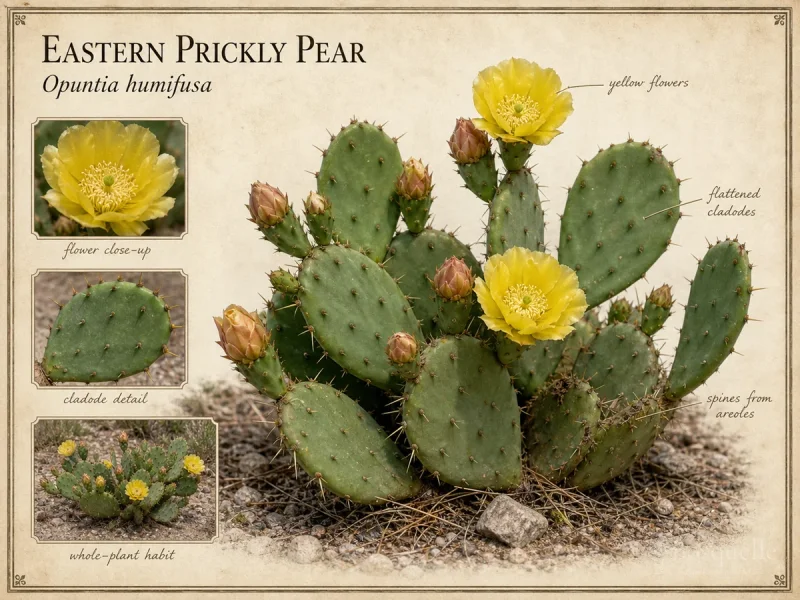
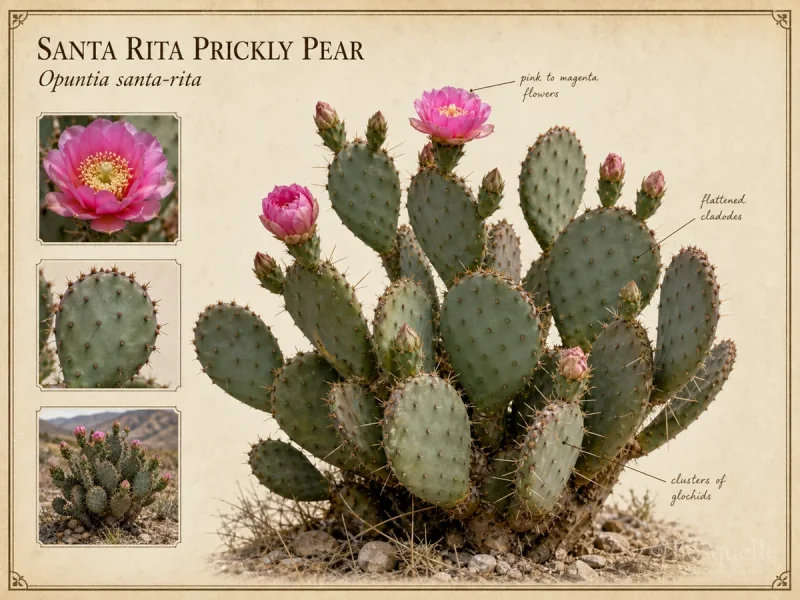
Prickly pear is a pad cactus. Give it a full day of sun and ground that dries after rain. Once the roots take, it tolerates dry spells. Soil that stays wet, especially in winter, leads to root rot. [1] eastern prickly pear wants that same dry ground. Pick the kind on Types of Prickly Pear.
- Site it in full sun. Shade makes pads stretch and bloom poorly.
- Keep the roots dry. On clay, mix in grit or plant on a slight mound or a slope.
- Water to settle a new plant, then wait until the soil is dry. Skip extra water in cool, wet weather. [2] [3]
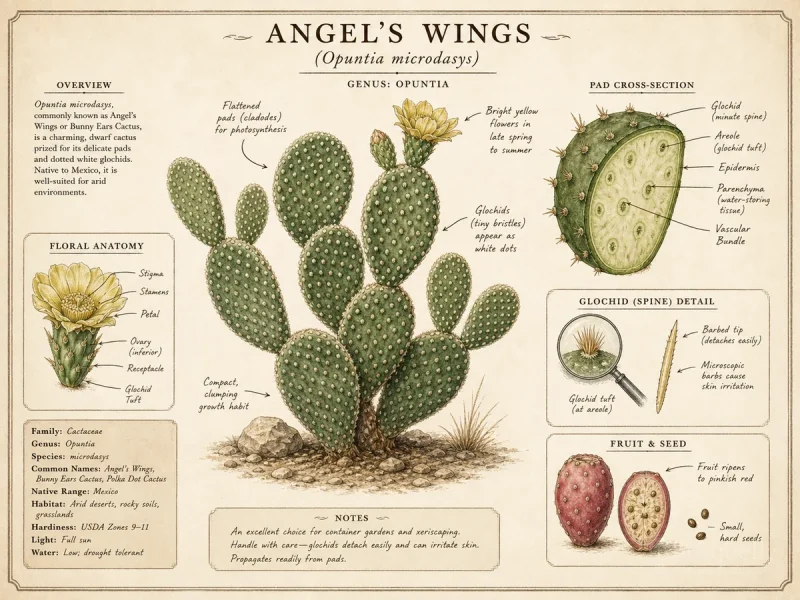
- Use tongs or thick gloves. The tiny barbed bristles (glochids) lodge in skin and clothing. [4]
A tender kind belongs in a container you can move on Prickly Pear in Pots. Ripe fruit and young pads are a different job on Harvesting Prickly Pear.
Does prickly pear need full sun?
Yes. Give it at least six hours. Shade stretches the pads and cuts bloom.
How often should I water prickly pear?
Water a new plant until it roots. After that, water when the soil is dry. Do not leave the roots in standing water, especially in winter.
How do I handle glochids?
Use tongs or thick gloves. Glochids are barbed and hard to pull. Tape or a tweezers pass after a brush, not a bare wipe.
Plant at the same depth, with grit and a path setback
Plant in spring from a nursery pot. Set the plant at the same depth it grew in the pot. Leave room for the mature clump, and keep spines and glochids off the walk. Pads you root from a cutting are a different job on How to Propagate Prickly Pear.
- Plant after frost, once the soil can be worked. Wear gloves. Tease circling roots if the pot is bound.
- Dig a hole as deep as the root ball and a little wider. On heavy ground, work grit into the backfill.
- Set the plant at the old soil line, not buried. Water once to settle, then let the soil dry.
- Space to the mature width on the tag, about two to three feet for many kinds. Large kinds need a path setback so pads do not snag clothing.
How deep do I plant prickly pear?
At the same depth it grew in the pot. Do not bury the pads. A buried crown sits wet and rots.
When should I plant prickly pear?
Spring, so roots take in warmth. Skip a plant-out into cold, wet clay.
Not a cholla, and not a fruit pear
Cholla is Cylindropuntia — cylindrical joints, not flattened pads. See How to Grow Cholla. A fruit pear is Pyrus, a deciduous fruit tree — see How to Grow Pear. Pear cactus on a search is still this pad cactus, not the orchard tree.
Eve's Needle in this catalog is Austrocylindropuntia — a cane, not a pad. Hedgehog cactus and barrel cactus are other genera — How to Grow Hedgehog Cactus and How to Grow Barrel Cactus.
Is prickly pear the same as cholla?
No. Prickly pear has flat pads. Cholla has cylindrical joints. They are different plants.
Is prickly pear the same as a pear tree?
No. A pear tree is Pyrus. Prickly pear is an Opuntia cactus with pads.
If pads turn soft, the soil stayed wet — lift the plant onto grit, and do not water on a calendar.
FAQ
Do the pads die in winter?
Hardy kinds wilt and look deflated in cold, then refill in spring if the soil drained. That is rest, not death.
What about white fluff on the pads?
That can be cochineal. Wash or pick it off when you see it. Wet, rich soil makes pest problems worse. Do not start with a spray.
Do I prune prickly pear?
Cut a damaged or crossing pad at the joint with tongs. That is cleanup, not a yearly shrub prune.
Are extra shop names extra plants?
No. Tubac and Baby Rita are Santa Rita names. Treat them as the purple landscape pad, not a new genus.
Related guides


Recommended plants

References
- [1] NC State Extension Gardener -
https://plants.ces.ncsu.edu/plants/opuntia-humifusa/ - [2] University of Florida IFAS Extension -
https://ask.ifas.ufl.edu/publication/FP448 - [3] University of Florida IFAS Gardening Solutions -
https://gardeningsolutions.ifas.ufl.edu/plants/ornamentals/prickly-pear/ - [4] Penn State Extension -
https://extension.psu.edu/programs/master-gardener/counties/adams/news/opuntia-humifusa
This note is part of Opuntia Guides.
More first-season notes by plant are gathered in How to Grow Guides.
Updated: Reviewed by Bosquelle Editors