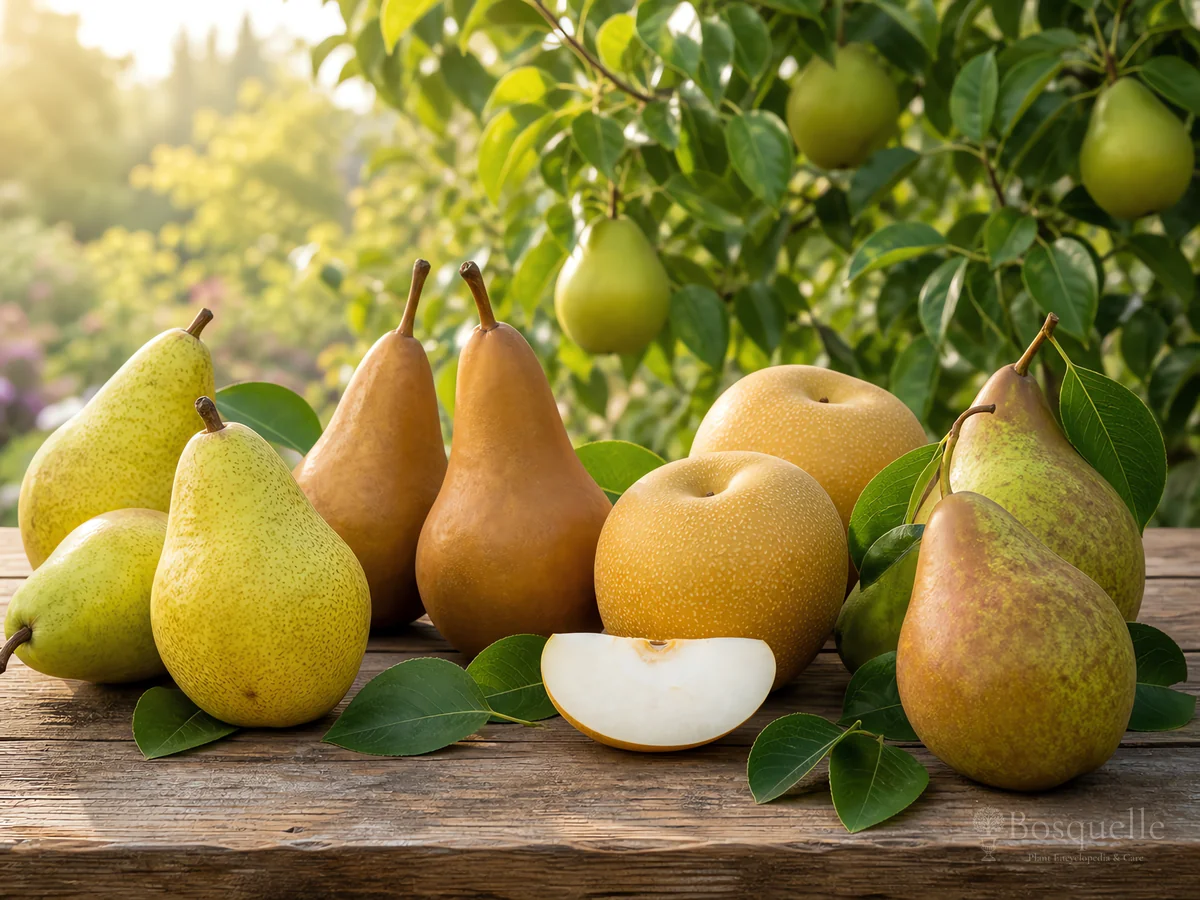
Grow pear trees in full sun and well-drained soil. Pear is the fruit tree in Pyrus — not a prickly-pear cactus.

Give it full sun and soil that drains
| Factor | Recommended | Avoid |
|---|---|---|
| Sun | Full sun most of the day | Do not site it in shade that grows wood and little fruit |
| Soil | Well-drained ground; a grass-free circle under the canopy | Do not leave a wet lawn tight against the trunk |
| Size | Room for a standard tree about 12 to 20 feet, unless the tag says dwarf stock | Do not jam it into a tight strip against a wall with no air |
| Neighbors | A second compatible pear within bee range if you want fruit | Do not count on one lonely cultivar with no nearby pear |
Pears fail first in shade and in a wet lawn that never dries around the trunk. [1] They take most well-drained soils, including a spell of wet weather better than many fruit trees, but standing water still rots roots. [2] A Bartlett and a Chojuro want the same sun and drain. Which fruit class you bought is on Types of Pears. Two trees and graft height are on Planting Pear.
How much sun does a pear tree need?
Full sun most of the day. Shade makes a tall tree with little fruit.
Water a young tree weekly, and keep mulch off the trunk
A new pear needs even moisture the first year. After that, water deeply in a dry spell. Heavy nitrogen grows long, soft shoots that fire blight finds easily.
- Water a newly planted tree every week the first season unless the soil is already moist. Do not wait for leaves to wilt.
- Keep a 3 to 4 inch mulch ring, a few inches back from the bark, so rot and rodents stay off the trunk.
- Skip fertilizer the year you plant. If later growth is under about a foot a year, a light compost ring is enough — do not push long, soft shoots.
- Keep grass off the root flare. Pull suckers from the base as they appear.
How often should I water a young pear tree?
Weekly the first year if the soil is drying. Established trees need a deep soak only in a dry stretch.
Not a Bradford pear — and not a prickly pear
Bradford is Pyrus calleryana, a Callery street tree with weak crotches and tiny fruit. It is invasive in much of the East. Do not plant more. [3] Prickly pear is Opuntia, a cactus. Care is on How to Grow Prickly Pear. Flowering quince is Chaenomeles, on How to Grow Flowering Quince. True quince is Cydonia, another fruit tree, not this one. A dwarf tag still means an in-ground tree, not a patio pot. [4] When the fruit is ready, pick it on Harvesting Pear.
Is a Bradford pear a fruit pear?
No. Bradford is Callery, grown for white bloom. It splits in storms and spreads by seed. Buy a named fruit cultivar instead.
If the tag says Bradford or prickly pear, it is not this fruit tree — plant a named dessert or nashi cultivar in sun instead.
FAQ
Can I grow a pear in a pot?
Only a tree on true dwarfing stock in a large draining pot, and it still wants full sun and a second cultivar nearby. Most shop pears belong in the ground.
How long until a pear tree fruits?
Often 3 to 10 years from planting, depending on rootstock. A grafted nursery tree is faster than seed.
What about fire blight sprays?
Choose a resistant cultivar when you can, and do not push lush nitrogen growth. Do not write a spray recipe from this page.
Related guides


Recommended plants




References
- [1] University of Minnesota Extension -
https://www3.extension.umn.edu/node/7801 - [2] NC State Extension Gardener -
https://plants.ces.ncsu.edu/plants/pyrus-communis/ - [3] NC State Extension -
https://content.ces.ncsu.edu/callery-pear-bradford-pear-other-varieties-and-their-invasive-offspring - [4] University of Maryland Extension -
https://extension.umd.edu/resource/growing-apple-and-pear-trees-home-garden
This note is part of Pyrus Guides.
More first-season notes by plant are gathered in How to Grow Guides.
Updated: Reviewed by Bosquelle Editors