
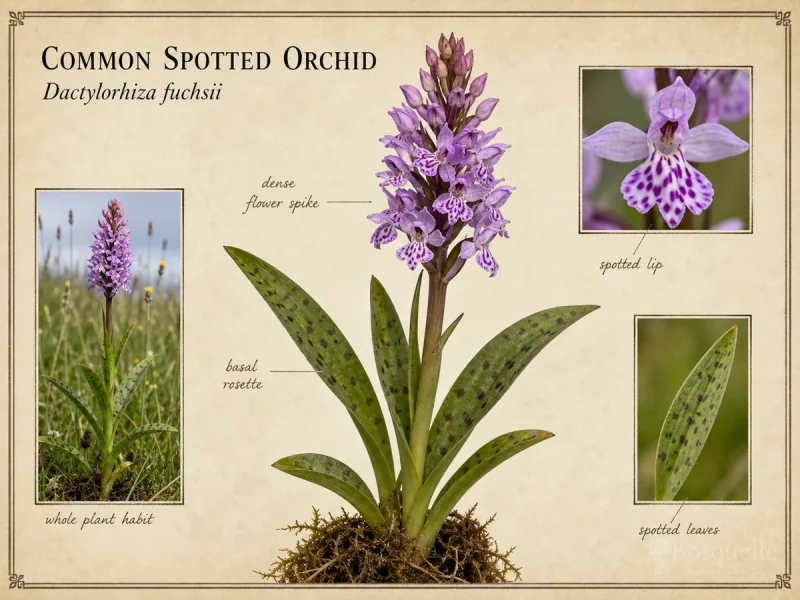
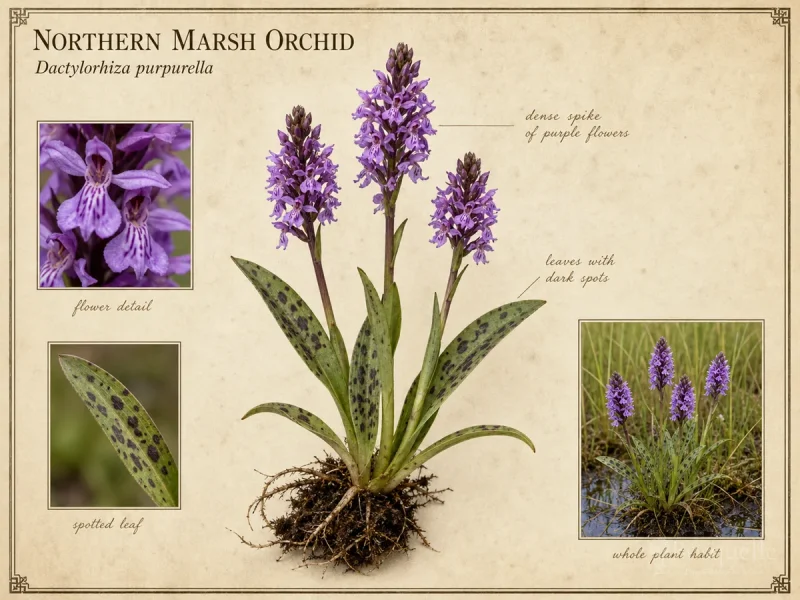
Grow marsh orchid in moist soil that drains, not in standing water. Shops also call it spotted orchid. It is not a lady's slipper or a cymbidium.

Give it morning sun, moist soil that drains, and a cool summer
| Factor | Recommended | Avoid |
|---|---|---|
| Light | Morning sun, with light afternoon shade in a hot summer | A hot west wall with no shade after noon |
| Soil | Moist, humus-rich soil that still drains | A bog pocket or a puddle with no outlet |
| Season | A cool growing season; ease off after the leaves yellow | Long stretches of heat above about 90 °F with dry soil |
| Place | A moist meadow, woodland edge, or the edge of a bog bed that still drains | A tropical windowsill mix, or a pitcher-plant bog that stays flooded |
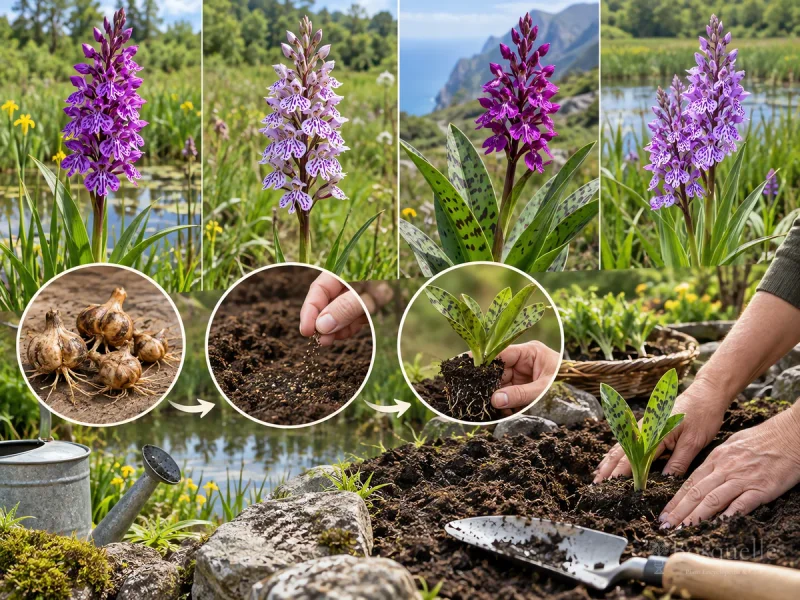
This is a hardy terrestrial orchid with finger-like tubers. Site it where the soil stays evenly moist and still drains. The name marsh orchid does not mean a flooded bog. [1] marsh orchid and common spotted orchid want that same moist, draining ground. Pick a kind on Types of Marsh Orchid. Set the tubers on Planting Marsh Orchid.
- Give it morning sun. In a warm climate, add light afternoon shade so the soil does not bake dry. [2]
- Work leaf mold or compost into a bed that stays moist and still drains. Do not plant in a hole that holds water after rain. [3]
- Choose a cool summer if you can. Long heat above about 90 °F, with dry soil, is the usual outdoor fail. A shady, draining pocket helps more than extra fertilizer.
Does marsh orchid need full sun?
Morning sun is enough. Add light afternoon shade in a hot summer so the soil stays moist.
How wet should the soil stay?
Evenly moist, with an outlet. Do not leave the tubers in standing water. That is how they rot.
Grow it in a draining pot only if you have no moist bed
If you have no moist bed, use a draining pot of loam-based mix and keep it moist through the growing season. Plunge the pot in the garden for winter, or set it in a cold frame, so the plant gets a real cool rest. A small indoor bark pot is the wrong mix. [4]
Keep it moist while it grows, then ease off after the leaves die back
Water through spring and early summer so the top several inches stay moist, not soggy. After flowering, the leaves yellow and die back. Cut that watering back. Resume when new shoots appear.
- Water in dry spells while leaves and spikes are up. Do not let the bed crust dry, and do not flood it.
- When the foliage yellows, stop soaking. Leave the dying leaves until they pull away. The tuber is storing food for next spring.
- Skip a heavy fertilizer program. A spring mulch of leaf mold is enough. Rich, manured soil grows weeds that smother the orchid.
Do I water marsh orchid in winter?
Ease off after the leaves die back. Keep the soil from going bone-dry, but do not soak a dormant tuber in a cold, wet hole.
Not a lady's slipper, a cymbidium, or a Chinese hardy orchid
A hardy lady's slipper is How to Grow Lady's Slipper — a woodland orchid with a pouch, not a dense marsh spike. A cymbidium is How to Grow Cymbidium — a cool-night boat orchid in bark, not a meadow tuber. Chinese hardy orchid is How to Grow Hardy Orchid — Bletilla, with pleated fans, not finger tubers. Helleborine is How to Grow Helleborine — a different hardy orchid, often weedy in eastern woods. Fringed orchid is How to Grow Fringed Orchid — a wet-meadow native with a fringed lip, not this finger tuber. In eastern US woods, Adam-and-Eve usually means putty-root, a different plant.
Is this a lady's slipper?
No. Lady's slipper has an inflated pouch. Marsh orchid has a dense spike of small flowers on a leafy stem.
If the tuber sits in a puddle, move it to moist ground that drains this season — do not wait for next spring’s missing spike.
FAQ
Can I grow marsh orchid in a pot?
Yes, in a draining pot of loam-based mix, kept moist in growth. Plunge it outdoors for winter. A small bark orchid pot is the wrong mix.
Do I need fertilizer?
A spring mulch of leaf mold is enough. Do not pile manure on the crown. Weeds in rich soil crowd the orchid out.
Can I dig one from a meadow?
No. Buy nursery plants raised from seed or division. Wild plants are often protected, and they usually die after a move.
What about slugs?
Watch new shoots in spring. Pick slugs off at night, or use a barrier around the clump.
Will marsh orchid come back after winter?
Yes, if the tuber stayed cool and did not sit in a wet hole. Tops die back after bloom; new shoots return in spring.
What can I plant with marsh orchid?
Other moist-meadow plants that will not crowd it — a cuckoo flower, ragged robin, or snakeshead fritillary in a damp strip. Keep rank grass off the crown.
Can I cut the spikes for a vase?
Leave the spikes on the plant. This is a garden orchid, not a cut-flower crop. Cutting the stem early weakens the tuber for next year.
Related guides

Recommended plants



References
- [1] Nurseries Online -
https://www.nurseriesonline.com.au/plant-index/orchids/dactylorhiza/ - [2] American Orchid Society -
https://www.aos.org/orchids/articles/collectors-item-dactylorhiza - [3] Hayloft -
https://hayloft.co.uk/how-to-grow-dactylorhiza - [4] American Orchid Society -
https://www.aos.org/explore/dactylorhiza
This note is part of Dactylorhiza Guides.
More first-season notes by plant are gathered in How to Grow Guides.
Updated: Reviewed by Bosquelle Editors