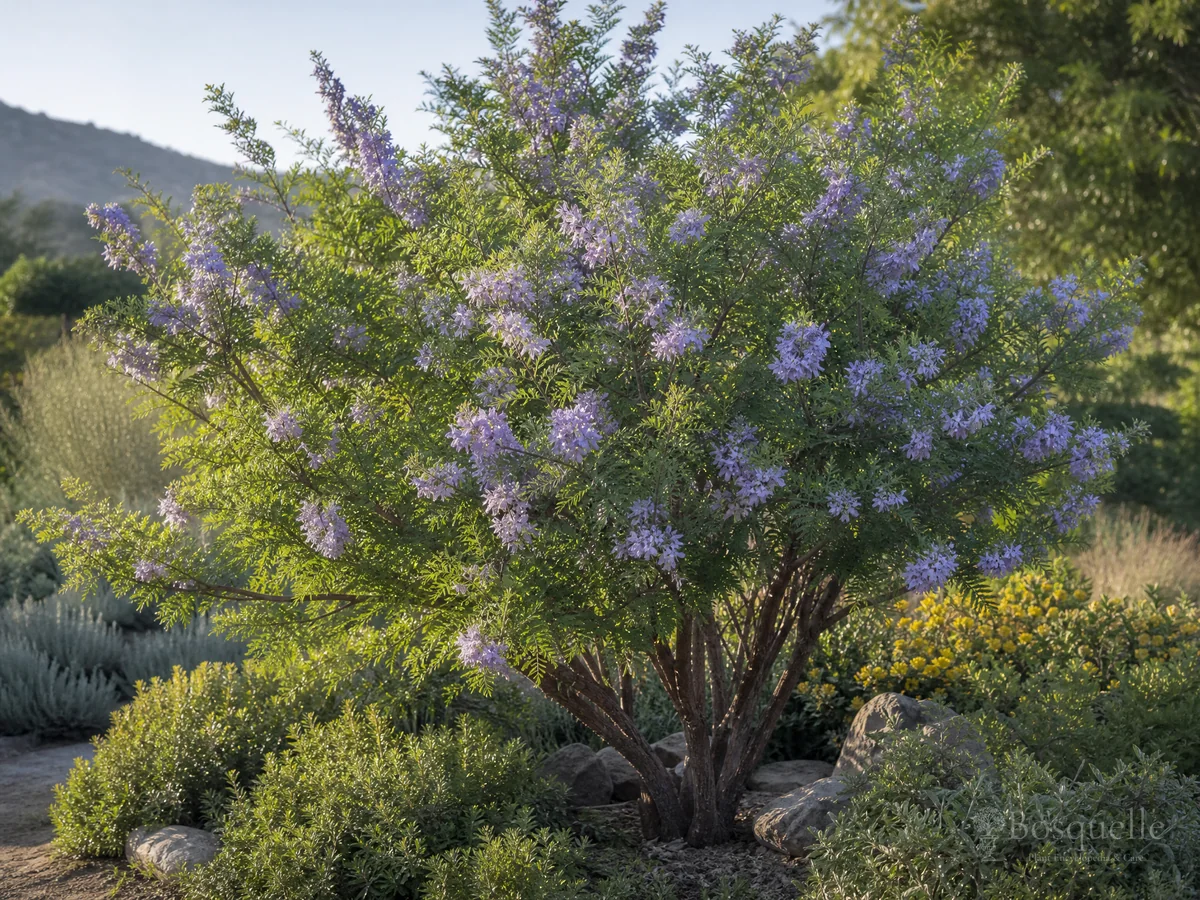
Grow Catalina ironwood in full sun or light shade, in soil that drains, and water it through the first dry years, then back off. Catalina ironwood is Lyonothamnus floribundus, a Channel Islands evergreen also sold as fernleaf Catalina ironwood.
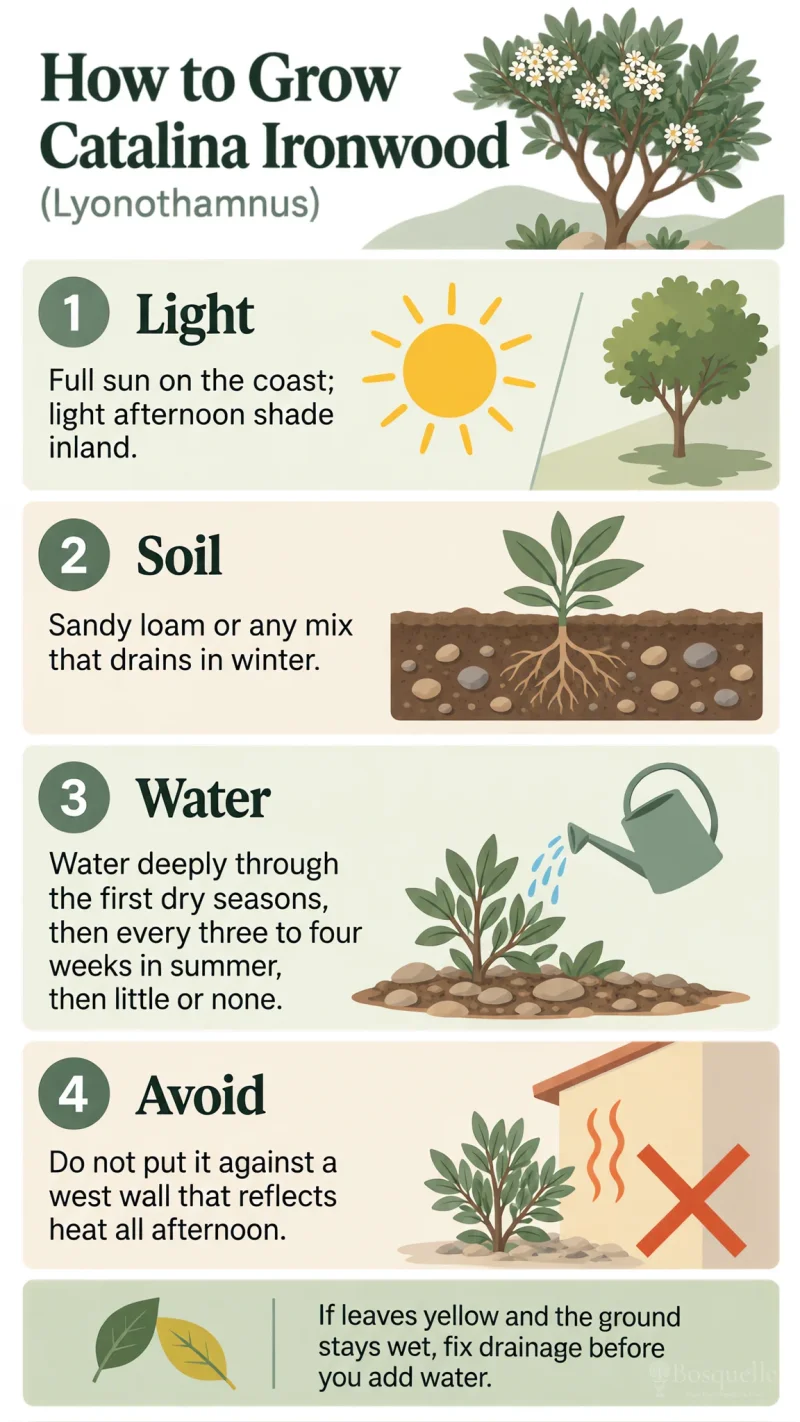
Give it full sun, soil that drains, and little summer water once it is settled
| Factor | Recommended | Avoid |
|---|---|---|
| Light | Full sun on the coast; light afternoon shade inland | Do not put it against a west wall that reflects heat all afternoon |
| Water | Water deeply through the first dry seasons, then every three to four weeks in summer, then little or none | Do not keep the root zone wet after the tree is settled |
| Soil | Sandy loam or any mix that drains in winter | Do not plant it in a low pocket of heavy soil that stays soggy |
| Size | Leave room for about 20 to 40 feet tall and 15 to 20 feet wide | Do not site it under a low eave or next to a foundation it will outgrow |
| Wind | A spot sheltered from cold, drying wind | Do not plant it on a bare, windy ridge if winter nights drop into the teens |
Catalina ironwood is a Channel Islands evergreen with fern-like leaflets and bark that peels to cinnamon red. Give it full sun on the coast. Inland, a little afternoon shade keeps the foliage from scorching, and an occasional deep soak in a long dry spell is enough once the roots are down. [1]
Water it through the first dry years so the roots go down, then water less. After that, a deep soak every three to four weeks in summer is plenty in most gardens, and many established trees need none in a year with winter rain. Soggy soil around the roots is the usual cause of yellow leaves and decline, not a missed watering. [2] [3]
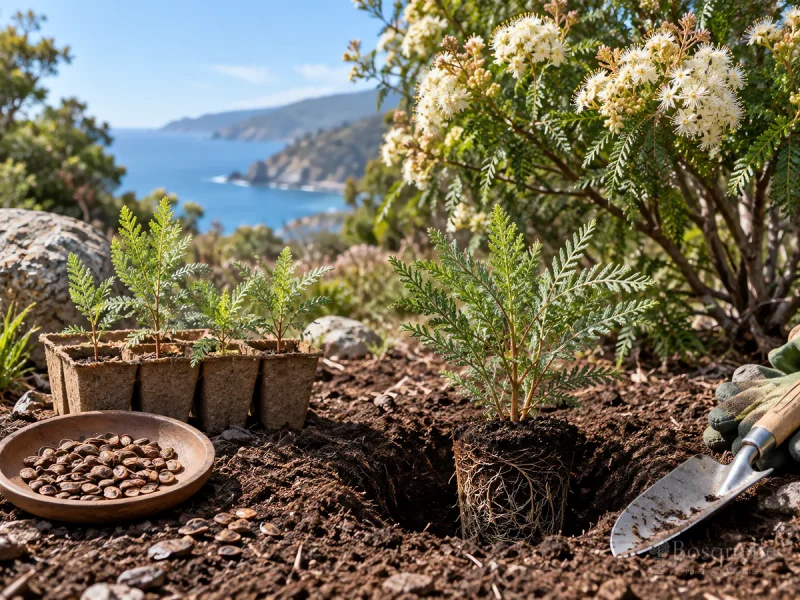
Leave the leaf litter under the canopy the way you would with a native oak. Do not compact the soil or pack thirsty understory plants against the trunk. A tree that sits in heavy, wet ground often turns chlorotic — the leaves yellow while the veins stay greener. [4] When you are ready to set a nursery tree in the ground, read Planting Catalina Ironwood.
How much sun does Catalina ironwood need?
Full sun on the coast. Inland, give it light afternoon shade so reflected heat does not cook the foliage.
How often do I water an established tree?
Little or none in a typical year after the first dry seasons. A deep soak every three to four weeks in summer is enough if the top few inches have dried. Wet soil around the roots is the usual cause of yellow leaves.
Is Catalina ironwood drought tolerant?
Yes, once the roots are down. Water it through the first dry years, then back off. It still wants soil that drains.
Why are the leaves yellow?
Heavy, wet soil is the usual cause. Improve drainage and stop watering on a calendar if the ground is still moist.
It flowers in late spring, then the old clusters hang on
Flat sprays of small white flowers open from late spring into summer at the branch tips. Bees work the clusters. As they age the heads turn brown, then gray, and they can hang on the tree for a year or more. That is normal, not a sign the tree is dying.
If the old heads bother you, taking them off is a prune job, not a change in watering. That method is on Pruning Catalina Ironwood.
When does Catalina ironwood flower?
Late spring into summer. The spent clusters often hang into the next year unless you cut them off.
Not Persian ironwood — and not a hornbeam sold as ironwood
Ironwood is a nickname for several unrelated trees. Persian ironwood is Parrotia, a deciduous landscape tree with mottled bark and fall color. If the tag says Persian ironwood, read How to Grow Persian Ironwood instead.
American hornbeam is often sold as ironwood too. That tree wants moister eastern woodland soil; read How to Grow Hornbeam. Mountain mahogany is a dry western shrub sometimes called mountain ironwood; that job is How to Grow Mountain Mahogany. Desert ironwood is a thorny Sonoran tree (Olneya), not this Channel Islands evergreen. Fern-like leaflets do not make it a tree fern — How to Grow Tasmanian Tree Fern is a wet-shade plant with a fibrous trunk.
Is this the same as Persian ironwood?
No. Catalina ironwood is an evergreen from the California Channel Islands. Persian ironwood is Parrotia, a deciduous tree with fall color.
If leaves yellow and the ground stays wet, fix drainage before you add water. Next season, keep the first dry years watered and the soil dry once the tree is settled.
FAQ
Is there more than one kind of Catalina ironwood?
This catalog holds the fern-leaf tree, Lyonothamnus floribundus subsp. aspleniifolius, also called Santa Cruz Island ironwood. The Catalina Island subspecies has simple, undivided leaves and is rarely sold. Both want sun, drain, and the same first-year water.
Can I grow Catalina ironwood in a pot?
Only while it is young, in a large container that drains, in full sun. It wants to become a 20- to 40-foot tree, so plan to plant it out.
What can I plant with Catalina ironwood?
Other dry-summer California natives that want sun and drain — ceanothus, manzanita, toyon, and coffeeberry. Read How to Grow California Lilac and How to Grow Toyon for those shrubs.
Is Catalina ironwood used for wood?
The wood is hard and reddish, and woodturners prize small pieces. It is not a timber crop in a home garden. Grow it for the foliage and bark, not to harvest the trunk.
Related guides


Recommended plants

References
- [1] San Marcos Growers -
https://www.smgrowers.com/products/plants/plantdisplay.asp?plant_id=1024 - [2] UC Master Gardeners of San Luis Obispo County -
https://ucanr.edu/blog/uc-master-gardeners-diggin-it-slo/article/catalina-ironwood - [3] Waterwise Garden Planner -
https://waterwisegardenplanner.org/plants/lyonothamnus-floribundus-ssp-asplenifolius/ - [4] Las Pilitas Nursery -
https://www.laspilitas.com/nature-of-california/plants/418--lyonothamnus-floribundus-ssp-asplenifolius
This note is part of Lyonothamnus Guides.
More first-season notes by plant are gathered in How to Grow Guides.
Updated: Reviewed by Bosquelle Editors