
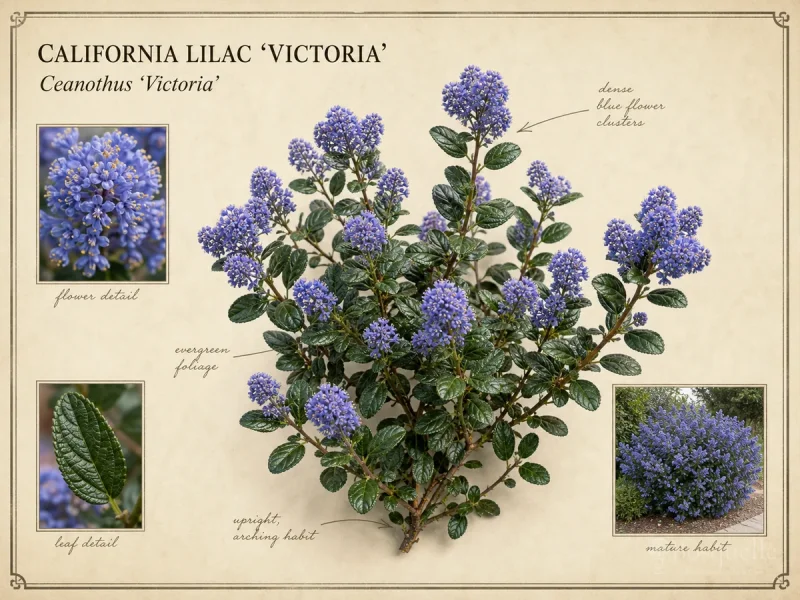
Grow California lilac in full sun and well-drained soil. California lilac is Ceanothus — not a true lilac.
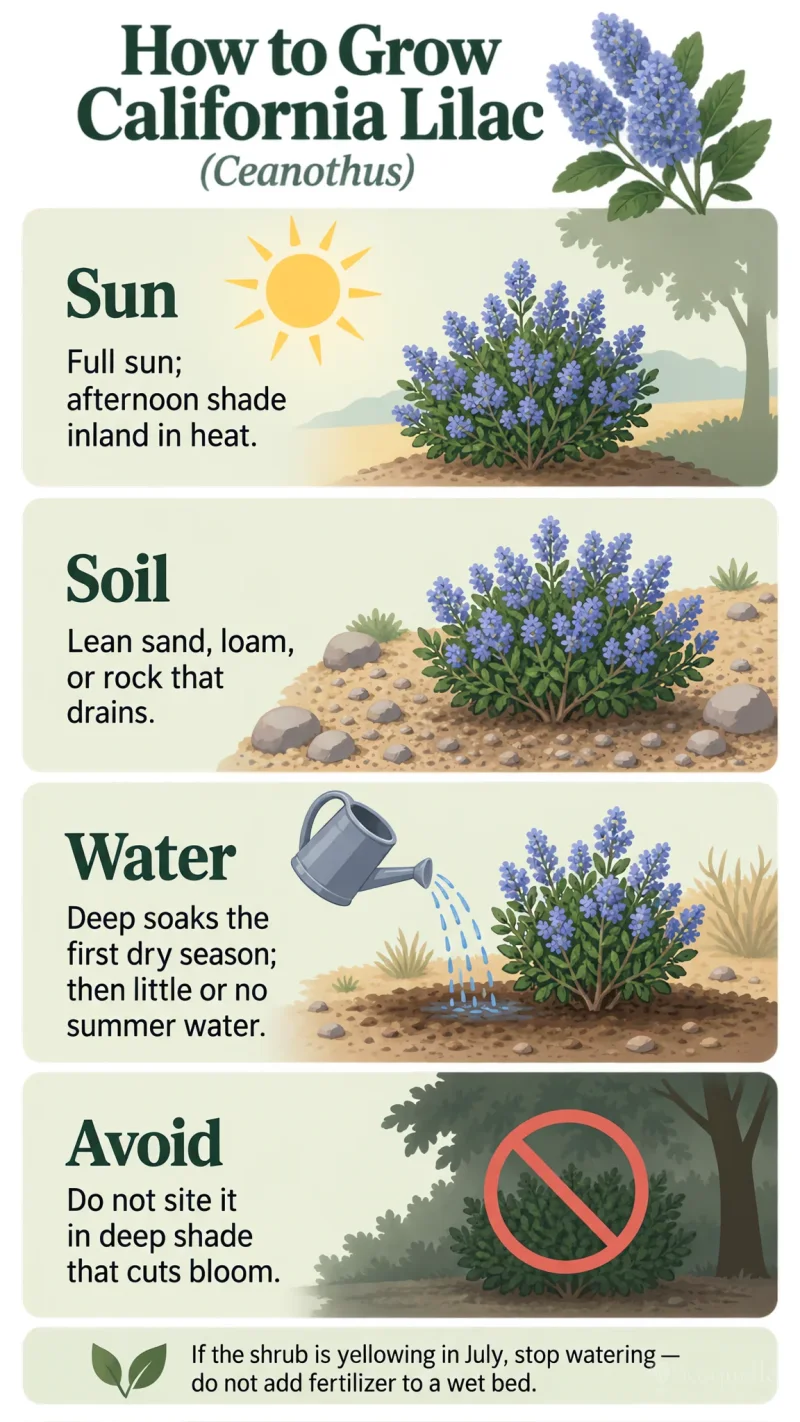
Give it full sun and well-drained soil
| Factor | Recommended | Avoid |
|---|---|---|
| Sun | Full sun; afternoon shade inland in heat | Do not site it in deep shade that cuts bloom |
| Soil | Lean sand, loam, or rock that drains | Do not plant in a low wet pocket |
| Water | Deep soaks the first dry season; then little or no summer water | Do not run a weekly sprinkler on an established plant |
| Feed | None. The shrub fixes nitrogen | Do not fertilize, and do not pile rich compost on the roots |
California lilac is a sun shrub. Full sun packs more flowers. Afternoon shade helps in hot inland yards. Well-drained soil is the usual bed — sand, loam, or rock. Standing water around the roots causes rot. [1] Do not fertilize. The plant makes its own nitrogen, and extra feed pushes soft growth that fails sooner. [2] A landscape shrub such as Concha wants that same drain. So does Yankee Point. Match habit on Types of California Lilac.
Does California lilac need full sun?
It flowers best in full sun. Afternoon shade helps inland in heat. Deep shade makes a thin plant with a weak bloom.
Should I fertilize California lilac?
No. It fixes nitrogen. Fertilizer around the roots pushes soft growth and invites rot.
Water the first dry season, then skip summer water
New plants need deep, infrequent soaks through the first dry season so roots go down. Once they take, most kinds want little or no summer water. Extra water in hot weather is the primary cause of root rot. [3]
- Keep the root ball from going bone-dry through the first dry season.
- Water deeply every week or two that first summer, then let the soil dry before the next soak.
- After the second year, skip summer water in a naturalized bed. One or two deep soaks a month is enough if the kind you bought tolerates garden water.
- Do not run a weekly sprinkler on an established plant. Wet, warm soil around the roots causes rot. [4]
How often should I water California lilac?
Keep a new plant from drying out the first dry season. Then skip summer water, or water deeply only once or twice a month if the kind tolerates it.
Not a true lilac
True lilac in U.S. nurseries is Syringa, a deciduous olive-family shrub that wants a cold winter. California lilac is Ceanothus, usually evergreen, in the buckthorn family. The flowers look similar from a distance. The care is not. True lilac care is on How to Grow Lilacs.
Is California lilac the same as a true lilac?
No. California lilac is Ceanothus. True lilac is Syringa. They are not related.
If the shrub is yellowing in July, stop watering — do not add fertilizer to a wet bed.
FAQ
Can I grow California lilac in a pot?
Open ground is the usual home. A young plant can sit in a large draining pot for a season, then go in the ground. Do not leave the pot standing in a saucer of water.
Can I start California lilac from a cutting?
Named kinds are usually started from cuttings, not from seed. Buy a plant if you want a named shrub this season.
Is New Jersey tea the same plant?
New Jersey tea is Ceanothus americanus, an eastern deciduous shrub with white flowers. It is in this genus. It is not an evergreen California hybrid.
Why did my California lilac die after a few years?
Many kinds live about 8 to 15 years in a garden. Summer water, fertilizer, or wet clay shortens that. Replace the plant; do not cut it hard to the ground.
Does California lilac get root rot?
Wet, warm soil around the roots is the primary cause. Drain well, and skip summer water on an established plant.
Related guides

Recommended plants



References
- [1] UC Master Gardeners of Sonoma County -
https://ucanr.edu/site/mg-sonoma/ceanothus-wild-lilac - [2] Gardeners Path -
https://gardenerspath.com/plants/ornamentals/grow-ceanothus/ - [3] The Planters' Guild -
https://theplantersguild.com/grow-guides/california-natives/ceanothus/ - [4] NC State Extension Gardener -
https://plants.ces.ncsu.edu/plants/ceanothus-thyrsiflorus/
This note is part of Ceanothus Guides.
More first-season notes by plant are gathered in How to Grow Guides.
Updated: Reviewed by Bosquelle Editors