
Grow hornbeam in moist soil that drains. Hornbeam is Carpinus, also sold as musclewood or blue beech. A beech is a different plant.

Give it moist soil that drains, and sun to shade by kind
| Factor | Recommended | Avoid |
|---|---|---|
| Soil | Moist ground that drains after rain; clay, loam, or sand is fine | Do not leave the roots in standing water for weeks |
| Sun | Full sun to part shade for a European tree; American takes shade | Do not plant American in a hot, dry parking strip |
| Water | Keep a new tree moist for two years; then European takes a dry spell | Do not let American dry out once it is in the ground |
| Heat | American wants even moisture away from paving glare | Do not site American against a heat-soaked wall |
Hornbeam wants moist soil that still drains. Clay is usable if water does not sit on the roots for weeks. [1] European hornbeam takes full sun to part shade and, once it is rooted, a dry spell. American hornbeam wants even moisture and handles shade; heat, drought, and compacted soil stall it. [2] It is a woodland understory tree in the Midwest, useful in shade if the ground stays moist. [3] Match the kind to the site on Types of Hornbeam.
How much sun does hornbeam need?
European hornbeam wants full sun to part shade. American hornbeam takes shade, and it also takes sun if you can keep the soil moist.
Is hornbeam drought-tolerant?
European hornbeam takes a dry spell once it is established. American hornbeam wants even moisture and stalls in heat and drought. Water both kinds for the first two years.
Water a young tree for the first two years
A new hornbeam still needs water until the roots leave the nursery ball. Give the root zone about an inch of water a week in the growing season, then check a few inches down before you water again. [4]
- Soak the root zone after planting. Check a few inches down and water again when that soil starts to dry.
- Keep the root zone moist through the first two growing seasons. Do not let a new tree dry out between soaks.
- Once a European tree is established, water only in a long dry spell. Keep watering American hornbeam in drought, because it does not take a dry bed.
- Mulch about two inches over the root zone. Keep bark clear so the trunk stays dry.
How often do I water a new hornbeam?
About an inch a week through the first two seasons, or whenever the top few inches start to dry. A slow soak is more useful than a brief splash every day.
Not beech, and not hop-hornbeam
Hornbeam is Carpinus. Beech is Fagus. Hop-hornbeam is Ostrya. They are not the same plant and they do not take the same care.
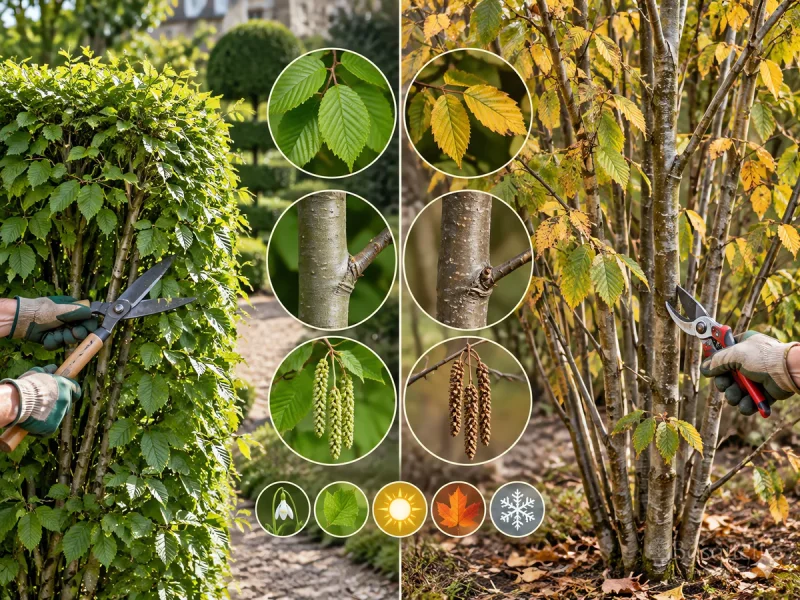
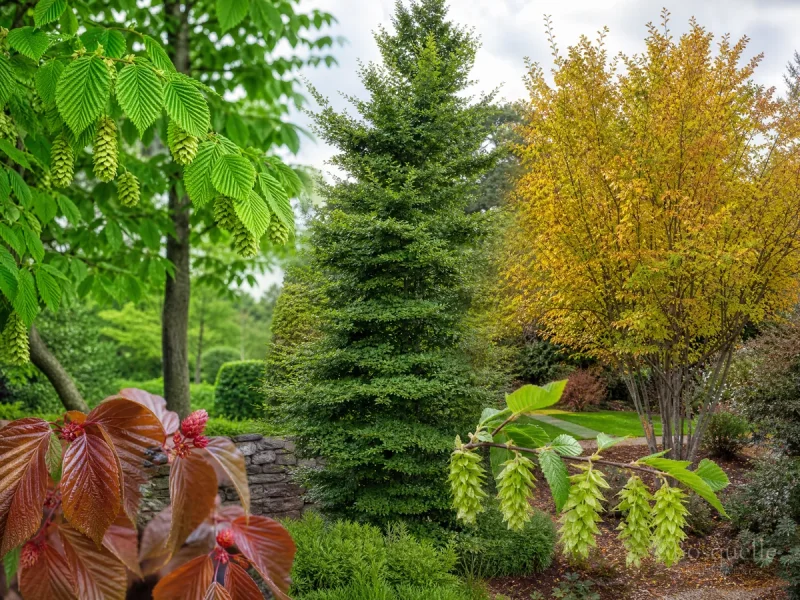
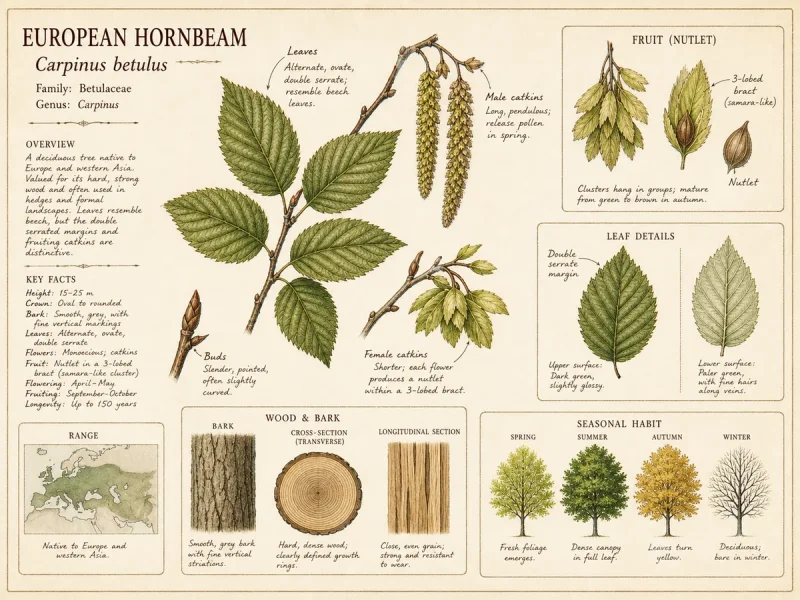
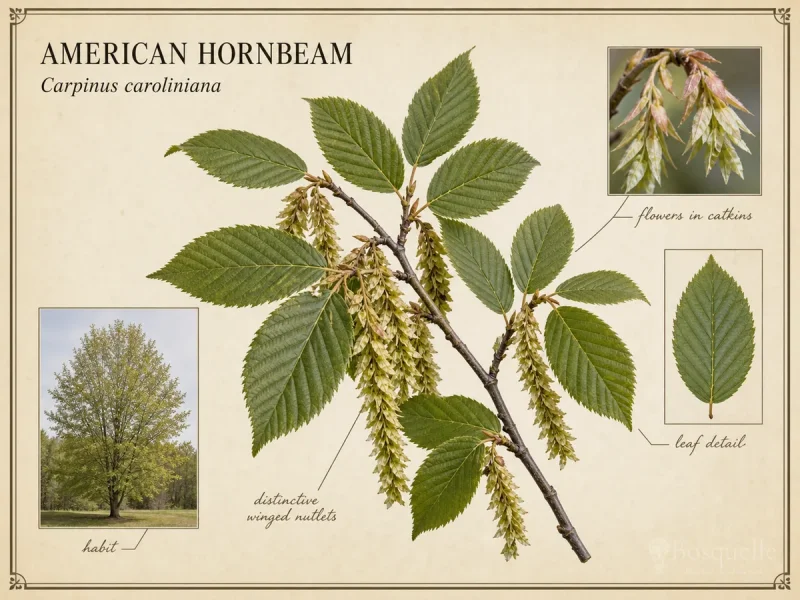
- Hornbeam (Carpinus) — doubly toothed leaves with a quilted look, nutlets under three-lobed bracts, and smooth fluted gray bark. American hornbeam is the kind sold as musclewood or blue beech. That blue-beech name is still this tree, not a beech.
- Beech (Fagus) — smoother, wavier leaf edges and a different winter bud. A beech hedge looks similar when clipped, but beech wants sharper drainage than hornbeam. Care lives on How to Grow Beech.
- Hop-hornbeam (Ostrya virginiana) — also sold as ironwood. The bark shreds in thin strips, and the fruit looks like hops. It is a drier-site cousin, not Carpinus.
Hornbeam maple is a maple, Acer carpinifolium — see How to Grow Maples. Persian ironwood is Parrotia, not this genus. Confirm the Latin on the tag.
Is blue beech a beech?
No. Blue beech is American hornbeam, Carpinus caroliniana. Beech is Fagus. The bark and the Latin on the tag tell them apart.
If a young tree flags in a dry week, soak the root zone once, then check a few inches down before you water again.
FAQ
Can I grow hornbeam in a pot?
Only as a short nursery start. Landscape hornbeam wants a spreading root system, and it does not stay healthy long-term in a container.
Can I eat the nutlets?
The nutlets are tiny and are mainly food for birds and squirrels. They are not a kitchen crop. Do not treat hop-hornbeam forage pages as this tree.
What pests hit hornbeam?
Leaf spots show in wet summers and are usually cosmetic. Hose or pick pests when you see them. Do not spray as a default.
Related guides

Recommended plants
References
- [1] NC State Extension Gardener -
https://plants.ces.ncsu.edu/plants/carpinus-betulus/ - [2] NC State Extension Gardener -
https://plants.ces.ncsu.edu/plants/carpinus-caroliniana/ - [3] The Morton Arboretum -
https://mortonarb.org/plant-and-protect/trees-and-plants/american-hornbeam/ - [4] University of Maine Extension -
https://extension.umaine.edu/publications/2568e/
This note is part of Carpinus Guides.
More first-season notes by plant are gathered in How to Grow Guides.
Updated: Reviewed by Bosquelle Editors