
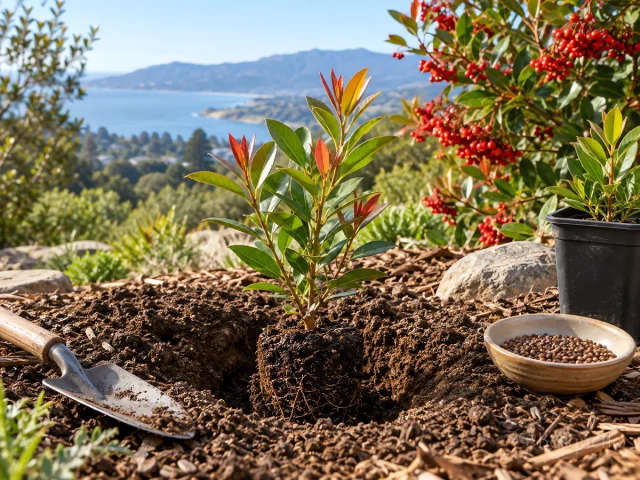
Grow toyon in full sun or light shade, in soil that drains, and water it through the first dry summers, then back off. Toyon is Heteromeles arbutifolia, a California native evergreen also called California holly.

Give it full sun, soil that drains, and water the first summers, then back off
| Factor | Recommended | Avoid |
|---|---|---|
| Light | Full sun for the heaviest flowers and berries; light or dappled shade is fine | Do not plant it in deep shade, where it grows leggy and sets few berries |
| Water | Water weekly through the first dry season, every two to three weeks the second, then little or none | Do not keep the soil wet after it is established, and do not water on a calendar if the top few inches are still moist |
| Soil | Any soil that drains in winter — sand, loam, clay, or serpentine | Do not leave it in a low, waterlogged pocket |
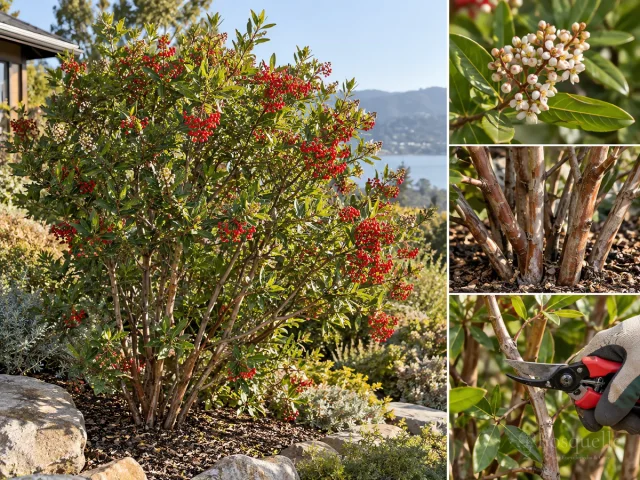
| Size | Leave room for about 6 to 8 feet tall and 4 to 5 feet wide in a garden | Do not crowd it as a specimen; an unpruned plant can grow much larger |
| Deer | Cage a young plant until the leaves are up and leathery | Do not leave a new shrub unprotected where deer browse |
Toyon is a California chaparral shrub with leathery, finely toothed leaves. Give it full sun if you want a heavy crop of winter berries; light shade is tolerated, the way it grows under oaks, but deep shade stretches the stems and cuts the flowering. [1]
Water it through the first dry summer so the roots go down, then water less the second year, then stop in a typical year. Once it is settled it is drought tolerant, and more plants fail from wet soil than from missed water. Let the top few inches dry before you water again, even inland where a deep soak in a heat wave keeps the foliage looking better. [2] [3]
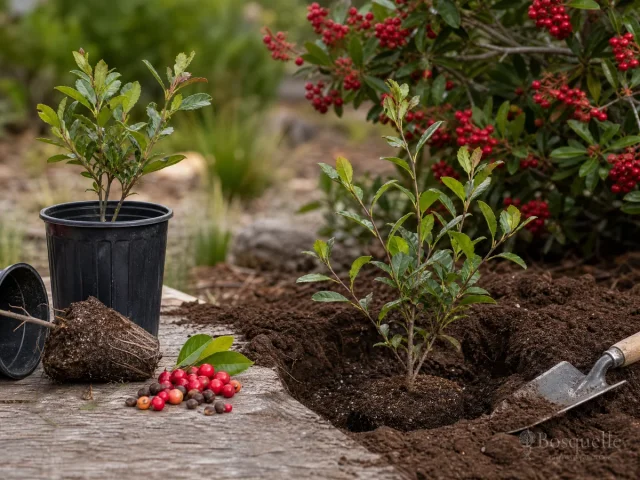
Deer usually leave a mature plant alone, but they chew new growth on a young shrub, especially in a dry year or if you have been watering it. Cage it for the first few years, or raise the lower branches so the foliage sits above browse height. [4] When you are ready to set a nursery shrub in the ground, read Planting Toyon.
How often should I water an established toyon?
Little or none in a typical year. Water weekly the first dry season and every two to three weeks the second, then back off. Wet soil around the roots is the usual cause of rot.
Will deer eat toyon?
They often browse a young plant. Cage it until the leaves are leathery. A mature shrub is usually left alone, though hungry deer may still nibble the tips.
It flowers in summer, then holds red berries through winter
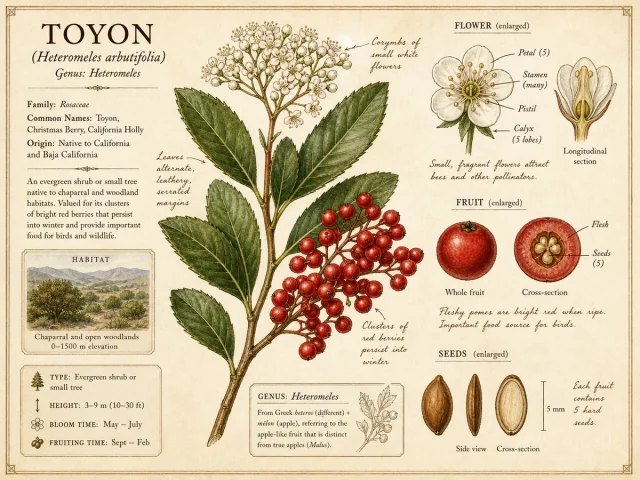
Creamy white flower clusters open from late spring into summer and draw bees and butterflies. The fruit that follows is a small pome, the same family as an apple, though shops call the crop berries. They turn orange, then red, and hang into winter for birds.
Berries are heaviest in full sun. If you need to cut branches for a wreath, wait until the fruit is fully colored, and make those cuts as part of Pruning Toyon rather than shearing the plant at random.
When does toyon have berries?
The fruit colors in fall and hangs through winter, often into January, until birds strip the clusters. Flowers come first, in late spring and summer.
Not holly — and not a Christmas cactus or goji berry
California holly is a nickname for this native shrub. English holly is Ilex, a different family with true holly leaves. If the tag says holly and the plant is a dense, spiny evergreen from a holiday pot, read How to Grow Holly instead.
Christmas cactus is a hanging houseplant that blooms indoors in winter. That plant is How to Grow Christmas Cactus. Christmas berry on a goji or Carolina wolfberry tag is Lycium, a thorny fruit shrub; read How to Grow Goji Berry and do not treat that plant as toyon. The species name arbutifolia means the leaf looks a bit like madrone; strawberry tree is How to Grow Strawberry Tree. Older lists filed this plant as Photinia arbutifolia. Red-tip photinia is a different hedge. Firethorn and cotoneaster also carry winter berries; those jobs live on How to Grow Firethorn and How to Grow Cotoneaster.
Is toyon the same as holly?
No. Toyon is a California native in the rose family. English holly is Ilex. The leaves and winter fruit look similar, which is why people call it California holly.
If leaves yellow and drop, check drainage before you add water. Next season, keep the first summers watered and the soil dry once the shrub is settled.
FAQ
Is there more than one kind of toyon?
This catalog holds one species, Heteromeles arbutifolia. Yellow-berry selections such as 'Davis Gold' are extra names, not a separate type here. They all want sun, drain, and the same first-year water.
Can I grow toyon in a pot?
For a few years, in a large container that drains, in full sun. It is a deep-rooted landscape shrub, not a houseplant, so plan to plant it out.
Are toyon berries safe around pets?
Do not let pets or children snack on unripe fruit or the seeds. Unripe berries hold cyanogenic compounds. Ripe fruit is less of a risk but is still not a snack. Keep the birds' crop on the shrub.
What can I plant with toyon?
Coffeeberry, ceanothus, and manzanita share the same sun and dry-summer habit. Read How to Grow Coffeeberry and How to Grow Manzanita for those shrubs.
How do I get more plants?
Sow cleaned seed after a cold rest, or take summer cuttings. That method is on How to Propagate Toyon.
Related guides
Recommended plants
References
- [1] UC Master Gardener Program of Sonoma County -
https://ucanr.edu/site/mg-sonoma/heteromeles-arbutifolia-toyon - [2] San Marcos Growers -
https://www.smgrowers.com/products/plants/plantdisplay.asp?plant_id=832 - [3] Harvest to Table -
https://harvesttotable.com/how-to-grow-toyon-heteromeles/ - [4] Las Pilitas Nursery -
https://www.laspilitas.com/nature-of-california/plants/339--heteromeles-arbutifolia
This note is part of Heteromeles Guides.
More first-season notes by plant are gathered in How to Grow Guides.
Updated: Reviewed by Bosquelle Editors