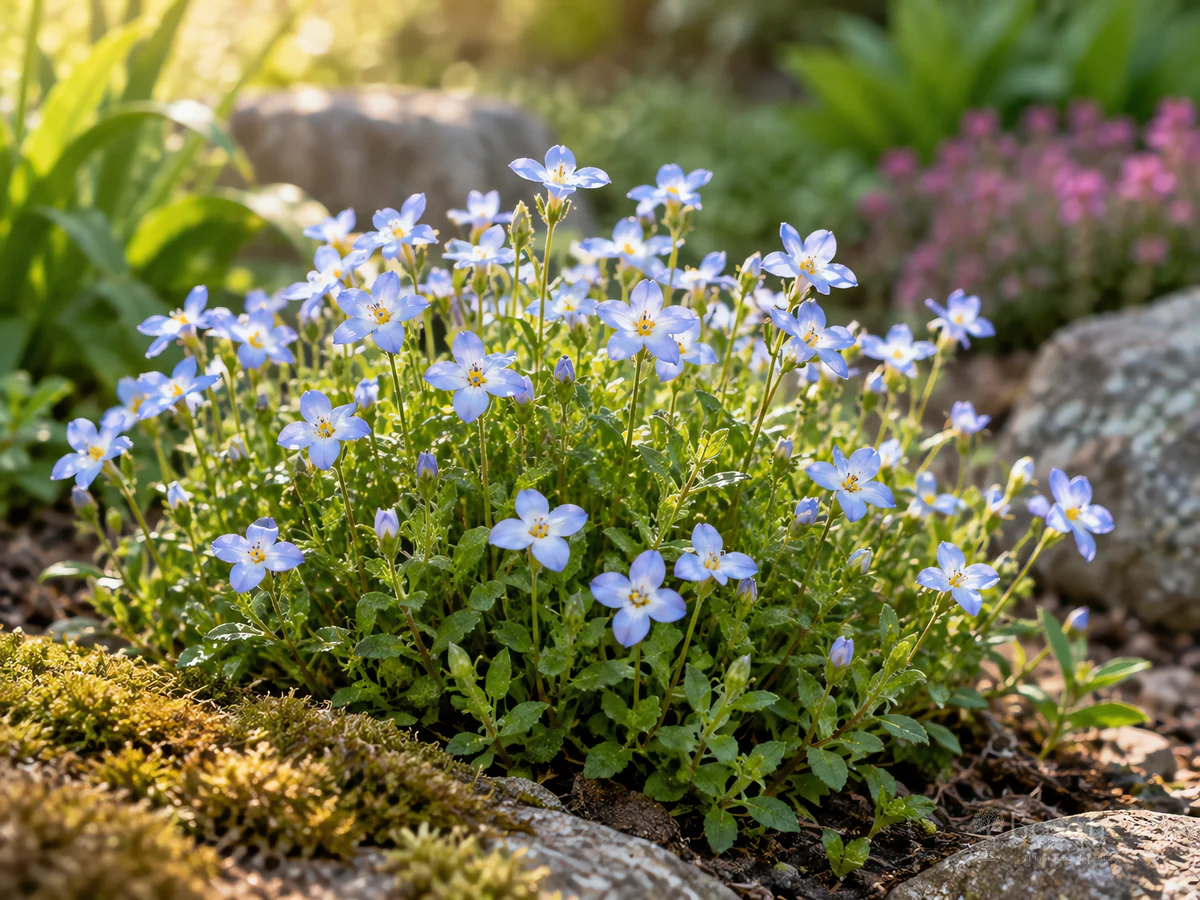
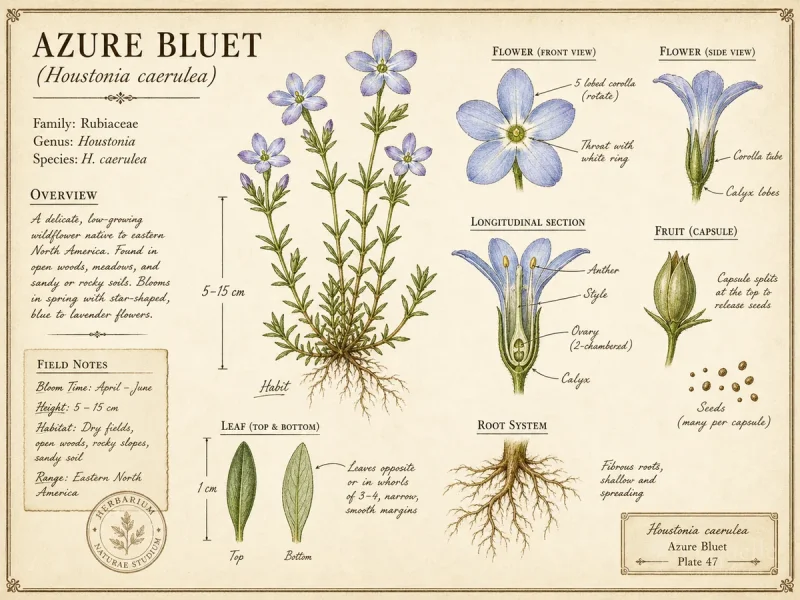
Grow azure bluet in thin acidic soil that drains, in sun or light shade, where taller weeds will not cover the tufts. Azure bluet is Houstonia caerulea, also called Quaker ladies — a three-to-six-inch eastern perennial with four pale-blue petals and a yellow eye.

Give it thin acidic soil, sun or light shade, and little competition
| Factor | Recommended | Avoid |
|---|---|---|
| Light | Full sun to part shade; morning sun or dappled light in a hot summer | Do not plant it in deep shade, where the tufts bloom poorly |
| Soil | Thin sandy or rocky soil that is acidic and low in nutrients | Do not plant it in heavy clay, packed ground, or a rich, fertilized bed |
| Water | Keep the soil evenly moist in spring while it grows and blooms; established tufts take a dry spell | Do not leave it waterlogged, and do not let a new planting dry out in its first spring |
| Feed | None — lean ground keeps weeds down so the tufts can hold the spot | Do not fertilize, because fertilizer grows taller plants that smother it |
Azure bluet is a tiny tuft, usually three to six inches tall, with a basal rosette and one pale-blue flower on each slender stem. It holds a lawn, a path edge, or a bare, thin patch because nothing taller is shading it out. [1] Give it the same kind of ground it uses in the wild: moist in spring, acidic, and fast to drain, even if the soil is poor. Part shade is fine, especially where afternoons run hot. [2] Sandy or thin rocky soil is enough. Once the tuft is settled, it takes a dry spell, but it still wants moisture through that short spring flush. Rich beds and fertilizer work against it, because grass and weeds then take the light. [3]
Is azure bluet drought tolerant?
Once it is established in thin soil, it takes a dry spell. Keep a new planting moist through its first spring, and do not treat it like a desert plant in heavy clay.
Do deer eat azure bluet?
Deer usually leave it alone. The plants are small and not a preferred browse.
Plant nursery plugs in spring or fall, a few inches apart
Set nursery plugs in early spring or in fall, in a thin, acidic bed you can keep free of taller weeds. Keep the crown at the same soil line it had in the pot. Space plants about four to six inches apart so the tufts can join into a small colony. Water them in the same day, and keep the first spring from going bone-dry. Do not lift plants from a wild patch; nursery plugs take, and dug wild tufts often do not.
- Pick a thin, acidic, well-drained spot in sun or light shade, with no tall grass or dense groundcover.
- Dig a hole the size of the pot and set the crown at the same soil line it had in the container.
- Space plugs about four to six inches apart, then firm the soil so there are no air pockets around the roots.
- Water thoroughly the same day, and keep the soil just moist through that first spring.
Can I dig azure bluet from a wild lawn?
Do not. Wild tufts often fail after a move. Buy nursery plugs, or raise a patch from seed.
Let it bloom, then wait to mow until the seed has dropped
Azure bluet carries four pale-blue petals with a yellow eye for about three weeks in late spring, sometimes into early summer. Leave the small two-lobed capsules on the stems until they split, so the patch can thicken itself. If it shares a lawn, wait to mow that strip until the seed has dropped. To raise a batch on purpose, see Growing Azure Bluet From Seed.
- Let the flowers finish; the show is short, about three weeks.
- Leave the capsules until they split and the seed has fallen.
- Then you may mow that strip, or leave the rosettes uncut in a rock garden or path edge.
Keep it with other short plants so grass and taller wildflowers do not shade it out. There is almost no pruning; you are waiting on seed, not shaping a shrub.
When does azure bluet bloom?
For about three weeks in late spring, with four pale-blue petals and a yellow eye. Leave the seed if you want the patch to thicken.
Not creeping phlox, forget-me-not, or mountain bluet
Azure bluet is a four-petaled coffee-family wildflower on a thread-thin stem, not a dense needle-leaf mat. [4] Creeping phlox is Phlox, with five-lobed flowers and a spring carpet; if that is what you have, read How to Grow Phlox instead.
Forget-me-not is Myosotis, also five-petaled and usually taller and hairier. Read How to Grow Forget-Me-Not if that is the shop tag. Mountain bluet is Centaurea montana, a much larger perennial daisy — see How to Grow Cornflower. Ageratum houstonianum is a taller annual floss flower, not this genus; see How to Grow Ageratum. The name Innocence is also used for Collinsia — see How to Grow Collinsia if that is the tag. Tiny bluet (Houstonia pusilla) is a smaller cousin with a reddish-purple eye. Creeping Appalachian bluet (Houstonia serpyllifolia) roots along the stem and is not this upright tuft. Older tags that say Hedyotis caerulea are this same Houstonia caerulea, not a second kind.
Is azure bluet the same as mountain bluet?
No. Mountain bluet is Centaurea montana, a large perennial daisy. Azure bluet is a three-to-six-inch Houstonia with four pale-blue petals and a yellow eye.
If the patch thins, taller weeds or rich soil probably took the light. Put the next plugs in thin, acidic ground, keep the neighbors short, and wait to mow until the seed has dropped.
FAQ
Is there more than one kind of azure bluet?
Houstonia caerulea is the plant here, also listed as Hedyotis caerulea — the same wildflower. Tiny bluet and creeping Appalachian bluet are other Houstonia species, and mountain bluet is a Centaurea. They are not in this catalog.
Can I grow it in a pot?
A shallow pot with acidic, sandy mix can hold a small colony outdoors. It is not a houseplant.
Will it come back after winter?
Yes, from the tuft, as long as the soil drains. The tops die back. Packed, wet clay is what loses it, not ordinary cold.
Do rabbits eat azure bluet?
They usually leave it alone. The plants are small and not a preferred browse.
Related guides

Recommended plants
References
- [1] NC State Extension Gardener -
https://plants.ces.ncsu.edu/plants/houstonia-caerulea/ - [2] Plant Native -
https://plantnative.org/native-plants/bluets-houstonia-caerulea.htm - [3] Tennessee Smart Yards -
https://tnyards.utk.edu/hedyotis-caerulea-houstonia-caerulea/ - [4] Go Botany / Native Plant Trust -
https://gobotany.nativeplanttrust.org/species/houstonia/caerulea/
This note is part of Houstonia Guides.
More first-season notes by plant are gathered in How to Grow Guides.
Updated: Reviewed by Bosquelle Editors