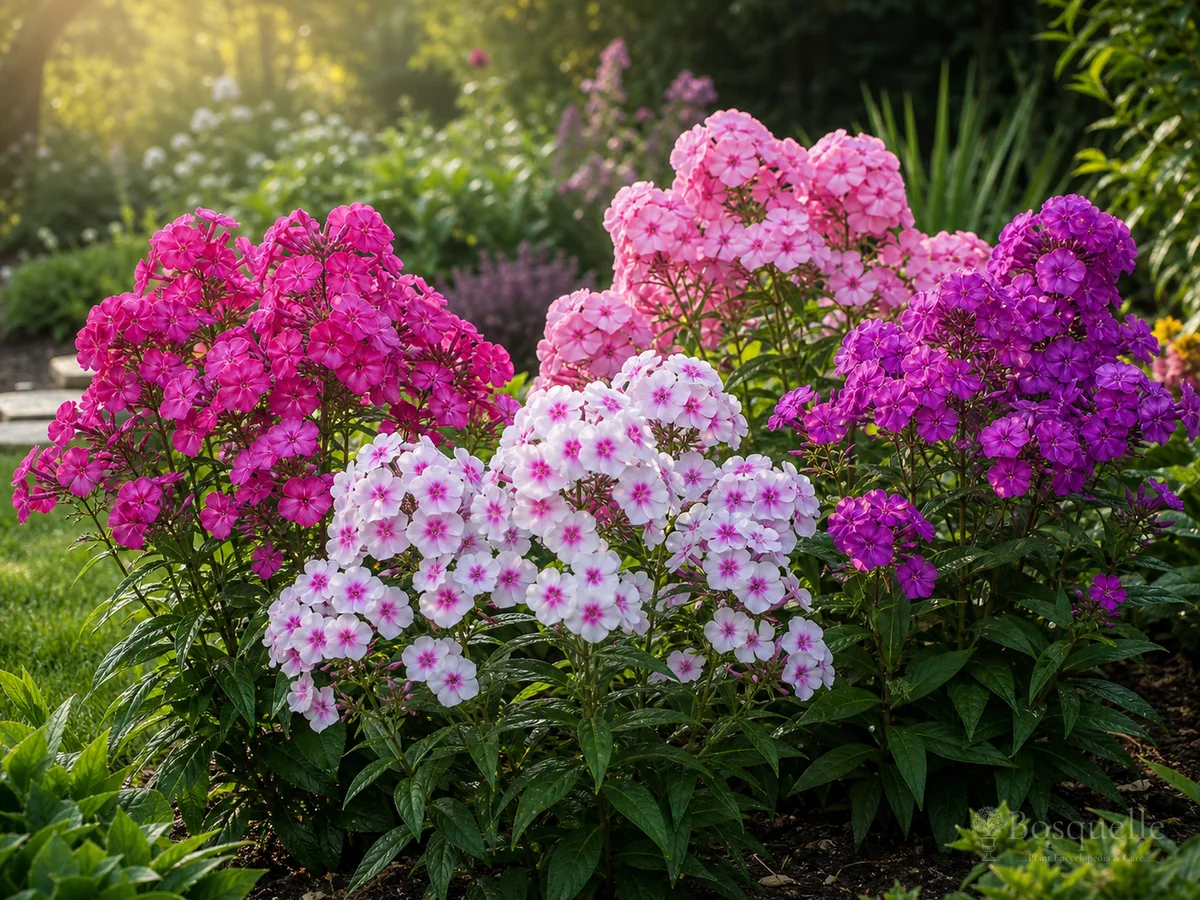
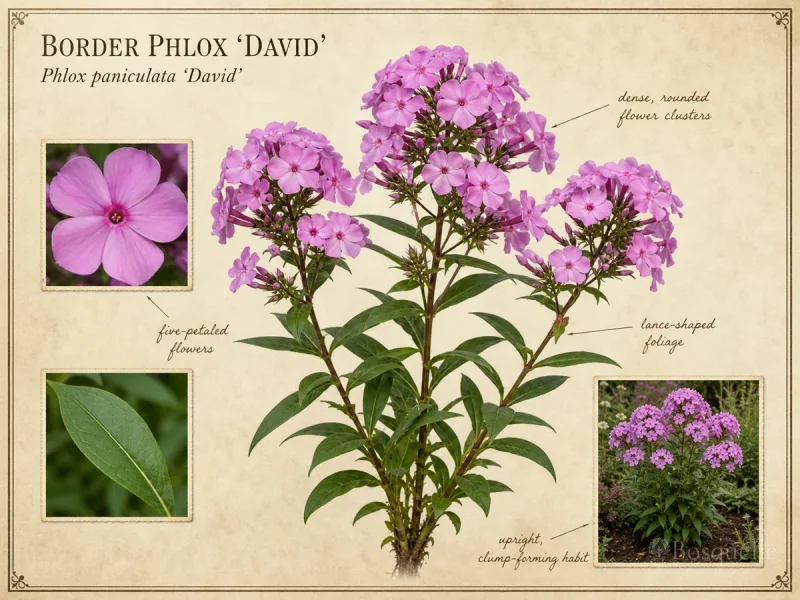
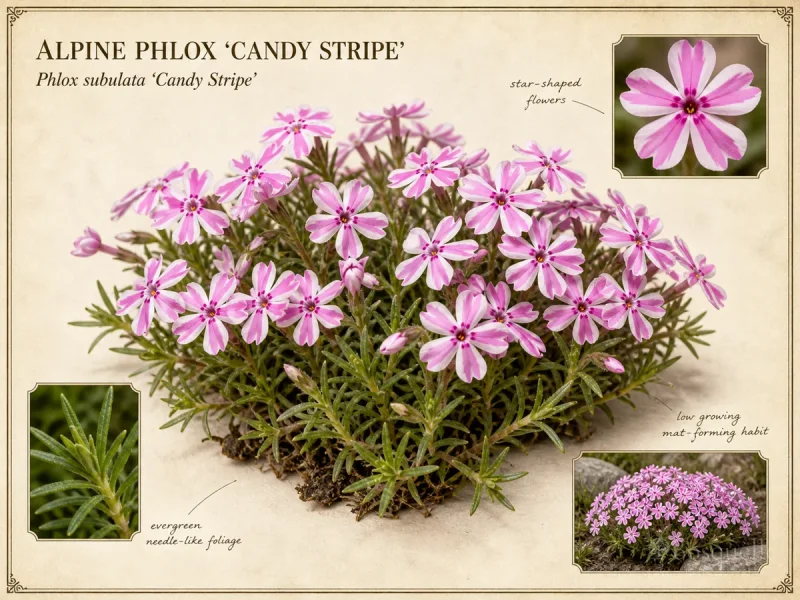
Phlox is four plants under one name. Tall garden phlox (Phlox paniculata) such as 'David' wants sun, even moisture, and Air around the stems against powdery mildew. Moss phlox such as 'Candy Stripe' wants a dry, sunny mat. Woodland types want part shade. Annual Drummond phlox is one warm season. Sort classes on Types of Phlox. Divide on Dividing Phlox; scent on Fragrant Garden Phlox; partners on Phlox Companion Plants.

Sun, air, and soil by phlox class
| Factor | Recommended | Avoid |
|---|---|---|
| Tall garden (paniculata) | Full sun, moist fertile soil that still drains, 18 inches between clumps | A still fence corner; wet foliage; crowding |
| Moss / alpine (subulata) | Full sun, sharp lean drainage, a rock or edge mat | A rich, wet border bed |
| Woodland (divaricata / stolonifera) | Part shade, cooler moisture | A baked south ridge |
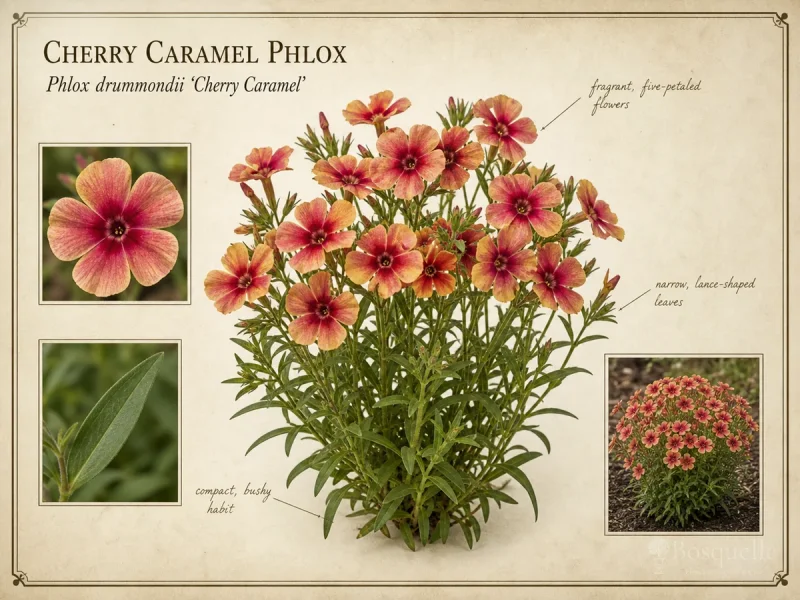
| Annual (drummondii) | Warm-season sun, a fresh sowing each year | Treating it as a perennial clump |
University of Minnesota Extension: tall garden phlox needs sun to bloom; shade cuts flowers and raises disease. Iowa State Extension: paniculata, moss, woodland, and creeping woodland are different plants. Clemson: at least six hours of sun for garden phlox; some afternoon shade helps in heat. Hardy about USDA zones 4–8 for many paniculata garden types, if air and drainage hold.
- Water the soil, not the leaves. If you must water overhead, do it in the morning so foliage dries.
- Do not plant tall phlox against a wall or under competing shrubs.
- Moss mats want grit, not compost piled on the crown.
- Woodland types want leaf mold and cooler light, not a dry rock scree copied from moss phlox.
Powdery mildew on tall garden phlox
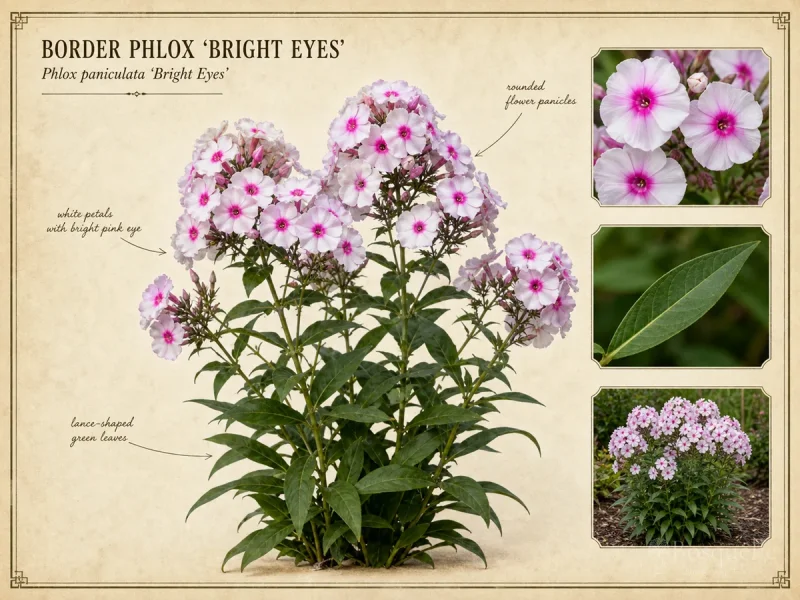
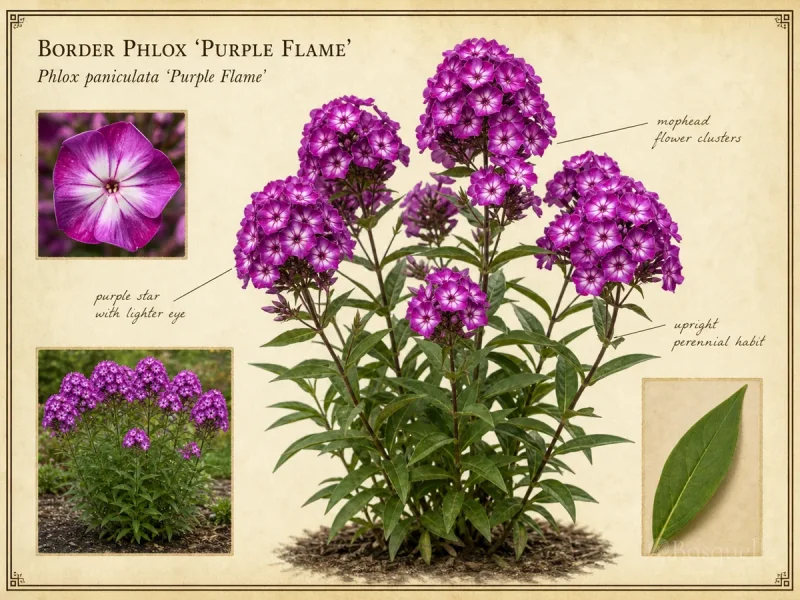
Powdery mildew is the usual failure on paniculata. Minnesota Extension: choose resistant cultivars, then give them sun and space. Iowa State: crowding and shade make it worse. Thin stems in spring. Resistant names such as David and Jeana still need air; they are not a crowded humid-bed pass.
- Space clumps about 18 inches. Leave a collar so air can move.
- In spring, once shoots are about 6 inches, keep about five or six stems and pinch the tips (Minnesota Extension). Larger heads, less mildew.
- Pick up diseased leaves. After frost, cut paniculata to a couple of inches and remove the debris.
- Moss and woodland types are not the same mildew job. Do not spray a dry rock mat like a humid border clump.
Thin stems, deadhead, and winter cut
Tall garden phlox: deadhead spent heads for a longer show. North Carolina Extension: cut plants after frost and clear old stems. Moss phlox: shear the mat by about half after spring bloom to keep it dense (Maryland Extension / North Carolina Extension). Woodland types: tidy spent bloom; do not scalp a shade mat like a hedge.
- Deadhead paniculata through summer if you want more bloom.
- Shear moss after the spring flush. Evergreen mats stay; they are not cut to the ground like paniculata in fall.
- Annual Drummond phlox: deadhead for more bloom, or let some seed if you want volunteers.
- Division windows live on Dividing Phlox.
Moss, woodland, and annual extras
Moss phlox is a sunny evergreen cushion. Creeping woodland phlox (P. stolonifera) is a shade mat with steadier moisture. Woodland phlox (P. divaricata) is a spring edge plant, not a 4-foot summer spike. Annual Drummond phlox is bedding for one warm season. Culture is shared only at “match the class”; the watering is not.
- Do not treat a vanished moss mat in summer heat as dead without checking the evergreen cushion first.
- Do not plant woodland phlox on a hot, dry bank copied from subulata.
- Do not divide Drummond annuals like paniculata. Sow again.
- Scented border picks live on Fragrant Garden Phlox.
FAQ
Are phlox perennials?
Most garden, moss, and woodland types are perennials. Drummond phlox is an annual.
Do phlox need full sun?
Tall garden and moss phlox want at least six hours. Woodland types want part shade. Shade on paniculata cuts bloom and invites mildew.
What do you do with phlox in the fall?
Cut tall garden phlox to a couple of inches after frost and remove debris. Leave moss mats in place; they are evergreen.
Does creeping phlox stay green in winter?
Moss phlox is an evergreen mat. Tall garden phlox dies back. Do not cut the moss cushion to the ground.
How do I prevent powdery mildew?
Sun, 18-inch spacing, water at the soil, thin to five or six stems, and a resistant cultivar. Air around the clump matters more than a spray.
When should I divide phlox?
Every two to four years for crowded paniculata, in spring or late summer. Full steps are on Dividing Phlox.
Is moss phlox the same as garden phlox?
No. Moss phlox carpets in spring on dry sun. Garden phlox is a tall summer spike that needs air.
Can I grow phlox in pots?
A large drained pot can hold a compact paniculata or a moss mat for a season. Open ground with matching drainage is kinder long-term.
Related guides
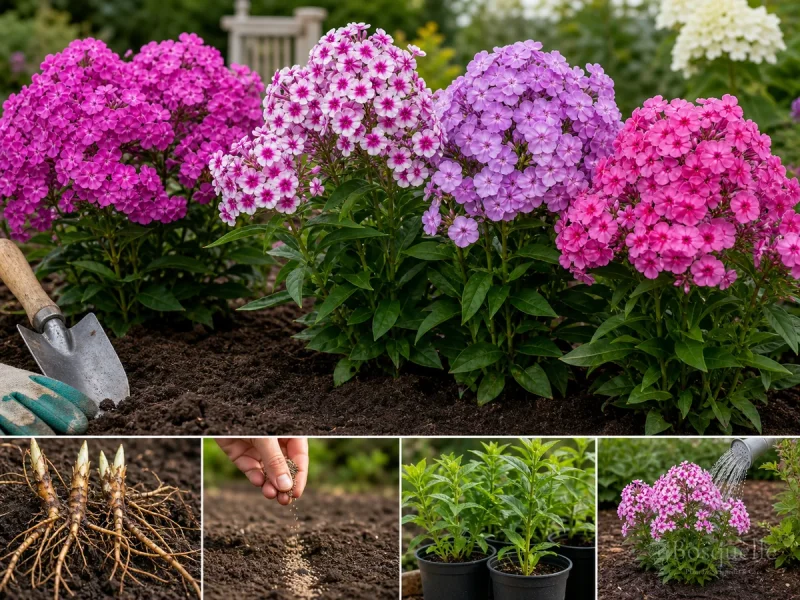
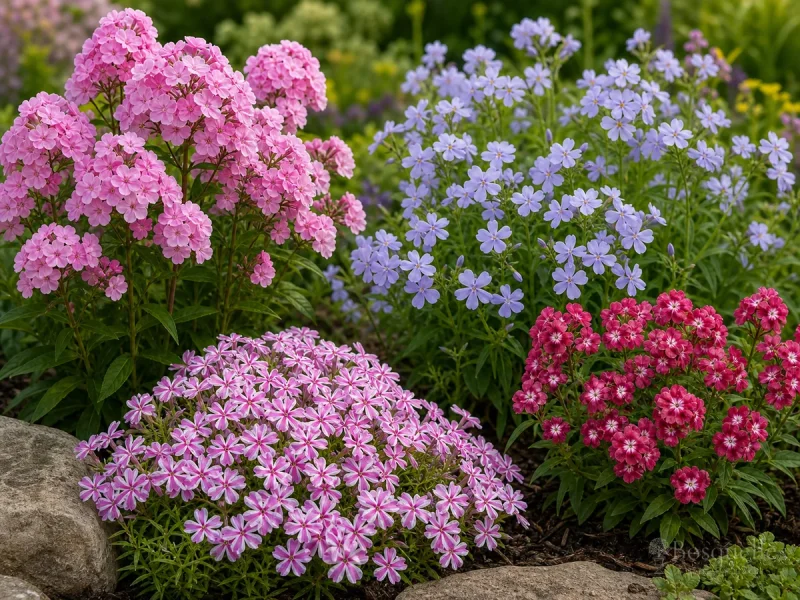

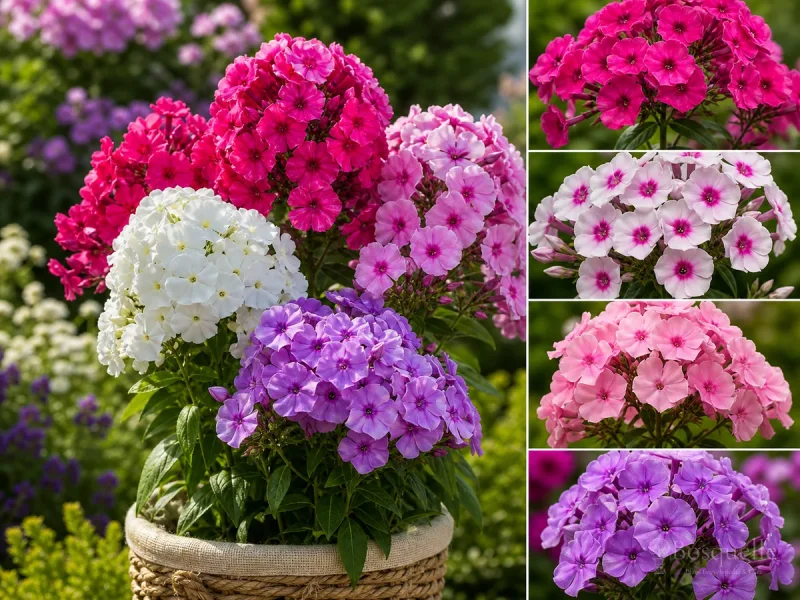
Recommended plants






This note is part of Phlox Guides.
More first-season notes by plant are gathered in How to Grow Guides.
Updated: Reviewed by Bosquelle Editors