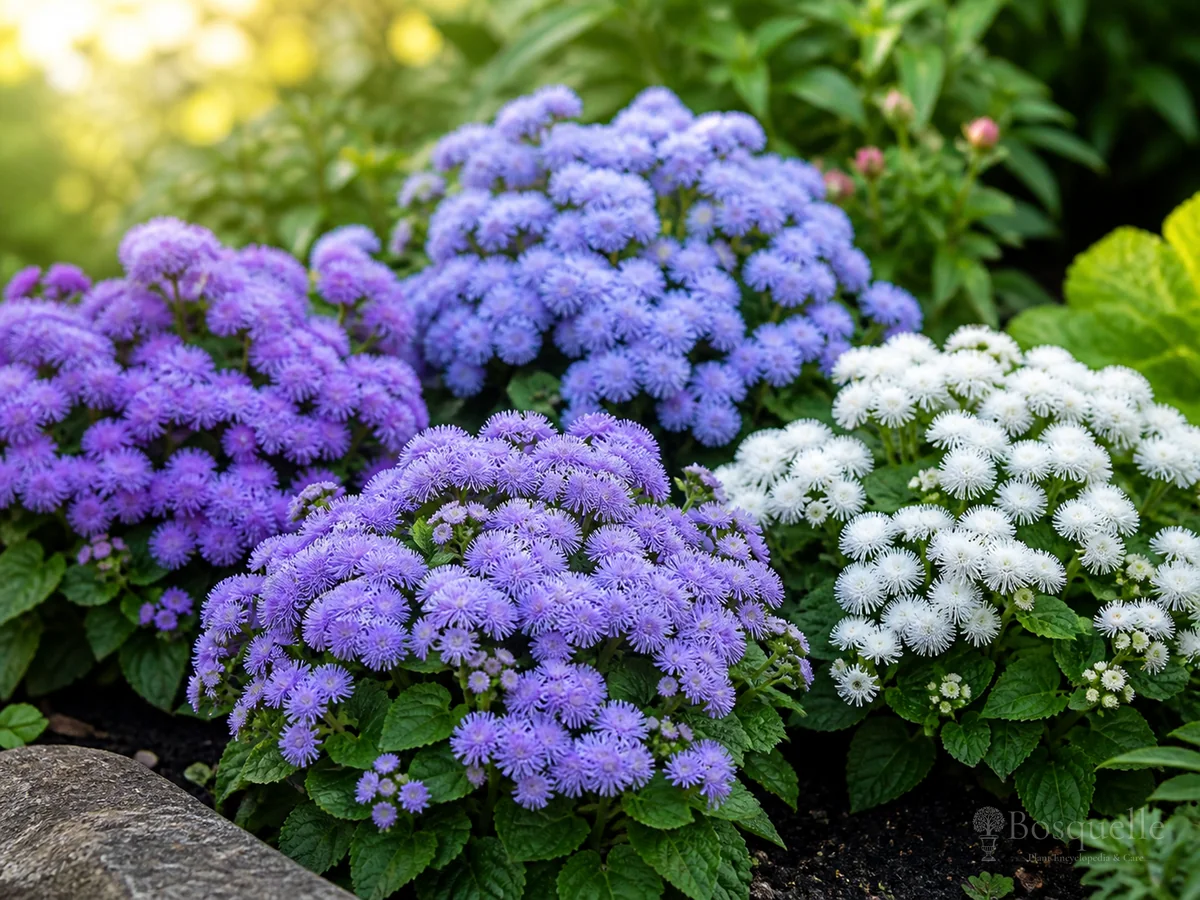
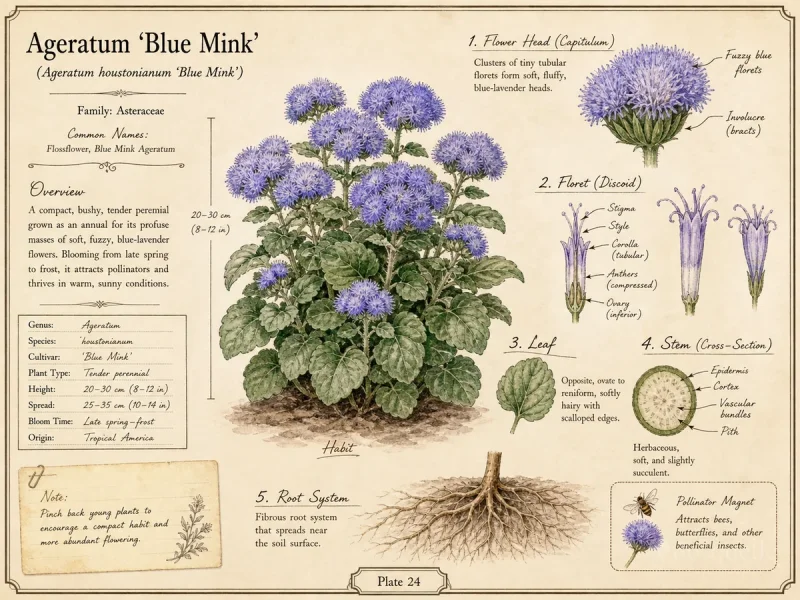
Grow ageratum in full sun on moist, fertile soil that drains. Shops also list floss flower. Keep the root zone evenly moist, deadhead spent clusters, and treat it as a frost-tender annual.

Full sun, even moisture, and a frost-tender annual
| Factor | Recommended | Avoid |
|---|---|---|
| Light | Full sun for bloom; light afternoon shade in brutal heat | Deep shade with stretch and few flowers |
| Water | Even moisture; water when the top of the soil starts to dry | A drought gravel strip, or a soggy hole |
| Soil | Fertile ground that still drains | Lean dry sand with no organic matter |
| Season | A frost-tender annual; replace after winter | Expecting the same crown back after a freeze |
Ageratum wants full sun and moist, fertile soil that does not sit wet. It is a frost-tender annual in most gardens, not a returning perennial. [1] In hot summers, light afternoon shade keeps plants from wilting in midday scorch. [2] Water when the top of the soil starts to dry. Shallow roots wilt fast if the bed swings from bone-dry to soaked. Fertile soil keeps bloom coming through summer; a starved bed fades early even in sun. In a long heatwave, plants often fade even when you water — refresh tired mounds rather than spraying for a disease that is really heat, not a mystery pest.
Is ageratum an annual or a perennial?
In most U.S. gardens it is a frost-tender annual. It does not overwinter where freezes occur. Replant after frost.
Does ageratum need full sun?
Full sun is the default for bloom. Light afternoon shade helps in extreme heat. Deep shade cuts flowers.
Why did my ageratum collapse in the heat?
Prolonged heat often ends or stresses stands even with watering. Offer afternoon shade, or replace tired plants midseason.
Deadhead spent clusters for more bloom
Spent flower heads turn brown and stay on most cultivars. Removing them keeps the plant tidy and pushes more bloom while the weather stays kind. [3] Some series cover old blooms with new ones and need less grooming. Do not shear the plant into a tight ball every week — leave enough leaves to feed the next flush. Spider mites show up in hot, dry spells; rinse the foliage and keep moisture even rather than waiting for a sticky mess.
- Pinch young tips once if you want a denser mound.
- Snap or snip spent clusters as they brown. Leave the foliage.
- Water at the soil in the morning so leaves dry before night. Wet overnight canopies invite mildew and leaf spot. [4]
- If bloom stalls while leaves look fine, check deadheading and skip a heavy nitrogen feed that makes soft, floppy growth.
Should you deadhead ageratum?
Yes — removing spent clusters tidies the plant and encourages more bloom. Some hybrids are more self-cleaning but still benefit from a light groom.
If mounds fade in a heatwave, add afternoon shade and even moisture before you replace them — do not wait for a second flush on a cooked plant.
FAQ
Can I grow ageratum in a pot?
Yes in a draining potting mix. Compact faces suit pots. Water when the top of the mix starts to dry — pots dry faster than beds.
What else can I plant nearby?
Other summer bedding that wants sun and even moisture — petunia, marigold, or cosmos. Skip xeric neighbors that want a dry gravel strip.
What pests hit ageratum?
Whiteflies and aphids show up on soft growth. Spider mites flare in hot, dry spells. Powdery mildew follows wet overnight foliage. See the whiteflies, aphids, or spider mites hub if a spray is warranted.
Is ageratum toxic to pets?
All parts can be harmful if eaten. Grow it as ornamental color and keep pets and livestock from chewing the bed.
Related guides

Recommended plants


References
- [1] Illinois Extension -
https://extension.illinois.edu/flowers/ageratum - [2] Gardeners Path -
https://gardenerspath.com/plants/flowers/grow-ageratum/ - [3] Wisconsin Horticulture -
https://hort.extension.wisc.edu/articles/ageratum/ - [4] NC State Extension Gardener -
https://plants.ces.ncsu.edu/plants/ageratum-houstonianum/
This note is part of Ageratum Guides.
More first-season notes by plant are gathered in How to Grow Guides.
Updated: Reviewed by Bosquelle Editors