
Asters want full sun, even moisture in well-drained soil, and space so air can dry the leaves. Crowded, shady, or drought-stressed clumps pick up powdery mildew by midsummer. Woodland types are the exception: they want part shade, not a hot dry strip.

Pinch tall stems once in late spring for a bushier fall show. The pinch steps live on Pruning Asters. Divide congested clumps in spring. Sort height and light on Types of Asters.
Full sun, moist drain, and air
| Factor | Recommended | Avoid |
|---|---|---|
| Light | Full sun, 6 or more hours, for most garden types | Tree shade that keeps leaves wet and cuts bloom |
| Soil | Moist, well-drained loam; compost in clay | A winter puddle on the crown, or bone-dry sand with no water |
| Spacing | 18–24 inches so air moves through the clump | A jammed mat that never dries after rain |
| Water | Soak the soil at the base in the morning | Overhead spray that wets foliage into the night |
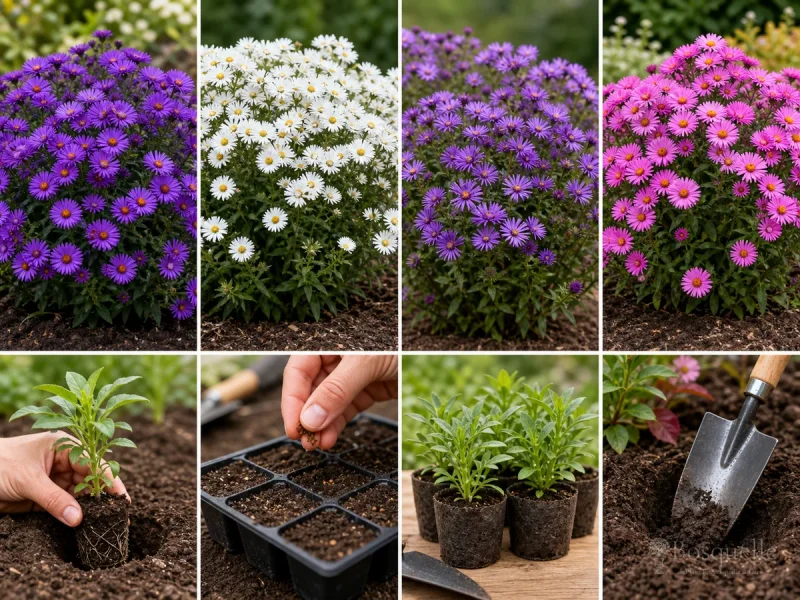
Pick the sunniest open strip you have. Morning sun that dries dew does more for mildew than a spray. Mix two inches of compost into clay so water moves, then plant the crown at soil level. Sand needs more summer water, not a richer manure hole.
Space clumps 18–24 inches apart, more for tall New England types. Air between stems is the shared rule. A packed row looks full in May and then mildews in August.
Most North American garden asters are now classified as Symphyotrichum (wood types often as Eurybia). Nursery tags still say Aster. Buy by height, light, and mildew notes, not by whether the pot uses the old genus name.
Pets: do not encourage chewing. This is not a forage plant. Keep cut debris out of reach of animals that eat garden waste.
Wood and shade-edge types such as White Wood Aster want morning sun or dappled shade and a woodland edge. Do not copy a Purple Dome sun strip onto a white wood aster.
New England vs New York types
New England asters (Symphyotrichum novae-angliae) are often taller, with hairy leaves. New York asters, also sold as Michaelmas daisies (S. novi-belgii), are often shorter, with smoother leaves, and they mildew faster in still, humid air. Both still want sun and space. Height and mildew risk change. The watering rule does not become a second care system.
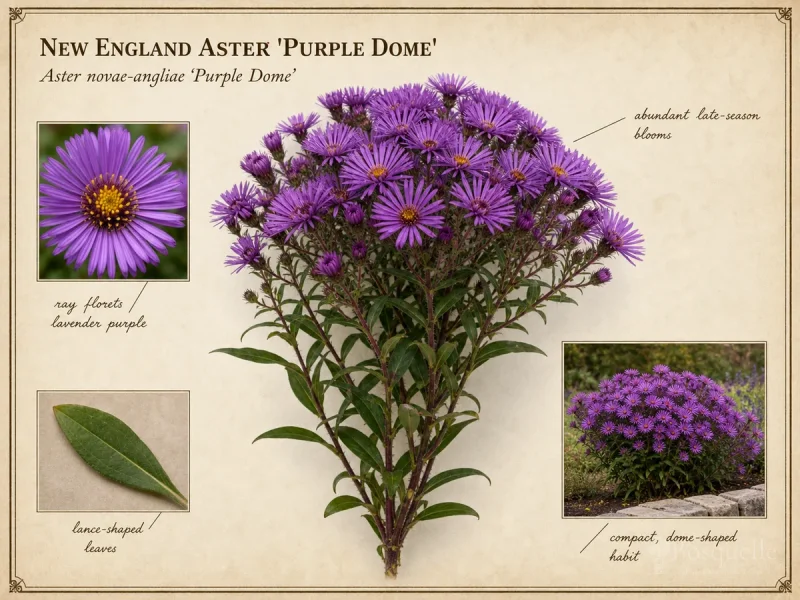
Purple Dome is a compact New England dome. Alma Potschke and Harrington's Pink are taller New England color. Give them sun, even moisture through summer, and room. Pinch once in late spring if you want a shorter fall plant.
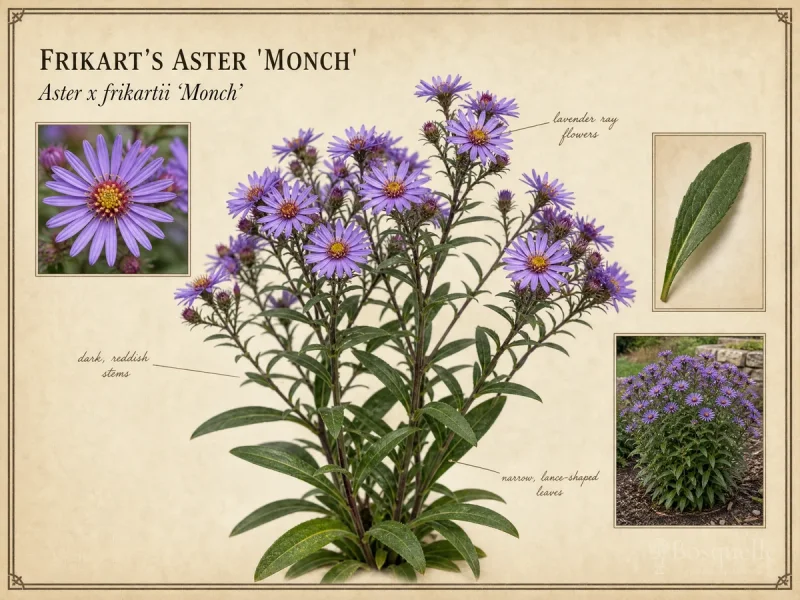
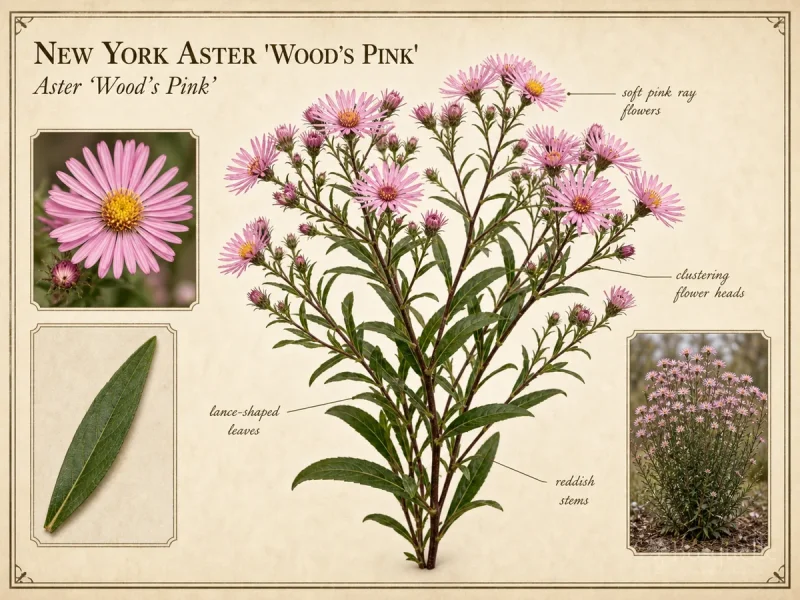
Professor Anton Kippenberg and Wood's Pink are compact New York types. Space them and water at the base. Mönch is a × frikartii hybrid with a longer daisy season. It still wants sun and air.
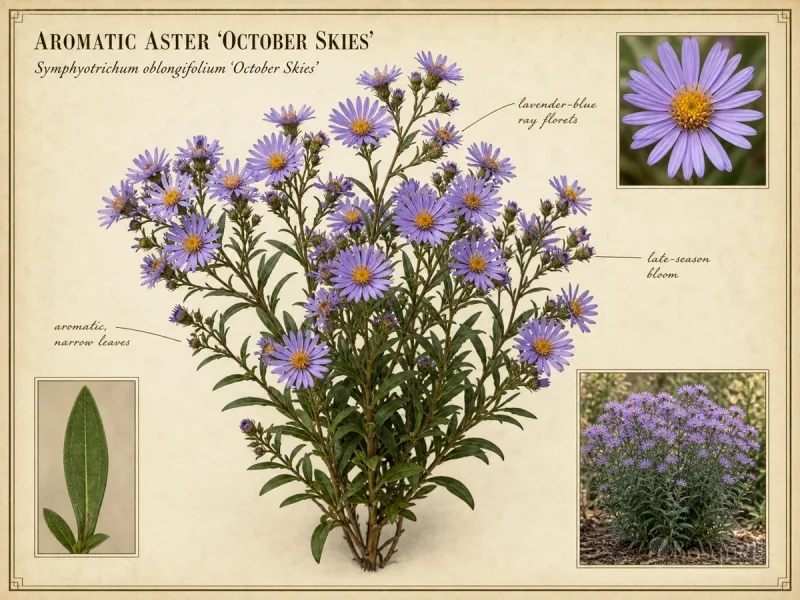
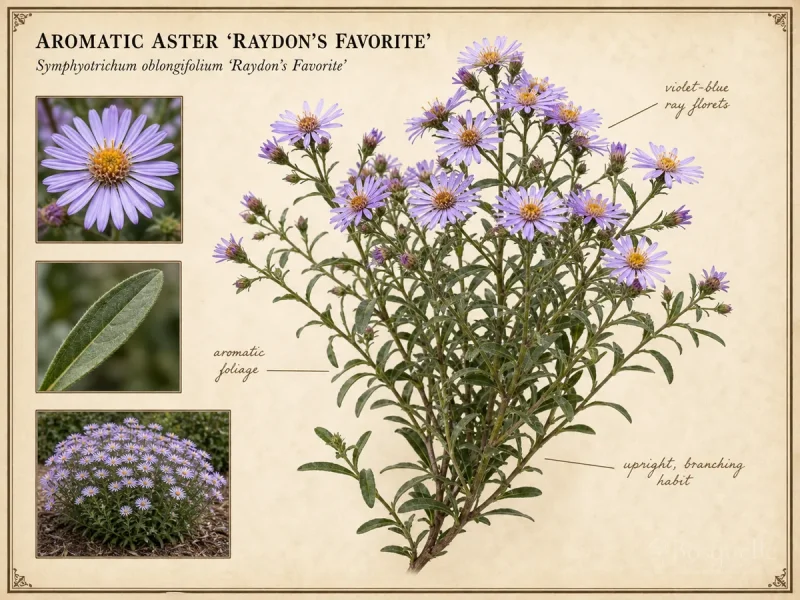
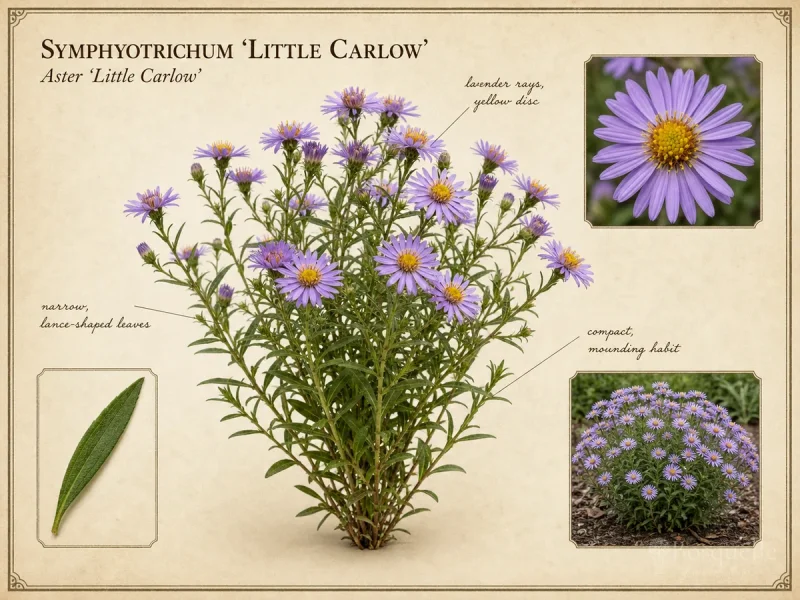
Heath and aromatic types such as Snow Flurry, October Skies, and Raydon's Favorite lean drier once rooted. Little Carlow is a long-season cordifolius cloud. Sort class on Types of Asters before you copy a neighbor’s hose.
Powdery mildew, pinch, and water
| Factor | Recommended | Avoid |
|---|---|---|
| Air | Sun, spacing, and a thinned center on old clumps | Hoping a spray will fix a shady, crowded site |
| Pinch | Once in late spring, about one-third, on tall types | Pinching after flower buds have set in late summer |
| Water | Deep soak at the soil in the morning | Letting New England types wilt hard before bloom |
Powdery mildew is a white or gray film on leaves. It thrives where leaves stay wet and air is still. Full sun, spacing, and water at the base prevent more than a late spray. New York types mildew faster than hairy-leaved New England types in the same jammed bed.
A drought-stressed clump mildews sooner. Keep even moisture on New England and New York types through summer, then do not flood the crown in winter. Aromatic types can take a drier strip once they are rooted.
Pinch tall stems in late spring when growth is about 12 inches. Cut the tips by about one-third. You get more branches and a slightly later, bushier fall show. Compact domes such as Purple Dome often need no pinch. Numbered steps, a stop date, and winter cut-or-leave live on Pruning Asters.
Aster yellows and similar stunting are not fixed by more water. Destroy a plant that stays yellow and never blooms. Do not compost it next to healthy clumps.
If lower leaves mildew but the top still flowers, thin inner stems in spring next year and widen the gap to neighbors. Replace a cultivar that mildews every year despite sun and space. Genetics matter.
Divide, pots, and next jobs
Divide every two to three years in spring when new shoots are a few inches tall. Lift the clump, keep vigorous outer pieces, and discard the woody center. Full steps live on Dividing Asters.
Compact types can sit in a large, drained pot for a season. Empty the saucer. This cluster has no containers page. Beds with sun and air are the better long-term home.
Partners that share sun and air live on Aster Companion Plants. Late-season picks live on Best Asters for Fall Color. Do not plant a woodland type into that full-sun shortlist hole.
If bloom was poor after a year you jammed the row, widen spacing before you buy a new color. Mildew and a thin center are site problems more often than a missed fertilizer.
Store unplanted nursery pots in bright shade and keep the mix barely moist until the hole is ready. Do not leave them in a hot car.
When two instincts compete — collect every color versus master one sunny, airy strip — master the strip. Color is easy to swap next year. A mildew mat wastes the fall show.
Label the row with class (New England, New York, aromatic, or wood) and year the day you plant. Mixed purples look the same in leaf.
A late spring freeze that nips new shoots is not a reason to flood the crown. Wait for green. Then keep the same sun and spacing.
Self-sown seedlings of species types can fill gaps. Named hybrids usually will not come true. Pull extras while they are small if you wanted a single cultivar row.
Test drain before you plant. Dig a hole, fill it with water, and watch. If it still stands an hour later, raise the bed. Asters fail from a sealed winter puddle as well as from drought in July.
First-year plants need even moisture until roots leave the nursery mix. After that, water by class. Aromatic types that are rooted should dry between soaks. New England types still want a soak in a long drought, then a chance to dry at the crown.
A four-year clump that blooms only on a thin ring is ready to divide. Do not treat a tired aster like a peony you can ignore for a decade. Spring split restores air in the middle.
Keep a simple record: class, plant date, and whether mildew showed. Next spring you will know whether to pinch, divide, or move the plant into more sun. Guessing from flower color alone repeats last year’s film.
If rabbits clip new shoots, protect the crown with a short ring, then keep sun and air. Browse is not a watering problem. Replace an eaten clump only after you confirm the hole still dries after rain.
Tall New England types in rich soil may still lean. Stake while shoots are short, or pinch in late spring so the plant stays shorter. A late cane after flop is weaker than an early pinch.
Cut a few stems for the house if you want. Leave most of the clump for pollinators. Cutting is not a substitute for the spring divide when the center has gone woody.
After bloom, you may leave seedheads for birds. That does not replace next spring’s split. Cut mildewed lower leaves in fall if they sit wet on the crown. Do not compost diseased foliage next to healthy clumps.
A nursery gallon that sat wet in a shop aisle needs a dry start. Knock off sour mix, then plant at soil level in sun. Shocked plants bloom later. That delay is not a reason to flood the crown.
If two instincts compete in fall — cut everything versus leave stems — leave most of the top until spring unless foliage is a wet mildew mat on the crown. Then clear the mush. Keep firm stems.
When heat arrives, resist panic fertilizer. Stem strength comes from sun and air more often than from another soluble feed. A light compost in spring is enough for most beds.
If neighbors ask why yours flowered and theirs mildewed, the answer is usually sun plus spacing, not a secret spray. Move a shady clump in spring. Then keep the same 18–24 inch gap.
Keep a written note of pinch date and divide year on the tag. Next spring you will not guess whether the plant is due. Color on the flower does not record those jobs.
FAQ
Do asters need full sun?
Yes for most garden types. Aim for six or more hours. Woodland types want part shade. Deep shade cuts bloom and raises mildew.
Why does my aster get powdery mildew?
Usually shade, crowding, wet leaves, or a drought-stressed clump. Give sun, 18–24 inches of space, and water at the base. New York types mildew faster than New England types in the same jammed bed.
Should I pinch asters?
Pinch tall types once in late spring, about one-third, for a bushier fall plant. Compact domes often need no pinch. See Pruning Asters.
When should I divide asters?
Every two to three years in spring when new shoots show. See Dividing Asters.
Is aster the same as Symphyotrichum?
Most North American garden asters are classified as Symphyotrichum. Tags still say Aster. Buy by height and light, not by the old genus name.
Can I grow asters in pots?
Compact types can sit in a large drained pot for a season. Beds with sun and air are the better long-term home.
What is the difference between New England and New York asters?
New England types are often taller with hairy leaves. New York types are often shorter with smoother leaves and mildew faster in still air. Both want sun and space.
Do I fertilize asters?
A light compost in spring is enough. Heavy nitrogen flops stems and packs the foliage.
Where are fall-color picks?
Best Asters for Fall Color — linked above.
Related guides



Recommended plants





This note is part of Aster Guides.
More first-season notes by plant are gathered in How to Grow Guides.
Updated: Reviewed by Bosquelle Editors