
This shortlist is for late-season daisy color in sun. Compact New England domes, New York types, long-season frikartii, and aromatic mats. It is not a fragrance list. Purple Dome is a compact fall dome. October Skies is a late aromatic mat.

Sun and air stay on How to Grow Asters. Pinch steps live on Pruning Asters.
How we picked these
| Factor | Recommended | Avoid |
|---|---|---|
| Season | Late color, a long daisy window, or a compact fall mound | Buying for perfume; catalog scent is rare here |
| Site | Full sun and air for these picks | Dropping a woodland type into this list |
| Class | Confirm New England, New York, frikartii, or aromatic | Treating every purple daisy as one plant |
We picked garden asters that carry color after summer perennials fade. Compact show, tall back-border color, and late aromatic mats all qualify. Fragrance is not the filter. Almost none of these are scent plants.
Woodland types belong on the types page, not as the lead plants here. They want part shade. This page is the sunny fall strip.
Fall-color shortlist — Purple Dome to Little Carlow
Use the plants on this page as a starting set. Confirm sun and air on your site before you copy a fall photo onto a shady fence.
Purple Dome is the compact New England mound. Alma Potschke and Harrington's Pink carry taller New England color. Pinch the tall ones in late spring if you want a shorter plant.
Professor Anton Kippenberg and Wood's Pink are compact New York types for the front. Space them. Mönch is the long-season frikartii blue.
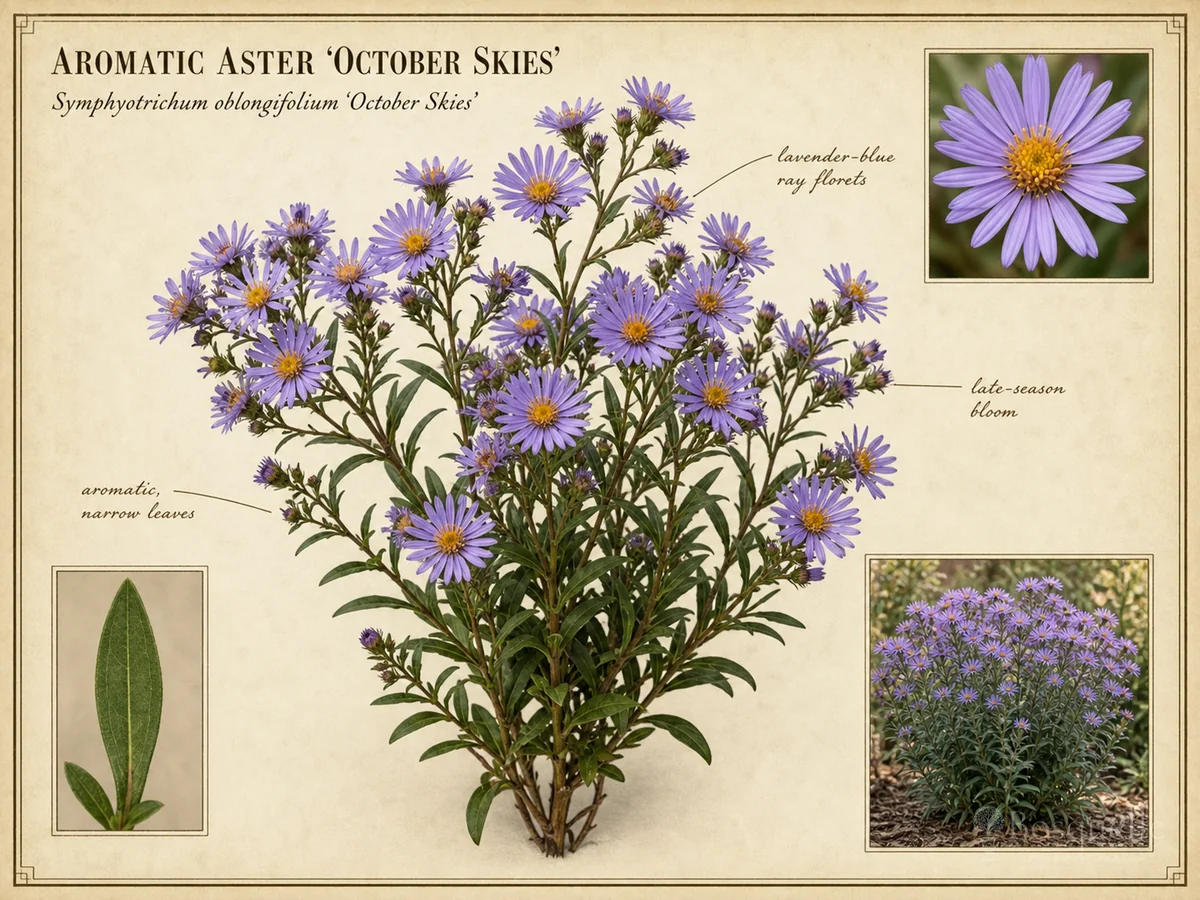
Little Carlow is a cordifolius cloud. Snow Flurry is a white heath mat. October Skies and Raydon's Favorite are aromatic types for a leaner, drier sun edge once rooted.
If two packets share a similar purple, ignore the name and read class. New England vs New York vs aromatic is the filter. Color is second.
Planting asters for fall color
- Choose full sun and soil that drains. Leave 18–24 inches between clumps.
- Set the crown at soil level. Water to establish through the first summer.
- Pinch tall types once in late spring. Steps live on Pruning Asters.
- Water at the base in the morning. Do not wet the leaves into the night.
- Divide every two to three years in spring. See Dividing Asters.
- Pair sun-and-air neighbors. See Aster Companion Plants.
Shared growing rules live on How to Grow Asters. Class: Types of Asters.
Do not enrich the hole for “better color.” Extra nitrogen flops stems and packs foliage that mildews. Compost in spring is enough.
A pot on a patio can hold a compact type for a season if it drains. Empty the saucer. This cluster has no containers page.
Group three of the same class. A single New York spike in a wet shaded corner is a trial you will lose.
Wrong fall-color buys
A woodland aster bought because the photo looked like fall purple still wants part shade. Put it on the types page’s shade list, not in this strip.
A New York type in a still, crowded bowl is a one-season mildew plant. Fix sun and space or skip the genus.
A fragrance search is the wrong page. Buy these for late daisies, not perfume.
If last year’s clump mildewed, widen the gap and divide in spring. Do not only shop a darker purple.
Do not crowd the clump with thirsty annuals. They hide wet leaves and force the hose. Lean, airy neighbors only.
Write class on the tag the day you plant. Next year’s you will not remember which purple was the compact New England dome.
If two instincts compete — collect every series versus master one sunny strip — master the strip. Color is easy to swap. A mildew mat is not.
A drought catalog that lists every aster as tough is selling a photo. New England types still want summer moisture. Aromatic types lean drier. Read class.
Prep the strip once. Sun. Drain. Space. Then plant. Confirm local airflow before you copy a compact dome onto a fence that never dries.
After planting, water to establish. Then keep even moisture on New England and New York types through summer. Watch the leaves for white film, not only the calendar.
Label the strip with class the day you plant. Next year’s you will not remember which blue was the long-season hybrid. Color is easy to swap. Air is not.
Mix compact New England at the front with taller types behind. Keep them in the same sunny watering basin. Do not drag a woodland aster across that edge because the photo was purple.
Confirm local airflow before you copy a compact dome onto a fence that never dries. Morning sun that clears dew is the site. A north wall that stays wet is not. No cultivar color fixes still air.
After the first fall, judge the clump. If the center thinned, divide next spring. If mildew coated the lower leaves, widen the gap. Shopping a new pink without changing space repeats the film.
Leave some seed if you want species volunteers. Named hybrids usually will not come true. Pull extras while they are small if you wanted a single cultivar row.
If two packets share a similar blue, read class before color. Frikartii carries a longer season. Compact New England is a mound. Aromatic is the drier edge. Mixing them in one wet shade hole fails all three.
Prep the strip once. Sun. Space. Water at the base. Then plant. A late photo of purple daisies does not invent air in a jammed fence corner.
FAQ
Which asters are best for fall color?
Compact New England types, New York types, long-season frikartii, and aromatic mats in full sun with air. Not every woodland aster.
Is this a fragrant list?
No. This page is late-season color. Fragrance is not the filter.
Do these need different care?
No. Fall color is a selection filter. Shared care lives on How to Grow Asters.
Should I pinch these?
Pinch tall types once in late spring. Compact domes often need no pinch. See Pruning Asters.
Where is full care?
How to Grow Asters.
Can I grow them in a pot?
Compact types in a large drained pot for a season. Beds are better long-term.
How do I choose among the purples?
Read New England vs New York vs aromatic class, then color. See Types of Asters.
Will they bloom the first year?
Often, from nursery plants. Seed-grown species may wait a season.
Related guides


Recommended plants




This note is part of Aster Guides.
More job shortlists live in Best Plant Picks Guides.
Updated: Reviewed by Bosquelle Editors