
Divide asters in early spring when new shoots are a few inches tall. Lift the clump, keep vigorous outer pieces, and discard the woody center. Congested mats mildew and bloom on a thin ring. Purple Dome follows that calendar.

Sun and air stay on How to Grow Asters. Pinch steps live on Pruning Asters.
When to divide asters
| Factor | Recommended | Avoid |
|---|---|---|
| Timing | Early spring, shoots 2–4 inches tall | Peak summer heat, or a frozen midwinter lift |
| How often | Every 2–3 years on vigorous mats | Waiting until the center is a dead hollow |
| Signals | Thin center, weaker bloom, worse mildew | Splitting a first-year plant that still has air |
Wait until you can see new green. A ring of shoots around a woody middle is the clearest signal. Shared site rules stay on the grow page. This page is the split.
Purple Dome, Alma Potschke, and Professor Anton Kippenberg all wait for spring green. Class changes height and mildew risk, not the calendar of the lift.
A light fall split can work in mild winters if you water new pieces in well. Spring is the safer default. Avoid peak summer.
If mildew was bad last year and the clump is jammed, divide even if bloom was still decent. Air in the middle is the point.
Dig and split congested mats
- Water the clump the day before if the soil is dry, so it lifts in one piece.
- Loosen soil on all sides. Lift the whole clump; do not pry one edge.
- Tease or cut outer rooted pieces with green shoots and firm roots.
- Discard the woody, hollow, or dead center. Keep only living outer pieces.
- Replant at the same depth. Space new clumps 18–24 inches apart.
- Water in. Keep even moisture for two to three weeks while roots take.
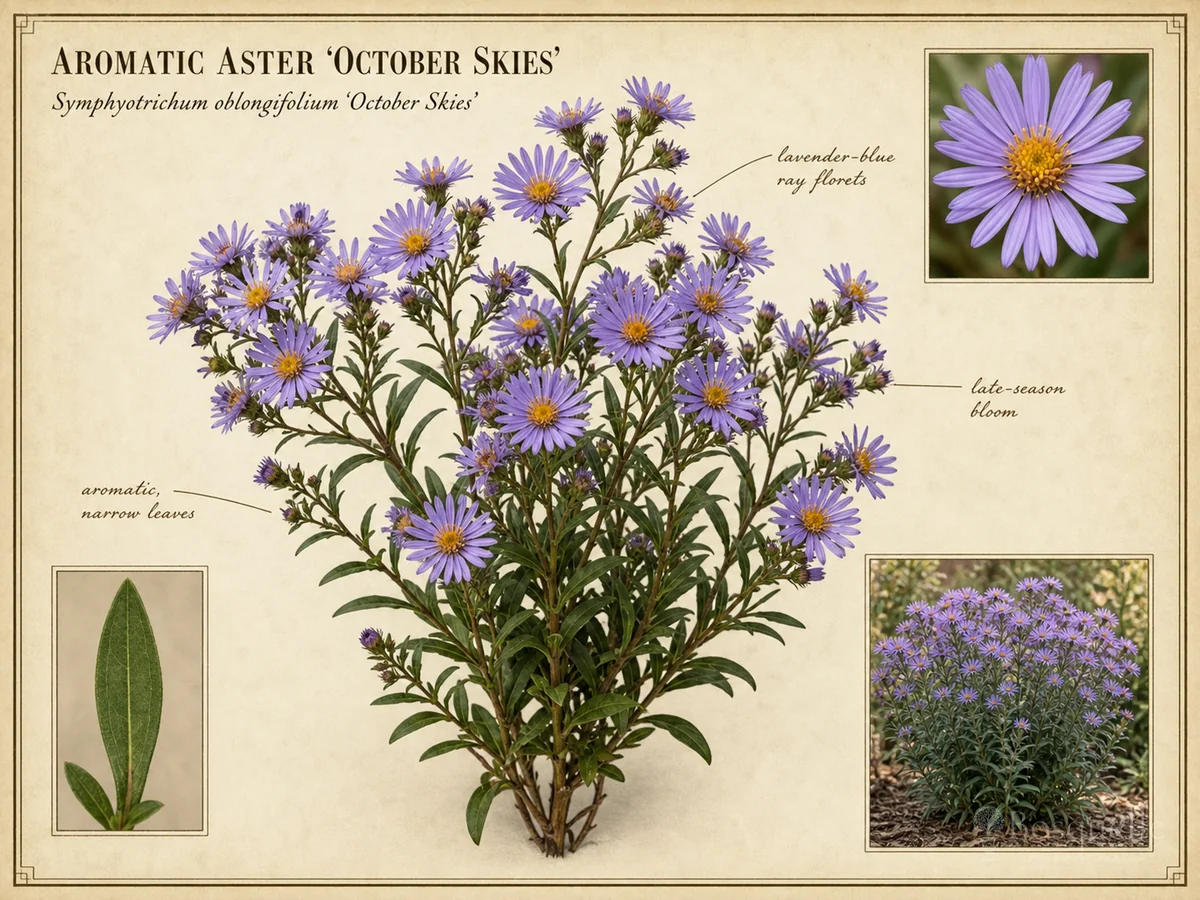
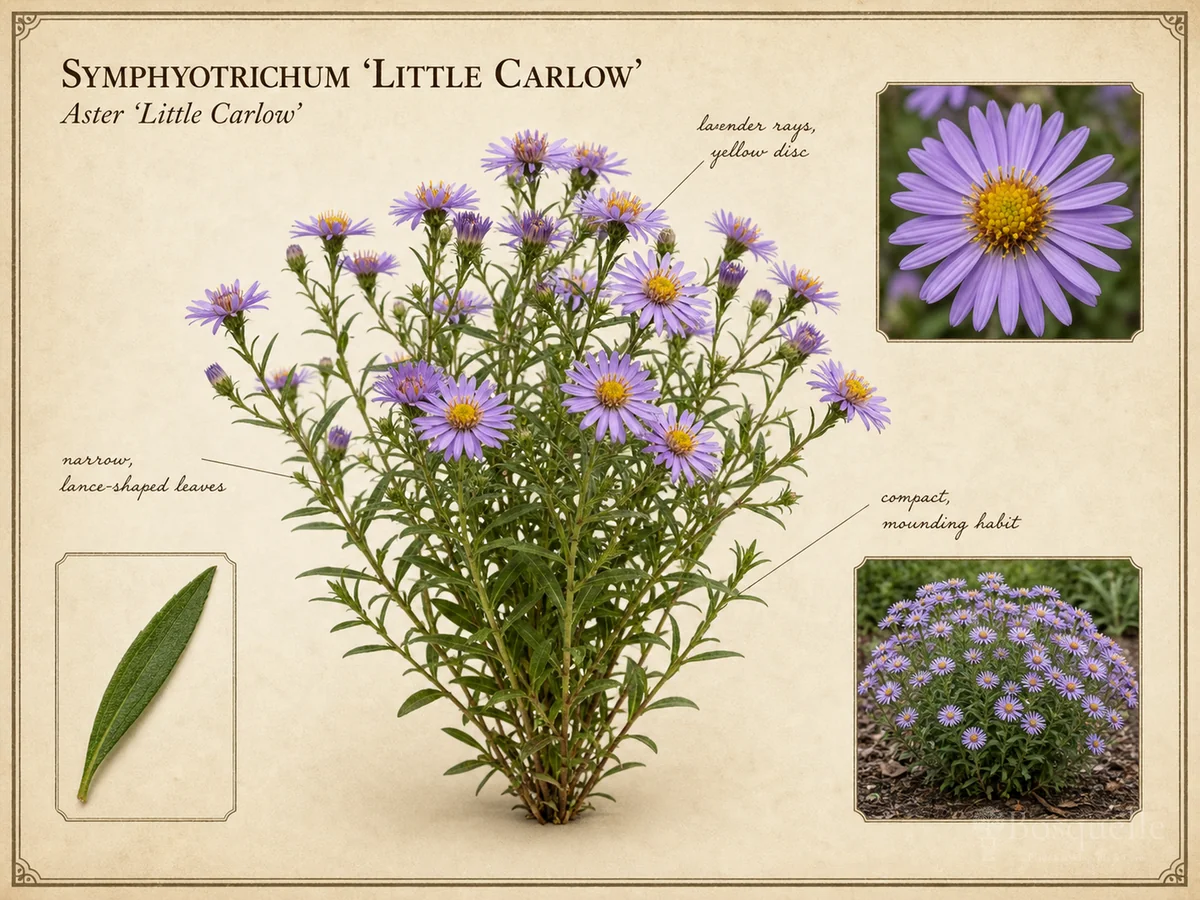
Mönch, Little Carlow, and October Skies split the same way. Keep heath mats such as Snow Flurry in generous pieces so they do not dry out in week one.
Label woodland pieces such as White Wood Aster before you split so you match part shade on replant. Do not drop a wood aster into a hot New England hole.
Use a sharp knife or spade. A crushing tool leaves ragged pieces that sit wet. Each division should stand on its own once replanted.
Discard the woody center
The tired middle blooms poorly and packs foliage that mildews. Keeping it saves no time. Compost only healthy outer pieces. Destroy a plant that stayed yellow and never bloomed.
New York types such as Professor Anton Kippenberg benefit most from this discard. Crowding the old center back in defeats the split.
Do not replant pieces so close that the gap closes by July. The divide is also an airflow reset.
Replant and aftercare
Match light to class. Sun types go back to sun. Wood types go back to an edge. Water to establish. Do not flood a freshly cut crown in a sealed hole.
Partners should have left you a path. If they did not, you will damage neighbors getting in. See Aster Companion Plants.
If you want better late-season plants, open Best Asters for Fall Color before you replace a mildew-prone New York type with another jammed row of the same.
Expect a short pause, then new growth. A plant that never greens after a wet winter was already rotting. Replacing it without changing drain or air repeats the fail.
Do not pinch the same week you divide. Let new roots take. Pinch tall types later in spring if shoots still have time to branch.
Basal shoots look like small green points at soil level. Wait until you can see them. Lifting blind in February is how gardeners break living tissue they cannot yet judge.
Use clean tools. Lift cuttings away so they do not sit on the crown. A late frost that nips new shoots is not a reason to flood the split. Wait for green, then keep the same sun and spacing.
Pinch steps live on Pruning Asters. Divide and pinch are two jobs on two calendars.
Label the new clumps with class after you replant. Mixed stubs look the same. Summer you will want to know which soak and which light to use.
Heath mats dry out faster as small pieces. Keep those divisions larger than a New England wedge. Water them more often for the first three weeks, then ease off if the type is aromatic.
Do not divide as a default on a first-year plant that still has air in the middle. Wait until the center thins or mildew worsens. A young clump needs a season to root before you split it.
If wind rocks a tall new piece, stake it loosely. Do not bury the crown to hold it. Same-depth replant and a gap to neighbors matter more than extra soil on the neck.
Aftercare is even moisture and sun, not a heavy feed. Nitrogen right after a split packs foliage. Compost can wait until the pieces are growing.
If a piece fails to green after three weeks, replace it. Do not keep watering a rotting wedge. The next piece needs the same sun and the same 18–24 inch gap.
Woodland pieces want the same lift, then a shadier hole. Do not “toughen” a white wood aster in full afternoon sun. Light class does not change because you just divided it.
FAQ
When should I divide asters?
Early spring when new shoots are 2–4 inches tall, about every two to three years.
Do I keep the center of the clump?
No. Discard the woody, hollow center. Replant vigorous outer pieces.
Can I divide asters in fall?
A light split can work in mild winters if you water new pieces in. Spring is safer.
How far apart do I replant?
About 18–24 inches so air can move. Crowding divisions brings mildew back.
Is this the full care guide?
No. This is the seasonal split. Care lives on How to Grow Asters.
Should I pinch after dividing?
Not the same week. Let roots take. Pinch tall types later in spring if there is time to branch. See Pruning Asters.
Do woodland asters divide the same way?
Yes, but replant them in part shade. Do not drop them into a hot sun strip.
Where are partners and fall-color picks?
Aster Companion Plants and Best Asters for Fall Color.
Related guides


Recommended plants


This note is part of Aster Guides.
More notes on making another plant live in Propagating Guides.
Updated: Reviewed by Bosquelle Editors