
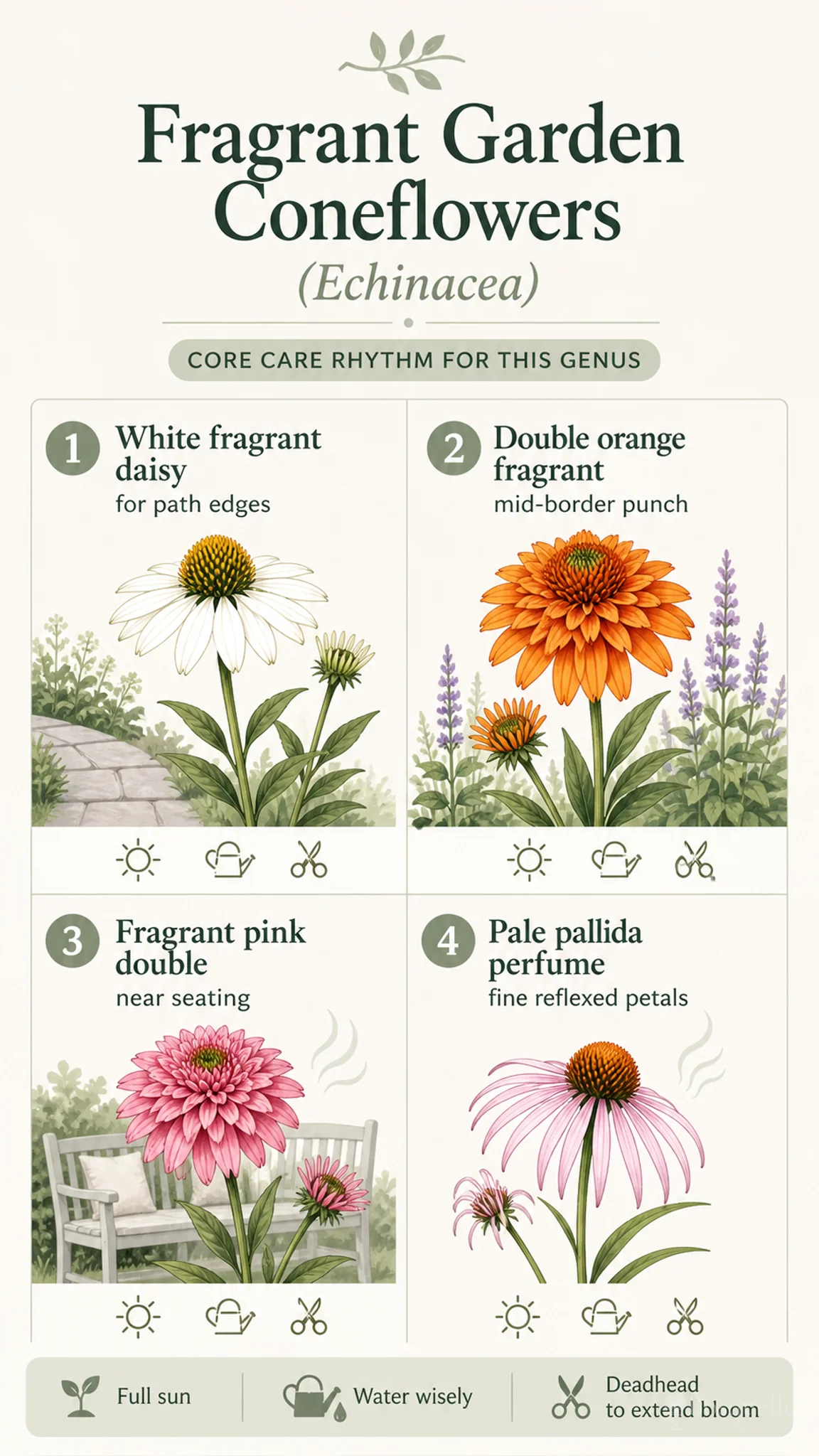
Most garden coneflowers are grown for color and pollinators, not perfume. This page is a shortlist of types sold for scent near a path or seat. White Swan is the usual white daisy with a noticeable fragrance. Shared care does not change.
Sun and lean drain stay on How to Grow Coneflowers.
How we picked these
| Factor | Recommended | Avoid |
|---|---|---|
| Filter | Echinacea sold or listed as fragrant | Assuming every purple daisy is scented |
| Site | Path, door, or seating in full sun | The back of a deep border where you never walk |
| Care | Same lean sun and drain as the grow page | Extra water or feed “for perfume” |
Scent is a selection filter, not a second method. If the tag is silent on fragrance, believe the silence. Many excellent prairie types have little smell. Shop with your nose at the nursery when you can.
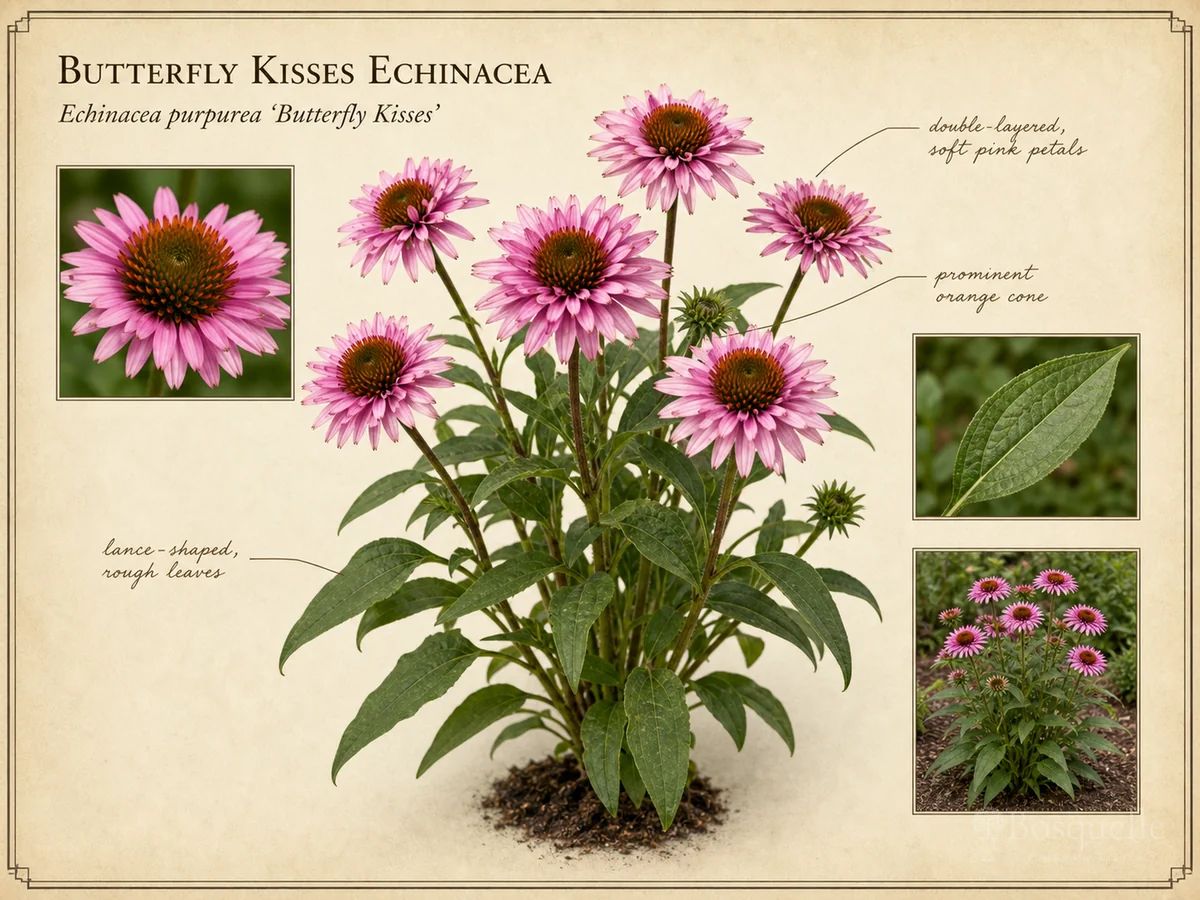
White Swan is the classic white. Hot Papaya and Butterfly Kisses are doubles often placed near seating. Doubles can hold a little more summer moisture than a lean species, still with drain. Perfume does not rewrite that.
This is not a catalog of every Echinacea in the library. Color menus are not a types page. If you need height class, read the inches on the tag. This cluster has no types URL.
Confirm genus Echinacea. A fragrant rudbeckia or annual daisy is a different plant. The Latin still matters on a scent page.
Fragrant shortlist
Use the plants on this page as a starting set, not a promise that every nose will agree. Heat, time of day, and age of the flower change what you smell. Morning on a still path is the usual test.
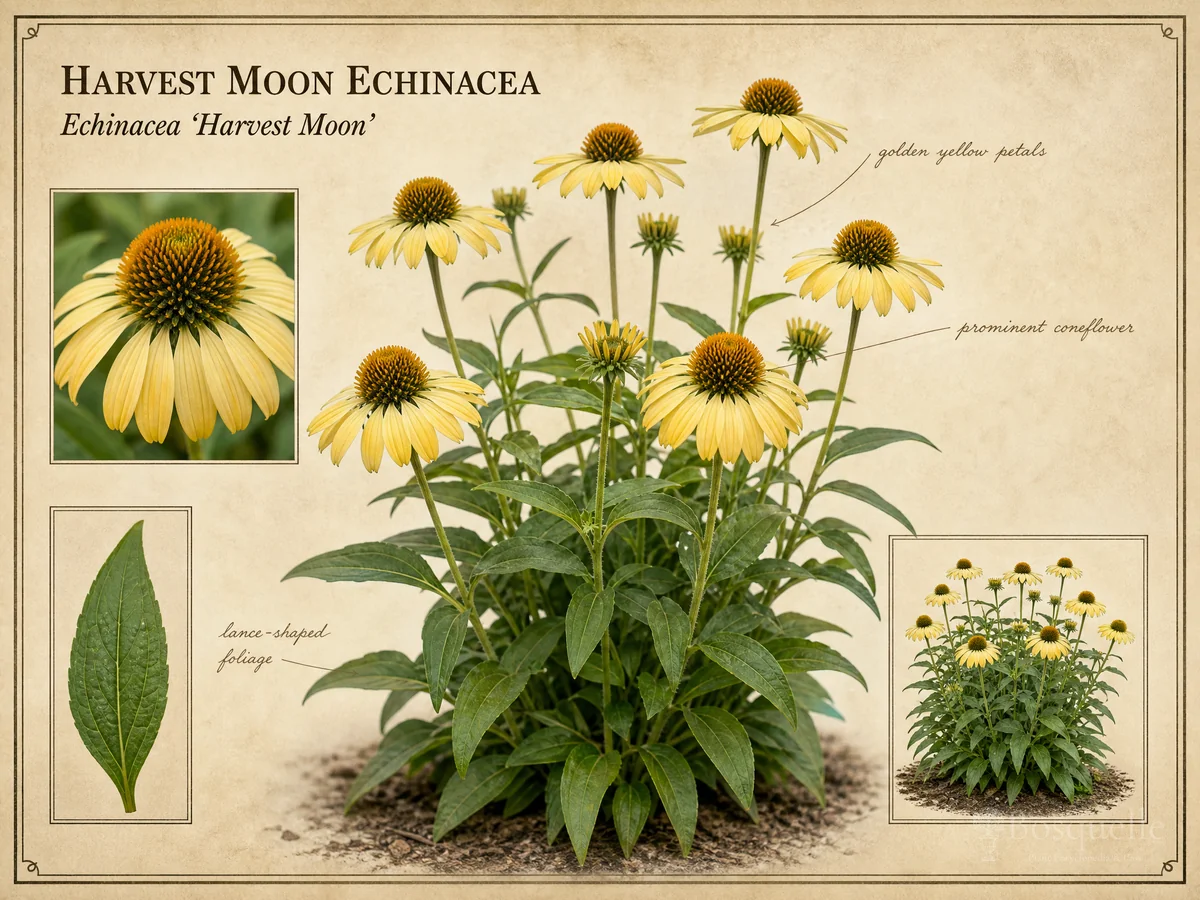
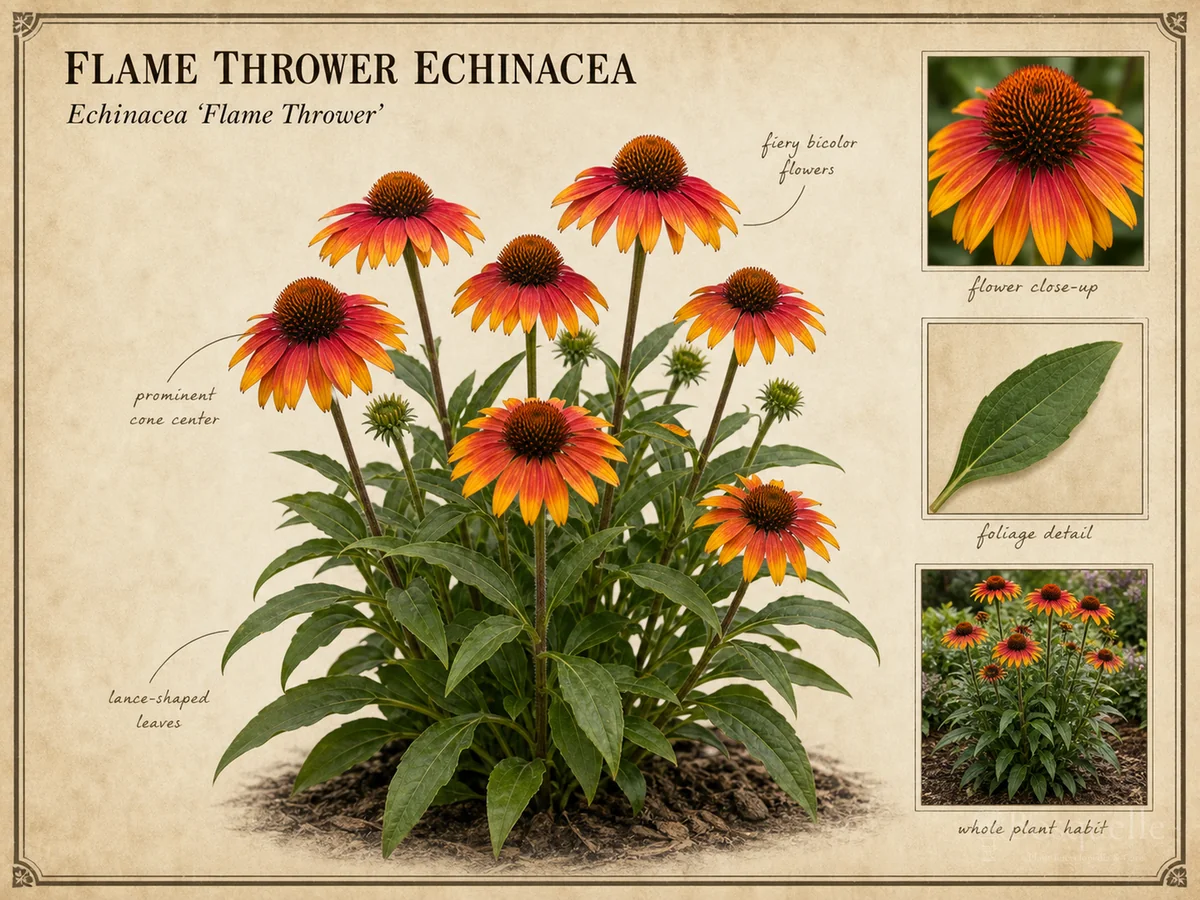
Hula Dancer is a pale pallida type with fine reflexed petals. Harvest Moon and Flame Thrower sit on the warm-color side of the shortlist. They still want full sun and a crown that drains.
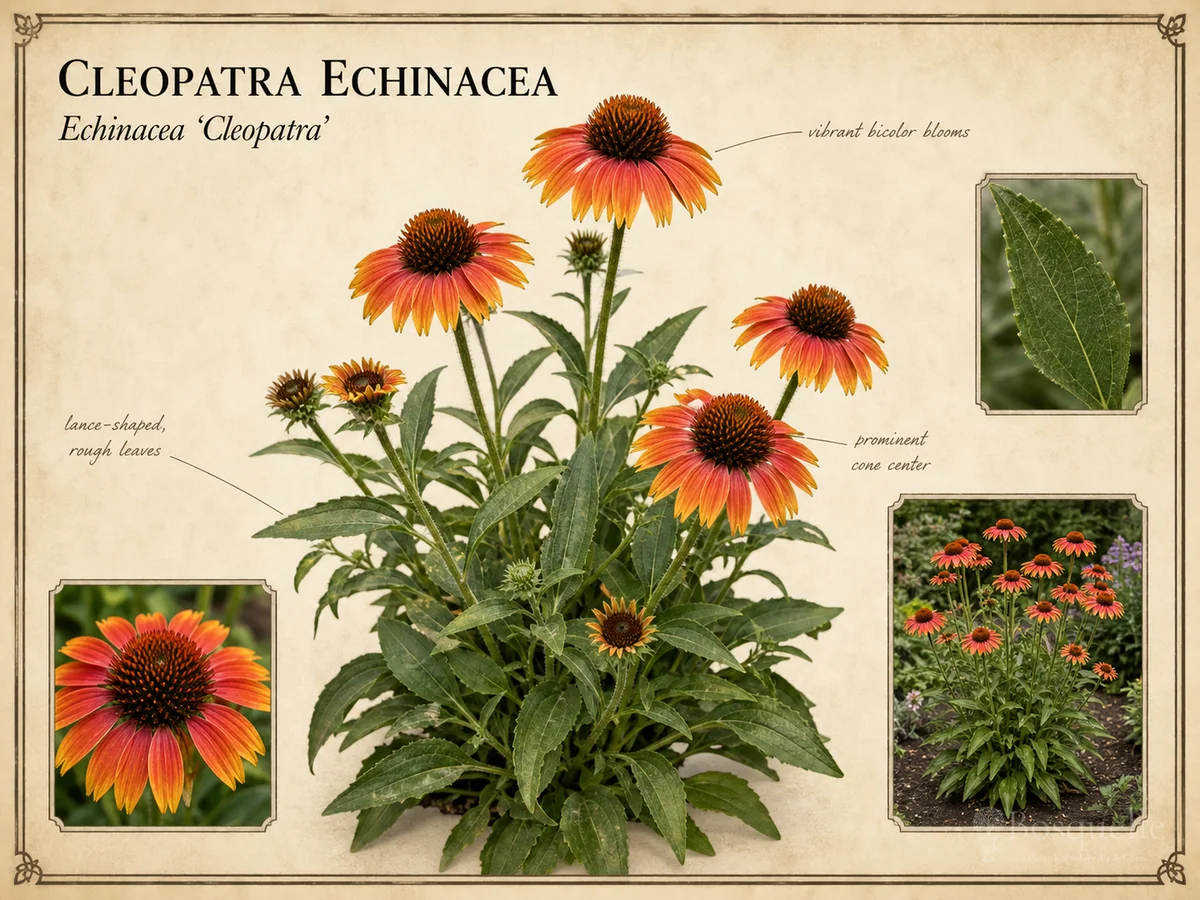
Cleopatra and Big Kahuna are further warm-color picks. Taller stems need room. Do not jam a statement plant against a path where sleeves snag, even if the scent is the point.
If two packets share a similar trade name, smell them. Names proliferate. A gold thumbnail is not a fragrance guarantee.
Leave seedheads or deadhead the same as on the grow page. Scent in July does not require you to cut every cone in October. Goldfinches do not care what the flower smelled like.
Planting fragrant coneflowers near paths
- Site the plant where you walk or sit, in at least 6 hours of sun.
- Use lean, well-drained soil. Do not enrich for perfume.
- Set the crown at soil level. Space 18–24 inches for air.
- Water to establish, then soak only in a long drought.
- Deadhead or leave seedheads the same as other coneflowers.
- Divide when the center thins. See Dividing Coneflowers.
Match height to the path. Compact doubles belong mid-path. Taller types belong where stems have room. A 4-foot stem in a 12-inch gap will lean into the walk no matter how it smells.
Keep drainage. A soggy crown still fails. Fragrance is not a reason to add a water bowl.
Partners that share this sun live on Coneflower Companion Plants. Patio scent: Coneflowers in Containers. Divide: Dividing Coneflowers.
Do not hide a scented clump behind a shrub you never walk past. The point of this page is a nose-height encounter, not a back-border trophy.
Wrong fragrant buys
A paint-chip purple with no scent note is a color buy. Enjoy it on the grow page. Do not plant it by the door expecting perfume.
Herbal supplement branding on a garden tag is not a care method and not a fragrance test. This page is not a tea recipe.
A florist bunch in a vase is not a landscape contract. Cut stems may smell. The garden plant still needs sun and drain.
Annual “coneflower” mixes in a seed rack may not be Echinacea. Read the Latin. One-season color is a different job.
Shared growing rules stay on How to Grow Coneflowers. If the plant fails, fix sun and drain before you shop a stronger perfume.
Do not crowd a path planting until the collar disappears. You will not smell a rotten crown. You will smell wet soil. Leave air.
If last year’s scented clump flopped, the usual cause is rich wet soil, not a weak cultivar. Move it to leaner ground. Keep the same name if the nose still likes it.
Write “fragrant” on the plant tag the day you confirm it. Memory of a white daisy in July is not a catalog. Next year’s you will thank the stake.
Scent is strongest on a still morning. A windy afternoon on a west path will fool you into thinking the plant has none. Test twice before you reject a cultivar.
A double flower can look showy and still smell little. Petal count is not a perfume meter. Lean in. If you smell nothing at noon in heat, believe that for that plant, that day.
Do not spray perfume on the path planting. If the clump fails, fix sun and drain. A fragrance oil on the bench is not garden care.
If you bought a mixed seed strain for color, do not expect every seedling to smell. Cheyenne-type mixes vary. Keep the scented ones by the door and move the rest to the prairie row.
Shared care still wins. If the path plant flops, open How to Grow Coneflowers before you shop a louder scent. Sun and drain first, perfume second.
FAQ
Are all coneflowers fragrant?
No. Many are grown for color and pollinators. Shop the tag and smell the plant when you can.
Do fragrant coneflowers need different care?
No. Same full sun and lean drain. See How to Grow Coneflowers.
Where should I plant them?
Beside a path, door, or seat in full sun. Scent is wasted at the back of a deep border.
Is White Swan fragrant?
It is the usual white daisy on this shortlist. Confirm on the plant in bloom if you can.
Is this every fragrant echinacea?
No. It is a curated shortlist, not the full catalog.
Is coneflower the same as Echinacea here?
Yes. These are genus Echinacea. Not Rudbeckia.
Can I grow them in a pot by the door?
Yes in a deep drained pot. See Coneflowers in Containers.
Does scent change deadheading?
No. Deadhead or leave seedheads the same as other coneflowers.
Related guides


Recommended plants




This note is part of Coneflower Guides.
More job shortlists live in Best Plant Picks Guides.
Updated: Reviewed by Bosquelle Editors