
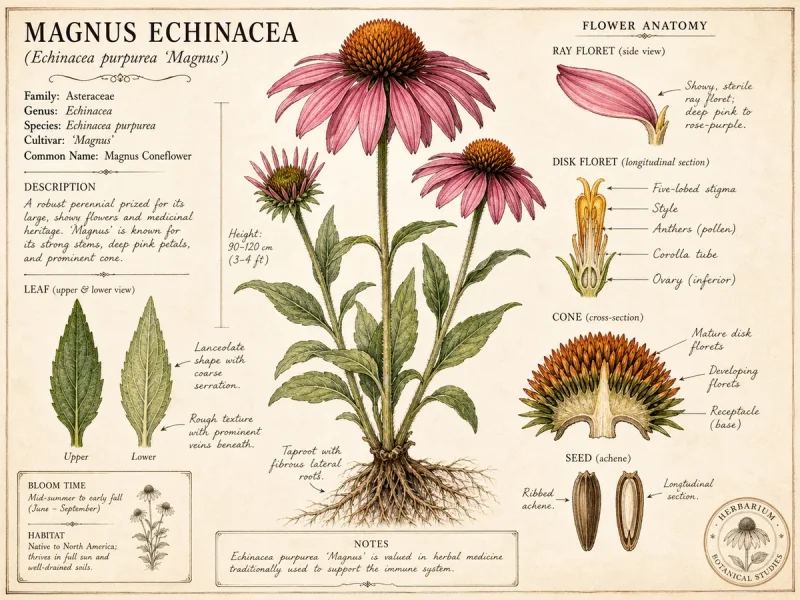
Divide coneflowers when the center thins or bloom fades, usually every three to four years. Prefer spring as growth starts, or early fall so pieces root before hard frost. Keep a shoot with firm roots. Discard a mushy middle. Magnus follows that rule.

Year-round sun and soil stay on How to Grow Coneflowers.
When to divide coneflowers
| Factor | Recommended | Avoid |
|---|---|---|
| Trigger | Hollow or thin center; weaker bloom | Splitting a vigorous young clump on a calendar |
| Season | Spring as growth starts, or early fall | Peak bloom and peak heat |
| Pieces | A shoot plus about 3 inches of firm root | Saving a soft, foul-smelling center |
Many clumps can sit for years. Divide when you need plants, when the middle dies out, or when a pot is rootbound. Do not split in full flower. The plant is spending energy on cones, not on new roots.
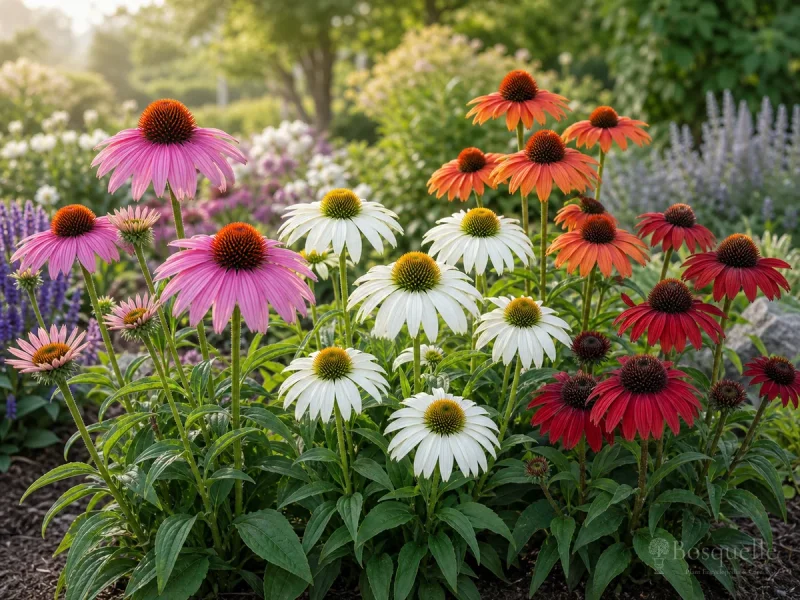
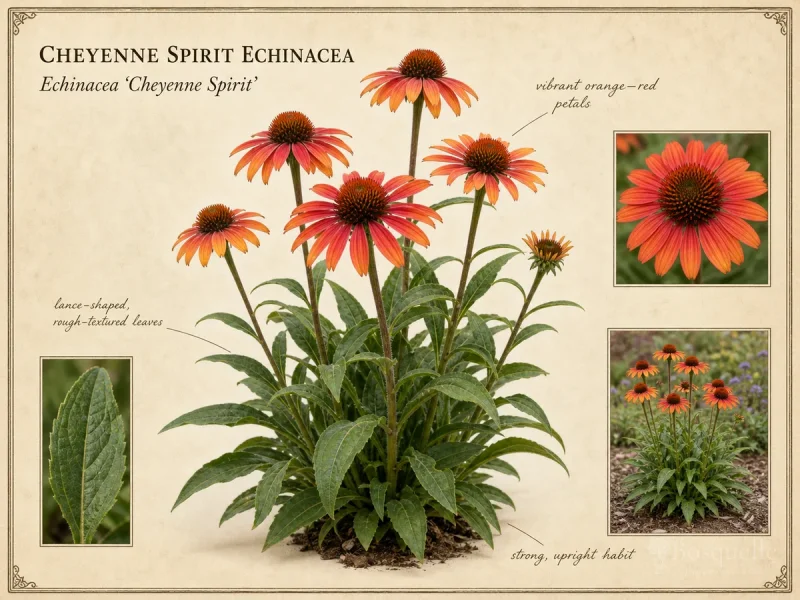
Magnus, Cheyenne Spirit, and PowWow White are the usual garden clumps. Purpurea types recover more readily than some taprooted species. Watch the plant, not a fixed anniversary.
Early fall means about six weeks before hard frost so roots move. If your fall is short, wait until spring. A late split that sits wet and cold is a rot risk.
Home propagation of named clumps is this job. Seed does not come true on most cultivars. Species may be raised from seed, but that is not this checklist.
Dig and split the clump
- Water the clump the day before if the soil is dry.
- Loosen a wide circle. Lift the whole clump onto a tarp.
- Cut or pull pieces with a healthy shoot and firm roots.
- Discard mushy, hollow, or foul-smelling centers.
- Keep divisions about 3 inches of root when you can. Label them.
- Replant the same day. Do not let pieces dry in the sun.
A sharp spade or knife is enough. Wash the blade if disease was present. Do not tear pieces so small they have no root.
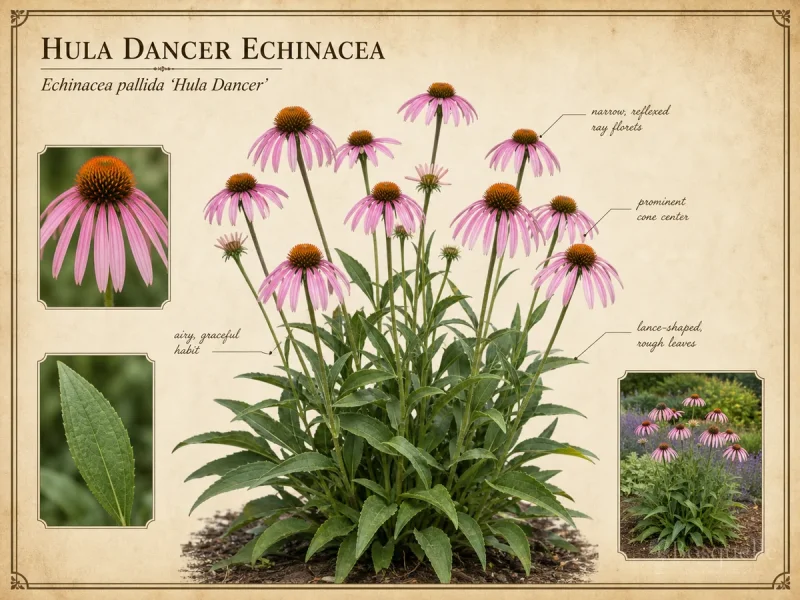
Compact Kim's Knee High and Sombrero Baja Burgundy still need a shoot and roots. Fine- petalled Hula Dancer (pallida) often recovers slowly. Keep those pieces generous. Do not treat a woodland-leaning species like a disposable plug.
Fragrant White Swan follows the same split. Scent does not change the knife job.
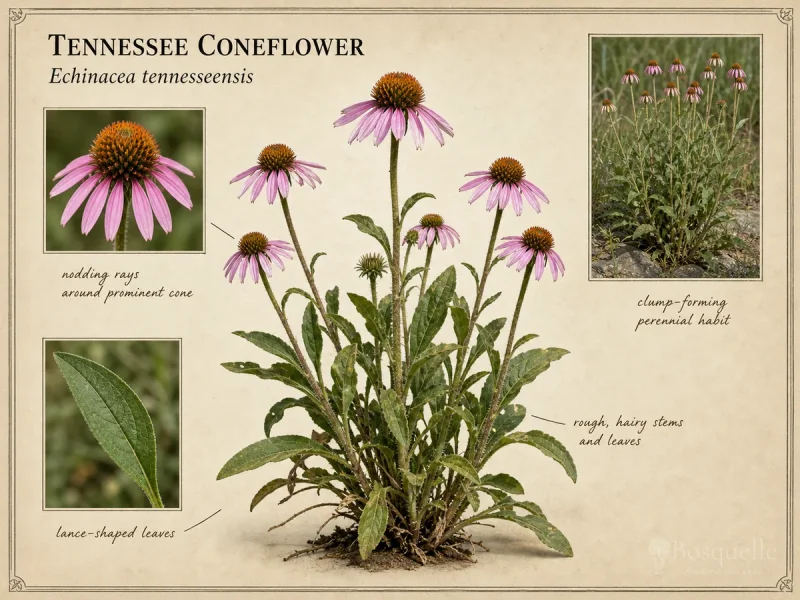
Native Tennessee Coneflower wants space after the split. Do not cram pieces back into a wet hole. Lean drain still applies.
Replant and water in
Replant in full sun in lean, well-drained soil. Set crowns at the surface with buds up and roots spread. Space 18–24 inches. Water once to settle. Then let the surface dry between soaks. Do not keep new pieces in a puddle.
Magnus and Tennessee Coneflower both sit high. Burying the crown is how rot starts. A light mulch around, not over, holds moisture on sand without sealing the neck.
Do not backfill with rich manure. That is the flop recipe from the grow page, applied to a wounded plant. Grit and the same lean hole are enough.
Pot clumps use the same split. Refresh the mix when you divide. See Coneflowers in Containers.
Partners should have left you a path. If they did not, you will damage neighbors getting the clump out. Design that gap on Coneflower Companion Plants.
Aftercare until new roots take
Keep weeds off the crown. Water during dry spells the first weeks. Expect a lighter bloom the first season after a hard divide. Full cones return as the clump settles. That lag is normal, not a fertilizer emergency.
Do not bury new pieces under a thick mulch blanket. Do not feed heavy nitrogen to “make up” for the split. Leaves and drain rebuild the plant.
If a piece never greens, it was too small, too wet, or already soft. Discard it. Do not leave a rotting stub next to a healthy neighbor.
Year-round rules stay on How to Grow Coneflowers. Scent picks: Fragrant Garden Coneflowers.
Label height and cultivar on each new piece the hour you plant. Mixed purples look the same in leaf. You will not remember which tray was the compact series when they spike.
Aster yellows is not fixed by dividing. If the parent showed stunted yellow stems, do not save those pieces. Destroy them. Split only green, blooming-capable crowns.
A note on the plant tag — “divided April 2026” — beats repeating a split next May on a clump that still needed a year.
If the first season after divide is dry, soak the new pieces. An established neighbor can wait. New divisions do not have the old root depth yet.
Do not divide a clump that is only one year in the ground unless you are rescuing a wet hole. Let it bulk. A tiny split from a young plant rarely blooms well the first year and often dries out.
If the center is woody but the outer ring is green, save the ring and compost the dead middle. That is the usual older-clump pattern. Plant the good pieces at the same depth they grew before.
A dull blade crushes crowns. Sharpen or swap. Clean soil off the cut so you can see firm white root versus brown mush. When in doubt, throw the mushy piece away.
After replanting, a light shade cloth for three days in a heat spell can reduce wilt. Remove it so the plant returns to full sun. Do not leave it in shade as a new default. Six hours is still the job on the grow page.
FAQ
When should I divide coneflowers?
Every three to four years when the center thins. Prefer spring or early fall. Leave vigorous clumps alone.
How do you propagate coneflowers?
Division for named clumps. Seed for species. Cultivars usually do not come true from seed.
Can I divide in summer?
Avoid peak bloom and peak heat. Spring and early fall are kinder.
How small can a piece be?
A healthy shoot plus about 3 inches of firm root. Discard a mushy center.
Will they bloom the same year?
Often lighter the first season. Full bloom returns as the clump settles.
Is this the full care guide?
No. This is the divide checklist. Care lives on How to Grow Coneflowers.
Do taprooted types divide well?
Purpurea clumps are easier. Some species recover slowly. Keep pieces generous.
Can I divide a pot plant?
Yes when it is rootbound. Refresh the mix. See Coneflowers in Containers.
Related guides



Recommended plants



This note is part of Coneflower Guides.
More notes on making another plant live in Propagating Guides.
Updated: Reviewed by Bosquelle Editors