
Once you see white tubes or orange powder on this year's spruce or pine needles, those needles are already infected, so a bottle will not turn them green again. Keep the landscape tree, point the lawn sprinkler at the grass instead of the canopy, and pull nearby goldenrod, aster, or Labrador tea only if you can actually reach them, because most needle rusts need a second plant to finish the year and a wet needle to start.
People call the same job spruce needle rust on a Colorado blue or white spruce, and pine needle rust on a mugo, Austrian, or Scots pine. It is still needle rust: fungi in Chrysomyxa on spruce, including the one now named Ceropsora weirii that never leaves the spruce, and Coleosporium on two- and three-needle pines. Black dots in rows on older interior needles belong to a different disease, and a hard white bump you can scrape off is scale, not a tube of spores.
Skip the spray. Keep the tree, and keep the needles dry
Once the white tubes are on this year's needles, those needles are already infected, so a fungicide will not rewind the yellow. Keep the landscape spruce or pine, and point the lawn sprinkler at the grass instead of the canopy, because rust needs a film of water on the needle to start, then skip a rescue spray in July or August when the orange powder is already there. Pull goldenrod and aster around a two- and three-needle pine if they sit in the same bed, because that fungus finishes the year on those flowers and then blows back to the pine in late summer. On spruce, Labrador tea, leatherleaf, and bearberry in a bog within a few hundred yards can feed the two-host rusts, but pulling them will not stop Weir's cushion rust, which jumps from last year's spruce needle to this year's flush without a second plant.
A chlorothalonil or copper program at bud break belongs on a Christmas-tree or nursery crop you mean to sell, not on a blue spruce in the yard. Those sprays have to coat new needles while they are still elongating, and they do nothing to needles that already carry tubes. Infections do not hit the same yard every year, so an annual bottle is a guess. Raking fallen needles does not break the two-host rusts the way it would for needle cast, because the spores that infect spruce or pine next year are sitting on the bog shrub or the goldenrod, not in the duff. Weir's cushion rust dies with the needle it already used, so bagging that litter is extra work, not a cure.
- Confirm. Pinch a yellow needle from this year's flush. Pale orange-to-white tubes or tongues that smear powdery orange are this rust. Tiny black bumps in neat rows on older interior needles are needle cast, a different job. A hard white teardrop you can scrape, with a yellow tip and often red eggs underneath, is pine needle scale, not a spore tube.
- Skip the bottle on a landscape tree. Those needles are already done, and the tree will put on a new flush next spring. A labeled protectant at bud break is only worth talking about on a young nursery or Christmas-tree crop you cannot afford to look pink.
- Dry the needles. Redirect lawn sprinklers so they do not wet the canopy, and give the tree room so lower branches dry after rain, because a wet film is how the spore starts.
- Pull what you can reach. Goldenrod and aster next to a mugo, Austrian, or Scots pine. Labrador tea, leatherleaf, or bearberry near a spruce if you are not dealing with Weir's cushion rust. A thousand-foot wipe of a wetland is not a backyard finish, and it will not stop the rust that never leaves the spruce.
- Prune witches' brooms, the clumps of small weak twigs that some spruce rusts raise from one point on a branch, and destroy that wood. Do not count on that cut to save next year's needles if the bog plants are still upwind.
How do I get rid of needle rust?
You cannot take the yellow off needles that already have tubes. Keep the landscape tree, keep the sprinkler off the canopy, and pull reachable goldenrod, aster, or Labrador tea. A bottle in July will not rewind this year's flush.
Do I have to pull all the goldenrod and Labrador tea?
Only if you can reach them and you know which rust you have. Goldenrod and aster feed pine needle rust. Labrador tea, leatherleaf, and bearberry feed some spruce rusts. Weir's cushion rust never leaves the spruce, so pulling bog plants will not stop that one, and a thousand-foot wetland wipe is not a backyard job.
Should I spray chlorothalonil for needle rust?
Not on a landscape tree once the tubes are showing, because those needles are already infected. Christmas-tree and nursery growers sometimes coat new needles at bud break. That timing does nothing in July, and infections do not hit every year, so an annual bottle is a guess.
A pink spruce in August is still alive
Needle rust is ugly, not a death sentence on a healthy spruce or pine. From the street a badly infected Colorado blue can look tan, pink, or frosted at the tips in July and August, and those infected needles often drop in September, so the tree looks a little thinner until the next flush. New buds at the ends of the twigs still form, and next year's needles still come. Heavy infection does not usually repeat several years in a row, because a cool wet spring has to line up with spores from the second plant, so one pink August is not a reason to take the tree down.
Young pines can lose lower needles and slow down for a season. A mature landscape tree almost always lives. If the older interior needles on the lower branches have been browning and dropping for years, and you can see tiny black dots in rows, that is needle cast, which can kill those limbs after a few wet seasons. Do not treat that as this rust. Water the tree in drought, keep a thin mulch over the roots, and spend the worry on the lookalike that actually thins the crown from the inside.
Will needle rust kill my spruce or pine?
Rarely on a healthy landscape tree. Infected needles drop, the tree looks thinner until the next flush, and new buds still form. If older interior needles have been browning for years with black dots in rows, that is needle cast, not this rust.
White tubes and orange powder on this year's needles confirm this rust
Look at this year's flush first, the needles at the tips, because that is the class needle rust uses. On spruce they yellow in summer, then pale orange-to-white tubes or tongues push out of the needle in July or August and shed a powdery orange dust. From the street the tree can look tan or pink. Those needles often fall in September. On two- and three-needle pines the first marks are small yellow spots or bands, sometimes visible through winter, and in spring the spots swell into white columns that split and dump orange spores toward goldenrod and aster. The pine needles may hang on a year or two with the columns still showing.
Weir's cushion rust, still this disease on spruce, shows yellow spots or bands on last year's needles in late winter, then waxy yellow-orange blisters at bud break. Those spores infect the new flush in wet weather, and the new needles stay green until the following winter or spring, so you are always looking at last year's work. Some spruce rusts also raise witches' brooms, clumps of small weak twigs from one point, with orange powder on those needles in summer. Pinch the tube. If it smears orange and is not a hard armor you can pop off, it is rust.
| Where you see it | What it is | Try this |
|---|---|---|
| White tubes or tongues, orange powder, on this year's spruce or pine needles | Needle rust | Skip the spray; dry the needles; pull reachable goldenrod, aster, or bog shrubs |
| Yellow bands on last year's spruce needles, then orange blisters at bud break | Weir's cushion rust, still needle rust | Keep the tree; a bud-break spray is leftover of a sale crop |
| Older interior needles brown or purple, tiny black dots in rows, lower branches first | Needle cast leftover | See needle cast — do not copy that spray calendar here |
| Hard white teardrop on the needle, yellow tip, often red eggs underneath | Pine needle scale leftover | Scrape it; it is an insect armor, not a spore tube |
| Fine yellow stipple, dusty undersides, no tubes | Spruce spider mite leftover | See spruce spider mite |
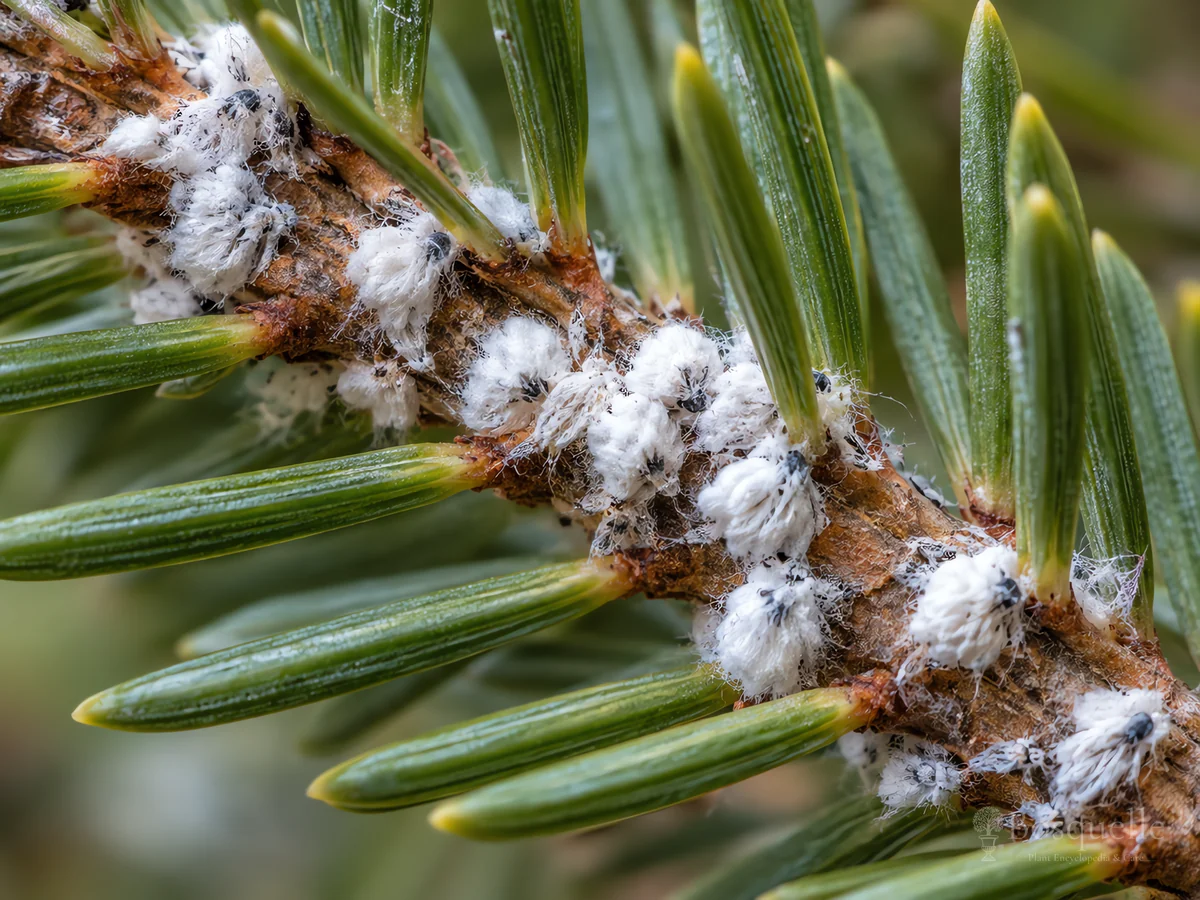
| White wool on spruce shoots | Adelgid leftover | See adelgids |
| Orange jelly horns on a dimpled juniper gall after rain | Cedar-apple rust leftover | See cedar-apple rust — not a spruce-needle job |
What does needle rust look like?
Pale orange-to-white tubes or tongues on this year's needles that smear powdery orange. A badly infected spruce can look tan or pink from the street in July and August. On pine, yellow spots swell into white columns in spring.
Black dots on older needles are needle cast. A bump you can scrape is scale
Older needles turning brown or purple on the lower, interior branches, while this year's tips stay green, are needle cast. Under a hand lens those needles show tiny black fruiting bodies in neat rows. That fungus winters on the tree and in fallen needles, and it can kill a limb after a few wet years. Do not paste its chlorothalonil calendar onto orange tubes. White tubes on this year's flush, with powder you can smear, are this rust.
A hard, elongated white cover stuck to the needle, usually with a yellow point at the narrow end, is pine needle scale. Flip it and you may see red eggs or a reddish body. It does not split and dump orange powder. The white swelling of pine needle rust is easy to mix with scale in spring, so scrape before you treat for an insect that is not there. Fine yellow stipple without tubes is spruce spider mite. White wool on the shoots is adelgids. Orange jelly horns on a brown dimpled gall after rain belong to cedar-apple rust on juniper and apple, not to a spruce or pine needle. Do not copy those methods here.
Is needle rust the same as needle cast?
No. Needle rust puts white tubes and orange powder on this year's needles and rarely kills. Needle cast puts tiny black dots in rows on older interior needles and can kill those limbs. See needle cast if the tips stay green and the inside of the crown is going bare.
Related reading
- Needle cast — black fruiting dots on older interior needles, not orange tubes on this year's flush.
- Cedar-apple rust — orange jelly horns on a juniper gall, then spots on apple, not spruce or pine needles.
- Spruce spider mite — yellow stipple and dusty undersides, no spore tubes.
- Adelgids — white wool on spruce shoots, not powdery orange rust.
FAQ
Does baking soda or neem oil get rid of needle rust?
No. A kitchen baking-soda or dish-soap mix is not a labeled conifer program, and it can burn needles. Neem will not rewind tubes that are already there. Dry the canopy and pull the second plant you can reach.
Will it come back next year?
It might, but it often skips years, because a cool wet spring has to line up with spores from the second plant. Weir's cushion rust can infect the new flush from last year's needles on the same tree. Next year's needles still come either way.
Are the orange spores dangerous to people or pets?
They are a plant fungus, not a mushroom to eat and not an insect that bites. The dust can stain a shirt or a stream after a heavy outbreak. Wash hands after you handle infected needles. The worry is the look of the tree, not a sting.
Should I rake the fallen needles?
Raking does not break the two-host rusts, because next year's spruce or pine infection starts on the bog shrub or the goldenrod. Weir's cushion rust dies with the needle it already used, so bagging that litter is extra work. Rake if you also have needle cast, which is a different job.
Related diseases




Related pests



Updated: Reviewed by Bosquelle Editors