
Tap a branch over a sheet of white paper and watch for dark, slow specks that crawl, then smear green if you crush them, because those are spruce spider mites, not grit. Hose the inner, older needles hard in spring and again in fall, because this mite feeds in cool weather and sits still once days hit the 80s. Labeled insecticidal soap or horticultural oil can finish live mites if the spray actually wets the inside of the plant. Skip oil on a Colorado blue spruce, because it takes the blue off the needles. Do not run a hot-July houseplant mite calendar on a spruce.
People still say spruce mite, then spruce spider mite. The animal is Oligonychus ununguis, a cool-season spider mite, not an insect. Young mites are pale green, and adults go dark green to almost black, with salmon-pink legs, about the size of a pepper grain. They overwinter as tiny eggs at the needle bases. In the yard they show first on spruce — dwarf Alberta, Colorado blue, Norway, white — and they also feed on arborvitae, juniper, hemlock, pine, and fir. Fine silk between needles shows up when numbers are high. Older inner needles go off-green, then bronze, and they can drop. A healthy large spruce often lives. A small dwarf Alberta that is going bare cannot wait.
Hose the inner needles in spring and fall
This mite works when the weather is cool, so the session is April into May and again in September, not a July afternoon when two-spotted mites would be running on a rose. Once daytime heat sits in the 80s, spruce spider mites lay resting eggs and stop feeding, so a midsummer spray on empty needles misses them. Hose the inside first, because a hard stream knocks mites and eggs off the inner and lower needles, where rain does not reach, and on a small spruce or an arborvitae hedge you can repeat that wash several days in a row, or weekly through the cool weeks, because they do not all drop on the first pass.
Labeled insecticidal soap or horticultural oil can finish mites that are actually moving, because those sprays work only where they wet the body. Soak the inside of the plant, not just the pretty outer face. Skip kitchen dish liquid, because it can burn needles and has no plant label. Skip oil on a blue spruce, because the oil dissolves the wax bloom and the old needles stay green until new growth hides them. Soap does not strip that blue. Do not soap a drought-stressed plant, tender new growth, or needles in full sun above about 90°F. Skip a Sevin or permethrin bottle as the first move, because those insecticides kill the predatory mites that smear red on the paper and the outbreak often gets worse.
- Confirm. Tap three or four places over white paper. Dark, slow specks that smear green are this mite. Ten or more live mites on a tap, with few fast red predators, is the treat threshold. Fast reddish mites that smear red are helpers, so wait.
- Hose the inner and lower needles hard. On a dwarf Alberta or a small arborvitae, repeat several days in a row, then weekly while the weather stays cool. Keep the plant watered and mulched, because drought makes the feeding worse, and skip a heavy nitrogen feed that only fattens the mites.
- Soap or oil only while mites are still crawling, and only where the spray wets the inside. Repeat if live mites remain, since dried soap does not keep working. Skip oil on Colorado blue spruce. Skip soap in heat, drought, or on brand-new growth.
- A tree over about ten feet is a hire if you cannot wet the crown. A driveway fog wets the skirt and misses the mites. Dormant oil in midwinter can smother overwintering eggs after a bad fall, but skip that oil on blue spruce too.
How do I get rid of spruce spider mites?
Tap first. If dark specks crawl, hose the inner needles hard in spring and again in fall. Labeled soap or horticultural oil only while mites are moving, and wet the inside of the plant. Skip oil on a blue spruce. Skip a midsummer spray on empty needles.
When should I spray spruce spider mites?
While they are active, usually April into May and again in September. Once days sit in the 80s they rest as eggs, so a July spray on bronze needles often misses them. Catch hatch in spring if you saw a heavy egg band last fall.
Does horticultural oil take the blue off Colorado spruce?
Yes. Oil dissolves the wax bloom, so old blue needles look green until new growth hides them. The tree is not killed by that color change. Use a hard hose, or labeled soap, on a specimen blue spruce. Skip dormant oil on blue spruce too.
Are the mites on my arborvitae this pest?
Often yes. Spruce spider mite feeds on arborvitae the same way: inner stipple, silk, bronze in dry dust. Same tap test, same spring-and-fall hose.
Bronzed needles in July can be last spring's feeding
Conifers are slow to show this injury, so a spruce that looks dirty bronze in June or July may have been fed on in April, or even last fall, after the mites already laid resting eggs and stopped. Tap first. If the paper is blank, a miticide now does not rewind the color, because those needles will not green up again. The tree holds several years of needles, so old injury can sit there looking current. Treat only if mites are crawling now, or if you find a heavy band of overwintering eggs at the needle bases and you plan to catch them at hatch in spring.
A healthy, well-established spruce or hemlock usually lives through a year of this feeding. Lower inner needles drop, the skirt looks thin, and the plant looks rough until new growth covers it. Seedlings, a newly planted screen, a drought-stressed hedge, and dwarf Alberta spruce are a different judgment. That tight little cone is a favorite, and a heavy year can kill a small plant or leave dead patches that never fill. Arborvitae in dry, dusty soil bronzes the same way. Water those plants, hose them while mites are moving, and do not wait for the whole globe to go rusty. If the tap test is blank in July, mark the plant and come back in early September, because that is when this mite starts again.
Will spruce spider mites kill my tree?
A healthy large spruce usually lives. The inner needles look bronze and may drop, and they do not green up again. Small plants, a new screen, drought-stressed arborvitae, and dwarf Alberta spruce can be killed or left with dead patches. Treat those while mites are still moving.
Will they kill a dwarf Alberta spruce?
They can. Dwarf Alberta is a favorite, and a heavy year can finish a small plant or leave holes that never fill. Hose the inside while mites crawl, and do not wait for the whole cone to go rusty.
Should I spray in July when the spruce looks bronze?
Tap first. If the paper is blank, the mites have usually already stopped, and a spray will not bring the color back. Water the tree, then check again in early September when this mite starts feeding again.
Tap a branch over white paper; crush a dark speck
You will not see these mites well on the needle. Hold white paper under a branch that looks off-green and strike the wood hard, then wait a few seconds, because they sit still before they crawl. Adults are about a fiftieth of an inch, oval, and dark. Young ones are paler and start with six legs. Eggs at the needle bases are tiny, round, slightly flattened, with a hair sticking up from the middle. Fine silk between needles is a late sign, not the first one. Check the older inner growth on the lower third of the plant, then one or two more spots around the canopy, because a single clean tap does not clear a spruce.
| Where you see it | What it is | Try this |
|---|---|---|
| Dark slow specks on white paper; green smear; inner older needles; fine silk; spring or fall | Spruce spider mite | Hose the inside; soap or oil while they move |
| Ten or more live mites per tap; few fast red mites | Treat threshold | Hose, then labeled soap or oil |
| Fast reddish specks that smear red | Predatory mites | Wait; a spray can make this worse |
| Pale mites with two dark spots; hot July; houseplant or deciduous leaf | Two-spotted spider mites | See spider mites — not this cool-season job |
| Purple-brown needles; black dots in rows; no crawling specks | Needlecast | Not a miticide; do not hose this as mites |
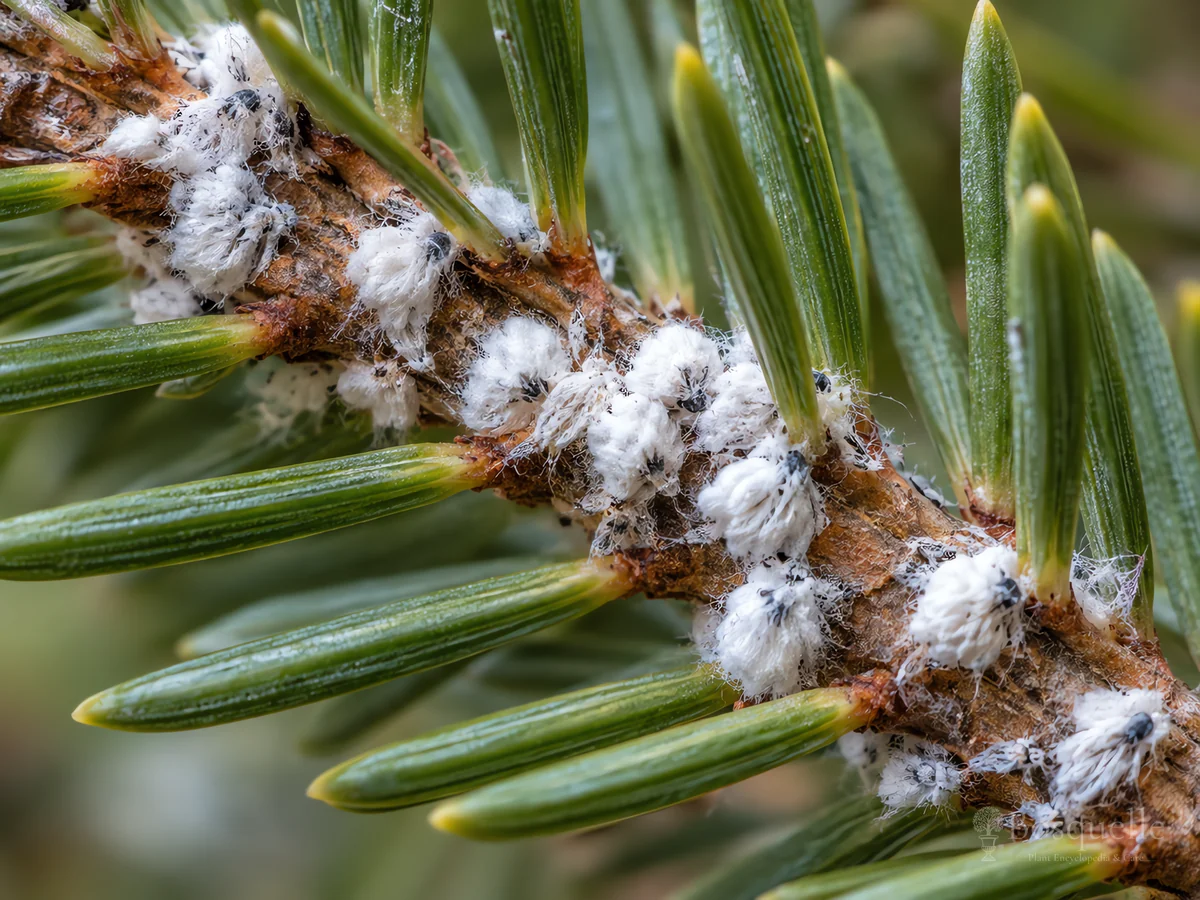
| Cotton tufts on the twig at needle bases | Adelgid | See adelgids — smear the wool, not this silk |
| Uniform brown above the snow line; blank tap | Winter burn or drought | Water; do not spray empty needles |
How do I check for spruce spider mites?
Hold white paper under a branch and strike the wood. Dark, slow specks that smear green are this mite. Fast reddish mites that smear red are predators. Check three or four places, including the inner lower needles.
Two-spotted mites run a summer calendar; wool on a twig is adelgid
Two-spotted spider mites are a different animal. They are pale, with two dark spots, and they love hot, dry weather on houseplants, vegetables, and deciduous shrubs. See spider mites for that summer job. Do not copy their July hose-and-isolate calendar onto a spruce in August, because spruce spider mites are usually resting then. Southern red mites are another cool-season kind on rhododendron and camellia, not this conifer silk.
Needlecast turns older needles purple-brown and drops them from the lower inside first, same neighborhood as mite bronze, but a hand lens shows black fruiting bodies in rows on the needle, not crawling specks on paper. A miticide does not finish a fungus. Uniform brown on the windward side, or a sharp line above last winter's snow, is winter burn or drought, and the tap test is blank. Cotton-swab tufts stuck to the twig at the needle bases are adelgids, not mite silk. See adelgids. Do not run their wool smear as the finish on this mite, and do not treat mite stipple as hemlock wool.
Are spruce spider mites the same as two-spotted spider mites?
No. This mite is dark, cool-season, and lives on conifers. Two-spotted spider mites are pale with two dark spots and they run in hot, dry weather on houseplants and leafy plants. See spider mites for that job. Do not copy their July calendar onto a spruce.
Is this needlecast or spruce spider mites?
Tap the branch. Crawling specks and a green smear are mites. Needlecast is a fungus: older needles go purple-brown and a lens shows black dots in rows. A miticide does not finish needlecast, and a fungicide does not finish this mite.
Related reading
- Spider mites — two-spotted mites on a hot, dry leaf or houseplant, not this cool-season conifer mite.
- Adelgids — cotton tufts on the twig, not silk between spruce needles.
- Scale insects — bumps on the needle or wood; dieback on a spruce is often this, not mites.
- How to grow spruce — site and water for a spruce that takes this mite on the inner needles.
- How to grow arborvitae — a hedge in dry dust bronzes with the same mite.
FAQ
Does dish soap kill spruce spider mites?
A labeled insecticidal soap can kill mites on contact if it wets them. Kitchen dish liquid can burn needles and has no plant label. Use the labeled soap, and skip it in heat, drought, or on brand-new growth.
Do spruce spider mites bite people or pets?
No. They pierce conifer needles, not skin. They do not live on dogs or cats. If you have bites, look at fleas or another biting mite, not this one. Keep pesticide bottles away from pets.
Should I use dormant oil for the eggs?
After a bad fall, a midwinter dormant oil can smother eggs on needles and bark. Skip it on blue spruce, because it still takes the blue off. Read a label that names mites on that plant, and do not spray into freeze or into a heat spike.
Can I spray a tall spruce from the ground?
You can hose and soap the skirt you can reach. A foliar spray on a tree over about ten feet wets the outside and misses the inner crown, where this mite lives. Hire coverage rather than fogging from the driveway.
Related pests



Related diseases




Updated: Reviewed by Bosquelle Editors