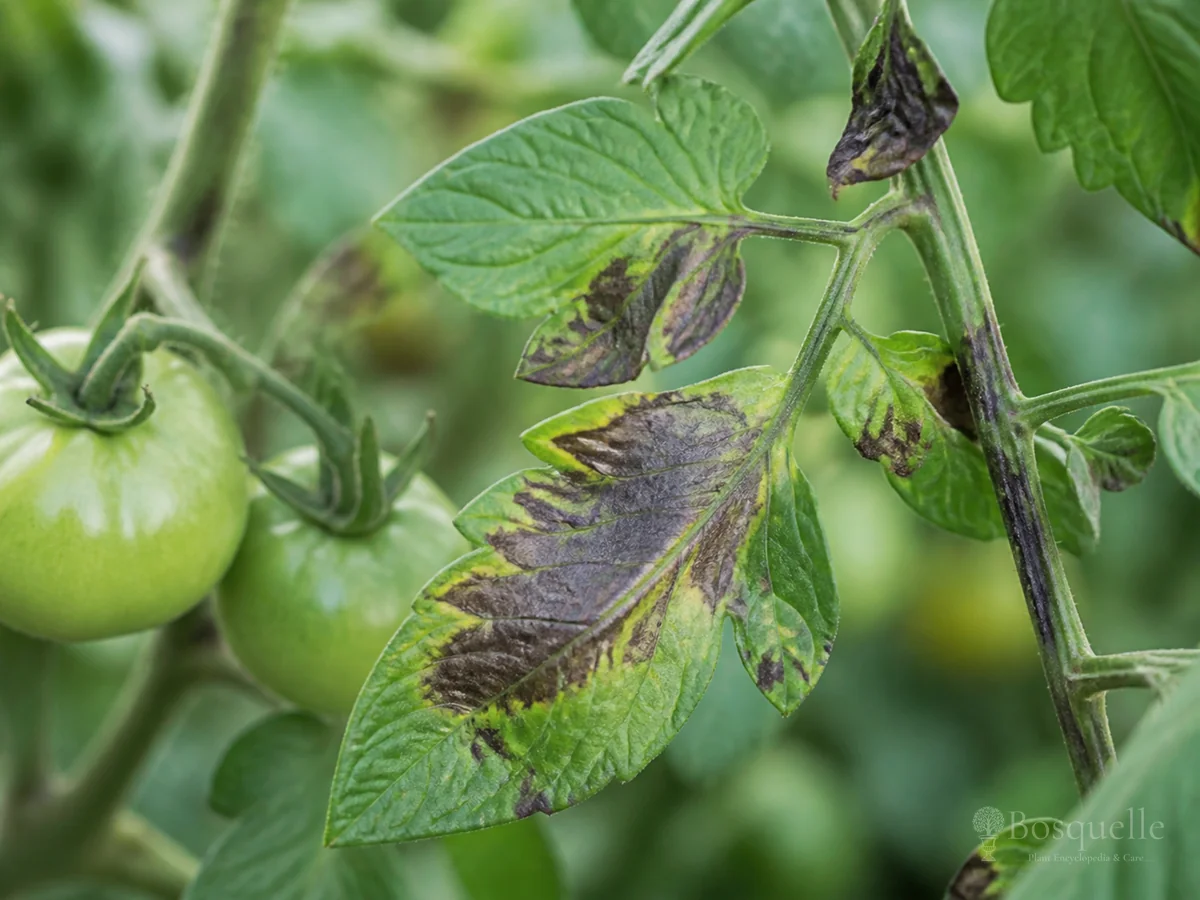
Late blight is a water mold (Phytophthora infestans), not a true fungus, that greases tomato and potato tissue in cool wet weather and can drop a plant in a week. It is not the slow bullseye of early blight and not the angular underside fuzz of downy mildew on basil or cucumber. If leaves look oily and the canopy is collapsing, pull — do not prune around it.
Do this first: pull the plant roots and all, bag it, trash it, and break up any potato cull pile. Inspect remaining transplants. Do not compost the vines.
Greasy collapsing blotch, or bullseye spots on old leaves
| What you see | Likely | Do this first |
|---|---|---|
| Irregular oily or water-soaked patches, gray-green edge, canopy dropping in cool rain | Late blight | Pull, bag, trash |
| Bullseye spots on the oldest lower leaves; top still green and setting fruit | Early blight | See early blight — mulch and prune |
| Tiny round dots with pale centers on lower tomato leaves | Septoria leaf spot | Splash culture; not this collapse |
| Angular yellow with fuzz under a cucumber or basil leaf | Downy mildew | See downy mildew |
| Striped beetles chewing potato foliage | Colorado potato beetle | See Colorado potato beetles |
Fuzzy gray on a rotting bloom is gray mold, a different cool-damp job. If you need a greasy run that ignores veins, stay here.
Is this early blight?
Usually not. Early blight prints bullseye spots on the oldest lower leaves and you can often keep the plant. Late blight greases irregular patches that are not stopped by veins and can drop a canopy in a week of cool rain.
Is downy mildew the same as late blight?
No. Both are water molds, but downy mildew yellows in angular patches with fuzz under basil, lettuce, or cucumber leaves. Late blight greases tomato and potato tissue and can take fruit and tubers. Flip the host you grow.
Oily patches that run overnight in cool rain
Lesions start as pale or olive patches, then turn brown-black and look water-soaked and oily. They are not boxed in by major veins. Stems take firm dark stretches with a rounded edge. In high humidity a thin white fuzz appears at the margin — on the underside, on stems, even on fruit. Tomato fruit goes firm, golden to chocolate brown, in large patches. The canopy can look frost-killed in August. That speed is the tell. A slow climb of rings on old leaves is the other blight.
How do I identify late blight?
Look for irregular, water-soaked, oily blotches that turn brown-black, often with a gray-green edge. In humidity a thin white fuzz sits at the margin, including under leaves and on stems. Fruit goes firm brown. Potatoes brown under the skin.
Do not wait for next week’s fruit
Once this water mold is in the canopy, a home spray rarely outruns cool rain. Pull tonight. Leaving “a few leaves” seeds the rest of the row and, in a wet spell, the street. Sound fruit can still be used soon; symptomatic fruit is not food and is not for the jar. Fail if you treat it like the slow bullseye blight and prune while the rest greases. Labelled products that name only true fungi often miss an oomycete — skip the brand aisle.
Should I pull a plant with late blight?
Yes once you are sure. This disease will not wait for next week’s fruit. Pull roots and all, bag it, leave the bag in the sun, then trash it. Fail if you prune a few leaves and hope the rest holds.
Cull piles and volunteer potatoes
The organism waits in living tissue, not as a soil fungus you rotate away in one season. A potato cull pile — dumped or leftover tubers — can sprout infected shoots. Volunteers from last year’s row do the same. Last year’s extras are not seed. Buy certified seed potatoes. Spread, bury, or otherwise destroy the cull pile before spring. Pull volunteer potatoes as soon as they show. Fail if the heap stays by the garden “for the compost later.”
What is a potato cull pile?
A heap of dumped or leftover tubers. The water mold can wait there through winter and sprout infected shoots in spring. Spread, bury, or feed that pile before the season — do not leave it by the garden.
Can volunteer potatoes start late blight?
Yes. Tubers left in the ground send up plants that can carry it. Pull them. Last year’s potatoes are not seed. Buy certified seed potatoes.
Should I buy certified seed potatoes?
Yes. Certified seed is the ordinary way to avoid planting infected tubers. Grocery leftovers and last year’s extras are how a cull pile starts in the row.
Does late blight survive in soil?
It does not rest in soil the way early blight does. It waits in living tissue: cull piles, volunteer potatoes, infected fruit that sprouts. Rotation still helps hygiene. The pile is the winter hotel.
Inspect tomato transplants before they go in
Plants shipped from a wet southern spell can carry lesions you did not grow. Look at leaves and stems on the bench: greasy patches, dark stem streaks, white fuzz in a humid tray — leave that six-pack. Home- saved tomato seed that was well dried is a smaller risk than a sick transplant. Space and stake what you do plant so leaves dry, but do not use airflow as a substitute for pulling a plant already greasing.
Can tomato transplants bring late blight?
They can, especially plants shipped from warmer regions already in a wet spell. Inspect leaves and stems before you buy. Spots, greasy patches, or white fuzz — leave that six-pack on the bench.
Cool wet nights, not a warm slow climb
This blight favours about sixty to seventy degrees and long leaf wetness. A lesion can throw thousands of spores in less than five days. Seven to ten days of cool rain can finish a plant. A stretch of hot dry weather can halt it. Warm humid weeks that only ugly the lowest leaves with bullseye rings are the other blight. Match the thermometer and the speed before you pull or prune.
Why is it moving so fast?
In cool wet weather a lesion can throw new spores in less than five days. Seven to ten days can finish a plant. Hot dry days can halt it. That speed is how you tell it from the slow bullseye blight.
Brown under the potato skin
Tubers pick up the water mold from foliage and wet soil. Flesh turns reddish-brown to purple under the skin; secondary soft rot then follows. Do not eat that tissue. Do not save it as seed. Cut the tops if a patch is hit and you still hope for sound tubers underneath — then harvest soon, dry them, and store only what looks clean. A dump of suspect tubers is how next year’s cull pile starts.
Firm brown fruit that is not sunscald
Tomato fruit lesions are large, often sunken, golden to chocolate, and firm at first — not a white sun patch on the shoulder. White fuzz may sit on the spot in humidity. Use sound fruit quickly. Discard anything already browned. Do not can symptomatic tomatoes. Secondary bacteria can turn the spot mushy; that fruit is trash, not a tasting.
Are the fruit safe to eat?
Sound, healthy-looking tomatoes from a hit plant can still be food if you use them soon. Once fruit shows firm brown patches, discard it — do not can it. Potato flesh that has browned under the skin is not food.
Bag the plant — do not compost late blight
Pull roots and all. Slip the plant into a bag, leave it in the sun a few days so tissue and spores cook, then put it out with the trash. Do not shake a greasy canopy over the bed. Do not add it to a home heap. Wisconsin notes that sound fruit from a hit plant can still be eaten; the vines are not compost. Bin them.
Can I compost late blight plants?
No. Bag them and trash them, or bury them deep and leave them. A home heap does not cook hard enough. Bin, do not feed the bed.
Pull it tonight — late blight will not wait
- Confirm the greasy, water-soaked run — not bullseye rings on old leaves.
- Pull the plant roots and all. Bag it. Trash it. Do not compost.
- Destroy the cull pile and pull volunteer potatoes. Plant certified seed next time.
- Inspect remaining transplants and neighbouring tomatoes and potatoes the same day.
- Use sound fruit soon. Discard browned fruit and browned tubers.
- Fungicide last, and only preventative in a known wet outbreak with a label that names late blight or this water mold — skip the brand aisle. Fail if you wait a week to see.
How do I get rid of late blight?
Pull and bag infected plants, destroy the cull pile, pull volunteer potatoes, plant certified seed, and inspect transplants. Do not compost the vines. A home spray rarely catches a canopy already greasing.
Related reading
- Early blight — bullseye on old leaves; mulch and prune, usually keep the plant.
- Downy mildew — another water mold, angular yellow and underside fuzz on other crops.
- Colorado potato beetle — chewing stripes on potato foliage, not a greasy blight.
FAQ
Is tomato blight always late blight?
No. Tomato blight is an umbrella search. Bullseye rings on old leaves are early blight. Greasy collapse in cool rain is this disease. Confirm the spots before you pull or prune.
Was this the Irish potato famine disease?
Yes — the same water mold. That history is why potato and tomato growers still take cull piles seriously. It is not a reason to pad this job with a history lesson. Pull, bag, clear the pile.
Does late blight show up every year?
No. Many gardens go years without it. That is why a sudden greasy collapse feels like a shock. When it does come, do not wait as if it were the slow bullseye blight.
Host plants
A few garden examples linked on this site — open a plant for care context.


Related diseases




Related pests



Updated: Reviewed by Bosquelle Editors