
Bacterial wilt on cucumbers and melons is Erwinia in the vine, moved by striped cucumber beetles and spotted cucumber beetles. A sticky strand between cut faces is the test. It is not the one-sided tomato yellow of Fusarium wilt and not a soil-line white fan. Watering will not help.
Do this first: cut a wilted runner near the crown, press the faces, pull. If a sticky strand shows, pull the whole plant and hunt the beetles. Wait on a vine that recovers overnight with no beetles and no strand.
A sticky strand, or another wilt
| What you see | Likely | Do this first |
|---|---|---|
| Cucumber or melon wilts in moist soil; sticky strand on a cut runner | Bacterial wilt | Pull the plant; hunt beetles |
| Hole and wet sawdust at the squash crown | Squash vine borer | See squash vine borer — split the stem |
| Tomato yellow on one side; brown inside the stem | Fusarium wilt | See Fusarium wilt |
| White mold and tiny brown specks wrapping a tomato stem in heat | Southern blight | See southern blight — bag plant and soil |
| Whole bed dry; every plant limp at noon and fine by morning | Thirst | Water, then recheck |
A grey squash-bug shield on the same vines is sap wilt, not a strand. If you need a sticky strand on a cucumber, stay here.
Is this Fusarium wilt?
No. Fusarium yellows one side of a tomato and browns the stem inside. This wilt hits cucumber and melon vines after beetle feeding. A sticky strand between cut faces is this job, not a brown ring in a tomato stem.
Noon wilt, then a sticky strand
Leaves go dull green. One runner droops in the heat, looks better by morning, then stops recovering. The soil is still moist. Cucumbers and muskmelons can die in days. Cut a runner close to the crown — not a dry dead tip — press the two faces for a moment, and pull slowly. A sticky strand between them is this bacterium. The test is stronger on cucumber and melon than on squash. No strand does not always clear it: beetles plus a vine that stays wilted overnight is enough to pull. Fail if you diagnose from a dry stick.
How do I identify bacterial wilt on cucumbers?
A vine wilts in soil that is still moist, often at noon, then looks better overnight until it stops recovering. Cut a runner near the crown, press the faces, and pull. A sticky strand between them is the test.
Pull it — a spray will not unplug the vine
There is no bottle that opens a plugged cucumber. Pull roots and all and bag the plant. Leave it and beetles keep feeding on a reservoir. Wait is for a vine that recovers by morning with no beetles and no strand. Discard a plant that stays limp in wet soil. Skip the brand aisle. A second sowing under cover is honest; a week of wilt drench is not.
Is there a cure for bacterial wilt?
No. The bacteria plug the vine. A labelled spray will not open it. Pull the plant so beetles stop feeding on a reservoir. Fail if you water it back for a week.
Will a spray save a wilted cucumber?
No. Bactericides and wilt drenches do not reverse a plugged vine. Skip the brand aisle. Hunt the beetles on the plants that are still standing.
The beetles carry it, not the soil
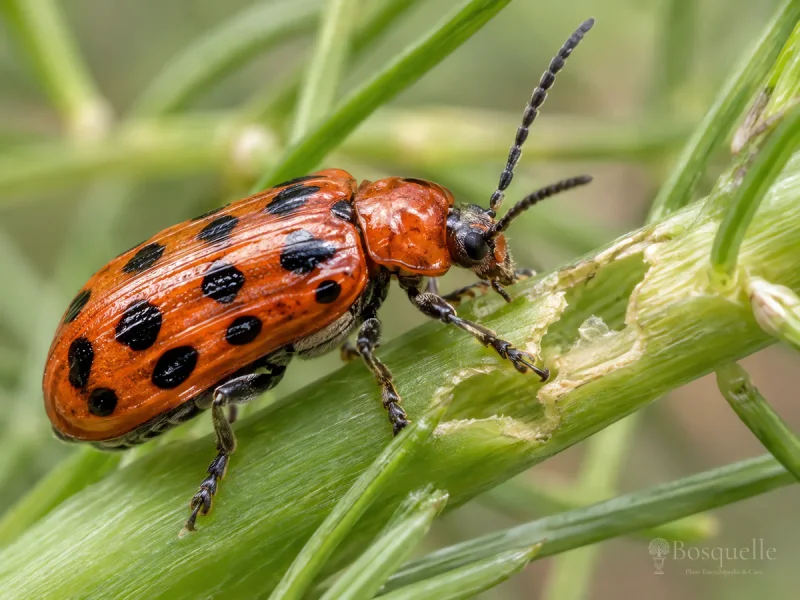
Striped adults have three clean stripes. Spotted adults have twelve black spots. They pick the bacterium up on infected vines and leave it in feeding wounds and frass. It overwinters in the beetle, not in Minnesota-style plant debris. This is why a clean cucumber bed can still wilt after the first chew on cotyledons. Hunt beetles two to three times a week early, then weekly. See the beetle pages for soap, covers, and what a bloom spray actually does.
Do cucumber beetles spread bacterial wilt?
Yes. Striped and spotted cucumber beetles carry it in their guts and leave it in feeding wounds. The bacterium does not live in the soil the way a tomato wilt can. See the beetle pages for covers and hand-picking.
Does bacterial wilt live in the soil?
Not this cucurbit form. It overwinters in the beetles. Tomato bacterial wilt is a different organism that can live in soil — not this cucurbit job.
Cover until the female flower
A floating cover from the day transplants go out keeps beetles off the seedlings that die fastest. Pin the edges. Take it off when female flowers open so bees can work. County Fair and Little Leaf are the cucumber names extension repeats — not a tomato F code. Fail if the tent stays on through bloom. A cover in the shed while cotyledons are holed is the same miss.
Are row covers worth it?
Yes from transplant until female flowers open. Then take the cover off so bees can work. A cover left on through bloom is a fruitless vine.
When do I take the row cover off?
At the first female flower. Leave it a day longer and you starve the bloom of bees. Fail if the tent stays on through fruit set.
No hole at the crown
Squash vine borer wilts a vine from a larva inside the stem. You get a hole and wet frass at the crown. This wilt has no hole. Do not split a cucumber looking for a borer because a search said wilt. Cut and pull for a sticky strand. If you find frass on a squash, open the vine-borer article.
Is this squash vine borer?
Look at the crown for a hole and wet sawdust frass. That is a larva in the stem. This wilt has no hole. Cut and pull for a sticky strand instead.
Squash limps; cucumber drops
Illinois and Wisconsin put cucumber and melon first. Squash and pumpkin take it less, and the strand is harder to see. A pumpkin may keep a few fruit for a week. Still pull a vine that stays wilted with beetles on it. Watermelon is not a host on the UMN read. Do not treat every yellow cucurbit as this wilt.
Do squash and pumpkins get it too?
Less often, and the sticky-strand test is weaker on those stems. Cucumbers and melons die fast. A pumpkin may limp for a week. Still pull a vine that stays wilted in wet soil with beetles on it.
Tomato bacterial wilt is a different bacterium
Searches mix two diseases. Ralstonia on tomato, pepper, and eggplant lives in warm soil and streams in a glass of water. This URL is Erwinia on cucurbits, moved by cucumber beetles, not a four-year tomato quarantine. A wilted tomato with no beetles and no cucumber vines is not this job. Gardenia pages that name Ralstonia as “the” cause are the false friend.
Is this the same as tomato bacterial wilt?
No. Tomato bacterial wilt is usually Ralstonia in warm soil. This job is Erwinia on cucurbits, moved by cucumber beetles. Do not rotate a cucumber bed as if it were a four-year tomato quarantine.
Pull the vine — beetles move this wilt
- Confirm a sticky strand on a cut runner, or beetles plus a vine that stays wilted overnight in moist soil.
- Pull the plant roots and all. Bag it. Do not compost.
- Cover new cucurbits until female flower. Hunt striped and spotted beetles two to three days a week at first.
- Check the crown for a hole before you call it this wilt — that is vine borer.
- Do not water it back. Skip the brand aisle. Fail if a copper bottle is the plan and the cover stays in the shed.
Should I compost the wilted vine?
No. Bag it. Beetles still visit a heap, and a tomato-form wilt would be a different compost risk. Fail if a wilted cucumber goes on the pile.
Will the next sowing be OK?
Often, if you cover the new plants and keep beetles down. This cucurbit bacterium is not waiting in the soil the way Fusarium is. Act on the first chewed cotyledons.
Related reading
- Striped cucumber beetle — three stripes; they move this wilt.
- Spotted cucumber beetle — twelve spots; same feeding wounds.
- Squash vine borer — a hole and frass at the crown, not a sticky strand.
- Fusarium wilt — tomato one-sided yellow, not a cucumber vine.
- Bacterial soft rot — mushy potato or cabbage after a bruise, not a sticky strand.
FAQ
Is copper a cure for bacterial wilt?
No. A copper bottle does not unplug a vine. Pull the plant and cover the next sowing.
Is this damping off?
No. Damping off topples seedlings at the soil line in a tray. This wilt hits vines that already have true leaves and fruit.
Does watermelon get bacterial wilt?
UMN treats watermelon as not a host for this cucurbit wilt. Cucumbers and muskmelons take the hit. Do not treat every wilted cucurbit as bacterial wilt.
Host plants
A few garden examples linked on this site — open a plant for care context.



Related diseases



Related pests





Updated: Reviewed by Bosquelle Editors