On a landscape pine, spruce, or fir, wait. Lady beetles and hover flies usually finish the colony. Hose the wood with a strong stream while the aphids still sit in a cluster. Shake a cut Christmas tree outdoors before it comes in. Smash them and they stain wrapping paper purple.
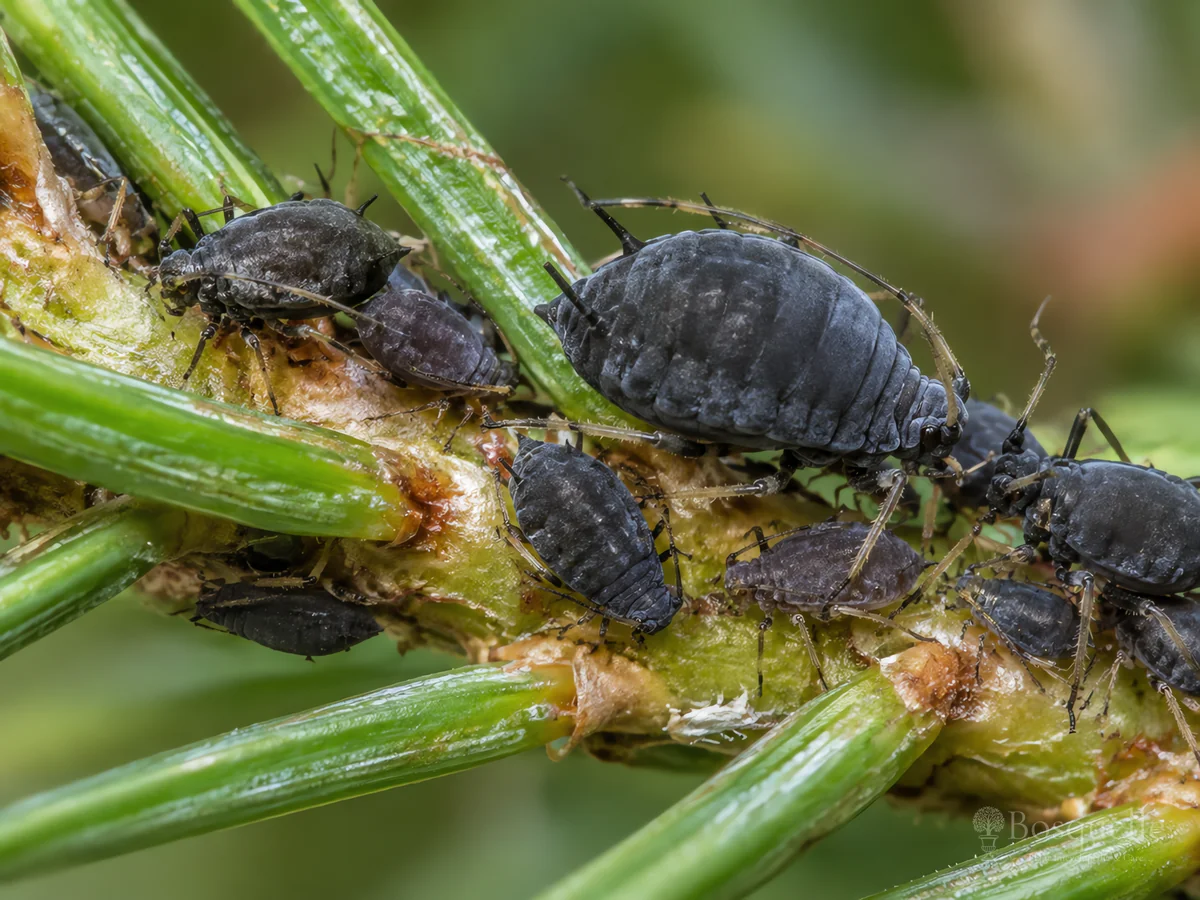
Cinara aphids, also called giant conifer aphids, are large brown or black aphids with long legs. They feed on the bark of twigs, limbs, and trunks, not on houseplant mix. Honeydew can drip onto a car or a deck. Sooty mold can blacken needles. The tree usually lives.
- Look on the bark. Large brown or black aphids with long legs confirm it.
- Hose the cluster, then wait on a landscape tree.
- Shake a cut Christmas tree outdoors. Do not smash them.
Wait on a landscape pine; hose the colonies on the wood
A yard white pine or blue spruce with sticky needles in May is messy. It is not dying. Cinara aphids rarely kill a landscape tree. Young seedlings and drought-stressed trees are the exception. Lady beetles, lacewings, and hover flies usually catch up as the weather warms. Leave them. Hose the trunk and the undersides of limbs with a strong stream while the cluster is still on the wood. Repeat after a few days, because a hose has no residual.
A Christmas tree you will cut this year is a different judgment. Fall colonies hide on the lower trunk. Shake and hose that tree outdoors. Do not fog a landscape pine because a plantation calendar said September.
- Confirm. Look on the bark and the undersides of limbs. A cluster of large brown or black long-legged aphids is this insect. Sticky honeydew, ants, or yellowjackets at the drip are the usual first clue.
- Wait on a landscape tree if predators are already there and the tree is not a seedling.
- Hose the wood with a strong stream while the cluster is still exposed. Repeat.
- Soap only if you can wet those aphids. Skip extra nitrogen. Fail if a bottle on a tree over ten feet is the whole plan.
How do I get rid of Cinara aphids?
On a landscape pine, spruce, or fir, wait if predators are there. Hose the colonies on the wood. Labeled soap only if you can wet the cluster. Shake a cut Christmas tree outdoors. Do not smash them.
Will Cinara aphids kill my pine?
Almost never on a landscape tree. Heavy years look bad and can slow a small tree. Seedlings and drought-stressed trees are the ones that can die. Bark wool that can kill a fir is an adelgid.
Look on the bark: large brown aphids with long legs
Look on the wood, not only the new flush. Cinara aphids are up to a quarter inch long, brown to black, with legs that look too long. Some have a gray wax dust. Rear tubes are short cones, not the long pipes on a rose aphid. They sit in groups on the trunk, the undersides of limbs, and sometimes among needles. Rap a branch over a white plate. Large brown or black aphids fall off. They can look spider-like when they drop onto a deck. They are still aphids.
In spring the cluster often sits higher, on the leader. In cool weather it sits lower, on the trunk, where it is easy to miss. Honeydew is often the first clue. Needles feel sticky. Ants and yellowjackets work the drip. A black film can grow on the honeydew. That film is sooty mold. Wash it after the aphids stop, and see sooty mold for the film, not for this insect. White pine aphid, Cinara strobi, is the usual species on eastern white pine. Bow-legged fir aphid sits on fir. Each species tends to stay on one kind of conifer.
| Where you see it | What they are | Try this |
|---|---|---|
| Bark, undersides of limbs, lower trunk; large brown or black, long legs | Cinara aphids | Hose, then wait on a landscape tree |
| Beat plate: large brown or black aphids, not pale green | Cinara aphids | Same insect |
| This year's fir flush, needles wrapping the shoot | Balsam twig aphid | See balsam twig aphid — not this wood cluster |
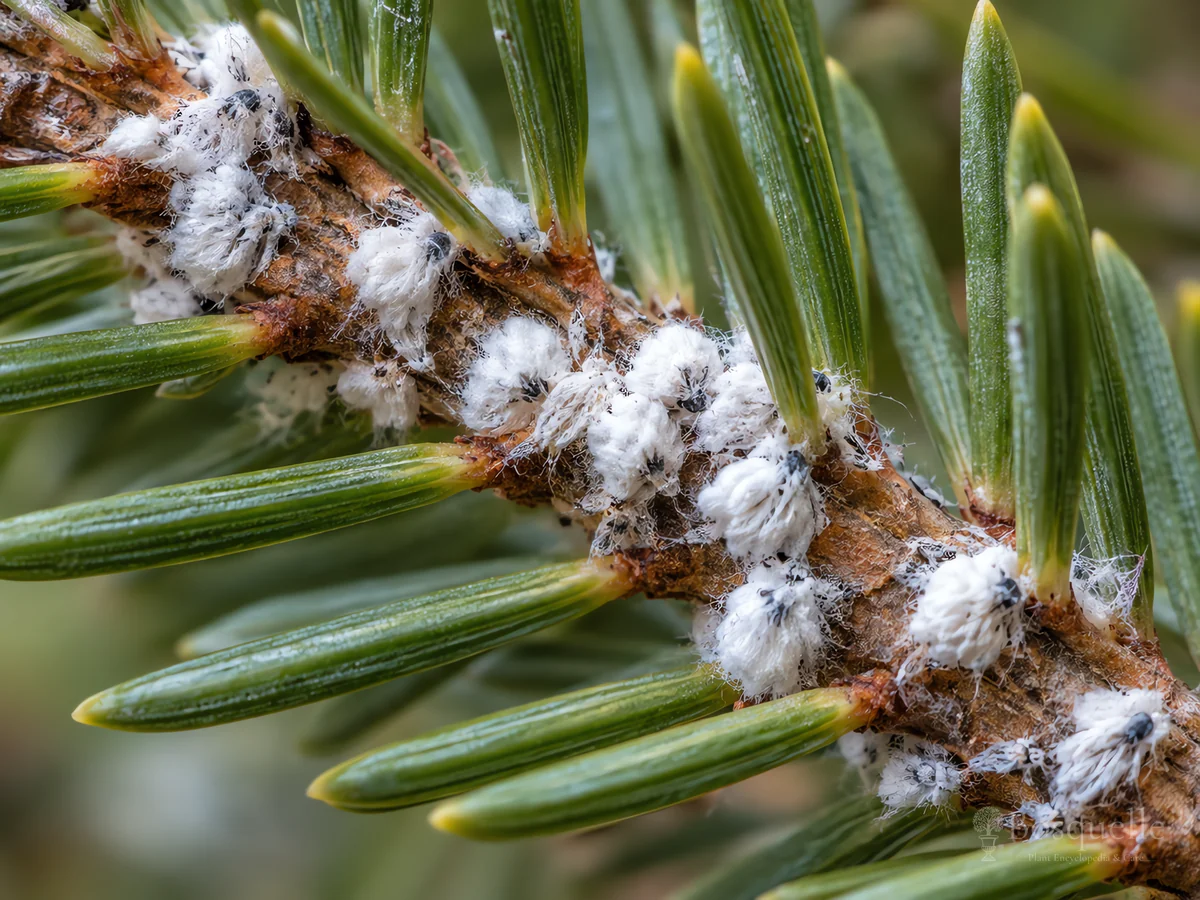
| White wool on bark; eastern white pine trunk looks snowed | Adelgid | See adelgids — do not oil the pine for this aphid |
| Small green aphids walking on pine needles, often with black spots | Spotted pine aphid | Different insect; not this genus |
| Dark bugs walking off a cut Christmas tree onto gifts | Cinara hitchhikers, not ticks | Shake outdoors; vacuum; do not smash |
What do Cinara aphids look like?
Large, brown to black, with long legs, up to about a quarter inch. Rear tubes are short cones. Look on the bark and the undersides of limbs, not only the new needles. Rap a branch onto a plate.
Wrapping needles and bark wool are different insects
If this year's fir needles wrap the shoot, that is balsam twig aphid. Those insects are pale green to blue-gray, often dusty with white wax, and they feed as the flush expands. See balsam twig aphid for that insect. Do not copy their spray timing onto a pine trunk.
If white wool sits on the bark, and an eastern white pine trunk looks painted with snow, that is an adelgid. Pine bark adelgid is not a Cinara aphid. Bark wool that can kill a fir is balsam woolly adelgid. See adelgids for that insect. Do not oil a hemlock here.
Pear-shaped clusters on a rose tip or a houseplant joint are ordinary aphids. See aphids rather than treating a rose tip the way you hose a pine. Stipple without a bark cluster is a mite — see spider mites.
Are they the same as balsam twig aphids?
No. This aphid sits on wood. Balsam twig aphid is pale green and wraps new fir needles. See balsam twig aphid for that insect.
Shake a cut Christmas tree outdoors before it comes in
Warmth indoors wakes Cinara aphids that rode in on a Fraser fir or a white pine. They crawl onto gifts and the tree skirt as the cut tree dries. They do not bite people or dogs. They do not feed on houseplants. Smash one and it leaves a purple stain, like pokeberry on wrapping paper.
- Shake the tree hard outdoors, on the lot or in the driveway, before it comes through the door.
- Hose the trunk and the lower limbs. Fall colonies hide there.
- Vacuum what walks on the carpet with a machine that has no beater bar. Labeled insecticidal soap wets the ones you can still see on the tree.
- Skip a household aerosol on a lit tree. If they keep coming after that, take the tree back out. Fail if you smash them on the carpet.
Are the bugs on my Christmas tree ticks?
Usually not. Cinara aphids are large, dark, and rounded, so they get mistaken for ticks. They do not bite. Shake the tree outdoors. Vacuum what walks. Do not smash them.
Skip the nitrogen jolt
High nitrogen in the needles feeds the next brood. Skip a late fertilizer dump on a pine that is already dripping. A slow-release or lower-nitrogen feeding is enough for a landscape tree. Flowering groundcovers under the tree feed hover flies and lacewings. That does more than another bag of lawn fertilizer at the drip line.
Soap only if you can wet the colony; skip oil on white pine
Labeled insecticidal soap kills aphids it actually wets. Coverage includes the undersides of limbs. A hose from the driveway on a tree over about ten feet wets the skirt and misses the crown. Wait on that tree, or hire coverage, rather than fogging from the ground.
Skip horticultural oil on white pine and spruce. Oil can strip the blue wax bloom and leave the tree yellow-green until new needles hide it. Kitchen dish soap can burn needles. A systemic drench is a nursery-bench move, not the first move on a yard pine.
Will dish soap kill Cinara aphids?
Skip a kitchen mix. It can burn needles. Labeled insecticidal soap wets exposed aphids. It has no residual once it dries.
Related reading
- Balsam twig aphid — pale green aphids that wrap new fir needles, not a bark cluster.
- Adelgids — white wool on bark and a snowed white-pine trunk, not walking brown aphids.
- Aphids — pear-shaped clusters on soft tips, with clear rear tubes.
- Sooty mold — the black film on honeydew after the aphids drip.
- How to grow pine — siting and watering the white pine these aphids use.
- How to grow fir — siting a landscape balsam or Fraser.
- How to grow spruce — siting a landscape spruce.
FAQ
Do Cinara aphids bite people or dogs?
No. They pierce conifer bark for sap. They do not bite skin. Sticky honeydew on a bench is sugar, not venom. The purple stain is from crushing them, not from a bite.
Why is honeydew dripping on my car?
The colony is on the wood above the parking spot. Hose the cluster. Yellowjackets at the drip are after the sugar, not stinging you on purpose. Wash the car after the drip stops. The black film on needles is sooty mold.
Do they live on houseplants?
No. This insect feeds on outdoor conifers. Aphids on a houseplant tip are a different insect. See aphids. A hitchhiker from a cut Christmas tree will not start a pothos colony.
Can I hose a tall landscape pine from the ground?
You can knock aphids off the wood you can reach. A foliar spray on a tree over about ten feet wets the skirt and misses the crown. Wait on that tree, or hire coverage, rather than fogging from the driveway.
Related pests



Related diseases




Updated: Reviewed by Bosquelle Editors