
Choose a sunflower by class first. Teddy Bear, Sunny Smile, and Russian Mammoth are Helianthus annuus — one warm season from seed. Happy Days and Lemon Queen are perennial border plants that return. ProCut and Sunrich packs are annual cutting series. Mexican sunflower is Tithonia, not this genus.

Annual vs perennial first
Three questions finish the buy. Does the tag say Helianthus annuus, or another Helianthus species? Do you want one summer from seed, or a clump that returns? Are you shopping for a patio dwarf, a giant seed head, or a cutting stem?
Write those answers before you pay. Iowa State University Extension: annual sunflowers (Helianthus annuus) are the seed and oil crop; most Helianthus species are perennials, often with smaller heads and more branching, and some spread by rhizomes. Indoor or patio care after you choose still lives on How to Grow Sunflowers.
- Packet says H. annuus, one season, taproot, often a huge head → annual. Sow after frost.
- Packet names maximiliani, salicifolius, tuberosus, or a named perennial hybrid → returning clump. Plant as a perennial, not a disposable annual.
- Tag says Tithonia or Mexican sunflower → not Helianthus.
Annuals can volunteer from dropped seed. That is not the same plant coming back. Perennials can also seed, but the clump is the plant you bought. Do not site a spreading Maximilian or Jerusalem artichoke in a 1-foot patio pot and call it Teddy Bear culture.
Pollen-free cut series are still annual annuus. They do not become hardy border plants because the florist used them. Height is the garden look. Class is the calendar.
A seed rack photo of a 12-foot stalk is not a perennial promise. Florists force annuals in a greenhouse; that does not change the Latin. If last year’s plant vanished, you likely grew annuus. If a clump thickened, you likely have a perennial species. Dig a little next to the crown in spring: new shoots from the same root mean perennial.
Compact, branching, giant, and cut kinds we hold
Inside annual annuus, pick by height and job. These packs share one sow: after frost, full sun, 1 inch deep. Spacing and a stake change with height.
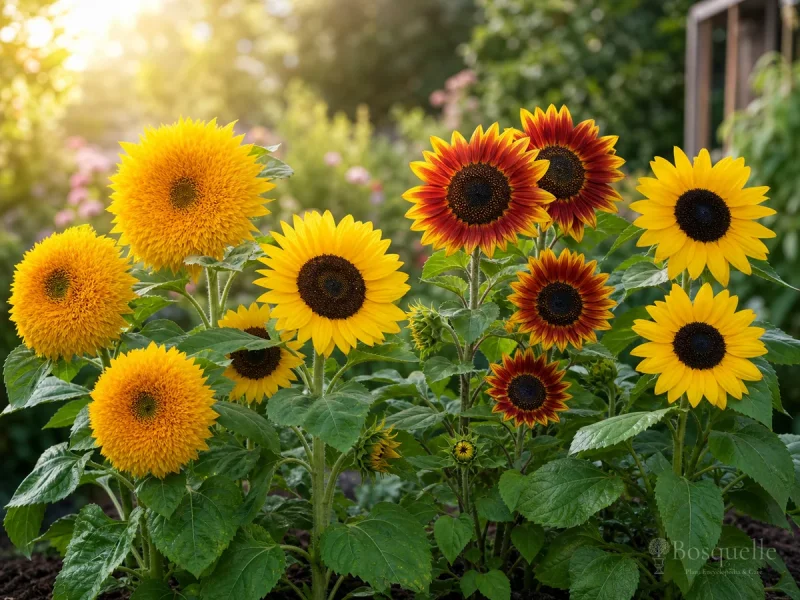
- Compact / patio — Teddy Bear is a double, plush head on a short plant. Sunny Smile and Firecracker stay dwarf enough for a large pot. Suntastic is another compact annual. Same sun. Same frost wait. No giant spacing.
- Branching garden — Soraya is an orange branching annual that also cuts. Floristan and Ring of Fire are bicolor branching looks. Claret is a dark red cutting annual. Leave 18 to 24 inches if you want many heads.
- Giant / seed — Russian Mammoth is the tall seed show. Stake early. Give about 2 feet. Not a vase flower.
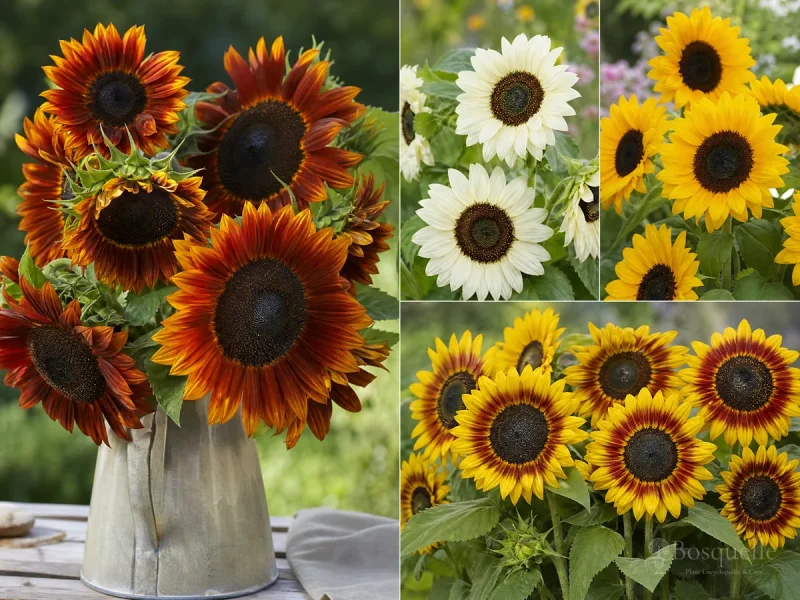
- Cut series — ProCut Red, ProCut White Nite, Vincent's Choice, and Sunrich Gold are pollen-free or florist-style annuals for long stems. Harvest steps live on Best Sunflowers for Cutting.
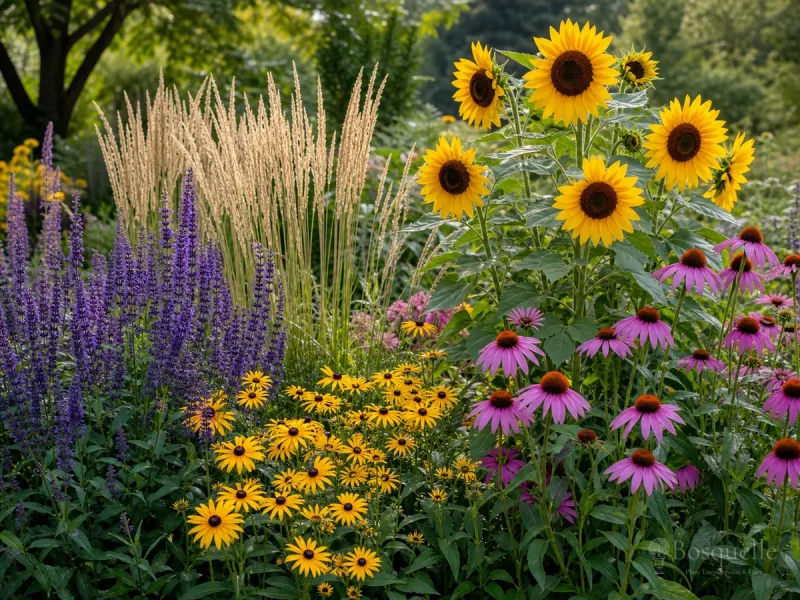
- Perennial border — Happy Days and Lemon Queen return. Smaller heads, more branching, a clump that stays. Not a mammoth seed contest.
Shop lists add dozens of annuus names. If the Latin is Helianthus annuus, grow it as an annual sunflower: frost wait, full sun, space by the height on the packet. Form is the look, not a different moisture class.
A gold dwarf and a 12-foot mammoth still die with frost as annuals. A Lemon Queen still wants sun and drain as a perennial. Color charts do not pick the class.
Branching garden mixes throw many medium heads over weeks. A single giant throws one contest head. ProCut throws one florist stem unless you succession-sow. Match the packet job to the bed: kids’ giant, patio dwarf, or a cutting row — not one packet for all three.
Happy Days and Lemon Queen can seed around, but the plant you paid for is the clump. Divide a crowded perennial in spring if the center thins. Do not treat that divide as the annual 1-inch sow.
A mixed “sunflower” six-pack at the grocery store can hide an annual and a perennial in one tray. Read every tag. One compact dwarf and one Lemon Queen do not share a frost calendar or a pot size. Walk away if the Latin is missing.
Mexican sunflower, Jerusalem artichoke, and names that are not extra species
Mexican sunflower is Tithonia rotundifolia. Orange daisy-like heads, different genus. It likes heat and sun, but it is not Helianthus and it is not a type we hold as sunflower.
Jerusalem artichoke (Helianthus tuberosus) is a true Helianthus. It spreads by tubers and is grown as a food crop. It is not a patio annual and not a ProCut stem. Do not plant it where you cannot contain the patch.
Swamp sunflower (H. angustifolius) and Maximilian sunflower (H. maximiliani) are perennial species you may see on native-plant lists. They still want sun. Some like more moisture than a dry annual row. They are not extra colors of Teddy Bear.
If you cannot keep a spreading clump, buy an annual pack. If you want the plant back without reseeding, buy a named perennial. Indoor first is not the job — this genus is a sun outdoor plant. Sort class, then height, then the name.
Willow-leaved sunflower (H. salicifolius) is a perennial with narrow leaves and a tall fall show. It can run. Maximilian does the same on prairie soils. Woodland sunflower (H. divaricatus) takes a bit more shade than annuus — still not a north-wall houseplant. None of those are extra colors of Sunny Smile.
Buy Helianthus annuus for one summer, or a perennial species for a returning clump. Compact, giant, and cutting series are height and job, not extra species. Mexican sunflower is Tithonia. Jerusalem artichoke spreads by tubers. Match the packet Latin to the bed before you copy a neighbor’s height. Pollen-free cut series are still one-season annuals. Compact patio packs and 12-foot giants share that annual calendar. Read the packet Latin once before you sow.
FAQ
Are sunflowers annuals or perennials?
Helianthus annuus is an annual. Many other Helianthus species are perennials. Read the Latin.
Is Teddy Bear a perennial?
No. It is a compact Helianthus annuus. One summer from seed.
What is Mexican sunflower?
Tithonia, not Helianthus. Same sun habit, different plant.
Is Jerusalem artichoke a sunflower?
It is Helianthus tuberosus — a spreading perennial grown for tubers, not a patio annual.
What is a ProCut sunflower?
An annual cutting series, often pollen-free, bred for uniform stems. Still Helianthus annuus.
Do perennial sunflowers have huge heads?
Usually smaller heads and more branching than a mammoth annual. Height can still be 6 feet or more.
Can I grow Sunny Smile in a pot?
Yes — a large draining pot. Giants stay in the ground.
Is pollen-free the same as perennial?
No. Pollen-free is a cutting trait on annuals. Class is still annuus versus other species.
Where do I sow the kind I picked?
How to Grow Sunflowers for frost, sun, and spacing. Best Sunflowers for Cutting for harvest stage.
Related guides

This note is part of Helianthus Guides.
More type comparisons by plant are gathered in Types of Plants Guides.
Updated: Reviewed by Bosquelle Editors