
Common sunflower (Helianthus annuus) is a warm-season annual: sow after frost, flower in one summer, then the plant dies. Compact Teddy Bear and giant Russian Mammoth use that same calendar. Perennial Helianthus returns from roots. Give annuals full sun and a bed that drains. Stake the tall ones before wind hits a heavy head.
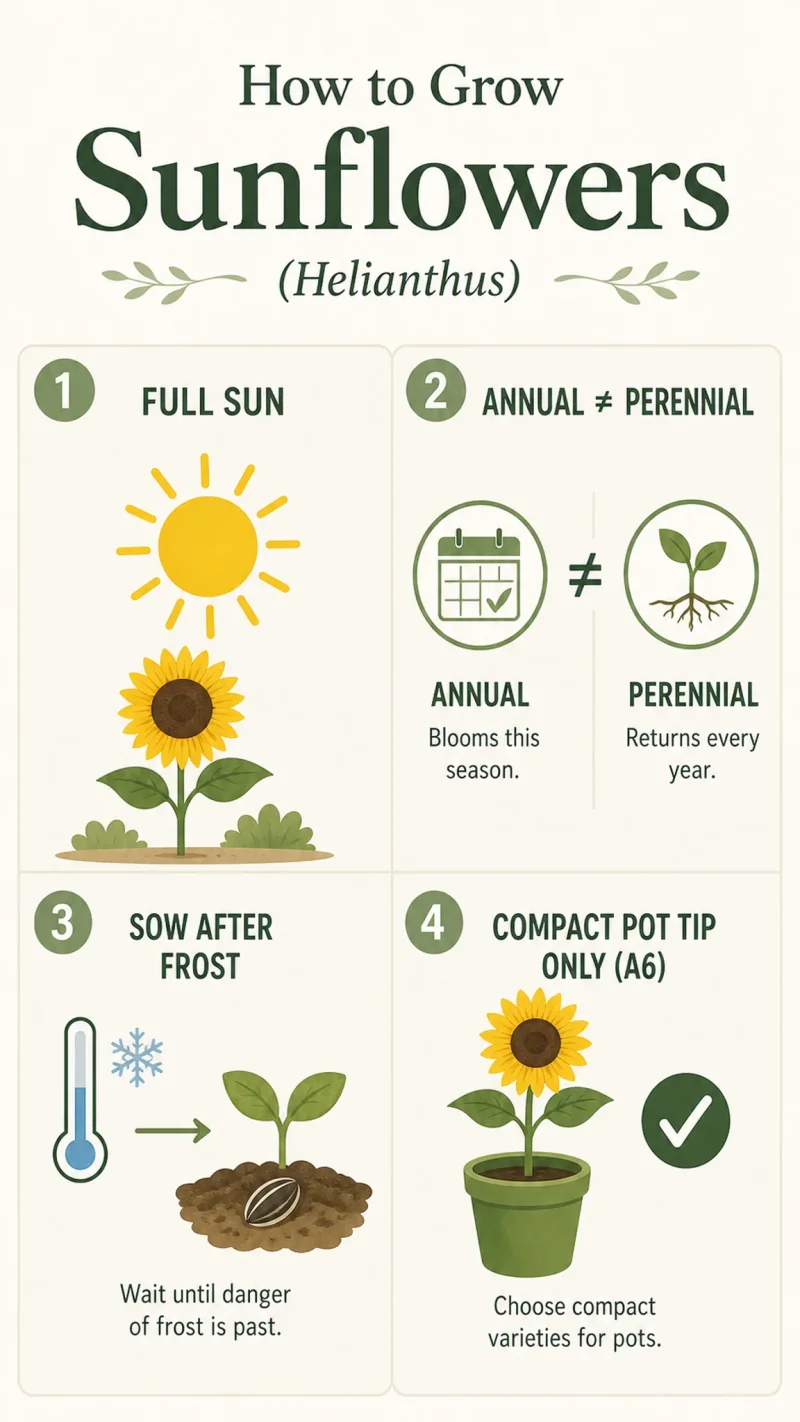
Full sun, drain, and annual vs perennial
| Factor | Recommended | Avoid |
|---|---|---|
| Light | Full sun, 6–8 hours or more | A north wall or a tree canopy that stretches stems |
| Soil | Well-drained, moderately fertile; compost worked in | A low puddle or cold wet clay at sow time |
| Class | Annual annuus for one summer; perennial species as clumps | Expecting last year’s annual to come back as the same plant |
| Support | Stake giants before they lodge | A late stake driven through a thick stem |
Sunflowers want the open sky. Oregon State University Extension: choose a place that gets full sun (6–8+ hours) and well-draining soil — skip low spots that puddle. Heavy clay slows growth. Mix 1–2 inches of compost into the top foot before you sow. Compact patio packs still need that sun; they just stay shorter.
Helianthus annuus finishes in one warm season. Dropped seed may volunteer next year; that is a new plant, not the old stalk returning. Perennial kinds such as Happy Days and Lemon Queen come back from the crown or rhizomes. If a packet says Helianthus annuus, treat it as an annual. If it names another Helianthus species, treat it as a clump that stays. Kinds live on Types of Sunflowers.
A west brick wall can cook petals in July even when the soil still drains. Morning sun plus some afternoon shade is safer in that heat. Do not site a giant where a downpipe dumps after storms.
Sandy ground needs compost so midday heat does not flash moisture away. Clay needs a raised row so a storm does not pond on new seed. Compost is not a license to flood. A downpipe splash that drains is useful; a sump that never dries is rot. Check the day after rain.
Do not copy a woodland fern list onto this plant. Sunflowers are a prairie-sun crop. A shaded north eave makes a lanky stalk with a small head. Move the row before you add fertilizer hoping for height.
How to sow sunflowers after frost
Direct sow is the usual method. University of Minnesota Extension: wait until frost risk has passed, plant seed about one inch deep, and space by height — about 6 inches for short kinds, a foot for taller ones, and 2 feet for giants. Seedlings show in about 7 to 10 days.
- Wait until the last frost has passed and the soil feels warm — about 50°F. Cold wet ground stalls seed more often than a late packet date.
- Sow 1 inch deep in full sun. Keep the row moist until germination. Do not drown a clay hollow.
- Space short kinds about 6 inches apart. Give mid-height plants about a foot. Give giants about 2 feet so air moves and heads do not grind.
- Thin crowded rows once true leaves show. Leave the strongest seedling at each station. Do not transplant a long taproot if you can sow in place.
- If you start indoors, use a biodegradable pot and transplant the whole pot after frost so you do not tear the root. Do not start so early that the plant gets pot-bound on a hot sill.
- For a longer bloom, sow the same kind every 1 to 2 weeks, or sow kinds with different days-to-bloom on the same day.
- Stake giants when they are still small. A hoop or a stout cane at sow time beats a late pole through a thick stem after a storm.
Perennial clumps go in as plants in spring, or in early fall where the bed drains, so roots settle before heat or winter wet. They are not the 1-inch annual sow. Birds and squirrels pull seed — net a new row for a week if they work your beds.
Single-stem cutting rows can sit closer (about 4 to 6 inches) if you want long straight stems. Branching garden kinds want 18 to 24 inches. Do not copy a giant spacing onto a patio pack, or a patio spacing onto a mammoth.
If you must transplant, do it at the first true leaves, on a cloudy day, and water in. A long taproot hates a late move from a packed six-pack. Biodegradable pots that sit above the soil line wick dry — tear or bury the rim. Indoor starts that sit on a heat mat meant for peppers get soft and flop at plant-out.
Skip a second sow in late summer if frost will hit before bloom. Count backward from your first fall frost using the days-to-bloom on the packet. A 90-day giant sown in August in a short season will not finish. Compact kinds still need those frost-free weeks.
Water, stake, and birds
Water to establish. Once roots run, sunflowers take some drought, but bloom and seed are better with a deep soak when rain is short — about an inch a week once plants are up. Water the soil, not the leaves, in humid weather so lower foliage stays drier. A hanging sprinkler on the heads is a mildew setup.
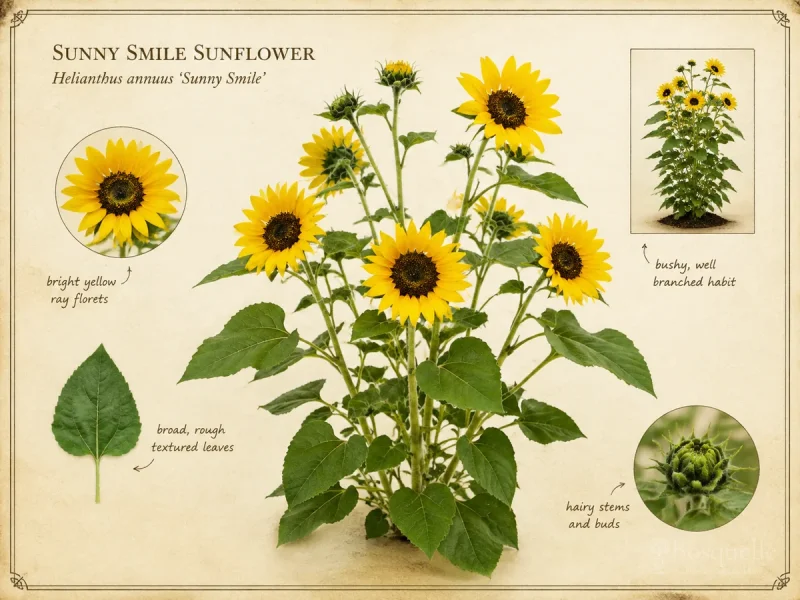
Giants lodge when a wet head sits on a thin stalk. Stake or cage before the plant is top-heavy. Compact Teddy Bear and Sunny Smile rarely need a pole. Russian Mammoth does. Tie loosely so the stem can thicken. A late stake through the crown splits the plant.
Deadhead spent blooms if you want a tidy row and more branching on kinds that branch. Leave some heads if goldfinches and other birds are the point. Seed for the kitchen comes from large-seeded giants left to ripen on the stalk, then bagged or cut when the back of the head turns yellow-brown. Do not leave rotting heads against the stem in a wet week — that is disease, not a bird feeder.
Aphids cluster on buds. A blast of water or insecticidal soap on a labeled path is enough on a small row. Powdery mildew likes crowded wet leaves — space and morning sun beat a late spray. Sunflower moth and head damage show on large seed heads; harvest or bag if you need clean seed.
If growth stalls in a heat wave, check water at the root, not a foliar mist. A plant that needs water every other day in a 5-gallon pot is usually too small a container or too much sun on black plastic, not a missing feed. Do not fertilize a lodging giant hoping the stem will stiffen — stake it.
Leave a few heads for goldfinches if that is the point, but cut or bag kitchen seed before wet weather turns the disc to mold. Rinse seed and dry it hard if you store it. Birds that pull new seedlings are a row-cover job for the first week, not a reason to skip the sow.
Pots, cutting, and next jobs
Dwarf packs under about 3 feet can live in a large draining pot — a 5-gallon bucket with holes is a real size, not a 6-inch nursery cup. Use potting mix, not garden clay. Pots dry faster; water more often, not with a bigger tub of wet mix.
Pollen-free cutting series and harvest stage live on Best Sunflowers for Cutting. Do not grow a 12-foot mammoth for a kitchen vase. Partners in the same sun — zinnia, salvia, squash at the feet — belong in a separate row from a cutting aisle so you can still walk.
Mexican sunflower is Tithonia, not Helianthus. Jerusalem artichoke is a spreading perennial grown for tubers, not a patio annual. Sort those names on Types of Sunflowers, then come back to sun and frost.
A patio pot still wants the frost wait and the full-sun sill or deck. Bring it in only if an early cold night is on the forecast and the plant is still in bloom — annuals are not houseplants. Empty the saucer. Do not keep a giant in a whiskey barrel of garden clay over winter hoping it returns; the annual is done.
Sow Helianthus annuus after frost in full sun that drains. Space by height, water to establish, and stake giants early. Treat perennial Helianthus as a clump, not a one-summer annual. Pick dwarf packs for pots. Cut pollen-free stems on the cutting page when petals first lift. Empty standing water after every soak. Bag kitchen seed before a wet week turns the head to mold.
FAQ
Do sunflowers need full sun?
Yes. Give 6 to 8 hours or more. Shade makes weak stems and few blooms.
Are sunflowers annuals or perennials?
Common Helianthus annuus is an annual. Other Helianthus species can be perennial clumps. Read the Latin on the packet.
Do sunflowers come back every year?
Annual plants die after one season. Volunteers may come from dropped seed. Perennial species return from roots.
When do I plant sunflower seed?
After the last frost, when soil is about 50°F. Sow about 1 inch deep.
How far apart should I plant sunflowers?
About 6 inches for short kinds, 1 foot for taller ones, and 2 feet for giants. Cutting singles can sit closer.
Can I grow sunflowers in a pot?
Yes if you pick a dwarf under about 3 feet and use a large draining container. Giants do not belong in a small pot.
Do I need to stake sunflowers?
Stake giants and top-heavy heads before wind. Compact patio kinds usually skip a pole.
Should I deadhead sunflowers?
Deadhead if you want a tidy row. Leave heads if you want bird seed or a kitchen harvest.
Where are types and cutting harvest?
Types of Sunflowers for annual versus perennial. Best Sunflowers for Cutting for pollen-free stems and vase timing.
Related guides
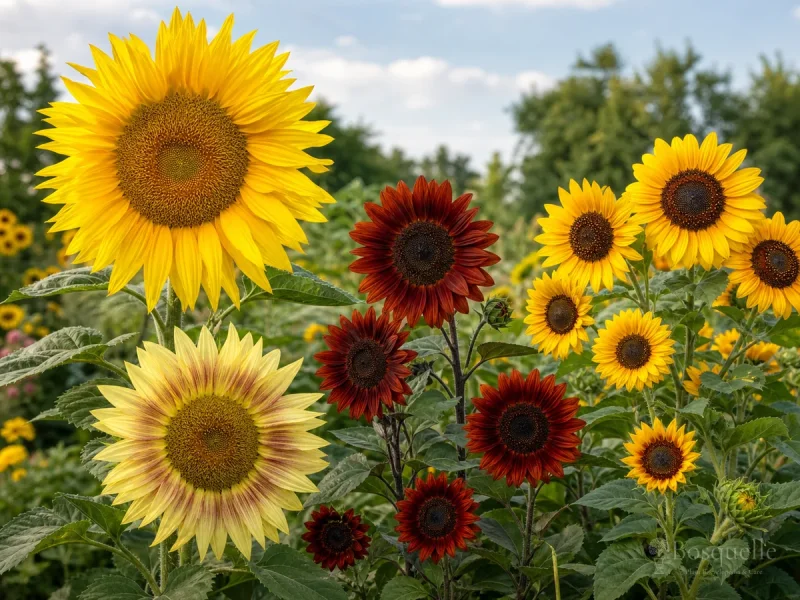
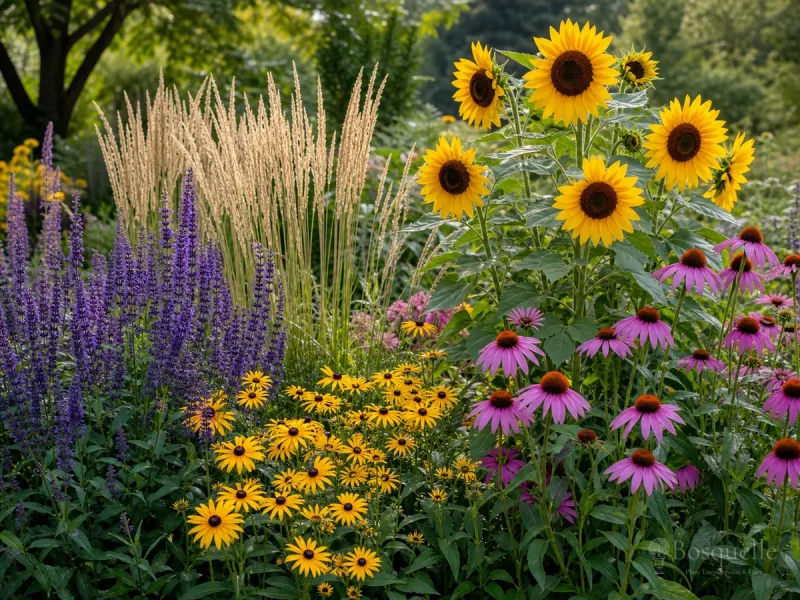
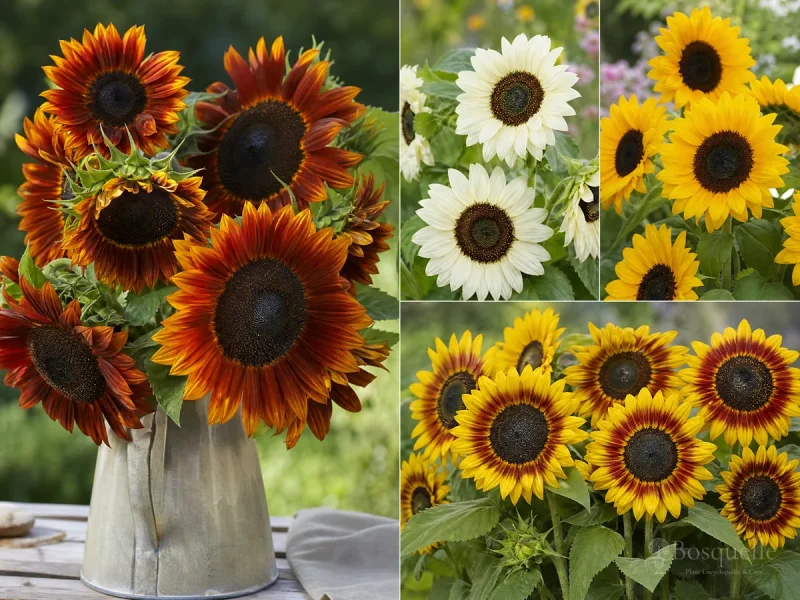
Recommended plants




This note is part of Helianthus Guides.
More first-season notes by plant are gathered in How to Grow Guides.
Updated: Reviewed by Bosquelle Editors