
Choose iris by moisture and plant part before flower color. Bearded rhizomes, moist beardless clumps, and fall bulbs are not one bed. Then browse all 198 garden iris by group.

Choose moisture, then flower color
American Iris Society: garden iris fall into bearded, beardless, and a few bulb types. Match the group to your soil before you shop a color chip.
- Dry sunny ridge — bearded, such as ‘Immortality’. Rhizome high, sharp drain.
- Moist border or rain-garden edge — Siberian, such as Caesar's Brother and Butter and Sugar.
- Pond-edge moisture — Japanese ensata, such as ‘Agripinella’.
- Early dwarf bulb — reticulata, such as ‘Alida’. Plant in fall.
- Cutting-patch bulb — Dutch hollandica, such as ‘Apollo’.
How do I choose an iris type?
Start with the bed: dry ridge, moist clump, or fall bulb. Then pick color inside that group.
Rhizome types vs bulbs
National Garden Bureau: rhizome iris include bearded and beardless clumps. Bulb iris (Dutch, dwarf reticulata) are a different planting job.
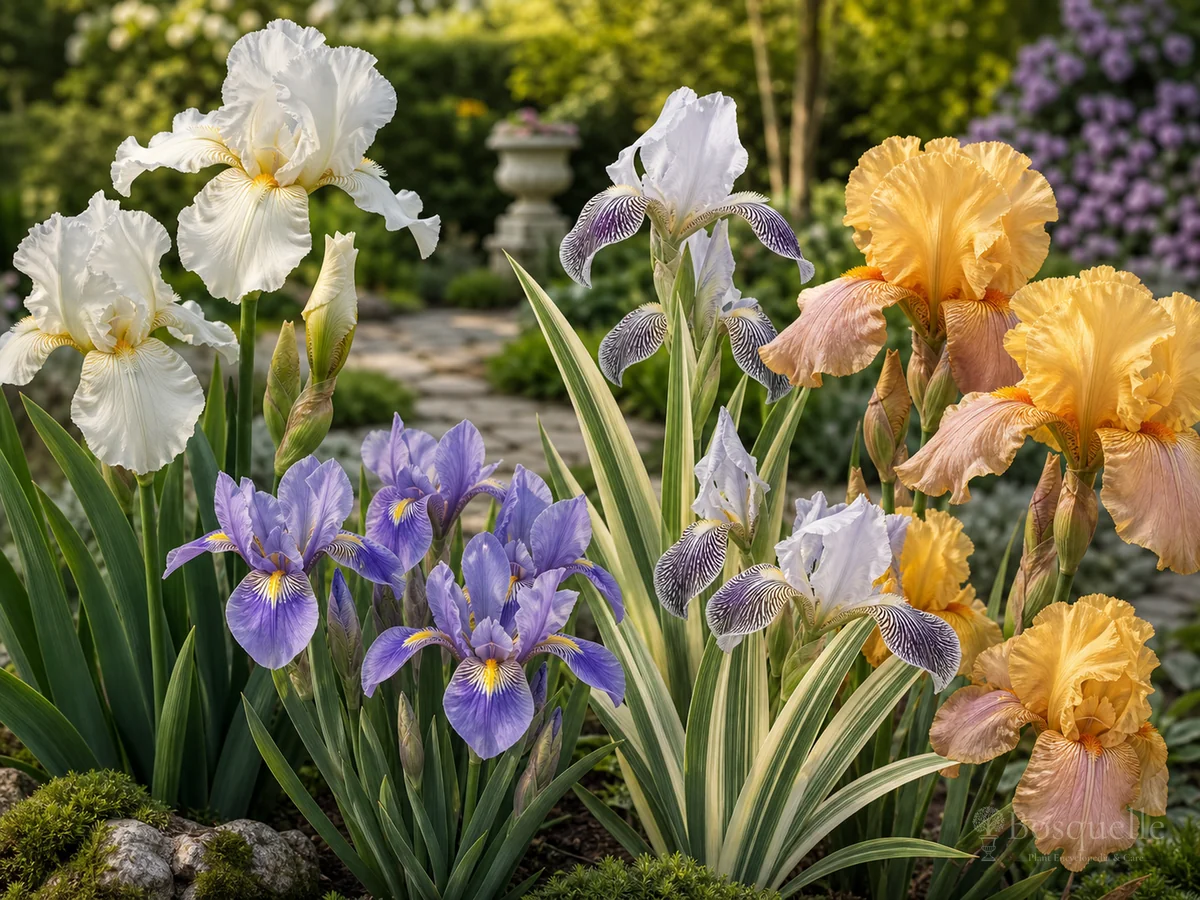
Bearded iris (Iris germanica types) grow from rhizomes planted high in full sun and sharp drainage — divide clumps in summer when bloom thins. Siberian iris (Iris sibirica / siberica) prefer moister, richer soil than bearded types and form upright clumps without bearded rhizome ‘backs’. Japanese iris (Iris ensata) want consistent moisture in the growing season — think pond-edge richness, not dry bearded beds.
Reticulata iris are small spring bulbs for rock gardens and front edges — plant in fall; they are not summer-divide rhizomes. Dutch iris (Iris hollandica) are bulbous cutting types for spring bloom — plant like other spring bulbs, not like bearded rhizomes. Wet-edge and Louisiana rows such as yellow flag and ‘Black Gamecock’ sit in other species — open the profile before you copy bearded rules. Variegated Pallida Argentea Variegata is a species accent, not a substitute for either bed.
Is a Siberian the same as a bearded iris?
No. Bearded types are high-planted rhizomes for sharp drain. Siberian types form moister clumps without that exposed-crest culture.
Can Japanese iris grow on a dry bearded ridge?
Usually not. Ensata wants wetter growing-season soil than bearded culture.
Tall and border bearded (germanica) (98)
Bearded iris (Iris germanica types) grow from rhizomes planted high in full sun and sharp drainage — divide clumps in summer when bloom thins.
Siberian iris (26)
Siberian iris (Iris sibirica / siberica) prefer moister, richer soil than bearded types and form upright clumps without bearded rhizome ‘backs’.
Japanese iris (ensata) (19)
Japanese iris (Iris ensata) want consistent moisture in the growing season — think pond-edge richness, not dry bearded beds.
Dwarf reticulata iris (14)
Reticulata iris are small spring bulbs for rock gardens and front edges — plant in fall; they are not summer-divide rhizomes.
Dutch iris (hollandica) (4)
Dutch iris (Iris hollandica) are bulbous cutting types for spring bloom — plant like other spring bulbs, not like bearded rhizomes.
Other iris species (37)
Other iris species and mixed catalog rows (including Louisiana and water iris when coded outside the main groups) — open the profile for moisture and hardiness before copying bearded rules.
Tag decoder and wrong buys
- Germanica / bearded → high rhizome, sharp drain
- Sibirica / Siberian → moister clump
- Ensata / Japanese → wet-leaning feature
- Reticulata → dwarf fall bulb
- Hollandica / Dutch → spring cutting bulb
Do not plant ‘Agripinella’ on a dry ridge because the flower is also called iris. Do not use ‘Apollo’ as a permanent bearded substitute. Care lives on How to Grow Irises. Summer divide lives on Dividing Iris.
Reticulata or Dutch for early spring?
Reticulata for a dwarf front-edge bulb. Dutch hollandica for cutting stems. Both are fall-planted bulbs, not bearded rhizomes.
Match the group to your soil, then open two profiles in that band. Plant with the care page; divide bearded clumps in summer.
FAQ
What does TB mean on an iris tag?
Tall bearded — a garden class inside bearded iris. It still wants a high rhizome and sharp drain.
Is Louisiana iris a bearded type?
No. It is a beardless, wet-leaning American group. Shop tags sometimes miscode it. Check moisture on the profile.
Do all iris bloom at the same time?
No. Dwarf bulbs open first. Bearded follow in late spring. Siberian and Japanese extend into early summer.
Related guides


This note is part of Iris Guides.
More type comparisons by plant are gathered in Types of Plants Guides.
Updated: Reviewed by Bosquelle Editors