
Divide bearded iris in summer after bloom when the clump thins. Keep firm rhizomes with a short fan, discard soft pieces, and replant high.
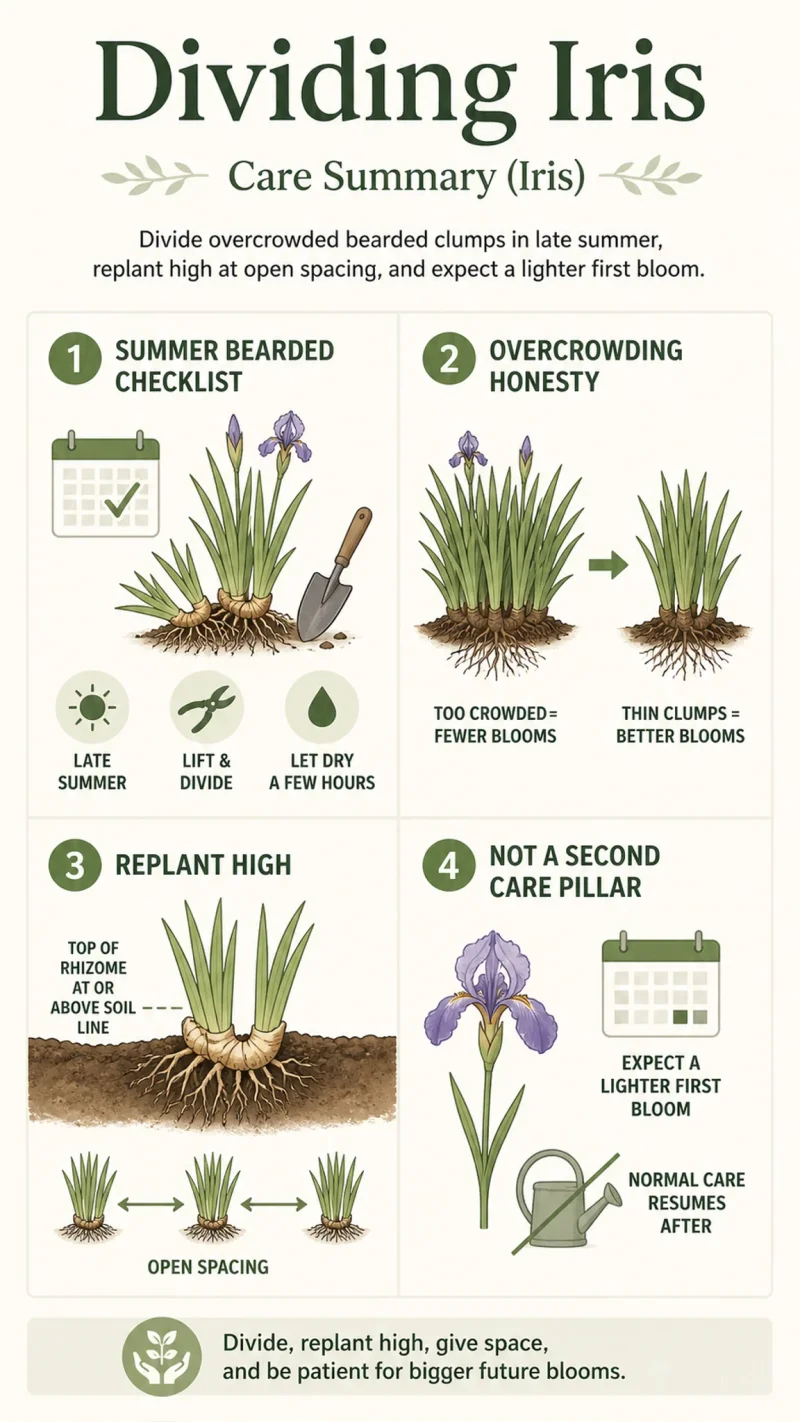
When to divide bearded iris
| Factor | Recommended | Avoid |
|---|---|---|
| Timing | Every 3–5 years, typically July–August after bloom | Winter digs, or waiting until the center is a bare doughnut |
| Cue | Bloom fades, fans crowd, center opens | Dividing a young, still-flowering clump for no reason |
| Window | Warm soil so new roots set before frost | Spring move as the default for bearded clumps |
Penn State Extension: divide bearded iris after flowering, in late summer, so pieces establish before winter. Soft rot is less likely then than in a winter lift.
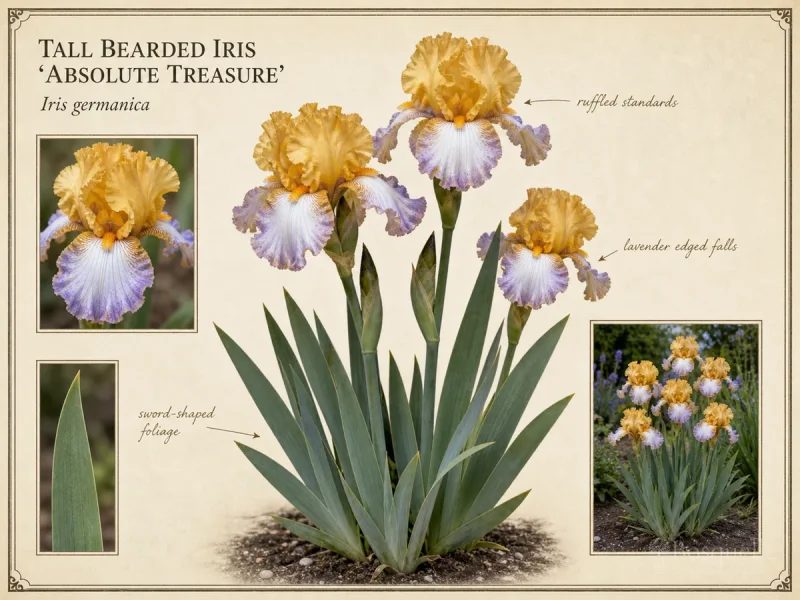
Clumps such as ‘Immortality’, ‘Absolute Treasure’, and ‘Before The Storm’ follow that window. Year-round site rules live on How to Grow Irises.
When should I divide bearded iris?
Every three to five years, or when the center thins — typically July–August after flowering, while the soil is still warm.
When do you split irises?
Same job as dividing: late summer after bloom. Spring is a weaker window for bearded clumps.
Dig and split the rhizome
Illinois Extension: lift the whole clump, wash soil off if you need to see the pieces, and keep rhizomes that are firm, about thumb-thick, with a fan and roots. Discard old, mushy, or borer-damaged sections. Sanitize the knife if you cut.
- Cut fans back to about one-third so wind does not lever the new plants out. You can do this before or after the lift.
- Loosen a circle around the clump and lift it with a fork.
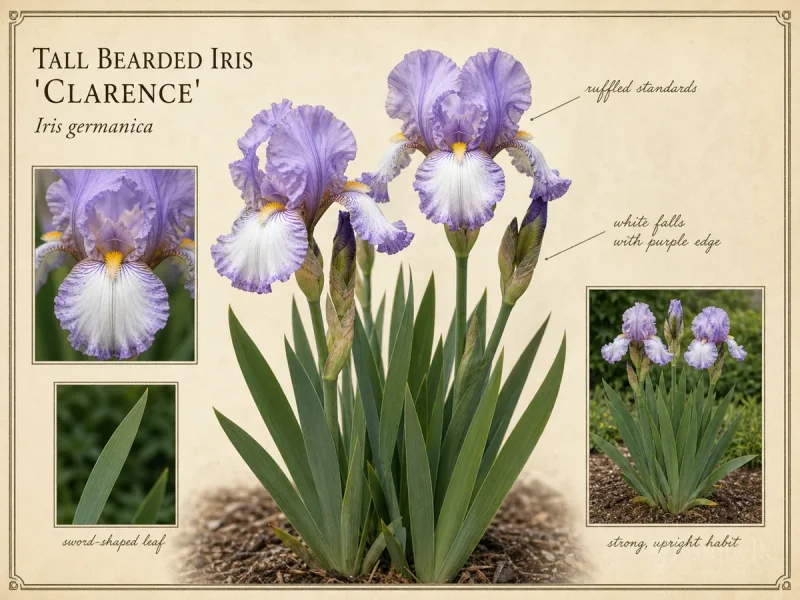
- Pull or cut rhizomes of kinds such as ‘Champagne Elegance’ and ‘Clarence’ apart. Keep pieces with a healthy fan and firm flesh.
- Throw out hollow centers and smelly rot. Do not compost those pieces. Wear gloves — iris is toxic if chewed.
- Label each piece before the bed looks the same.
What do overcrowded irises look like?
Bloom thins, fans push outward, and the center goes bare. That is the cue to dig, discard spent center rhizomes, and replant firm fans high.
Replant high and water in
University of Wisconsin Extension: replant soon. Set the rhizome high, spread the roots, and water to settle. Space so air moves between fans.
Set ‘Blue Rhythm’ and ‘Hold My Hand’ with the rhizome top at or slightly above the soil, fans upright. Space about 12–18 inches. Water once to settle, then return to bearded dryness — not an ensata soak.
How far apart do you replant iris rhizomes?
About 12–18 inches between pieces, rhizomes high and slightly exposed, or small groups of three with air between groups.
Aftercare until new roots take
Keep weeds off the crest. A light watering in a dry spell helps pieces such as ‘Fogbound’ root. Do not bury them under bark. Expect a lighter bloom the first season. Groups live on Types of Irises.
Does this cover Siberian iris?
This checklist is bearded-focused. Siberian clumps divide less often and are set a little deeper in moister soil — see How to Grow Irises.
Divide after bloom, keep firm fans, replant high, and water once to settle. Then keep the crest dry and in sun.
FAQ
Can I divide iris in spring?
You can, but late summer after bloom is the stronger window for bearded clumps. Spring lifts miss the easy rest phase.
How long until divided iris bloom again?
Often a lighter show the first season. Full bloom returns as the fans settle.
Should I wash the rhizomes?
If clay hides rot or borers, rinse so you can see. Handle roots gently and replant the same day.
What if I find a fat worm in the rhizome?
That is likely iris borer. Cut out damaged tissue, kill the larva, and discard rotten pieces. Do not compost them.
Related guides


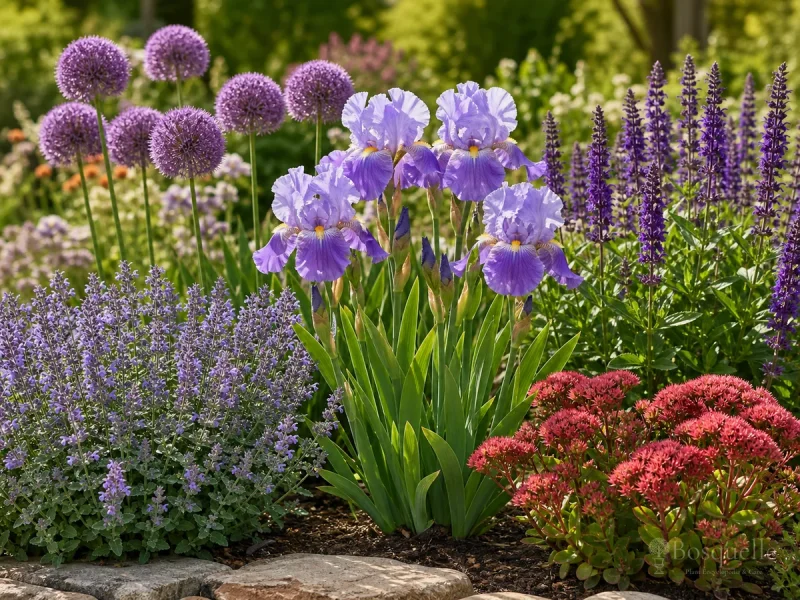
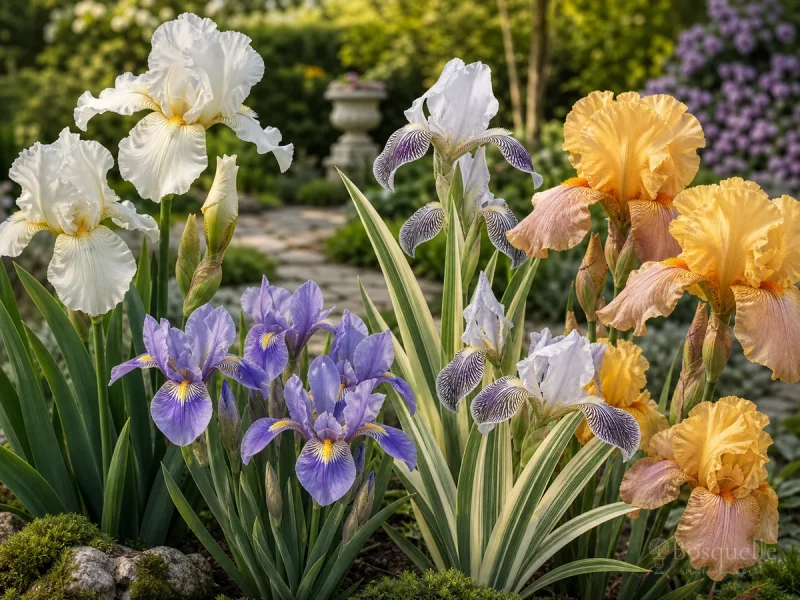
Recommended plants
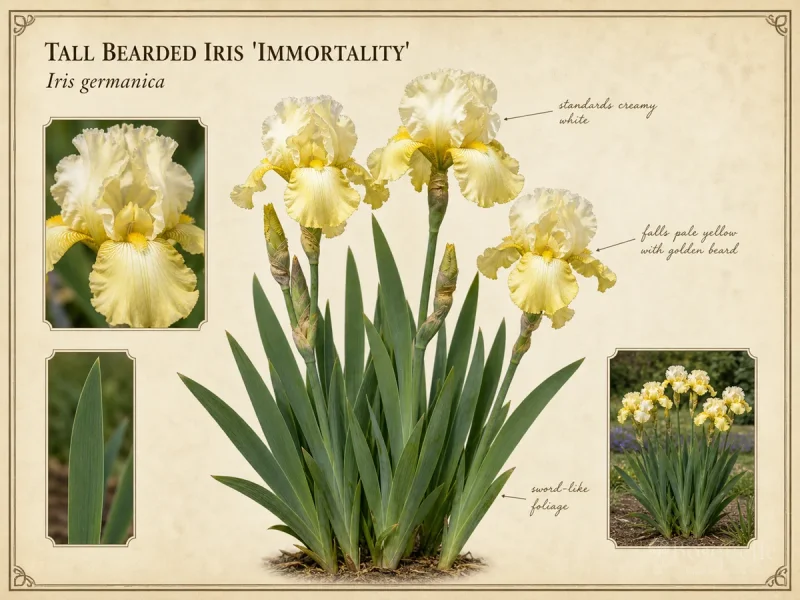




This note is part of Iris Guides.
More notes on making another plant live in Propagating Guides.
Updated: Reviewed by Bosquelle Editors