
Grow irises in full sun. Bearded types need the rhizome high — at or just above the soil. Siberian and Japanese clumps want more moisture. Dutch and reticulata are fall-planted bulbs.
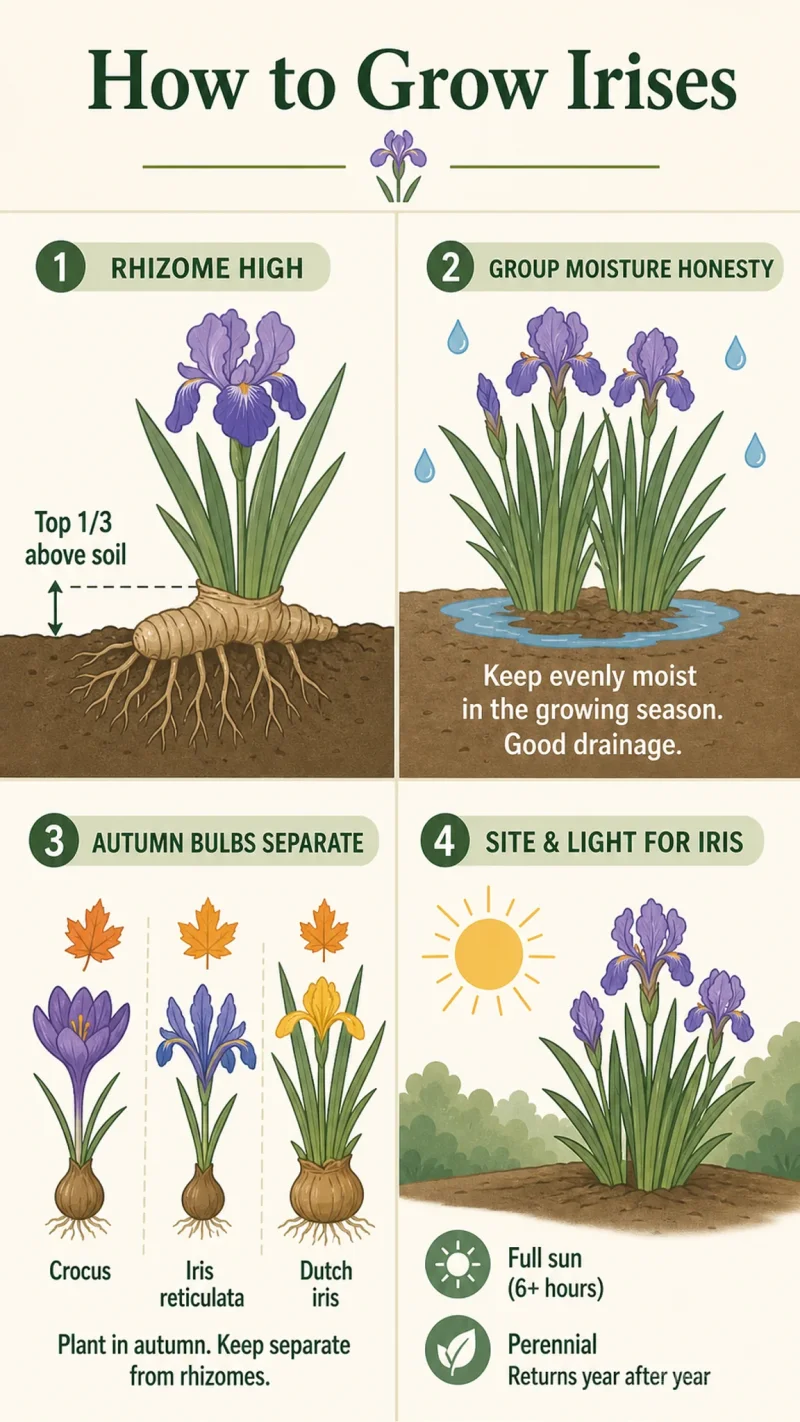
Sun, rhizome height, and drainage
| Factor | Recommended | Avoid |
|---|---|---|
| Light | Full sun, about 6–8 hours | Deep shade (thin bloom, soft fans) |
| Bearded rhizome | Top at or just above the soil on a slight mound | Burying it like a tulip, or mulch packed on the crest |
| Beardless moisture | Even moisture for Siberian and Japanese clumps | A baked dry ridge copied from bearded beds |
| Soil | Drains after a soak; raised bed if the ground stays wet | Soggy clay around bearded rhizomes |
Iowa State University Extension: most garden iris want at least six hours of sun. Bearded types fail in soggy soil — use a raised bed if water sits. Siberian clumps tolerate moister ground.
Do irises need full sun?
Yes, about six to eight hours for a full bloom. Shade cuts flower count and keeps bearded rhizomes too damp.
Are irises perennials?
Yes. Bearded and Siberian clumps return for years when sun and moisture match the type. Dutch and reticulata are perennial bulbs you plant in fall.
How deep should I plant bearded iris?
High. Set the rhizome so the top sits at or just above the soil, fans upright. Deep burial is a common cause of rot and weak bloom.
How to plant iris
University of Nebraska Extension: set the bearded rhizome on a soil cone, spread the roots, and keep the rhizome parallel with the surface. Water once to settle, then water sparingly until new growth starts. Midsummer to early fall is the usual window for bearded rhizomes.
- Read the tag. Bearded, Siberian, Japanese, and bulb types do not share one planting depth.
- Choose full sun and soil that drains. On wet ground, raise a bearded bed.
- Bearded: plant the rhizome high, fans facing the sun, space about 12–18 inches. Siberian: cover the rhizome with about 1–2 inches of soil. Japanese ensata: moister ground, not a dry ridge.
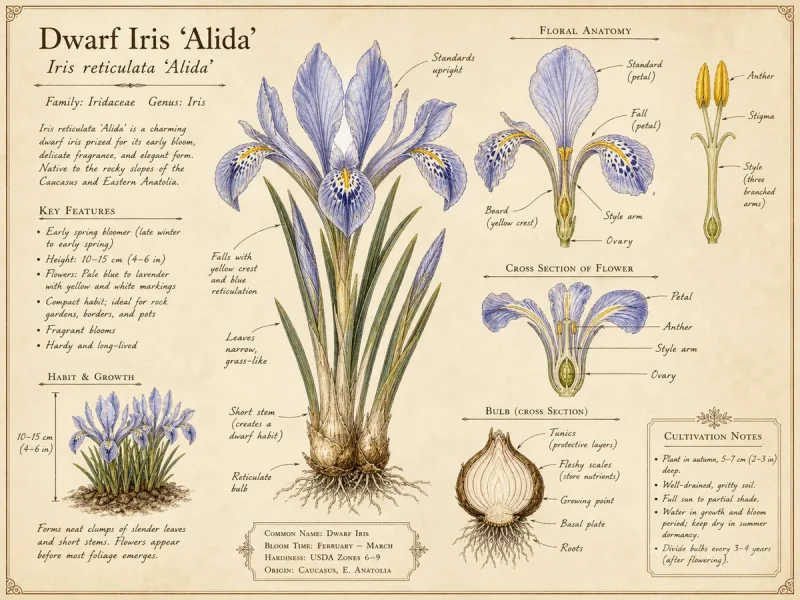
- Dutch and reticulata bulbs: plant in fall at about two to three times the bulb height, in drained sun — not the bearded summer window.
- Water to settle. Then let bearded soil dry between waterings. Keep Siberian and ensata evenly moist in the growing season.
- Keep mulch off bearded rhizomes. Leave the crest in the light.
When do you plant iris bulbs?
Fall, for Dutch hollandica and reticulata. Bearded iris are rhizomes: plant them high in late summer after bloom, not deep like tulips.
How deep do you plant iris bulbs?
True bulbs: about two to three times the bulb height. Bearded rhizomes: high, tops at the soil line. Do not bury germanica like a bulb.
Do Siberian iris use the same bed as bearded?
Not if you can split the bed. Siberian and Japanese types want moister, richer soil than the sharp-drained ridge bearded iris prefer.
Moisture groups, and what fails
Penn State Extension: bearded iris want full sun and a mound. Better shallow than deep. Do not mulch over the rhizomes. Soft rot follows wet, buried crests.
Groups
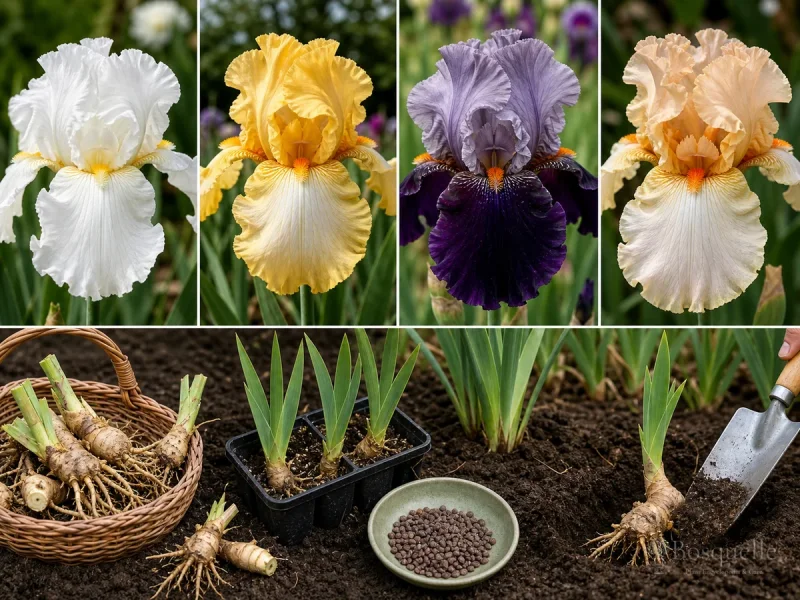
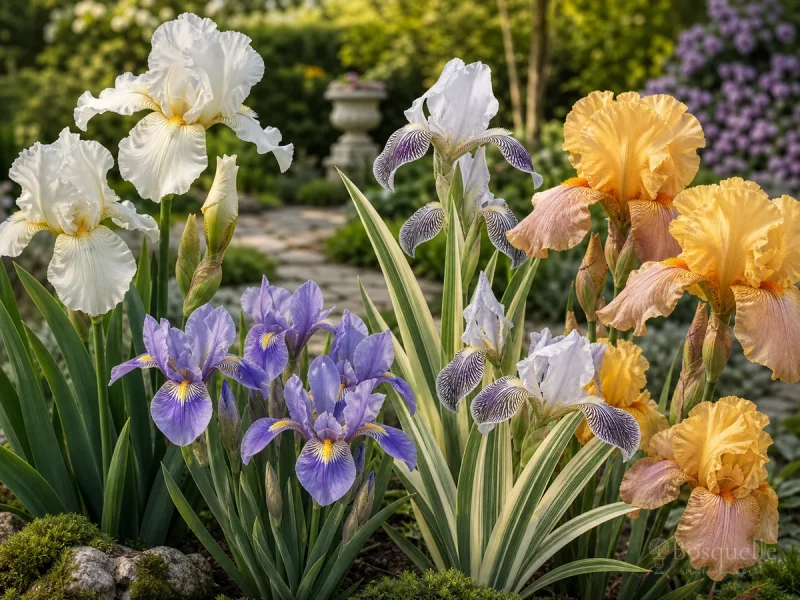
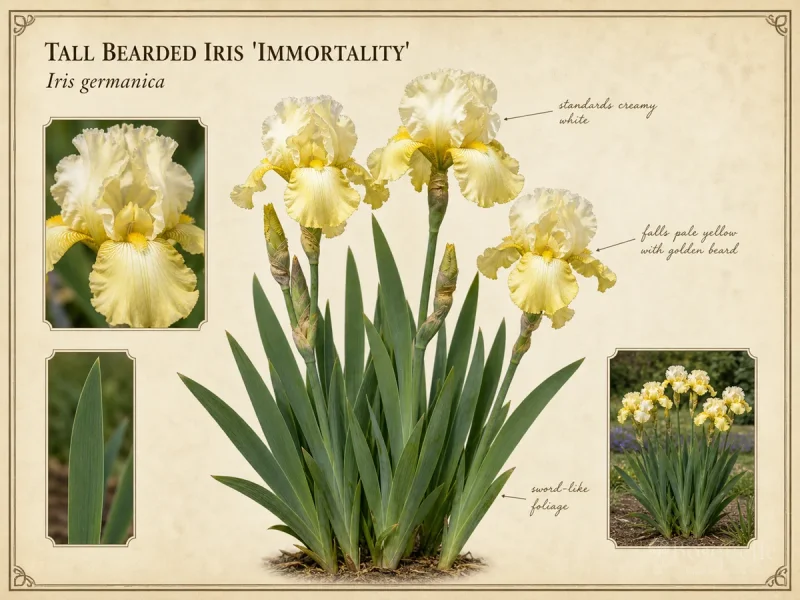
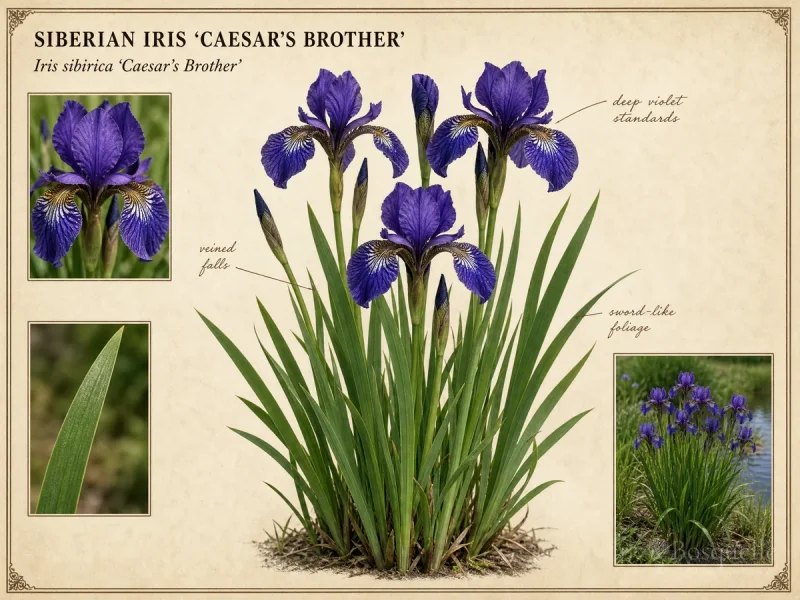
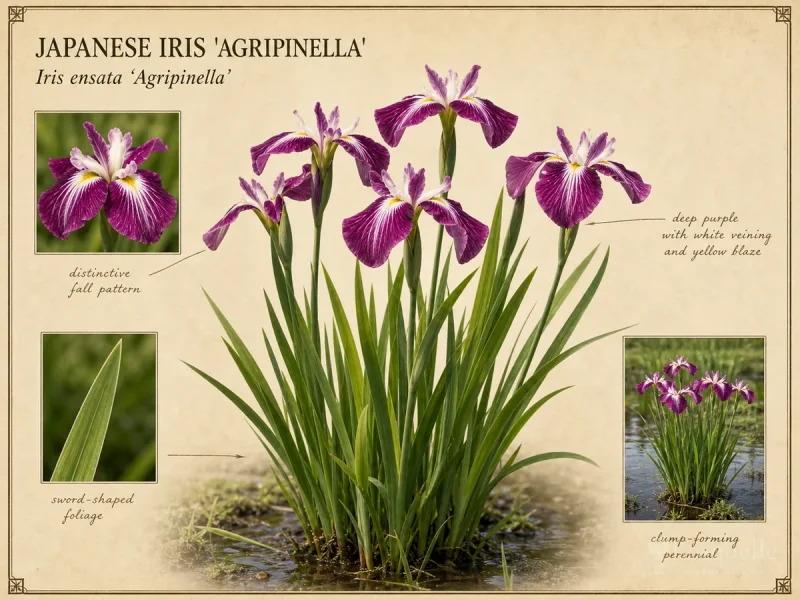
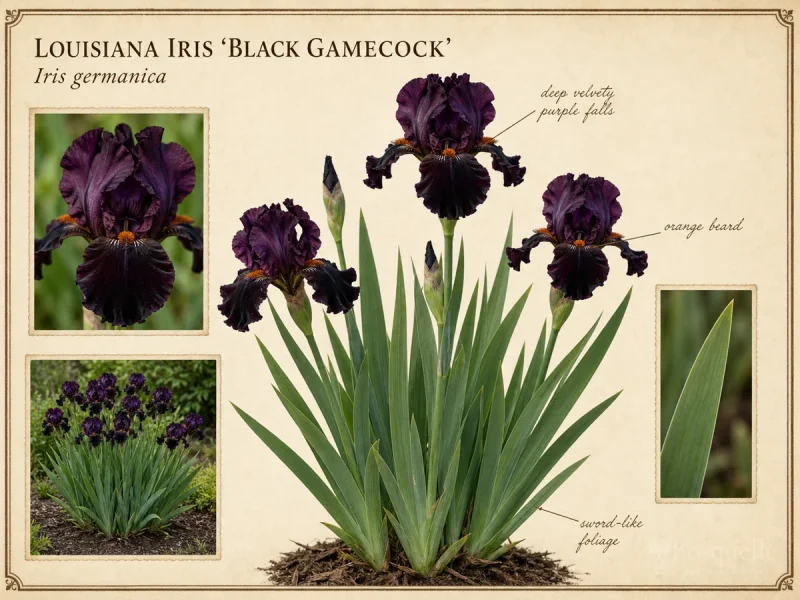
Bearded types such as ‘Immortality’ want a sunny, drained ridge with the rhizome high. Siberian clumps such as Caesar's Brother and Butter and Sugar take richer, moister soil and a slightly deeper set. Japanese ensata such as ‘Agripinella’ lean further toward growing-season moisture. Reticulata (‘Alida’) and Dutch hollandica (‘Apollo’) are bulbs for fall. Species and wet-edge rows such as Pallida Argentea Variegata, yellow flag, and ‘Black Gamecock’ need a moisture check before you copy bearded rules.
What fails
- Burying bearded rhizomes, or packing wet mulch on the crest.
- Planting ensata or Louisiana types on a dry bearded ridge.
- Skipping a summer divide until the bearded clump goes bare in the center — that job lives on Dividing Iris.
- Cutting every green fan to the ground after bloom. Leave enough foliage to recharge the rhizome.
Why did my iris stop blooming?
Usually shade, a buried bearded rhizome, or an overcrowded clump. Match the type to moisture, then divide bearded plants in summer if the center is bare.
Pots, bulbs, and names
Pots
- Bearded iris can live in a wide, shallow pot with holes and a mix that drains. Keep the rhizome at the surface. Empty the saucer.
- Siberian clumps want a deeper pot and even moisture. Do not treat them as a dry bearded trough.
Can I grow bearded iris in containers?
Yes, in a wide pot that drains, in full sun, with the rhizome at the mix surface. Do not leave the pot sitting in water.
Names
Bearded iris is the high-rhizome garden type. Siberian and Japanese are beardless clumps. Dutch and reticulata are bulbs. Browse groups on Types of Irises. Partners that share sun and moisture live on Iris Companion Plants. Scent kinds live on Fragrant Garden Irises.
Plant bearded rhizomes high in sun. Keep Siberian and Japanese clumps moister. When a bearded clump thins, divide it in summer.
FAQ
Are iris toxic to pets?
Yes. Rhizomes and foliage can irritate if chewed. Wear gloves when dividing, and keep pieces out of reach.
Should I fertilize iris?
A light, low-nitrogen feed in a lean bearded bed is enough. Rich, wet feeding pushes soft growth and rot. Siberian clumps take a bit more organic matter.
Do I need to deadhead iris?
Cut spent bloom stalks so the plant does not set seed. Leave the green fans. Do not shear the whole plant to the ground after bloom.
Will deer eat iris?
Browse varies. Sun, drainage, and the right moisture for the type still come first.
What is iris borer?
A caterpillar that tunnels fans and then the rhizome. Soft, smelly rhizomes and streaked leaves are the cue. Discard damaged pieces when you divide. Do not compost rotten rhizomes.
Should I cut iris foliage to the ground after bloom?
No. Fans recharge the rhizome. Trim only when you divide, and then to about one-third.
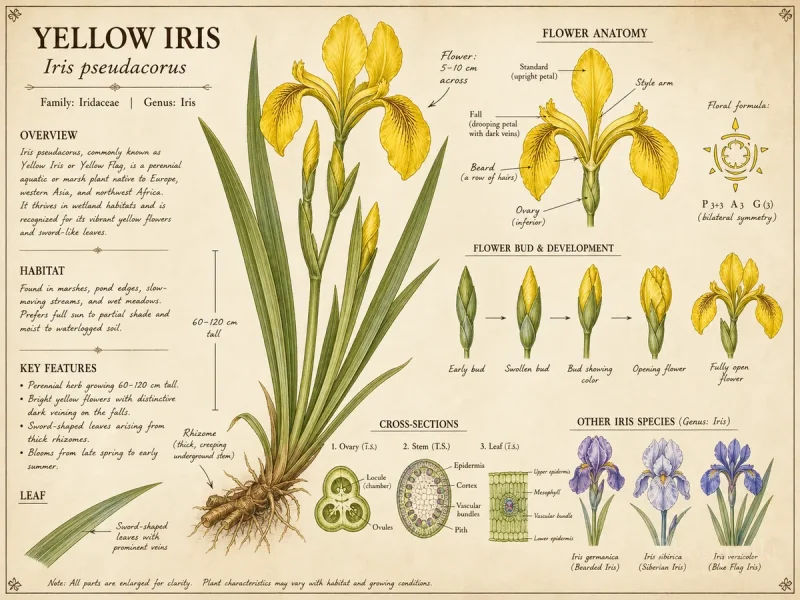
Can yellow flag iris stay in a pond?
Yellow flag (Iris pseudacorus) is a wet-edge species. Do not copy its pond culture onto bearded germanica.
Does rebloom change how I plant bearded iris?
No. Reblooming kinds such as Immortality still need a high rhizome and sharp drain. Scent and rebloom are cultivar traits, not a new bed recipe.
Related guides

Recommended plants



This note is part of Iris Guides.
More first-season notes by plant are gathered in How to Grow Guides.
Updated: Reviewed by Bosquelle Editors