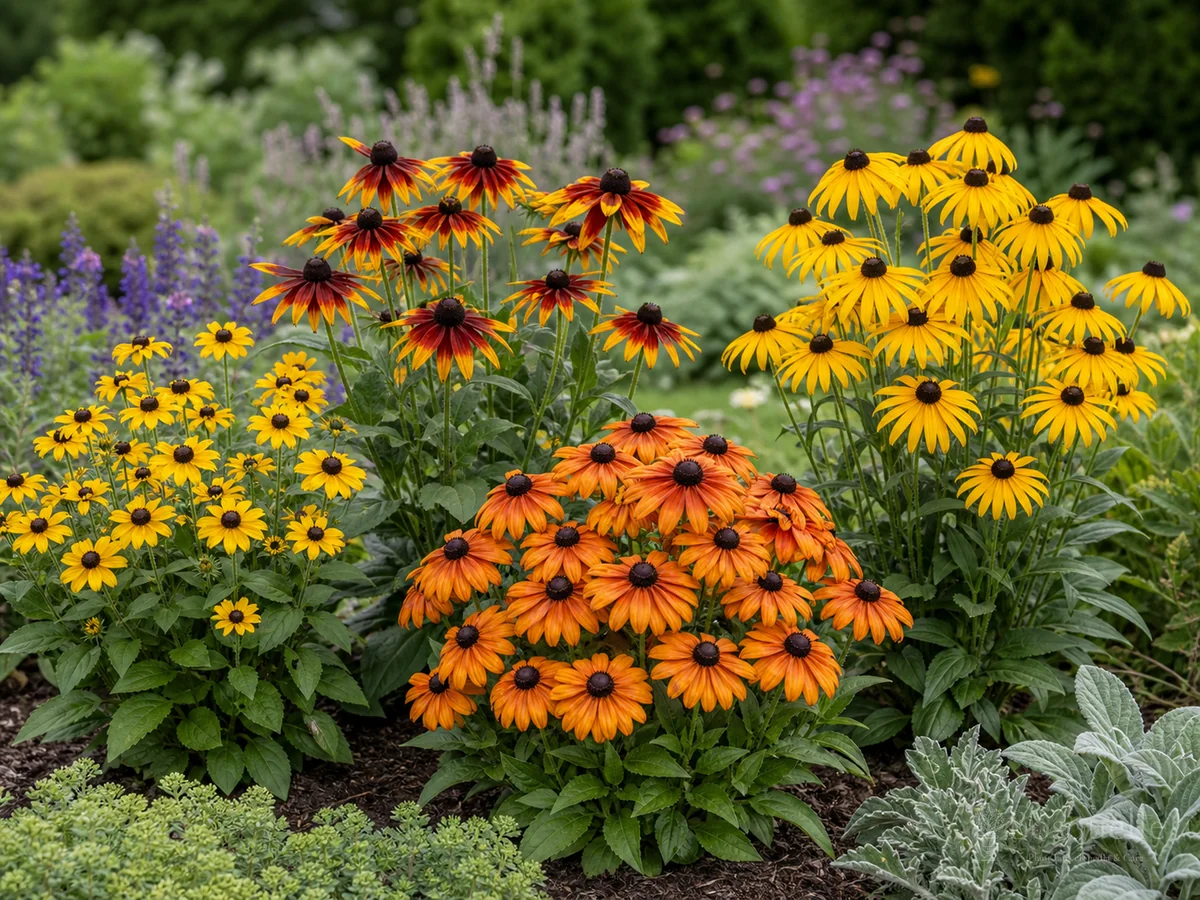
Black-eyed Susan type is a lifespan question: Hirta such as Toto for one bold season, or fulgida such as Goldsturm for a returning clump? Sort all 41 garden black-eyed Susans here. Care stays on How to Grow Black-Eyed Susans.
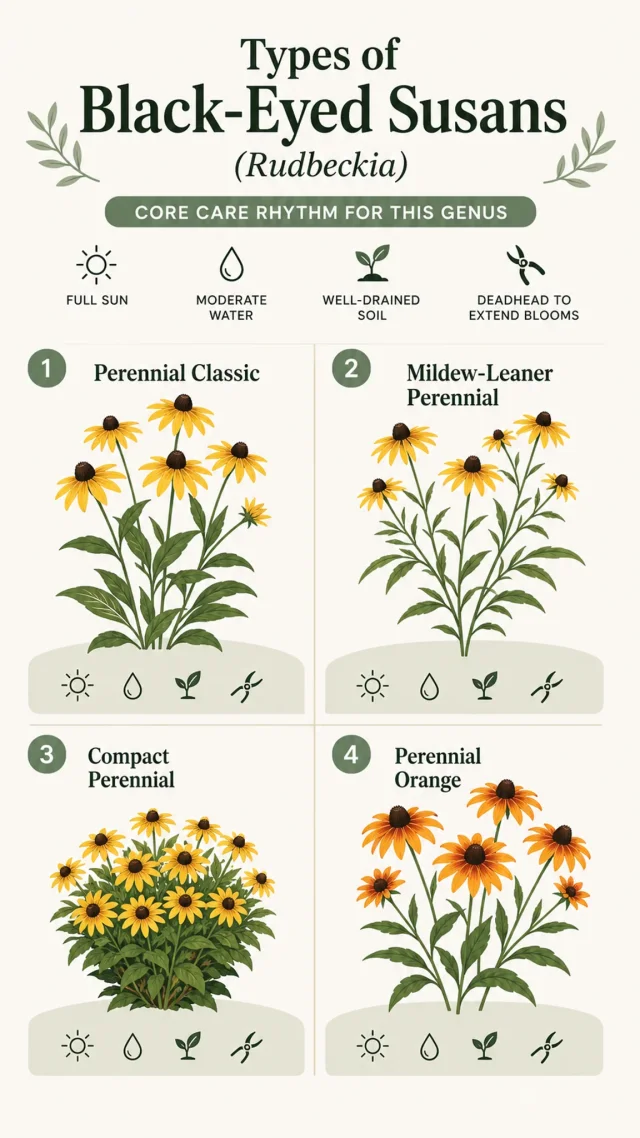
Choose hirta, fulgida, tall, or sweet
| Your site | Prefer | Avoid as default |
|---|---|---|
| One season of showy petals, including mahogany and bicolor | Hirta / Summerina | Expecting a decade-long clump |
| Sunny border that returns | Fulgida perennial | A hirta mix packet as a permanent hedge |
| Back of the border, tall cut stems | Laciniata / maxima | A 10-inch patio pot |
| Prairie or later native-style bloom | Triloba / sweet coneflower | Assuming they are Goldsturm |
Know your USDA hardiness zone before you pick a type of black-eyed susan that will take your winter. Type your ZIP below.
2023 USDA ZIP listings (PRISM / USDA-ARS). Find Your USDA Hardiness Zone · Official USDA map.
Toto and Indian Summer are hirta-season plants. Goldsturm and American Gold Rush are fulgida clumps. Herbstsonne and Giant Coneflower are tall. Henry Eilers and Prairie Glow are sweet or brown-eyed types. Petal paint does not prove lifespan. A nursery six-pack labeled only “black-eyed Susan” is often hirta. A 2-foot gold mound sold as a perennial is usually fulgida. Ask for the Latin before you copy a neighbor’s divide calendar onto a mix packet.
- Read fulgida vs hirta on the tag before you plan a three-year divide.
- Goldsturm is a clone. Seed-grown “Goldsturm” can vary. Buy named plants when the look must hold.
- A vine labeled black-eyed Susan may be Thunbergia, not Rudbeckia.
- Lasting names also sit on Best Perennial Black-Eyed Susans.
Wrong black-eyed Susan buys that look like a types page
- Hirta as a permanent clump — Toto finishes with frost. Goldsturm is the return plant.
- Herbstsonne in a small pot — Herbstsonne wants ground and height. Compact fulgida or Toto belong in patio pots.
- A mixed gold tray with no Latin — ask hirta vs fulgida vs laciniata before you copy one watering.
- Sweet coneflower as Goldsturm — Henry Eilers blooms later and taller than a 2-foot fulgida mound.
- Thunbergia vine as garden rudbeckia — different plant, different winter. Penn State Extension: the common name is shared; the care is not.
- Seed-grown Goldsturm as a clone — named Goldsturm is a division. Seed lines can vary in height and bloom. Buy named plants when the look must hold.
What height and habit offer
Hirta / Summerina. Often 1–3 feet. Showy petals, including rust and bicolor. Treat as a warm-season or short-lived plant. Compact Toto and Becky Mix suit pots. Indian Summer is taller hirta for a seasonal back row. Seedlings that return are new plants, not the named clone you bought.
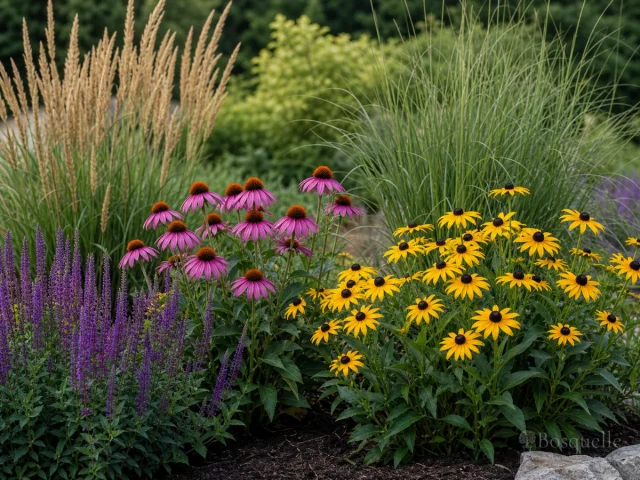
Fulgida perennial. About 18–30 inches for Goldsturm; shorter for Little Goldstar and Little Suzy. American Gold Rush is the mildew-aware mid border. Orange Coneflower and Deam’s are species-near clumps. Divide when the center thins. This is the plant people mean when they say a black-eyed Susan comes back for years.
Tall laciniata / maxima. Back-border height and cut stems. Same sun and drain. Stake if the site is rich or windy. Not a windowsill plant. Herbstsonne and Giant Coneflower belong here, not in a 12-inch patio pot.
Triloba / sweet coneflower. Brown-eyed Susan and subtomentosa types. Perennial, often later bloom, a looser prairie look than Goldsturm. Henry Eilers and Prairie Glow are the usual named picks. Do not water them like a bog plant just because they look wilder.
Height and return on the tag beat a shared gold photo. If the tag says only “black-eyed Susan,” ask which of those classes you are buying before you plan a divide or a 12-inch pot. A 6-foot laciniata and a 10-inch Toto can share a cone and still fail in each other’s beds. Confirm Latin or a clear class name, then browse the matching group below. Petal paint — mahogany, bicolor, or plain gold — does not tell you whether the crown will be there next June.
- Goldsturm / American Gold Rush / Little Goldstar → fulgida, return clump.
- Toto / Becky Mix / Indian Summer / Summerina → hirta season.
- Herbstsonne / Giant Coneflower → tall cut.
- Henry Eilers / Prairie Glow → sweet or triloba.
- Pots for compact types live on Black-Eyed Susans in Containers.
Partners on Black-Eyed Susan Companion Plants.
Full catalog by class (41)
Browse all black-eyed Susans by type. Groups follow lifespan and height — hirta season, fulgida clump, tall cut, sweet/triloba — not a hardiness system. Open How to Grow Black-Eyed Susans for sun and water. Confirm return on the tag before you treat a hirta mix as Goldsturm. If two cards share a gold cone and not a class, they still want different winters. Use the cards for height and hardiness; this catalog does not replace the care page or the pot essay. Confirm the class before you duplicate a slot you cannot fill with a returning crown. Browse all black-eyed Susans by group once the class is named, then open two or three cards in that band rather than the whole library at once. A Summerina pot and a Goldsturm border clump can sit in the same garden if you planned both jobs; they cannot share one winter expectation. Confirm light and height on each profile before you duplicate a slot, and before you plant a tall cut type where a 16-inch fulgida mound was the plan. Read the species line, then the cultivar, then buy the plant.
Hirta / Summerina annual-leaning (20)
Rudbeckia hirta cultivars and Summerina series — often grown as warm-season or short-lived plants (Toto, Indian Summer, Cherokee Sunset, Denver Daisy, Becky Mix, Summerina Orange/Yellow). Not the decade-long fulgida perennial default.
Fulgida perennial black-eyed Susan (7)
Rudbeckia fulgida and its compact border cultivars (Goldsturm, American Gold Rush, Little Goldstar, Viette's Little Suzy, deamii, speciosa) — reliable perennial clumps for sunny borders.
Tall laciniata / maxima cut forms (6)
Tall architectural daisies (laciniata Herbstsonne and Hortensia, maxima, occidentalis, grandiflora) — height and cut presence with the same sun-and-drainage method.
Triloba / sweet coneflower (8)
Triloba brown-eyed Susans, subtomentosa sweet coneflowers (Henry Eilers, Little Henry), missouriensis, and Dracopis clasping coneflower listed under Rudbeckia — prairie-style perennials, not Goldsturm mounds.
FAQ
Is Goldsturm the only perennial black-eyed Susan?
No. Fulgida types share that job. Hirta and Summerina are seasonal.
Will Indian Summer come back like Goldsturm?
Do not assume it. Hirta is usually one season, even if seedlings return.
What is a gloriosa daisy?
Usually Rudbeckia hirta — a seasonal plant, not fulgida.
Which black-eyed Susan for a tall cut stem?
Laciniata or maxima types such as Herbstsonne — not compact fulgida or patio hirta.
What is triloba or brown-eyed Susan?
A perennial, often later and looser than Goldsturm. Not a hirta mix packet.
Which type for pots?
Compact hirta or compact fulgida. See Black-Eyed Susans in Containers.
Are they the same as echinacea?
No. Coneflower is a partner in the same sun, not this genus.
Where is care?
On How to Grow Black-Eyed Susans.
Related guides

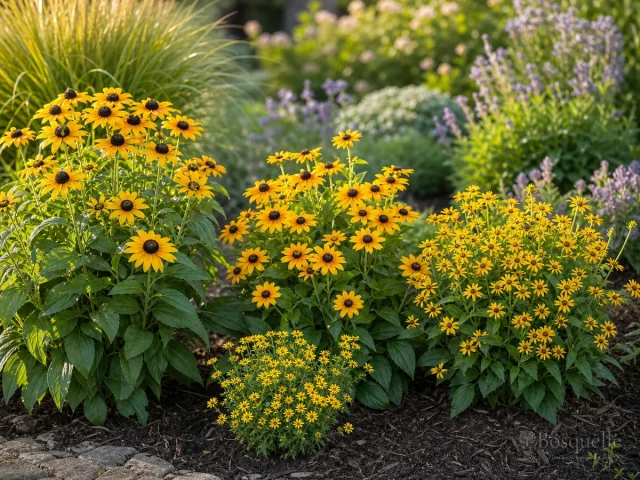
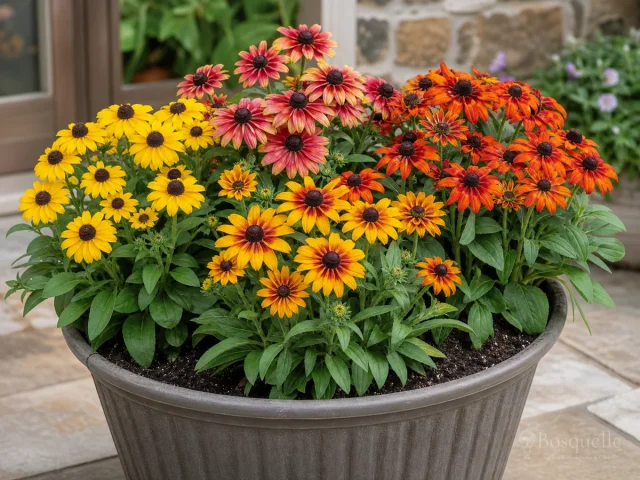

This note is part of Black-Eyed Susan Guides.
More type comparisons by plant are gathered in Types of Plants Guides.
Updated: Reviewed by Bosquelle Editors