
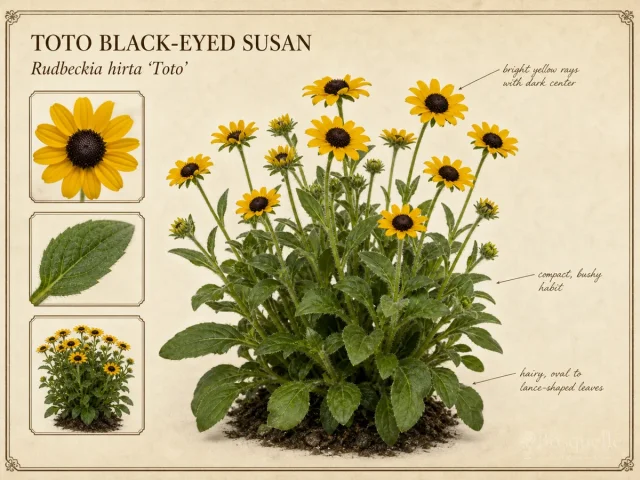
Black-eyed Susan is two lifespans under one name. Rudbeckia fulgida such as Goldsturm is a returning clump. R. hirta such as Toto is a short-lived or warm-season daisy — Clemson: treat it as an annual. Both want full sun and draining soil. Sort classes on Types of Black-Eyed Susans. Pots on Black-Eyed Susans in Containers; lasting clumps on Best Perennial Black-Eyed Susans; partners on Black-Eyed Susan Companion Plants.
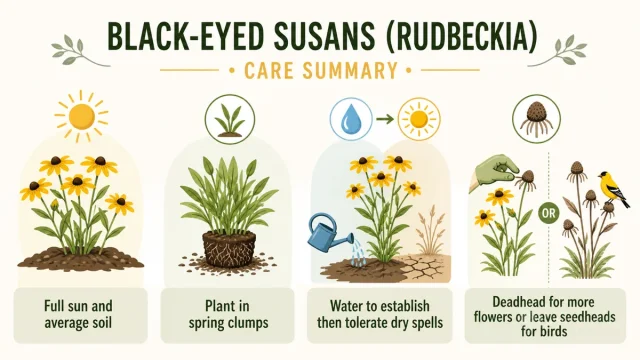
Full sun, lean soil, and water
| Factor | Recommended | Avoid |
|---|---|---|
| Light | Full sun, at least six hours | Shade that stretches stems and cuts bloom |
| Soil | Average, well-drained; lean beats soggy rich | A low, wet crown |
| Water | Settle new plants; then deep soaks in dry spells | Constant wet foliage; plant-and-ignore the first weeks |
| Spacing | About 12–24 inches by size, with air between clumps | A crowded, still mat |
Penn State Extension: full sun, average well-drained soil; heat- and drought-tolerant once established. Clemson: plant perennial types in early fall or mid-April; sow or set hirta after frost. Many fulgida garden types are hardy about USDA zones 3–9 if drainage holds. Too much nitrogen makes stems floppy.
- Water the soil, not the leaves, in the morning.
- Do not plant against a wall that blocks air.
- Afternoon shade is optional in extreme heat. Deep shade is not.
- Pot method lives on Black-Eyed Susans in Containers.
Annual hirta vs perennial fulgida
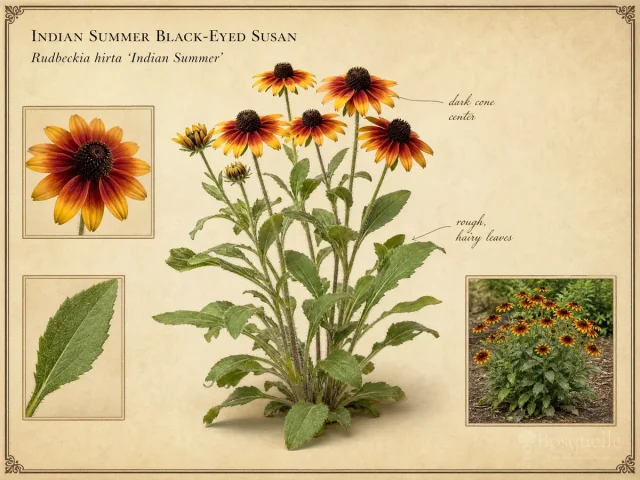
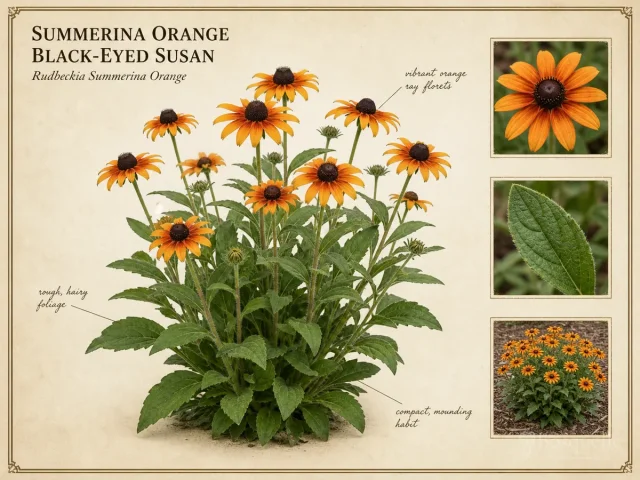
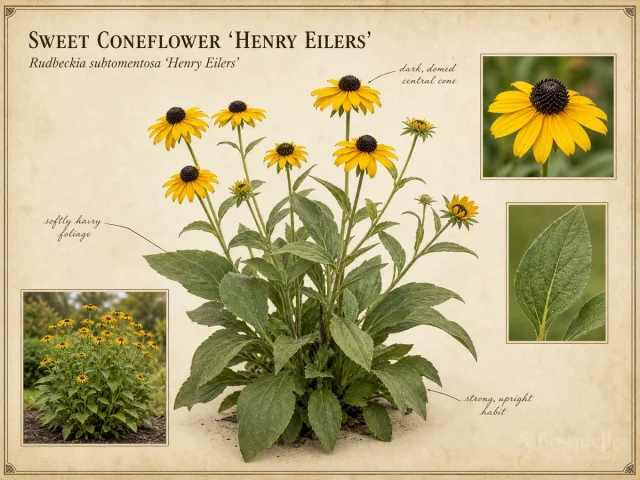
If last year’s plant never returned, check the class before you replant the same tag. Hirta and Summerina flower hard, then usually finish. They may self-seed. Fulgida returns from the crown and spreads into a clump. Tall laciniata and giant maxima still want the same sun and drain; they are a height choice, not a second watering system. Sweet coneflower and brown-eyed Susan (triloba) are perennial, often later bloom.
- Want a border that returns? Buy fulgida. Confirm the Latin, not only “black-eyed Susan.”
- Want mahogany or bicolor petals for one season? That is usually hirta. Plan to sow or buy again.
- A vine sold as black-eyed Susan is often Thunbergia alata, not this genus.
- Lasting names live on Best Perennial Black-Eyed Susans.
Deadhead, seedheads, and winter cut
Deadhead spent blooms to keep the show going. Leave some heads if you want seed for birds (Penn State / Clemson). Cut dead stems in late fall, winter, or early spring. Hirta after frost is often done — self-sown seedlings are new plants, not the same clone.
- Deadhead through summer if you want more bloom.
- Skip the last deadhead if you want winter structure and seed.
- Cut fulgida to the ground when stems are brown.
- Plant timing: hirta after frost; fulgida in spring or early fall.
Leaf spot, flop, and dividing clumps
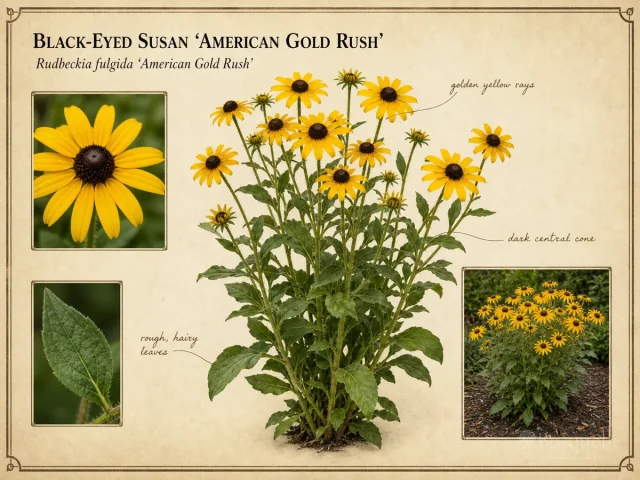
Septoria leaf spot and mildew show up in shade, crowding, and wet foliage. American Gold Rush is the usual mildew-leaning fulgida pick, but it still wants sun and air. Floppy stems mean shade, rich wet soil, or too much feed. Divide crowded fulgida every three to four years in spring (or early fall) — a divide tip, not a second care page. Discard woody centers. Replant at the same depth with space for air.
- Do not divide hirta like a perennial clump. Sow again.
- Do not force Herbstsonne into a small pot. Use ground, or a very large container.
- Partners live on Black-Eyed Susan Companion Plants.
FAQ
Are black-eyed Susans perennials?
Fulgida types are. Hirta is a short-lived perennial usually grown as an annual. Read the Latin on the tag.
Do black-eyed Susans need full sun?
Yes. At least six hours. Shade stretches stems and cuts bloom.
When to plant black-eyed Susans?
Set hirta after frost. Plant fulgida in spring or early fall while the soil is workable.
Should I deadhead black-eyed Susans?
Deadhead for more bloom. Leave some seedheads if you want birds and winter structure. Cut dead stems when they brown.
When do black-eyed Susans bloom?
Usually midsummer into fall in full sun. Deadhead for a longer show.
Do they spread or self-seed?
Hirta self-seeds freely. Fulgida clumps widen and may seed a little. Deadhead to limit spread.
Can I grow them in pots?
Yes — compact types in a deep, draining pot. Full steps are on Black-Eyed Susans in Containers.
When should I divide them?
Every three to four years for crowded fulgida, in spring or early fall. Do not divide hirta as a clump.
Related guides




Recommended plants





This note is part of Black-Eyed Susan Guides.
More first-season notes by plant are gathered in How to Grow Guides.
Updated: Reviewed by Bosquelle Editors