
Prune brambles by whether fruit sits on this year's canes or last year's. Summer raspberry fruits on last year's wood. Fall raspberry can be mowed to the ground for one late crop.
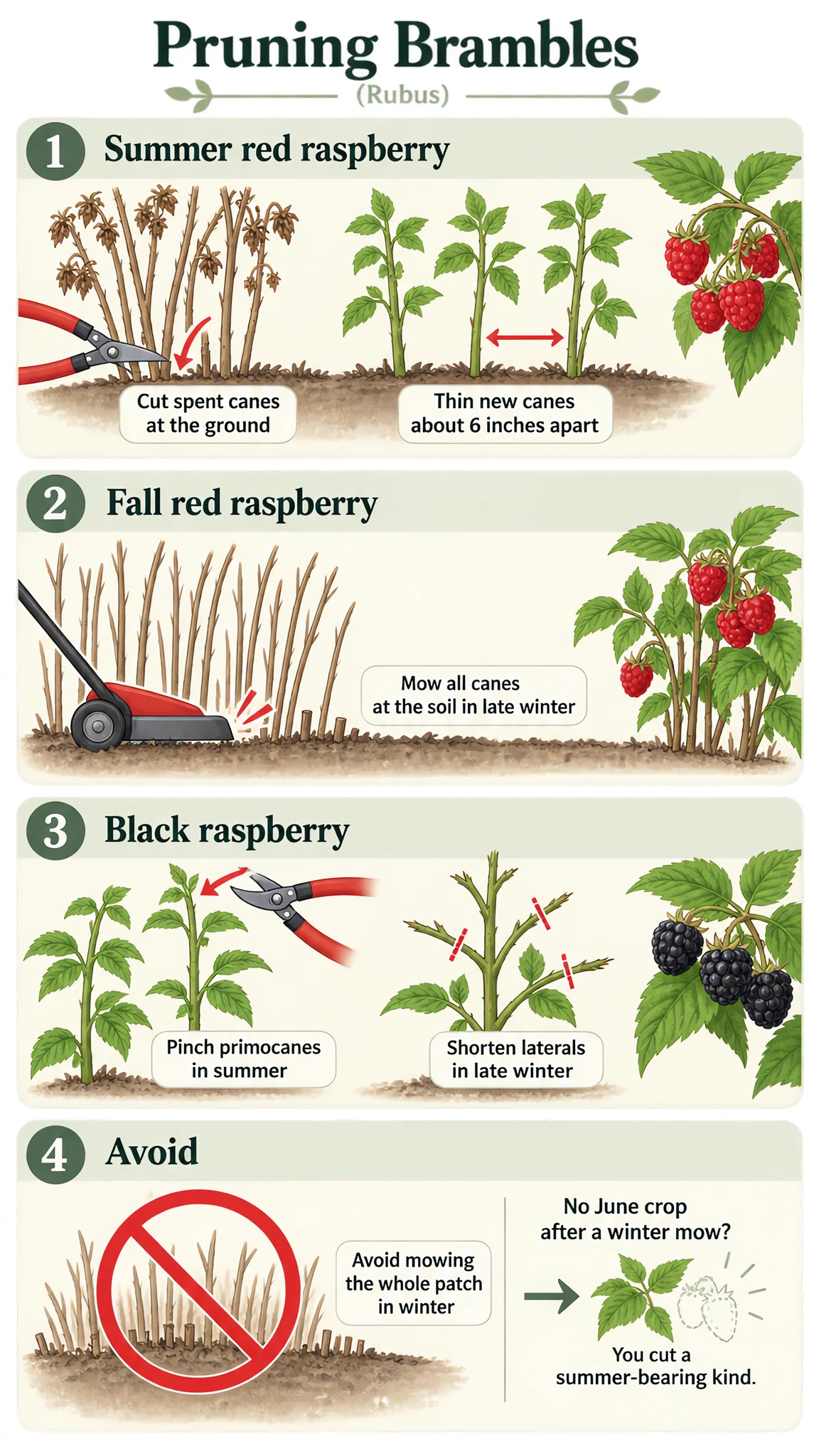
Know whether fruit is on this year's canes or last year's
| Factor | Recommended | Avoid |
|---|---|---|
| Summer red raspberry | Cut spent floricanes at the ground after harvest; thin new canes about 6 inches apart | Mowing the whole patch in winter |
| Fall red raspberry | Mow all canes at the soil in late winter for one late crop | Leaving a jungle of mixed wood if you wanted the simple crop |
| Black raspberry | Pinch primocanes in summer; shorten laterals in late winter | Letting canes arch and tip-root |
| Blackberry | Thin to a few strong canes; tip long shoots so laterals form | Leaving every cane until the row is a thicket |
Primocanes are this year's green shoots. Floricanes are last year's canes; they flower, fruit, and then die. [1] [2] If you do not know which kind you have, wait one season and watch when fruit forms — June on old wood, or late summer on new tips. Which kind to buy is on Types of Brambles. [3] [4]
When should I prune raspberries?
Late winter while the plants are dormant, plus a summer pass to take out canes that already fruited on summer kinds.
How to prune brambles
- For summer-bearing red raspberry: after harvest, cut every cane that just fruited at ground level. In late winter, thin the remaining canes to about 6 inches apart and take out weak wood. Keep the hedge 1 to 2 feet wide.
- For fall-bearing red raspberry on the one-crop system: in late winter, cut every cane to the ground. New shoots will fruit in late summer. Skip this mow if you are keeping a small summer crop on the lower canes.
- For black raspberry: when new canes reach about 3 feet in summer, pinch the tips so laterals form. In late winter, keep four or five strong canes per clump and shorten laterals to about 12 inches. After harvest, remove the canes that fruited.
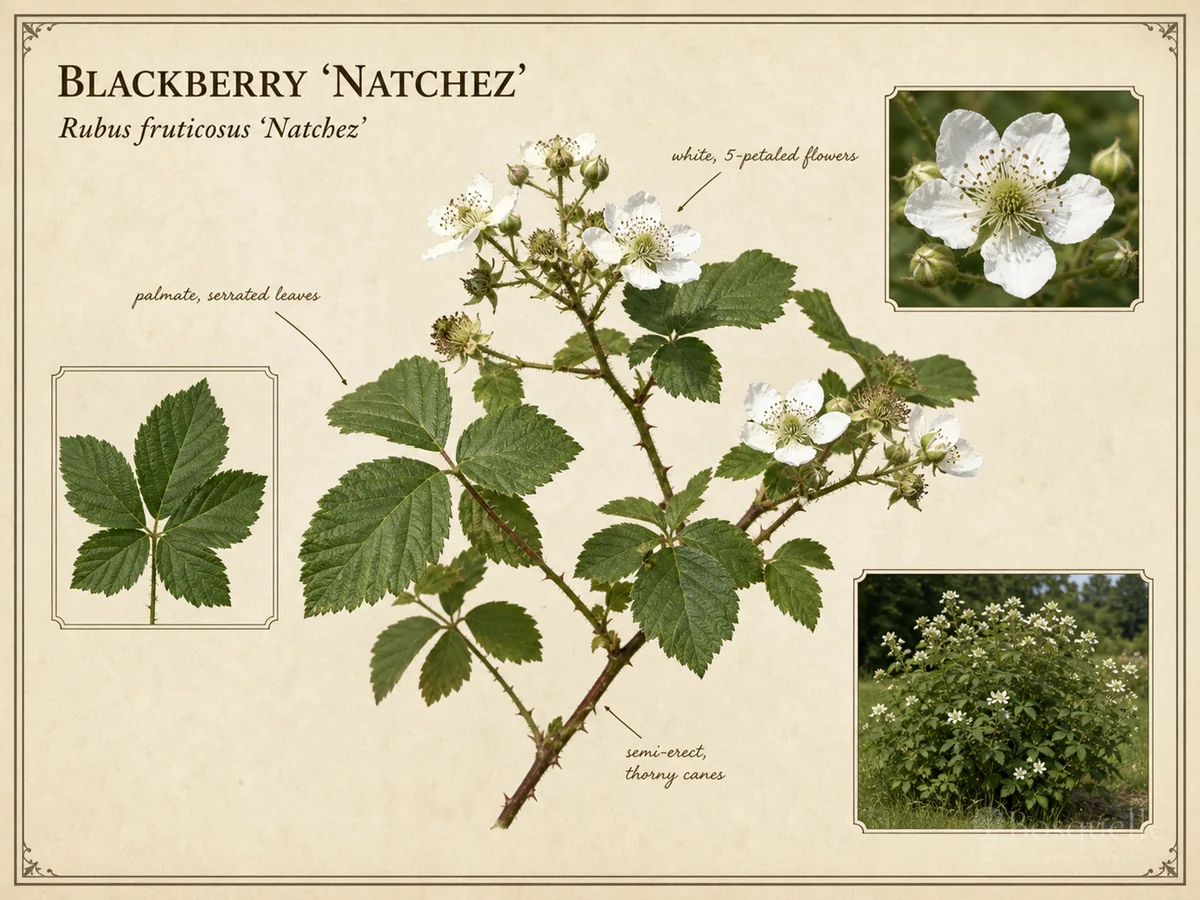
- For blackberry: thin to a few strong primocanes. Tip tall shoots at about 3 to 4 feet so laterals form, then shorten laterals in late winter. Cut spent floricanes at the ground.
- Rake the cut canes out of the row and destroy them so blight does not sit in the hedge.
What fails when you cut the wrong wood
Mowing a summer-bearing patch in winter removes next year's crop. Leaving dead floricanes shades new shoots and holds disease. Skipping the summer pinch on black raspberry gives long, arching canes that root at the tips instead of a pickable clump.
Do I cut all canes to the ground?
Only on fall-bearing kinds you are managing for one late crop. Summer-bearing kinds need last year's canes left to fruit.
If the patch has no June crop after a winter mow, you cut a summer-bearing kind.
FAQ
Should I prune raspberries in the fall?
You can take out canes that already fruited after harvest. Save the main thin for late winter, when live and dead wood are easier to tell apart.
Do I prune flowering raspberry the same way?
It is an ornamental. Cut spent or crowded canes after bloom if you need to. It is not a fruit-row prune.
Why is there no fruit after I pruned?
You likely mowed a summer-bearing kind. Those berries form on last year's canes.
Related guides


Recommended plants


References
- [1] Iowa State University Extension -
https://yardandgarden.extension.iastate.edu/how-to/how-prune-raspberries - [2] University of Maryland Extension -
https://extension.umd.edu/resource/growing-raspberries-and-blackberries-home-garden - [3] NC State Extension -
https://content.ces.ncsu.edu/raspberries-in-the-home-garden - [4] Penn State Extension -
https://extension.psu.edu/brambles-in-the-home-fruit-planting
This note is part of Rubus Guides.
More pruning timing notes by plant live in Pruning Guides.
Updated: Reviewed by Bosquelle Editors