
Plant citrus after the last frost. Set the root ball about an inch above grade so the graft stays dry.
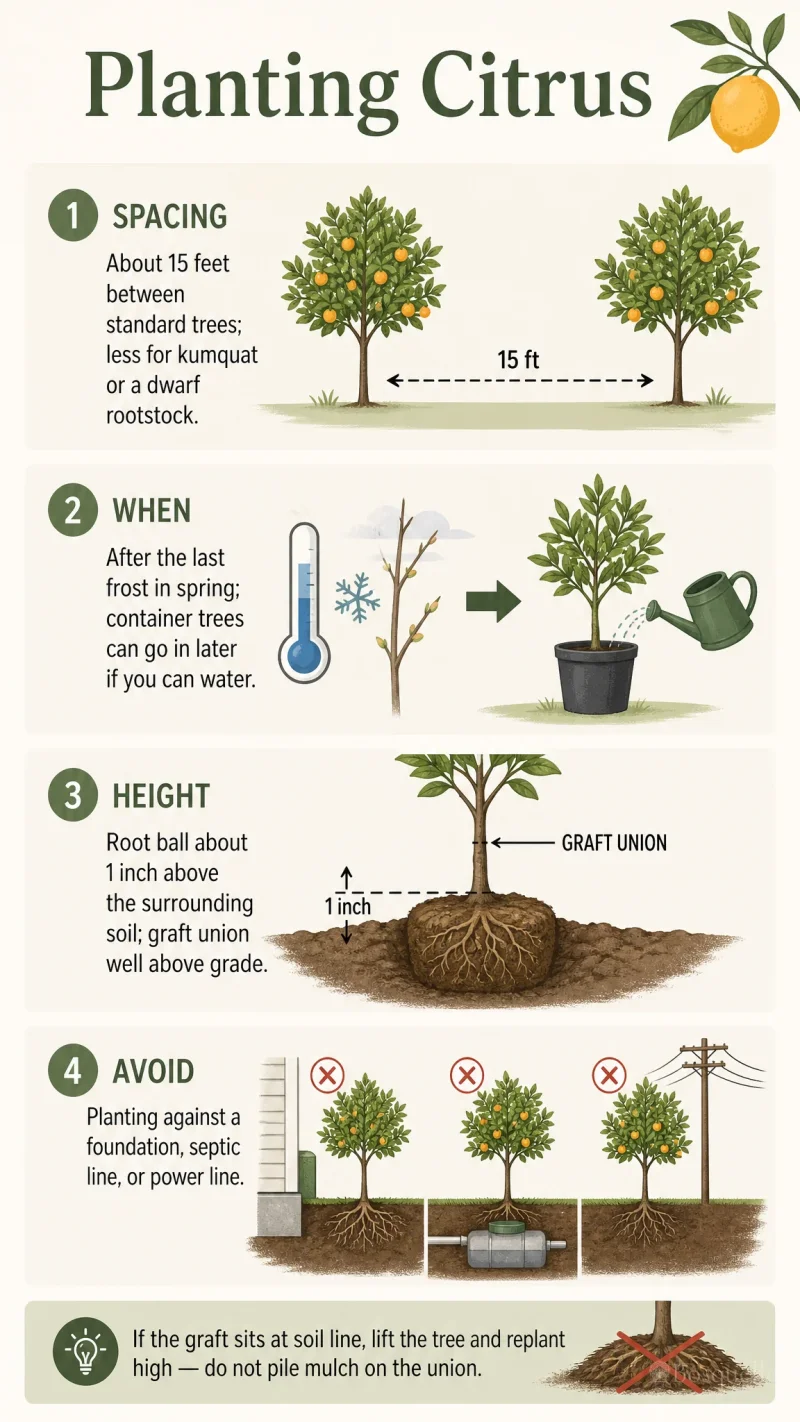
Plant after the last frost, with the graft above the soil
| Factor | Recommended | Avoid |
|---|---|---|
| When | After the last frost in spring; container trees can go in later if you can water | A late-fall plant just before a hard freeze |
| Height | Root ball about 1 inch above the surrounding soil; graft union well above grade | Burying the graft or sinking the ball as it settles |
| Hole | Twice as wide as the root ball, no deeper than the ball | A deep cup of compost that holds water on the trunk |
| Backfill | Native soil; firm the bottom so the ball does not sink | Fertilizer or a peat plug in the hole |
| Spacing | About 15 feet between standard trees; less for kumquat or a dwarf rootstock | Planting against a foundation, septic line, or power line |
The graft is the bulge or bark change on the trunk. If soil sits against it, foot rot can kill the tree. [1] Do not add amendments or fertilizer to the planting hole. Roots need to leave the potting mix and enter native soil. [2]
How high should the graft sit?
Well above the soil. Set the root ball about an inch high so settling does not bury the union.
How to plant citrus
Work one hole at a time: confirm the kind, set the ball high, water the basin, keep the trunk dry.
- Buy a certified nursery tree. Confirm lemon, orange, or another class on Types of Citrus. [3]
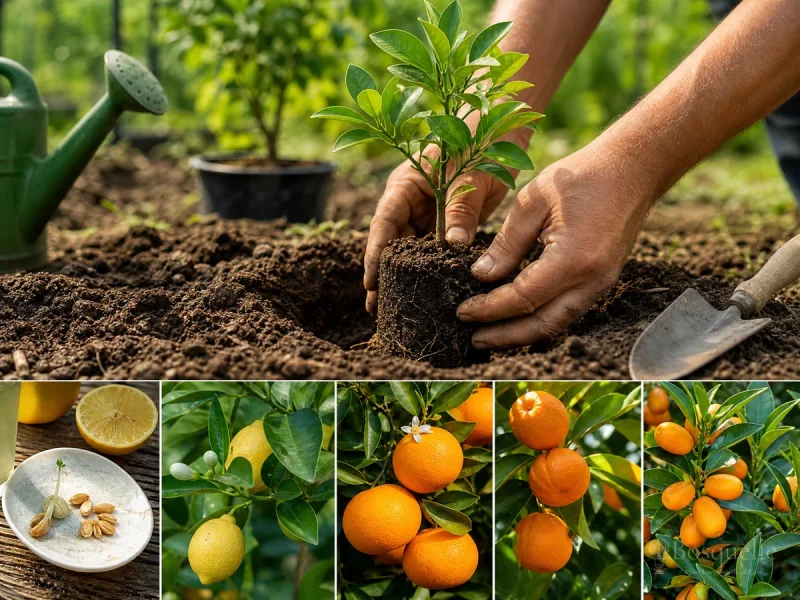
- Dig a hole twice as wide as the root ball and only as deep as the ball is tall. Firm the floor so the tree does not sink.
- Tease or slice circling roots. Set the top of the root ball about an inch above grade. Backfill with the soil you dug out — no fertilizer in the pit.
- Build a watering basin about a foot from the trunk. Fill it so the root ball soaks. Keep water off the bark.
- Space standard trees about 15 feet apart. Paint a bare trunk with diluted white latex if the canopy does not yet shade it. [4]
What fails at planting
A buried graft and a wet trunk invite crown rot. Do not plant in a lawn that stays soaked. Do not drop fertilizer in the hole. Seed is a poor start — fruit may take many years and will not match the parent. Buy a grafted tree.
How far apart should I plant citrus?
About 15 feet for standard orange and grapefruit. Kumquat and some mandarins can sit closer. Keep clear of buildings and septic lines.
Can I start citrus from seed?
Seed does not come true, and it is slow — often 7 to 8 years, with poor fruit. Buy a grafted nursery tree.
If the graft sits at soil line, lift the tree and replant high — do not pile mulch on the union.
FAQ
Can I plant citrus in fall?
Spring after frost is the usual window. A fall plant needs time to root before a hard freeze. A pot you can move is safer where winters are cold.
Should I fertilize in the hole?
No. Backfill with native soil. Start light nitrogen after the tree shows new growth, not in the pit.
Do I plant a pot-grown citrus the same way?
Yes, at the same height. If the tree will live in a pot, use Citrus in Containers — that is mix and winter, not this hole.
Related guides


Recommended plants


References
- [1] UC Statewide IPM Program -
https://ipm.ucanr.edu/home-and-landscape/cultural-tips-for-growing-citrus/ - [2] UC Master Gardeners of Santa Clara County -
https://ucanr.edu/site/uc-master-gardeners-santa-clara-county/growing-great-citrus - [3] University of Florida IFAS -
https://ask.ifas.ufl.edu/publication/HS132 - [4] University of Florida IFAS -
https://gardeningsolutions.ifas.ufl.edu/plants/edibles/fruits/citrus/
This note is part of Citrus Guides.
More planting notes by plant are gathered in Planting Guides.
Updated: Reviewed by Bosquelle Editors