
Plant ornamental allium bulbs in fall when soil is cool and workable, before it freezes. Set them about three times the bulb height deep, pointy end up, in full sun that drains. Large bulbs sit deeper than small ones. Clumpers go in as perennials at nursery depth. This page is the hole, not a second grow guide.

Sun, dieback, and the culinary split stay on How to Grow Alliums.
When to plant alliums
| Factor | Recommended | Avoid |
|---|---|---|
| Season | Fall, cool soil, before the ground freezes | Peak heat plant-out into dry clay |
| Site | Full sun; grit, sand, or a raised drained bed | A sealed wet bowl at day one |
| Material | Firm bulbs, or potted clumpers at nursery depth | A lightweight, dried bulb |
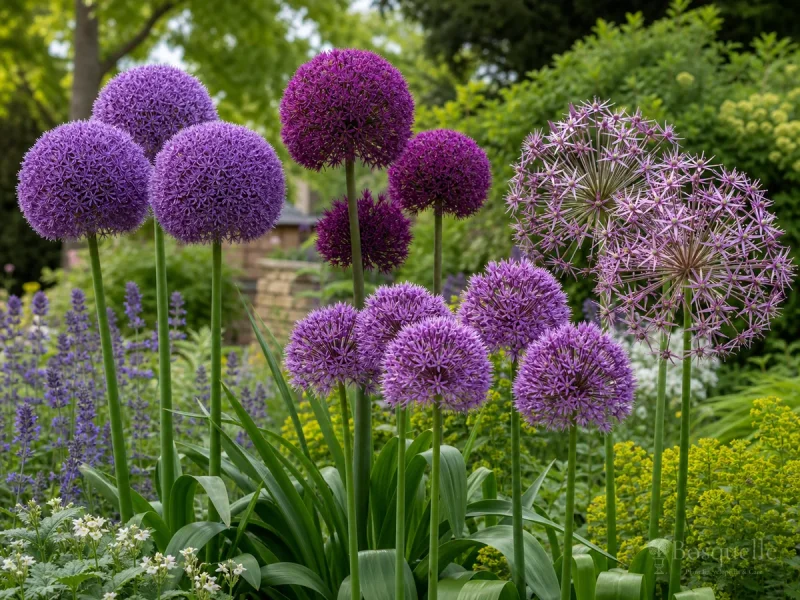
Globemaster, Gladiator, and Purple Sensation share that fall window. Flower color does not rewrite grit under the bulb. A cool period helps spring globes. Mild winters still need drainage.
This page is not a second full care essay. Watering and dieback live on the grow page.
How to plant a bulb
- Choose full sun and soil that drains within hours of rain.
- Dig a hole about three times as deep as the bulb is tall.
- Set the bulb pointy end up, with soil covering the nose.
- Backfill, firm, and water to settle with no fertilizer in the hole.
- Space large globes about 8–12 inches; small bulbs 4–6 inches.
- Keep mulch off a puddle; a thin layer beside the line is enough.
Star of Persia and Drumstick allium use the same rule: depth scales with bulb size. A pretty bag still fails if you plant it into a puddle.
Depth, spacing, and clumpers
A practical map: large bulbs about 6–8 inches deep, small bulbs about 3–4 inches, measured from the base. That matches the three-times height rule. Too shallow and stems flop. Too deep and they sulk.
- Plant clumpers such as Millenium at the same depth as the nursery pot.
- Divide summer clumps in spring or early fall; replant the same day.
- Separate offsets from large bulbs in fall if you want more plants.
- Label globe versus clump on a stick before you backfill.
Millenium is not a fall globe bulb. Buy it as a potted perennial. Kitchen chives follow the herb row, not this depth chart.
Small divisions can sit in moist grit until roots take, then go in the bed. Do not store bulbs in a sealed wet bag.
After planting
Water to settle, then let fall rain do the work unless the bed dusts out, and do not flood through winter wet. New plantings heave less at the right depth; a grit collar still helps on clay. Work grit into the backfill if native soil is clay so water moves after the first rain — do not plant on a slick smear, because a well around the hole holds a puddle and rot starts before roots leave the scales. If rain is coming the day you plant, you can still set the bulb, but mix grit or raise the bed so water moves after the storm rather than leaving it in a clay puddle you just dug.
In spring, leave foliage until it browns and hide the yellow with partners. Year-round sun and the culinary split stay on How to Grow Alliums; habit groups stay on Types of Alliums. Partners wait until the stem is visible — year-one over-planting of thyme on the bulb nose is a companions fail; see Allium Companion Plants. Label the group on a stick (globe, clump, or kitchen) and write the plant date, because next spring a green shoot will not tell you the habit or whether you are still in year one.
A potted clump planted in summer heat needs more frequent water the first two weeks; shade cloth is optional, a dry root ball is not. Fall plant-out needs time for roots before a hard freeze, while spring plant-out of potted clumpers needs water through the first heat — pick the window you can water for the habit you hold. Soak is not required for a firm dry bulb; a wrinkled, lightweight bulb sheds water after you plant, so water to settle and check the next morning, and if the bulb sits in a saucer of mud, lift and add grit.
If squirrels dig, a short mesh the day you plant saves the line; browse in week two is not a watering problem. Do not add a second bulb to the same four-inch hole for backup — one bulb, correct spacing, grit under the line. Mark spacing with sticks before you dig so you do not crowd like a seed mix: eight to twelve inches is a globe grid, tighter masses need more air after rain, and you still need to reach the leaves later to let them brown. On a slope, set the bulb on the uphill side of a small terrace so water sheds; a downhill scoop is a well, and hiding tall stems in a dip fills with every storm.
Share extras the same day you divide clumpers; a dry garage shelf is not a holding bed for a leafy fan. If only one side of an old clump is alive, keep that crescent and throw out the sour center, because rot in the hole is worse than a smaller planting. After a late frost on new bloom, wait rather than flood, then keep even moisture while the stem rebuilds.
FAQ
When should I plant allium bulbs?
In fall when soil is cool and workable, before it freezes. Avoid frozen ground and peak heat.
How deep should I plant ornamental alliums?
About three times the bulb height, pointy end up. Large bulbs about 6–8 inches; small about 3–4 inches.
Can I plant alliums in spring?
Potted clumpers, yes. Classic globe bulbs want fall so they can root through winter.
How do I divide them?
Split summer clumps in spring or early fall. Separate offsets from large bulbs in fall. Replant the same day.
Where is full care?
How to Grow Alliums. This guide is planting only.
Related guides



Recommended plants


This note is part of Allium Guides.
More planting notes by plant are gathered in Planting Guides.
Updated: Reviewed by Bosquelle Editors