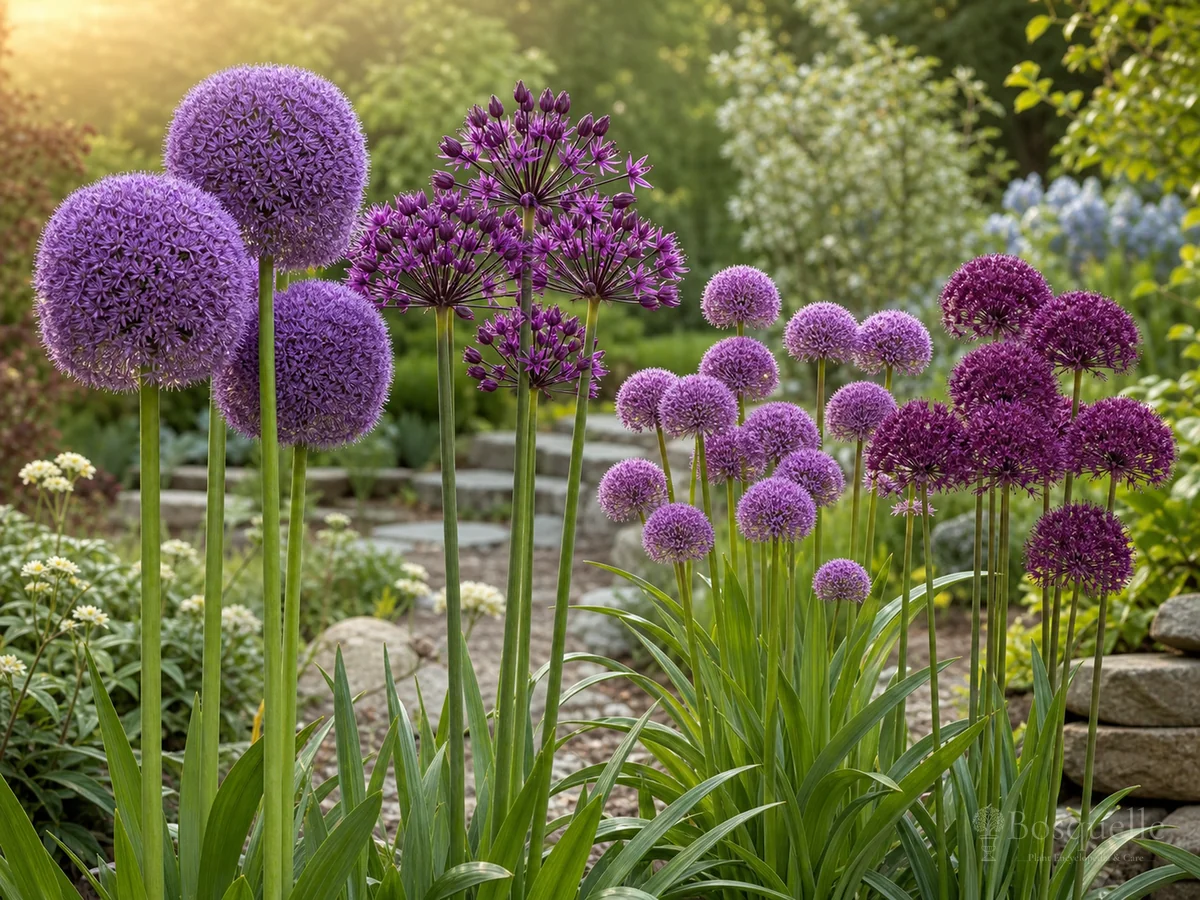
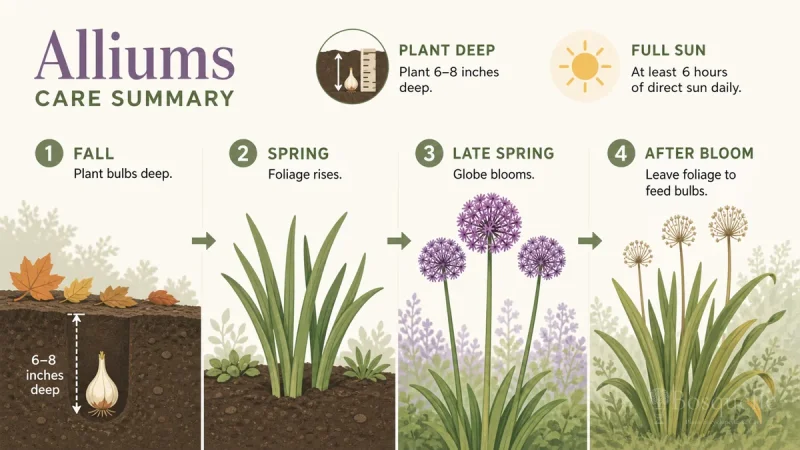
Ornamental alliums want full sun and soil that drains after rain. Plant the classic globe bulbs in fall, then leave the leaves until they brown even while the flowers still look good, because those leaves recharge the bulb for next spring. Wet clay rots the bulb, shade makes the stems flop, and the genus is mildly toxic if eaten — including to dogs and cats — so site the show away from a grazing run rather than treating toxicity as a watering cue. The first winter is a drainage test: check after each thaw, because ornamental onions drown in a melt puddle more often than they freeze.
Habit — globe, summer clump, or kitchen harvest — lives on Types of Alliums. Hole depth, spacing, and the fall planting window also live on Planting Alliums.
Sun, drainage, and ornamental onions
| Factor | Recommended | Avoid |
|---|---|---|
| Light | Full sun, six or more hours | Shade that flops the stems |
| Soil | Moist in spring, then sharp drainage; grit if clay | A sealed wet bowl that rots the bulb |
| Habit | Fall-planted bulbs, or summer clumps with longer leaves | Treating kitchen chives as miniature globes |
Most failures are wet feet or too little sun, not a missing feed. Water new plantings through the first spring when the top inch dries, then let established bulbs dry between waterings so the soil never sits as a sealed bowl. Clay holds water after rain, so mix grit or raise the bed first if a storm still leaves a slick smear. Heavy fertilizer makes soft leaves, so a lean, draining site matters more than a rich dressing. A north wall with four hours of sun still flops stems even if the catalog photo looks purple, because the flower stalks need heat to stay upright.
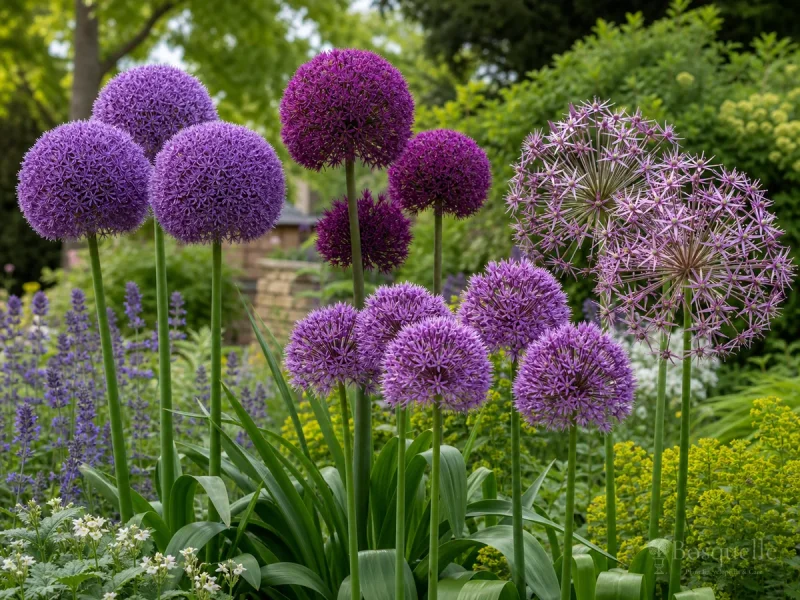
Globemaster is the usual tall purple globe, Gladiator is another tall drum, and Purple Sensation is a mid-height workhorse. They share that sun and drainage; they are a flower show, not a culinary onion crop. Group them with other full-sun, sharp-drainage plants on one hose, because a timer that also serves a hosta bed or a lawn sprinkler will keep the bulbs wet while the turf still looks thirsty.
Deer and rabbits usually leave the onion scent alone, though a hungry year is still browse rather than a cue to flood the bed. White rot and bulb rot show in wet soil, so fix drainage before you spray, and after a flood lift any sour, black bulb and discard it — soft rot will not recover in the same hole until you add grit or raise the bed. Mild winters still need that drainage: a cool period helps spring globes bloom, but wet clay in a warm winter fails more often than a missing hardiness table. A late frost that nips buds is not a reason to flood either; wait for new stems, then keep even moisture while they rebuild. Check after each thaw the first winter so a melt puddle does not sit on the scales for a week.
A deep drained pot is a patio method, not a one-line fold — see Alliums in Containers for pot size, mix, the saucer, and wintering the container. If paving reflects heat, water new clumps more the first spring, because black stone cooks shallow roots faster than an open grit bed. Stake a giant stem only when wind actually flops it — correct depth at plant-out is the usual anchor, and a shallow bulb leans first.
Bulbs versus chives and kitchen types
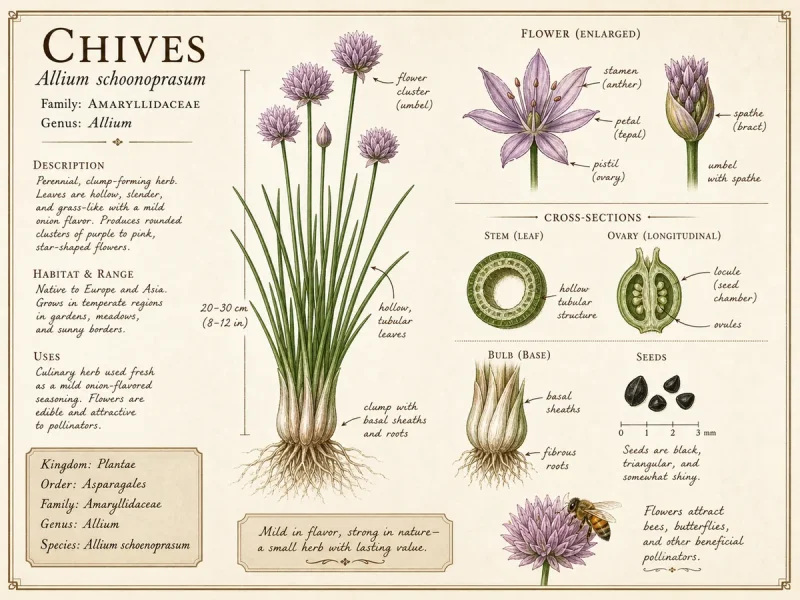
Tall spring globes are fall bulbs. Summer clumpers bloom later and keep leaves longer. Chives and other kitchen types are a harvest job in an herb row. Mixing those three jobs on one six-inch strip is how people mow a globe, starve a clump, or leave a kitchen onion to flower when they wanted a harvest. Flower color does not rewrite that split, so shop the habit on Types of Alliums before you match a bag photo to a hole.
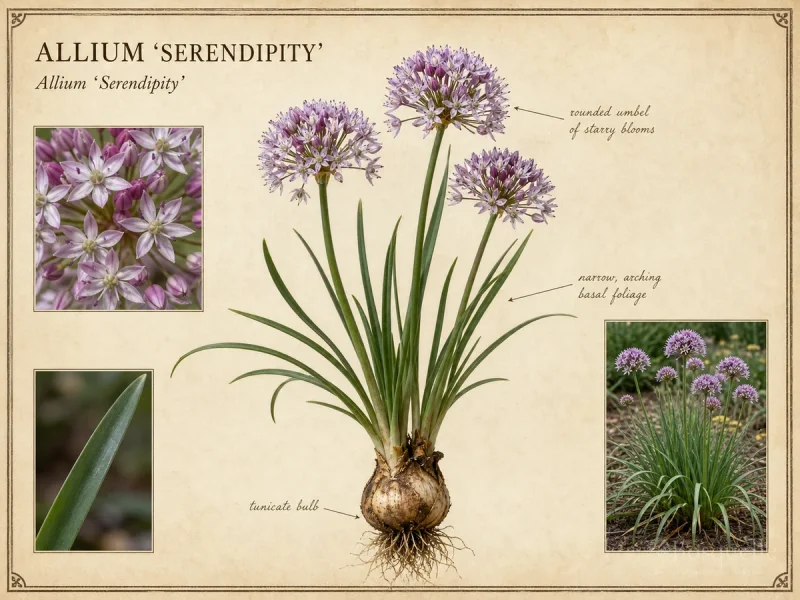
Millenium and Serendipity are summer clumps; Chives is culinary. Do not buy chives as a miniature Globemaster, and do not plant Millenium from a fall globe-bulb bag and expect a May sphere. If the catalog says ornamental onion, still read whether you hold a globe, a clump, or a kitchen plant, because a chive pot is not a globe and a mixed meadow blend can hide a true onion you will harvest instead of leave to brown.
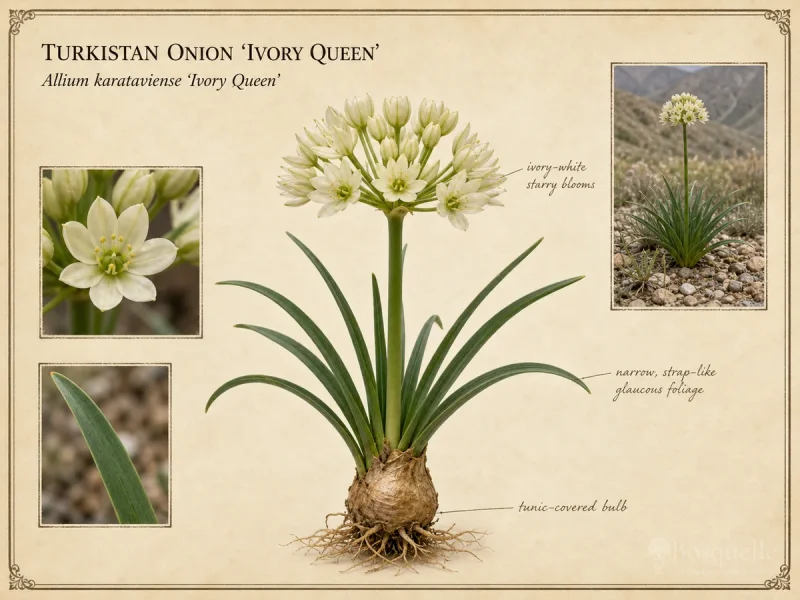
Star of Persia and Drumstick allium are airy starburst or drumstick forms; Lily Leek and Ivory Queen are small, front-edge types. They still want sun and grit. Kitchen onions and garlic share the genus but belong in a vegetable row; ornamental globes are the flower show, and leaving a harvest onion uncut does not turn it into a May Globemaster flower show. Many leaves smell like onion when crushed, which tells you the family, not a second watering method. Summer clumpers that look leafy in a July catalog photo still need the same drainage, so raise the bed if water stands after a storm.
After bloom: leave foliage, then hide it
After the globes fade, the leaves still feed the bulb, so leave them until they brown even if the bed looks messy while the flowers are up. Deadhead if you do not want seed; do not cut green leaves to tidy the bed. A meadow look wants pauses between stems, and a formal edge wants a hide plant in front — pick one, because mixing both on a narrow strip hides the globes and still leaves yellow in view. Hide the yellow with mounding partners that share sun and leave a collar at the bulb nose so winter wet does not sit under a dense groundcover — that partner job lives on Allium Companion Plants.
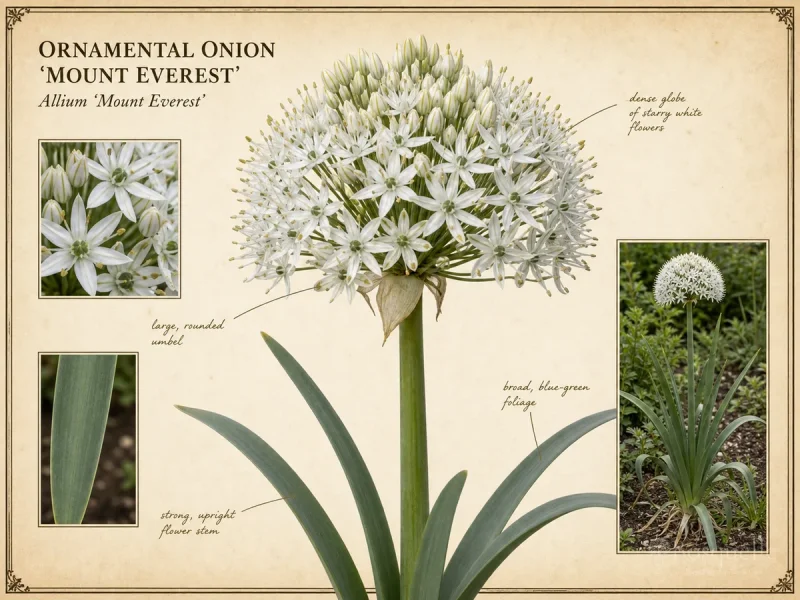
Mount Everest is a tall white globe with the same dieback. Summer clumpers such as Millenium keep foliage longer, so they need less hide-the-yellow than a May globe. Dried seed heads can stay for structure if you like them; deadhead types that reseed if you want a tight drift, and lift seedlings that jump a path the same week because waiting until fall lets another round set seed.
Do not mow the leaves like turf. The stems are hollow flower stalks, so a rotary mower cuts the growing points, the bulb thins, and extra fertilizer only makes more soft leaves. Yellowing in May is usually the plant feeding itself after bloom, not a missed feed or a weed flush; check whether the globes are still up before you add fertilizer, and use one deep soak after a heat spike rather than a daily sprinkle that never dries. Do not dig the hole in March because last year's leaves browned — winter dieback on classic bulbs is the season, not a dead plant, and new shoots push in spring.
Plant, pots, and next jobs
Plant bulbs in fall in cool soil, about three times the bulb height deep, pointy end up. Large bulbs sit deeper than small ones; clumpers go in as perennials at nursery depth. Space large globes about 8–12 inches and small bulbs 4–6 inches so air moves after rain and you can still reach the leaves later. Buy a firm, heavy bulb and plant into moist, drained soil — a dried, lightweight bulb sulks, soaking is not required, and a bone-dry ball in a dry hole fails. Do not drop a second bulb into the same four-inch hole as backup. Store unused bulbs in a cool, dry mesh bag, not a sealed wet sack, because trapped moisture starts rot before you plant. Full hole steps live on Planting Alliums.
Offsets beside a large bulb are the same plant, so lift them in fall if you want more globes; waiting until they crowd makes a harder move into the same wet hole. Squirrels sometimes dig fresh bulbs — a light mesh until the soil settles is enough, and chewed leaves after a wet spring are still not a cue to seal the soil. First-year bloom may be light until roots fill, so plan the hide plants before the leaves yellow in May rather than adding fertilizer to force a show. Label globe versus clump versus kitchen on the pot, because next May a green fan will not tell you the flower size. Patio steps — deep pot, grit mix, empty saucer, winter the container — are on Alliums in Containers.
Flower scent versus crushed-foliage onion notes live on Fragrant Garden Alliums. Pets that chew leaves can get sick, so fence a young planting if dogs or cats graze the bed; toxicity is a reason to site the show, not a reason to ignore drainage. Buy from a nursery that lists Allium on the tag when you want a flower show, so you can leave the leaves until they brown without wrecking a kitchen row you meant to harvest.
FAQ
Do alliums need full sun?
Yes for strong stems: six or more hours keeps the flower stalks upright. Light part sun is possible at the edge of a bright bed, but shade makes floppy flowers.
Are ornamental alliums toxic to pets?
Yes if eaten: the genus is toxic to dogs and cats, and mildly toxic to people, so grow it as a flower and keep grazing pets off the young planting.
What do I do after alliums flower?
Leave foliage until it browns so the bulb can recharge, deadhead if you do not want seed, and hide the yellow with sun-sharing partners — see Allium Companion Plants.
Do alliums come back every year?
Ornamental bulbs often return in drained soil with a cool period after fall planting; wet clay is the usual fail. Summer clumpers keep leaves longer and follow the same sun and grit.
Are chives the same as Globemaster?
No: chives are a kitchen harvest plant, and Globemaster is a tall spring globe. Shop the habit on Types of Alliums before you match a bag photo to a hole.
Should I fertilize ornamental alliums?
Usually a light spring feed is enough, or none if soil is decent. Lean drainage matters more than a rich feed.
Can I grow alliums in pots?
Yes: use a deep drained pot, a mix that dries, and an empty saucer, then keep the container cold through winter. See Alliums in Containers.
Where are types, planting, and scent?
Types of Alliums, Planting Alliums, and Fragrant Garden Alliums — linked above.
Related guides



Recommended plants





This note is part of Allium Guides.
More first-season notes by plant are gathered in How to Grow Guides.
Updated: Reviewed by Bosquelle Editors