
Grow white egret orchid in full sun to part shade, in a pot of wet, acid mix, and water it with rain or dechlorinated water. White egret orchid is Habenaria radiata, also classified as Pecteilis radiata — an Asian bog orchid, not a moth orchid.

Give it sun, a wet acid mix, and low-mineral water
| Factor | Recommended | Avoid |
|---|---|---|
| Light | Full sun to part shade, with strong light for most of the day | Do not keep it in deep shade or a dark room |
| Water | Keep the mix wet through spring and summer, with rain or dechlorinated water | Do not let the mix dry out while the plant is in leaf, and do not water it straight from a chlorinated tap |
| Mix | An acid, moisture-holding, free-draining orchid mix — sphagnum moss, or kanuma with pumice and sand | Do not pot it in ordinary garden or potting soil, which stays airless and rots the tuber |
| Feed | A dilute orchid feed at 10 to 20 percent strength, once or twice as the shoots come up | Do not feed at full strength, because the fine roots burn on fertilizer salts |
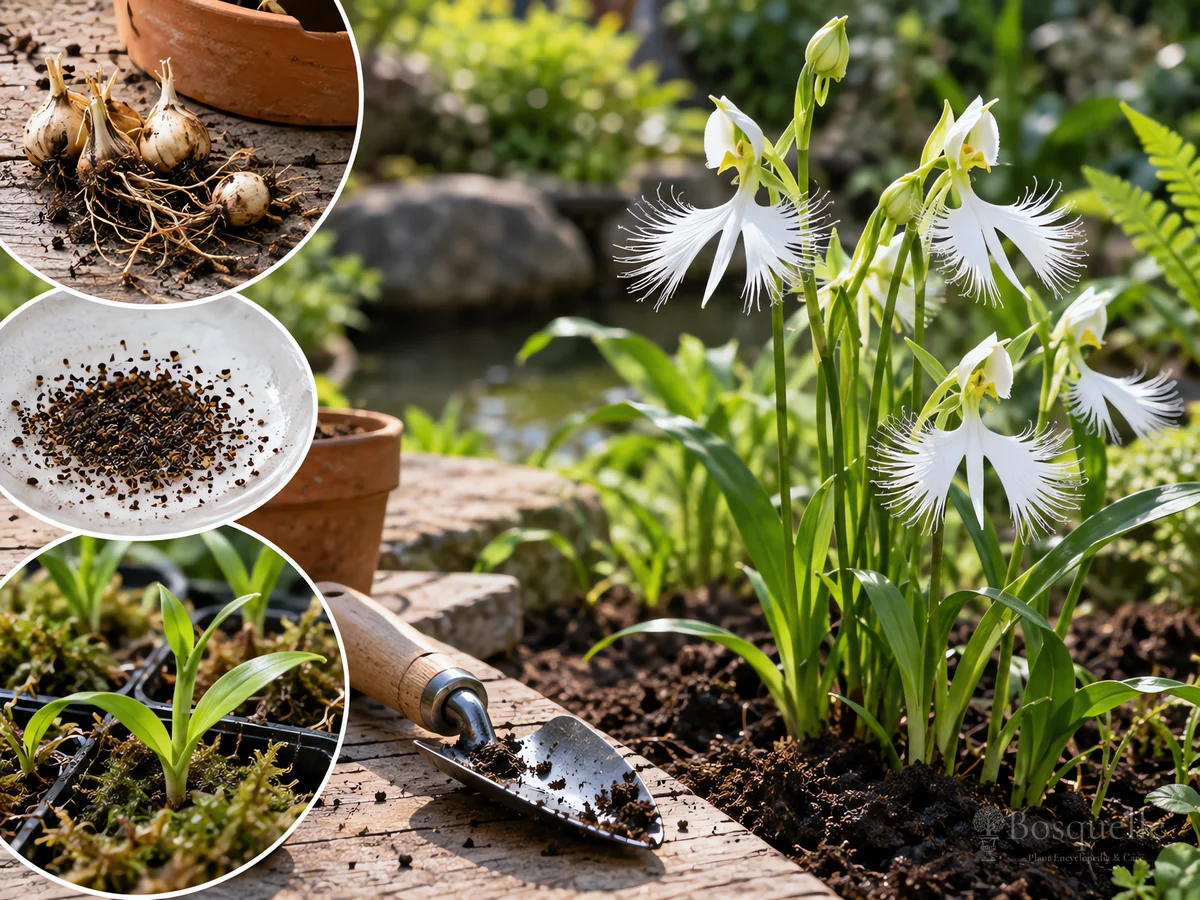
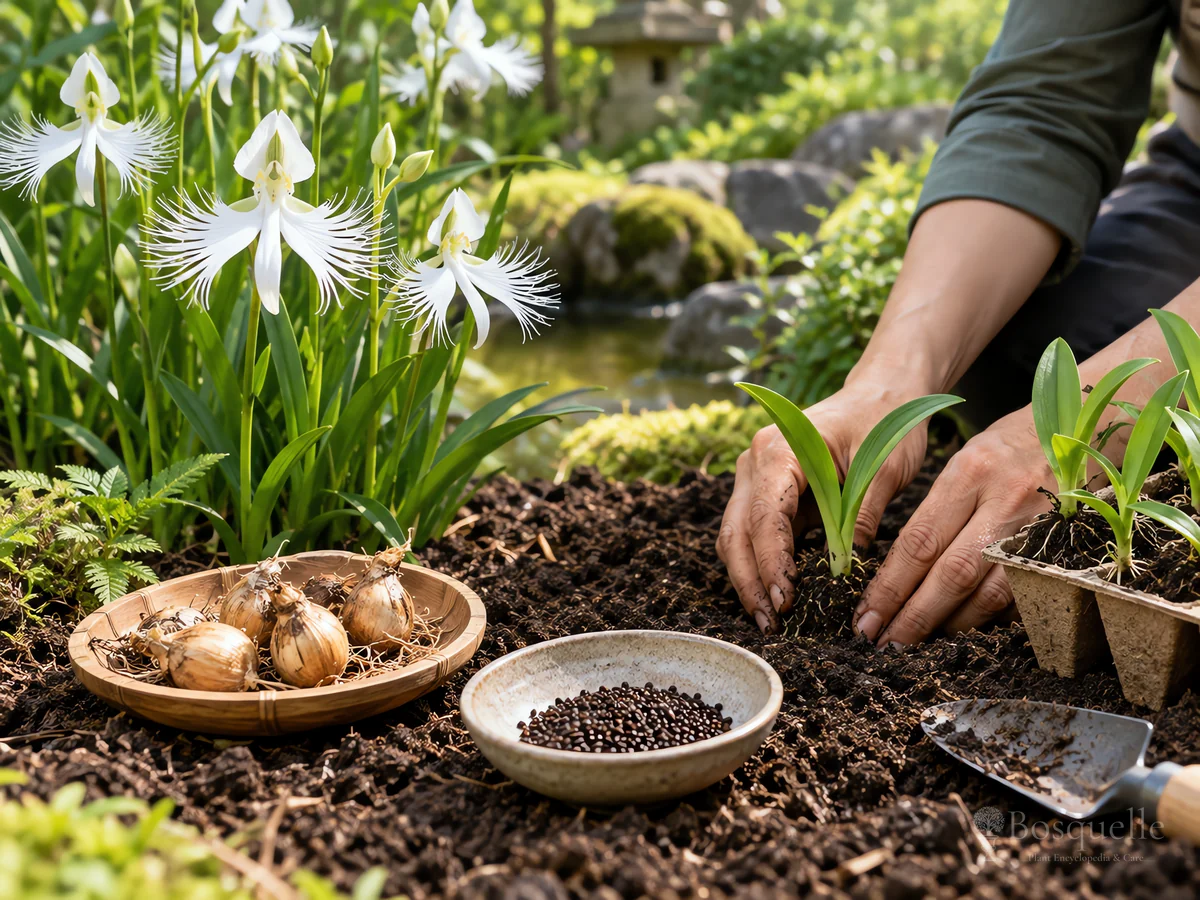
White egret orchid is a terrestrial orchid that grows from a small tuber, so it lives in a pot of wet, acid, open mix rather than in a border. It comes from grassy bogs and seepage slopes, which means it wants strong sun overhead and a mix that stays wet all through growth. [1] Keep the mix wet from the time the shoots appear until the leaves yellow in fall, and never let it dry out in leaf. Use rain or dechlorinated water, because the roots are sensitive to the chlorine and dissolved salts in hard tap water. If you must use tap water, stand it out for a day or two first. [2] Sphagnum moss, or a Japanese kanuma mix with pumice and sand, holds that moisture and still lets air reach the tuber. Ordinary potting soil packs down and rots it, so it is the usual reason a healthy tuber fails. [3] Feed only lightly, at a tenth to a fifth of the label rate, once or twice as the shoots come up. The pot-up in spring is on Planting White Egret Orchid. [4]
How much sun does white egret orchid need?
Full sun to part shade, with strong light most of the day. Deep shade gives a weak plant and few flowers.
What water should I use?
Rain or dechlorinated water. The roots are sensitive to chlorine and minerals, so stand tap water out for a day or two first.
It blooms in late summer, then eases toward dormancy
The pure-white flowers open in late summer, from about mid-July onward, one to a few on each slender stem. Each bloom has two large fringed side petals that spread like the wings of an egret in flight, which is where the name comes from. Snap off a faded flower stem so the plant is not spending energy on old blooms.
As fall comes and the leaves start to yellow, ease off the water bit by bit. The plant is not failing; it is a deciduous orchid that dies back to the tuber every year and rests over winter. Keeping the pot cool and barely moist through that rest is what carries the tuber to next year, and that job is on Overwintering White Egret Orchid.
When does white egret orchid flower?
In late summer, from about mid-July onward. The leaves are slow to appear in spring, then the flower stems follow in the heat.
Not a moth orchid — and not the native fringed bog orchids
The orchid most people picture is the moth orchid, Phalaenopsis, a warm indoor plant with broad leaves and arching sprays. White egret orchid is the opposite: a hardy, deciduous bog orchid that grows from a tuber and rests bare all winter. If your plant has thick evergreen leaves and lives on a windowsill, read How to Grow Phalaenopsis instead.
The name fringed orchid belongs to Platanthera, the native bog orchids of North American wetlands. White egret orchid is an Asian relative sold for pots, so do not treat a wild native stand as this plant. Read How to Grow Fringed Orchid if you mean the native wetland kinds. If you want a hardy ground orchid that is easier in a garden bed, Bletilla is the usual choice — see How to Grow Hardy Orchid.
Is white egret orchid the same as a moth orchid?
No. A moth orchid is Phalaenopsis, a warm indoor plant. White egret orchid is a hardy bog orchid that grows from a tuber and rests bare all winter.
If a plant sulks, check the light and the mix first: give it strong sun and keep the acid mix wet through growth, then let it rest cool over winter.
FAQ
Is there more than one kind of white egret orchid?
Habenaria radiata is the plant here, also listed as Pecteilis radiata — the same orchid under a second name. Other Habenaria species exist in trade but are not in this catalog.
Can I grow it in the ground?
Only in a mild-winter bog garden with wet, acid, open soil. In most gardens it is grown in a pot so you can control the wet summer and the cool, dry winter.
Why are my flowers small or missing?
Usually too little light, or a mix that dried out in growth. Give it strong sun and keep the mix wet from spring until the leaves yellow.
How do I get more plants?
Each tuber makes new offset tubers each year. Separate them at the spring pot-up on Planting White Egret Orchid.
Related guides
Recommended plants

References
- [1] Royal Horticultural Society -
https://www.rhs.org.uk/plants/68186/pecteilis-radiata/details - [2] White Flower Farm -
https://www.whiteflowerfarm.com/how-to-grow-habenaria-egret-flower - [3] The Spruce -
https://www.thespruce.com/white-egret-orchid-care-guide-7368735 - [4] Gardenia.net -
https://www.gardenia.net/plant/habenaria-radiata
This note is part of Habenaria Guides.
More first-season notes by plant are gathered in How to Grow Guides.
Updated: Reviewed by Bosquelle Editors