
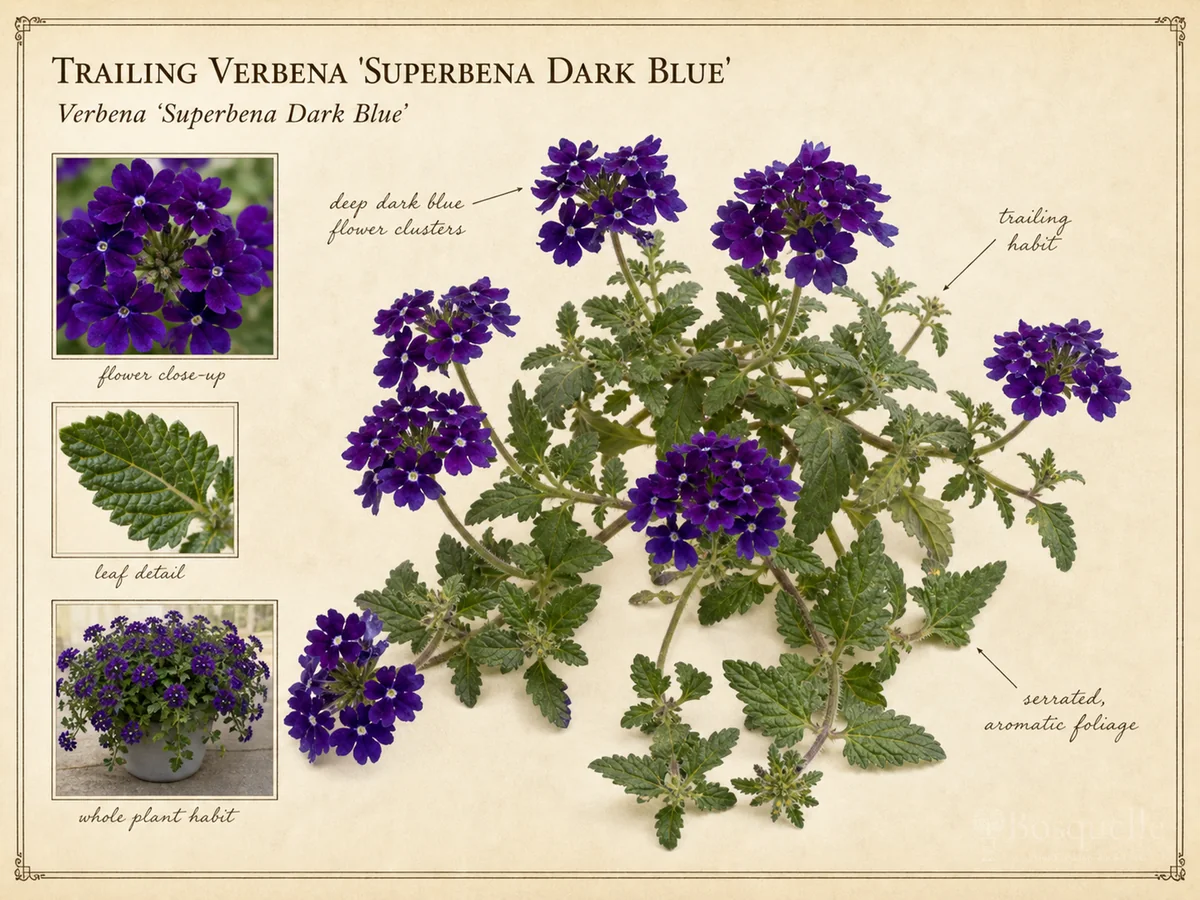
Garden verbena wants full sun and soil that drains. Bedding trailers are often a warm-season annual. Tall purple-top is a see-through border plant that may return from seed. Lemon verbena for tea is Aloysia, a different plant. Superbena Dark Blue spills a basket. V. bonariensis is the tall haze. Pick habit first. Habit on Types of Verbena. Pots on Verbena in Containers. Plant-out on Planting Verbena.
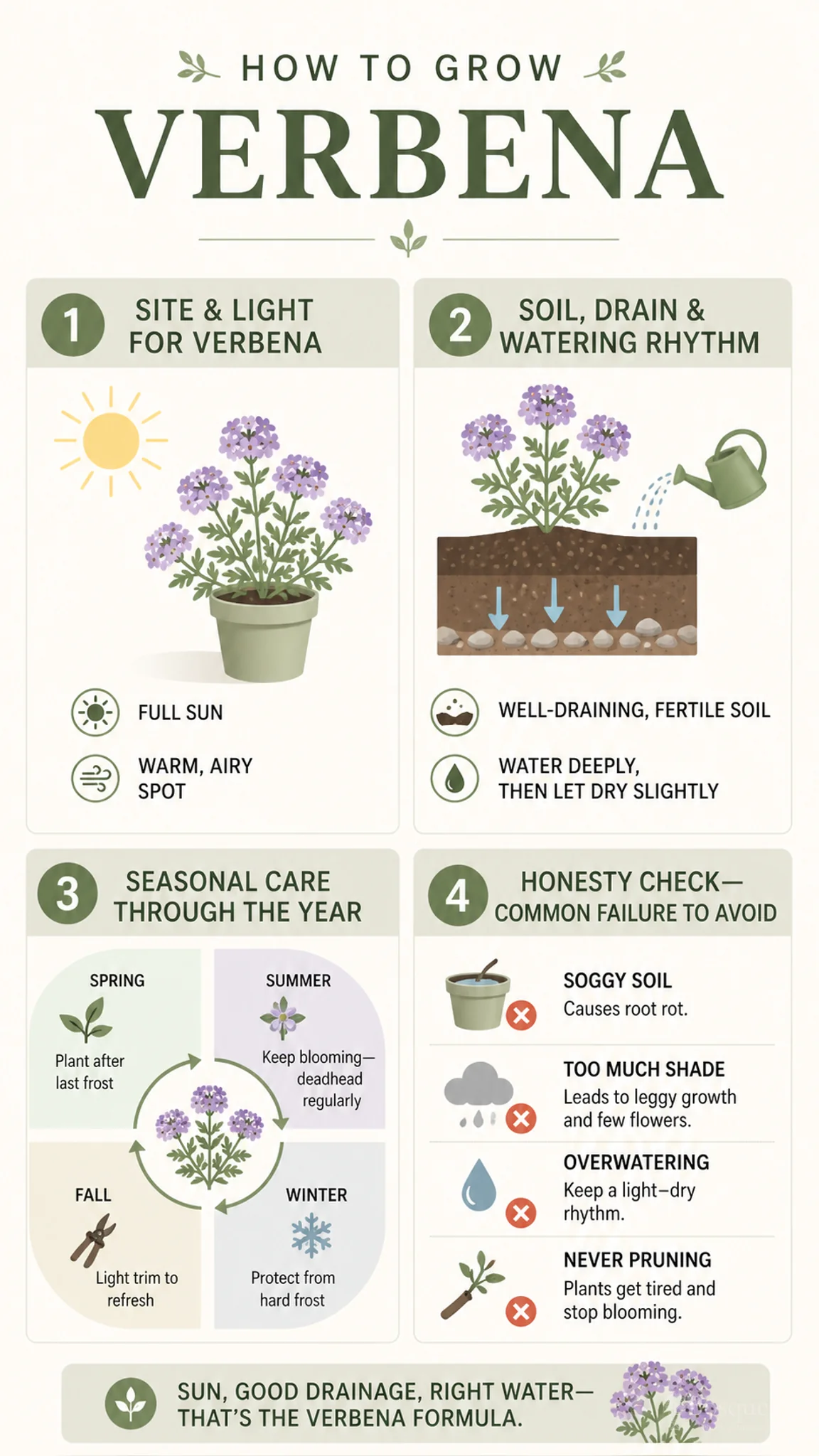
Sun, drain, and air
| Factor | Recommended | Avoid |
|---|---|---|
| Light | Full sun, six hours or more | Shade that makes mildew and few flowers |
| Soil | Average, well-drained; raised if clay stays wet | A soggy low spot or a rich nitrogen feed |
| Water | Soak to establish; then let the top inch dry | Overhead evening water on dense foliage |
| Air | Spacing so stems dry after rain | Crowding against a damp wall |
| Season | After last frost for tender packs | Planting into cold, wet soil |
Clemson Extension: verbena needs full sun all day, well-drained soil, and air. Shade, wet feet, or overcrowding cause most failures. Established plants take short dry spells, but bloom drops if they stay parched through heat. Give a thorough watering about once a week if rain does not supply an inch. Water at the soil, not over the leaves.
Southern Living and Proven Winners match that: heat is fine; wet leaves and still air are not. Average fertility beats a petunia-style feed that makes a green mat and mildew. New transplants need steadier moisture for about two weeks, then ease off.
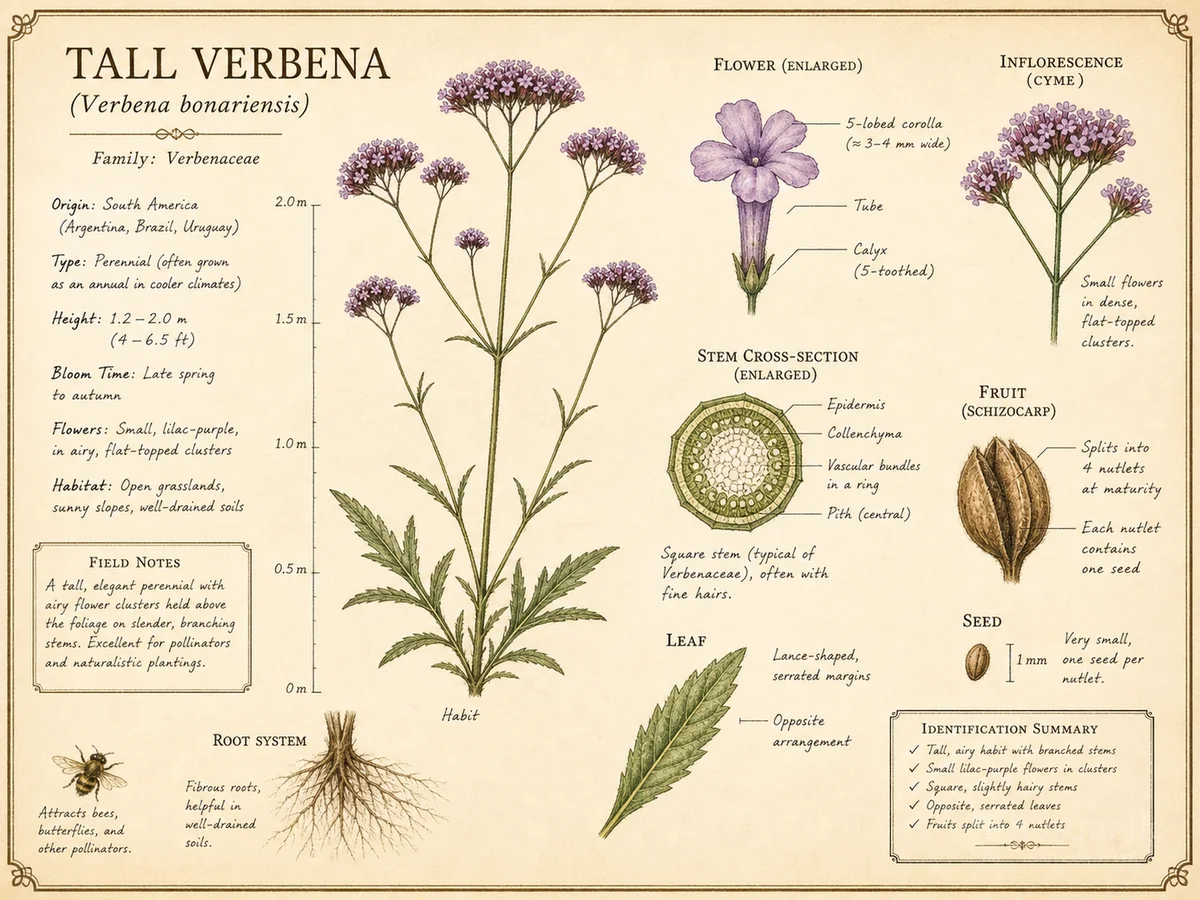
Tall V. bonariensis needs the same sun and drain, plus room for air through the stems. Wind can snap long canes — a sheltered sunny strip is better than a wind tunnel. Trailing packs sit lower. Do not bury crowns in wet mulch against a pot rim.
- Full sun. Drain. Water the soil, not the night foliage.
- Do not feed for a leaf flush. Soft growth mildews.
- Give trailers and tall types the same sun rule; habit is the Types job.
Clay that stays wet overnight is the usual fail, not “too much sun.” Plant a little high or add grit. Sand dries fast — water a bit more often once plants are up, still without a nitrogen feed. A path-edge strip that never gets the vegetable compost is a good home for trailers. Tall haze wants the same drain, just more air around the stems.
Heat can pause bloom. That is weather. Keep the plant alive with morning water at the soil. Color often returns as nights ease. Pale leaves in rich soil are still often too soft — do not answer that with more fertilizer. Check that water leaves the hole in a pot, and that a bed does not pond after rain.
Six hours of sun is the floor, not a suggestion. Morning sun with a little late shade still beats a north wall. If the plant stretches and drops bloom, move it. Verbena recovers from a transplant better than from a summer in shade. Water in, then return to soak-and-dry.
Annual or perennial — read the tag
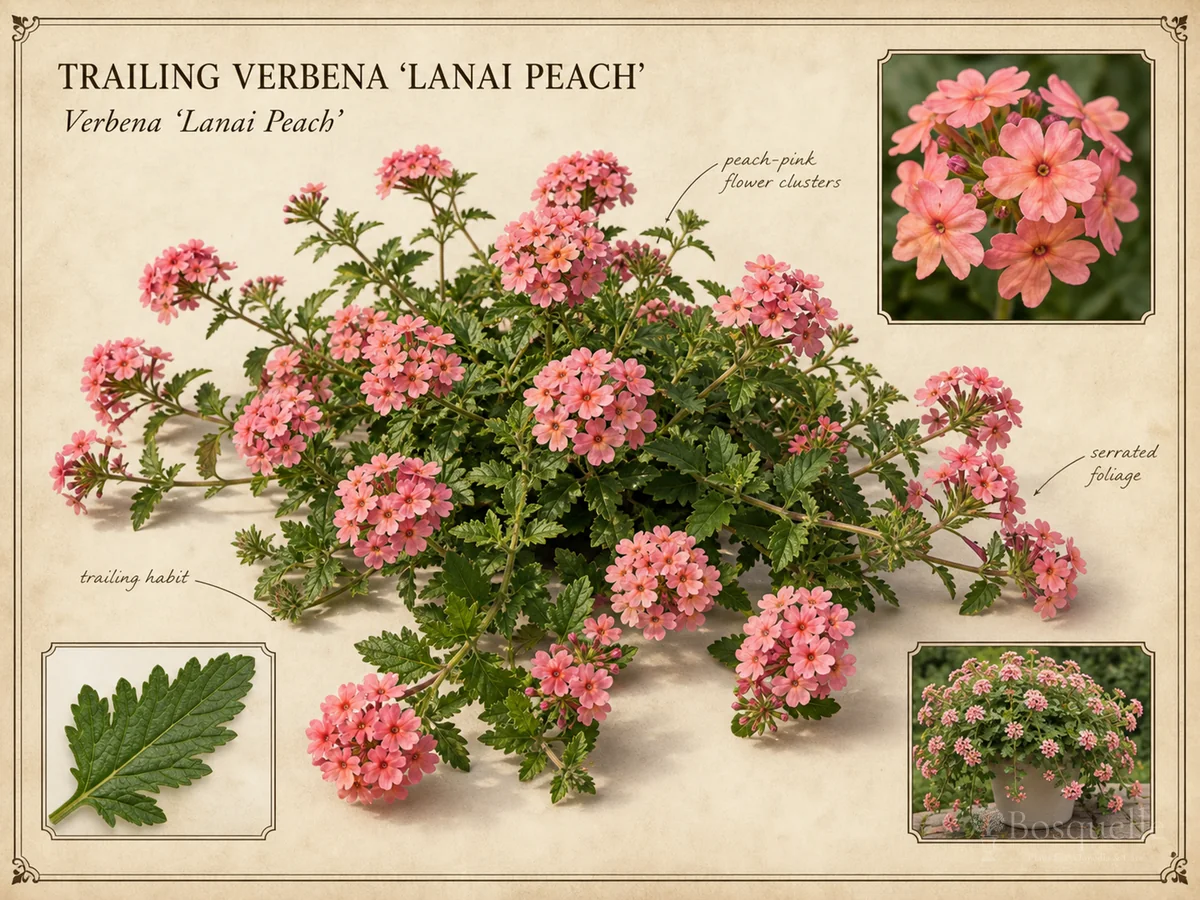
There is no single yes. Trailing bedding series such as Superbena and Lanai are sold for season-long color and treated as warm-season annuals in most of the country. They may linger where winters stay mild. Do not plan on that.
V. bonariensis is a short-lived perennial in mild, draining winters and a reliable self-sower farther north. Volunteers are common. Named trailing series rarely come true from casual seed — buy fresh plants when the color must match. Hardy vervain such as V. hastata and V. rigida is the upright spike contract, not a basket trailer.
Homestead Purple and Glandularia allies spread as a sunny ground layer. They are not Superbena and not a two-meter haze. Sort the habit on Types of Verbena before you promise winter return. A pot does not turn a tender trailer into a hardy perennial.
If a hard frost will hit the bed, pull tender packs and compost them. Dry mulch on hardy crowns is a winter tip, not a promise. Stem cuttings in late summer can overwinter frost-tender trailers indoors if you already do that — most gardeners buy fresh packs in spring.
Ask two questions at the bench: will this plant trail, stand, or run on the ground? And do I need it back next year, or is this summer color? If you cannot answer, do not guess from flower color. Purple clusters exist on trailers and on six-foot stems. The tag’s habit line is the contract. Types of Verbena is the shop split.
A plant that “came back” may be seedlings, not the same crown. Bonariensis does that. Superbena usually does not. If you need the same named color in the basket, buy it again. Volunteers are a cottage mix, not a series guarantee.
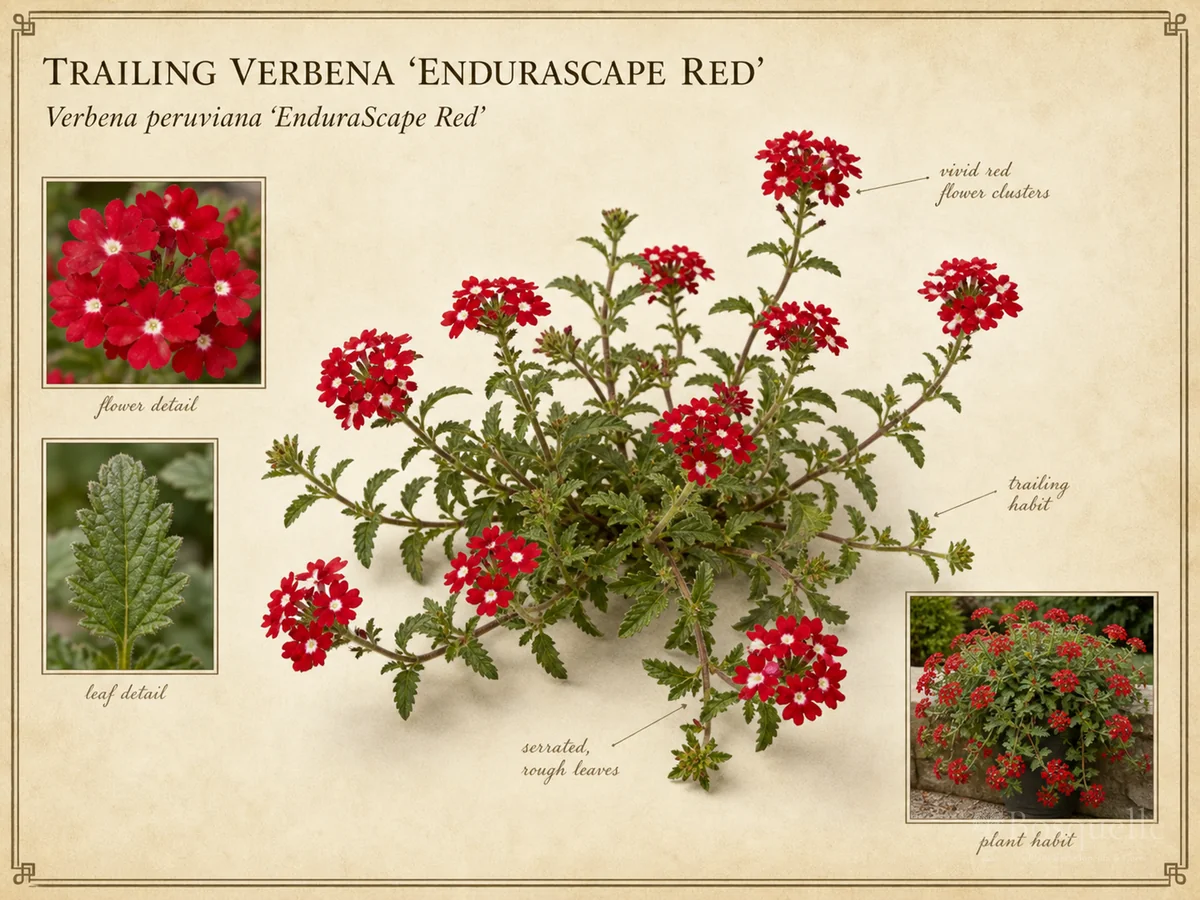
EnduraScape is still a trailer even when a tag talks up cold. Treat the pack as summer color unless you have already seen it live through your winter. Hastata can stand in a moister meadow than rigida, which likes heat and sharp drain. Both are hardy-vervain habit, not basket spill. Do not copy one winter story onto every purple cluster.
Lemon verbena is Aloysia
Lemon verbena is a fragrant culinary shrub (Aloysia citrodora), not Verbena or Glandularia. If the tag says lemon verbena, stop using this guide for pruning, hardiness, and harvest. Scented leaves for tea point to Aloysia. Clustered garden blooms on trailing or upright stems point here.
Shop search mixes the two because the common name overlaps. Check the Latin. Garden verbena here includes catalog Glandularia allies filed with this genus. It does not include the lemon tea leaf.
If you bought lemon verbena for tea, prune it as a tender shrub and look up Aloysia. Copying deadhead-and-shear from garden verbena will not make a tea harvest. If you bought clustered garden blooms, stay here. The leaves of garden verbena are not a lemon-tea substitute.
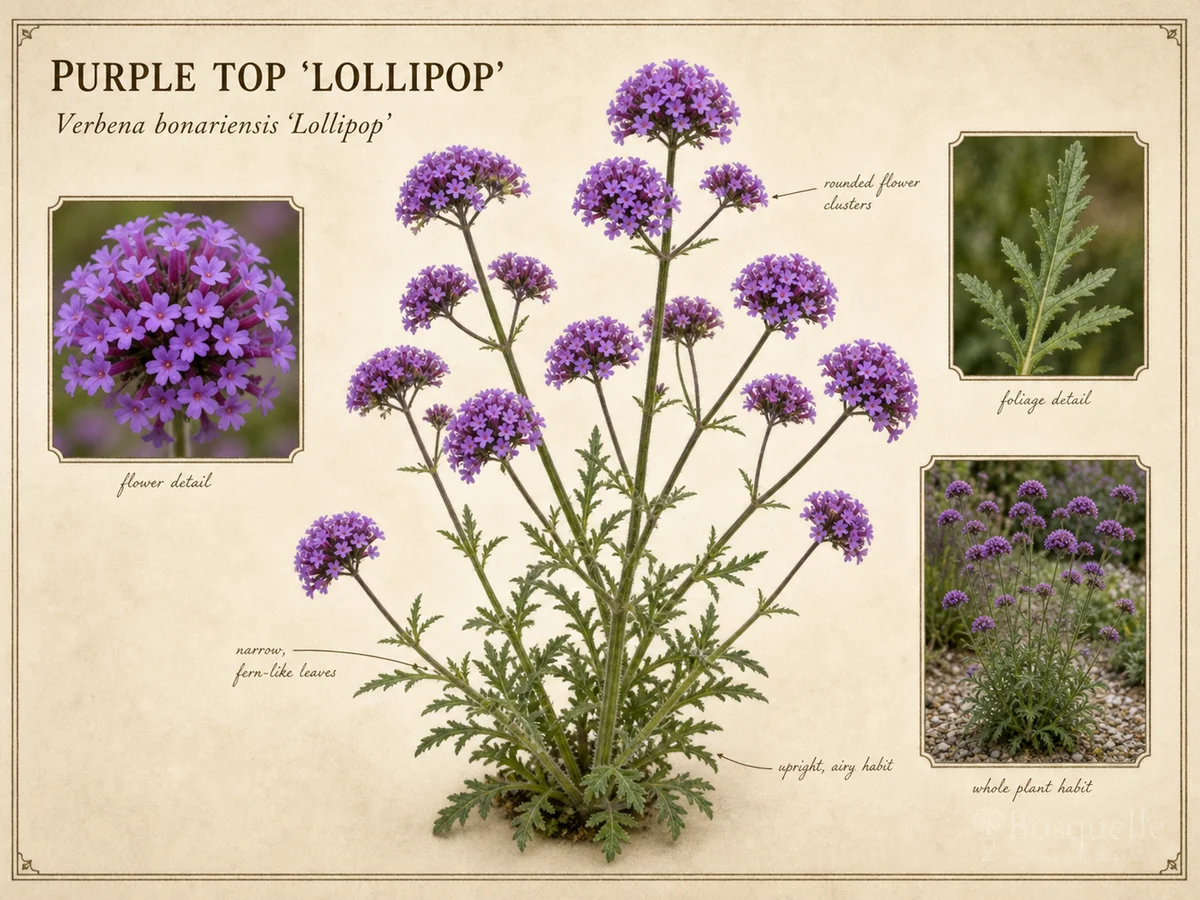
Packets that say only “verbena” with a photo of a basket spill are almost always trailing hybrids. Packets with see-through stems and pompoms on top are almost always purple-top. When the photo and the Latin disagree, trust the Latin.
Deadhead, mildew, and pests
Proven Winners: deadhead spent clusters. Trailing and groundcover types can be cut back up to a quarter of the stem to restart bloom. Do that when the plant looks tired in midsummer heat, not because a calendar says so. Tall bonariensis can be left to seed if you want volunteers; a light deadhead still keeps the haze tidy.
- Snip spent clusters back to a leaf on bedding trailers.
- If bloom stalls, shear up to one-quarter of the stems and water at the soil.
- Keep sun and air. Shade plus wet leaves is powdery mildew weather (Clemson Extension).
Powdery mildew is a white coat on leaves in humid shade or after drought stress. Fix the site first: more sun, more space, water at the base. Strip the worst leaves on tall types; keep the flowering tier. Aphids and whitefly show on overfed soft tips. Spider mites show as dusty undersides in heat. Hose gently. Do not answer mites with a daily leaf spray that never dries.
Deer browse varies. Do not buy verbena as a guaranteed deer-proof hedge. Butterflies use the nectar; that is a bonus, not a second care sheet. Planting steps live on Planting Verbena. Basket steps live on Verbena in Containers.
Shear on a dry morning so cuts dry. Do not wet the new flush every evening. If mildew already coats the interior, thin a few inner stems so air moves — the same quarter-cut idea Proven Winners uses to restart bloom. Compost badly mildewed trailers at season’s end; do not save infected debris on the bed.
Aphids cluster on soft tips after a feed. Blast with water in the morning. Whitefly lifts when you shake a stem. Spider mites stipple the underside in hot dry weeks — rinse, then ease drought without keeping leaves wet overnight. Food-safe soap is a last step on a plant you are not eating. Garden verbena is ornamental; lemon-verbena harvest rules do not apply here.
Do not spray a mildew-prone trailer every evening “to keep it cool.” Dry leaves at night matter more than a mist. If the plant is a green mattress with few clusters, stop feeding, add sun, and shear. Chemistry will not fix a north eave.
FAQ
Is verbena a perennial or an annual?
It depends on the plant. Trailing bedding series are usually grown as warm-season annuals. Tall bonariensis may return from crowns or seed. Read the tag.
What is the difference between lemon verbena and verbena?
Lemon verbena is Aloysia, a culinary shrub. Garden verbena is Verbena or Glandularia with clustered flowers. Different plant, different care.
How often should you water verbena?
Water to establish, then when the top inch is dry. About once a week in the ground if rain is short. Pots dry faster. Avoid wet leaves at night.
Does verbena come back every year?
Tender trailers usually do not after a hard frost. Bonariensis often returns from seed. Hardy vervain can persist where drainage is sharp.
When should you plant verbena?
After the last frost for tender packs. Harden off greenhouse stock. Detail is on Planting Verbena.
Does verbena need full sun?
Yes. Six hours or more. Shade cuts bloom and raises mildew risk.
Can verbena grow in hanging baskets?
Trailing series can. Tall bonariensis is a poor basket plant. Steps are on Verbena in Containers.
Is verbena deer resistant?
Sometimes, not as a contract. Treat browse resistance as a bonus.
Why does my verbena get powdery mildew?
Usually shade, crowding, or wet leaves. Give sun, air, and water at the soil (Clemson Extension).
Should I fertilize verbena like petunias?
No. Lean sun beats a nitrogen schedule that makes leaves and mildew.
Related guides

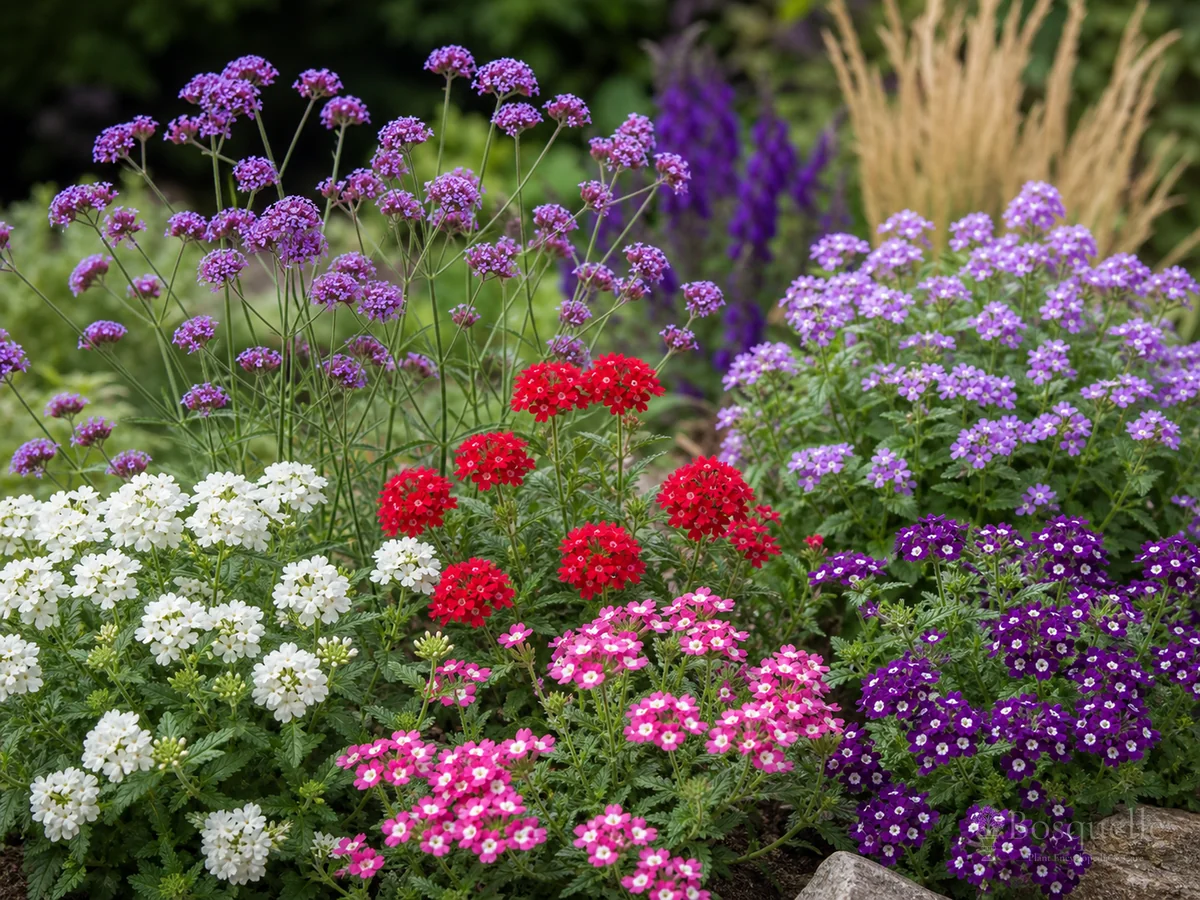

Recommended plants



This note is part of Verbena Guides.
More first-season notes by plant are gathered in How to Grow Guides.
Updated: Reviewed by Bosquelle Editors