
Manzanita (Arctostaphylos) fails in wet clay and does not move well once planted. A. manzanita is the upright western shrub; A. uva-ursi (bearberry / kinnikinnick) is the low evergreen mat. Both want full sun, lean mineral soil that drains, a plant-once root ball, and little or no summer water after the first dry season.
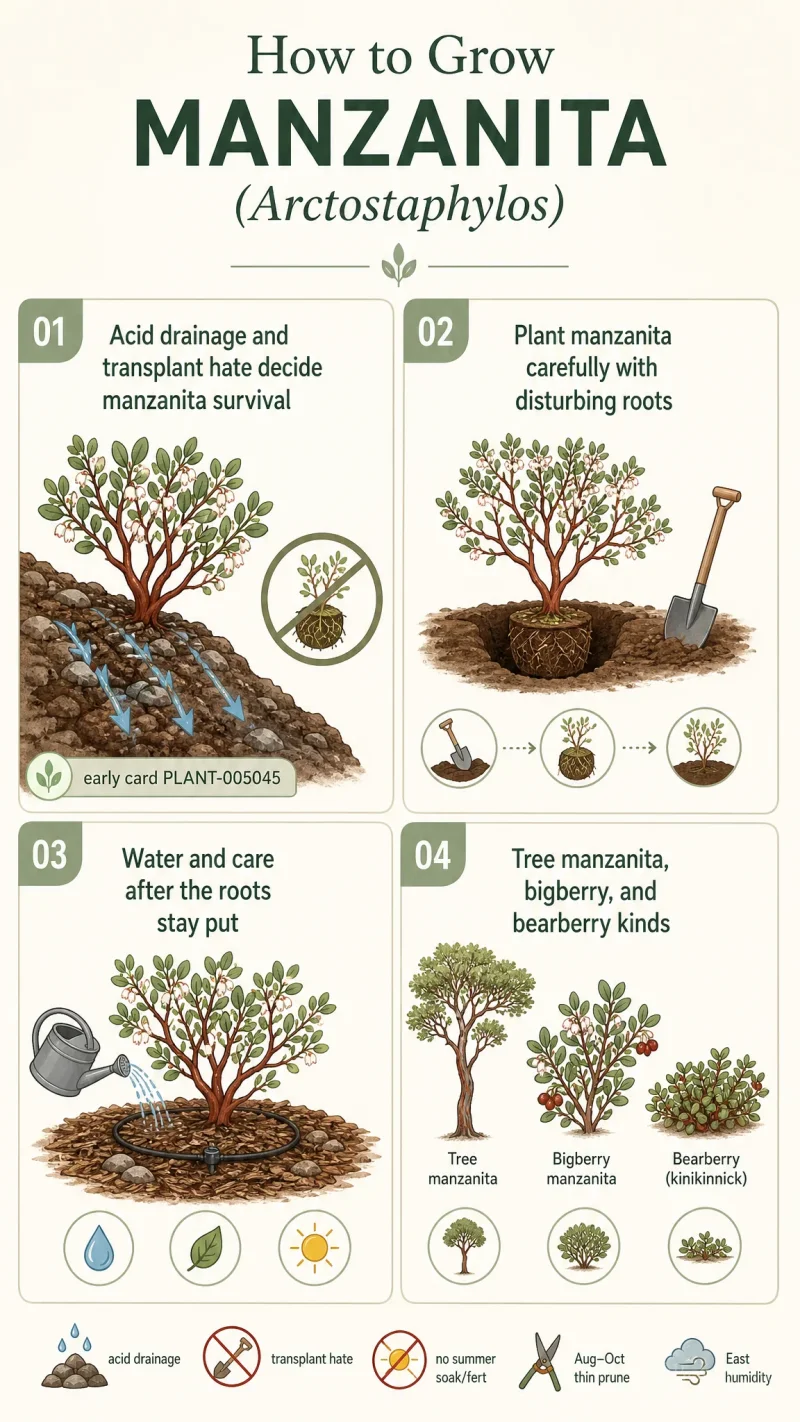
Full sun, sharp drainage, and lean soil
| Factor | Recommended | Avoid |
|---|---|---|
| Light | Full sun; light shade near the coast | Deep shade; a closed, humid pocket |
| Soil | Acid, lean, sandy or rocky; water leaves in minutes | Rich compost in a clay hole; a winter puddle at the crown |
| Water | Deep, infrequent soaks the first dry season; then little or none in summer | Weekly lawn spray on the trunk; a saucer of standing water |
| Feed | None | Fertilizer; a manure dressing |
| Site | A berm or mound in moist climates; thirsty neighbors 10–15 ft away | A wet lawn edge; a bed you plan to dig up later |
UC Master Gardeners (Sonoma): manzanitas adapt to poor soil and fail in rich soil, heavy clay, or saturated ground. Full sun or light shade. Rarely fertilize. UC Marin: do not amend with compost; avoid summer watering once established. Better Homes & Gardens: in moist climates (including much of the Pacific Northwest), plant on a berm so water sheds away from the crown. Keep irrigation for thirsty neighbors 10–15 feet away — leach from a nearby valve is enough to rot roots.
- Sharp drainage is the culture. Lean, rocky, or decomposed-granite ground is ideal. The plant is happy in soil too poor for a rose.
- Do not amend a planting hole with rich compost in the middle of clay. That makes a bathtub. Raise a mound of native soil instead, or pick a garden-tolerant selection and still plant high.
- Air circulation matters on the coast. Wet foliage plus still air invites leaf problems. Skip overhead spray.
- Tree and shrub manzanitas want dry-summer heat and space. Bearberry is the wider-hardy mat, still not a bog plant. North Carolina Extension: A. uva-ursi struggles in wet, humid eastern summers even when winter cold looks fine.
Confirm Latin and mature height on the tag. A two-foot strip planted with a tree manzanita is the wrong scale. A bearberry mat is not a 15-foot shrub.
Plant once — do not disturb the roots
Arctostaphylos roots resent disturbance. North Carolina Extension (bearberry): transplant poorly. Set a nursery pot once and leave it. Do not dig an established plant as a remodel step.
- Plant in fall or the cool season in summer-dry climates so roots run before heat. Avoid midsummer moves.
- Choose full sun and soil that drains in minutes after rain. In moist climates, build a berm or mound first.
- Prefer a small container plant (about one gallon). Dig a hole only as deep as the pot and about twice as wide.
- Slide the plant out. Set the root ball slightly high. Do not tease or break the ball. Backfill with native mineral soil — no compost pocket against the crown.
- Water once to settle. Keep the crown at or above grade. Mulch with gravel or rock kept several inches off the stem — never a wet organic volcano.
- Mark irrigation so a summer valve does not soak the crown. Space woody kinds for mature width and air; space bearberry 12–24 inches for a mat (North Carolina Extension) on the same draining ground.
Temporary holding in a pot is fine. Long-term containers dry and freeze unevenly and invite overwatering. Open ground with sharp drainage is the home. First-year plants look slow. That is roots exploring mineral soil, not a cue to feed or water daily.
- Fall plant-out in summer-dry country beats a July impulse buy. Heat plus a wet saucer is how new plants die.
- A one-gallon plant establishes faster than a boxed specimen you have to wrestle. Small stock is the point.
- Keep gravel several inches off the stem. Wet organic mulch against the crown is a rot collar.
- Do not mix a tree manzanita and a bearberry mat in the same short wet strip. Drainage that fails one fails both.
Water to establish, then stop the summer soak
UC Sonoma: moist — not wet — until established, then infrequent irrigation. Planters’ Guild: a thorough soak every two to three weeks through the first dry season, then taper hard. An established plant in much of California wants little or no summer water beyond rain. Heat plus moisture is the fungal setup.
- Year one: water deeply when the top few inches are dry. Then let the soil dry again. Do not create a permanent irrigated saucer.
- After establishment: cut summer water. A monthly soak is plenty even on garden-tolerant kinds; many want none.
- Feed: skip it. Fertilizer pushes soft growth and disease. Lean mineral soil is the match.
- Mulch: coarse gravel, off the stem. Do not add a thick wet compost blanket each spring.
- Neighbors: do not mix with lawn, roses, or other summer-soaked perennials. The shared valve kills the manzanita.
Prune only if you need to. UC Marin: bloom is on old wood. If you cut, thin in August through October, before flower buds set, on a warm dry day. Thinning cuts to reveal structure. Never heading cuts — they invite fungal issues and suckers. Remove dead wood anytime. Do not shear bearberry like a box hedge every month. Better Homes & Gardens: after bloom, on warm dry days, snip only an inch or two of tip if you must tidy — not a hard clip. Make as few cuts as you can. Do not force a lollipop or a hedge shape onto a plant that wants an open, sculptural frame.
- Sudden collapse after a wet winter usually means drainage failed, not a mystery virus. Fix the soil before you replace the plant.
- Yellowing and dieback in clay: raise the bed or move the job to a mound. Moving the plant later rarely works.
- Sparse thin growth in shade: more sun, not more water.
- Young plants in cold wet clay: raise the bed so freeze–thaw does not sit on the crown. Do not flood evergreen mats before a hard freeze.
Tree manzanita versus bearberry
This library holds five plants. Culture is shared: acid drain, plant once, little summer water. Scale and climate are not.
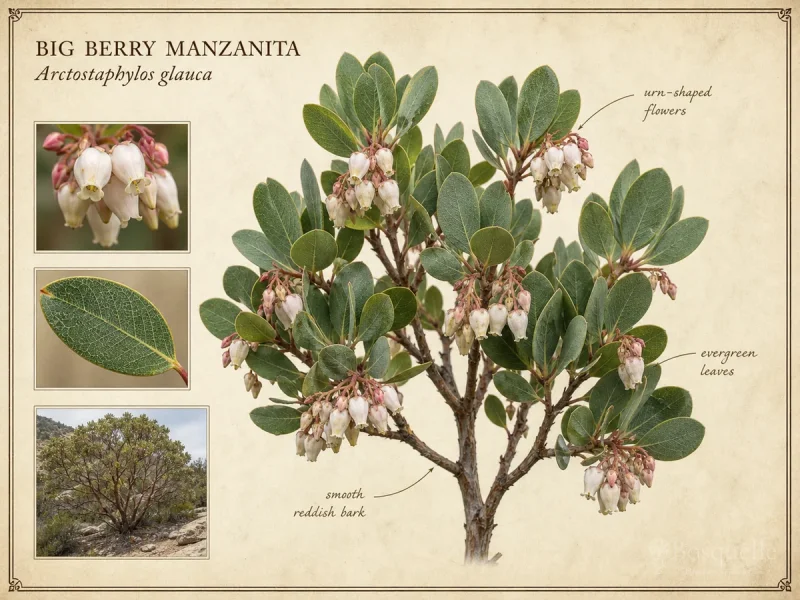
Western shrub and tree kinds. A. manzanita is the classic upright evergreen for dry-summer gardens with space. A. glauca (bigberry manzanita) is larger, with glaucous foliage, on the same rules — still not a wet-clay foundation plant. Both want heat, air, and a crown that stays dry in summer.
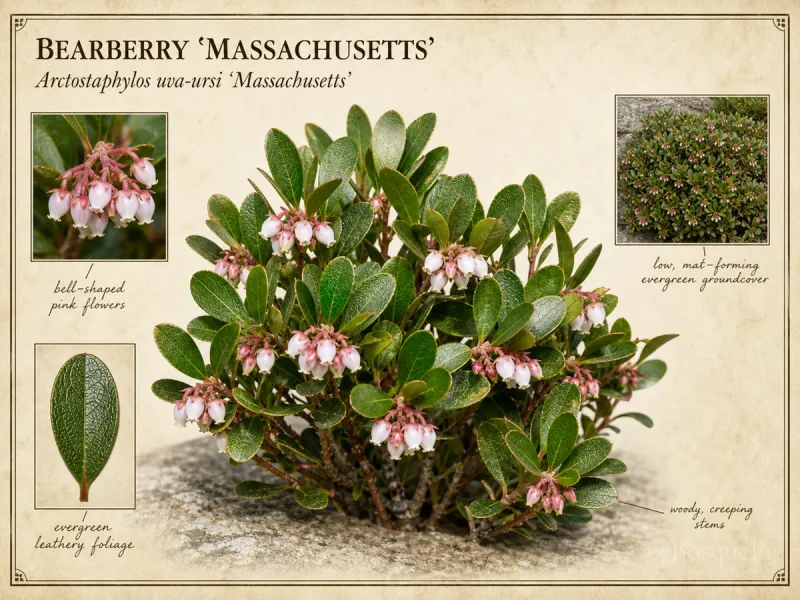
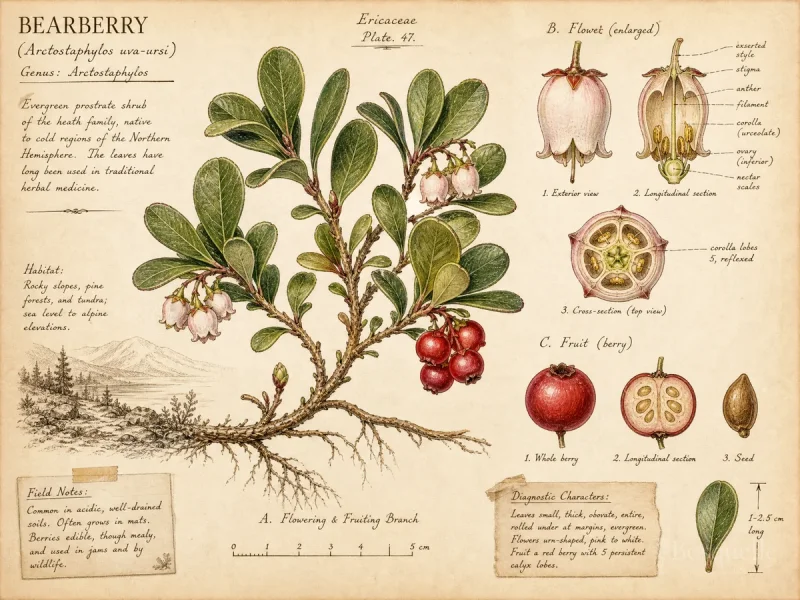
Bearberry groundcover. A. uva-ursi is the low evergreen mat (bearberry / kinnikinnick) for acid banks and colder groundcover jobs. A. uva-ursi ‘Massachusetts’ and A. uva-ursi ‘Vancouver Jade’ are denser garden forms of the same mat — not irrigated lawn substitutes. North Carolina Extension: do not compact the soil; skip fertilizer; transplant poorly; dry to moderate moisture that still drains; humid eastern summers are a common mismatch even when winter hardiness looks fine on paper.
- A. manzanita / A. glauca — upright western structure and peeling bark with age. Bark is not a first-year feature.
- A. uva-ursi and its selections — low mat, wider cold range, still sharp drain. Space 12–24 inches.
- A tag that only says “native evergreen” — ask for Arctostaphylos and a height. Tree versus mat is the buy.
- Garden-tolerant named shrubs exist beyond this catalog (for clay or a little summer water). They still want a high crown and no compost bathtub. Do not copy their irrigation onto glauca or a bearberry mat.
- UC Sonoma: leaf-gall aphids on tips — trim damaged growth; skip extra nitrogen and extra water. Good air on the coast matters more than a spray program.
- North Carolina Extension: bearberry tolerates salt spray on the right draining sand. That is not permission to soak a clay bank in a humid summer.
Flowers are small urns in winter and spring; fruit is the “little apple” that named the plant. Birds take the berries. Evergreen cover is the year-round job. Deer pressure is local — tough foliage is not a guarantee. Buy the height you can keep: a tree manzanita for a dry bank with room, a bearberry mat for a lean acid slope, and nothing for a lawn edge you water twice a week. If the bed ponds after rain, skip the plant until you can raise a mound.
FAQ
How often should I water manzanita?
Deep, infrequent soaks only while it is establishing and when soil is dry at depth. Established plants on sharp drainage often need little or no summer water.
Should I fertilize manzanita?
No. Lean native soils are the point. Fertilizer pushes weak lush growth and disease.
Can manzanita grow in clay?
Only if you plant on a berm or mound so water moves, or you chose a garden-tolerant selection and still plant high. Sealed ponding clay usually fails. Do not amend a clay hole with compost.
When should I prune manzanita?
If needed, thin in August through October on warm dry days, before buds set — bloom is on old wood. Avoid hard heading cuts and frequent shearing on bearberry mats.
Why is my manzanita dying?
Usually summer overwatering, poor drainage, or rich wet soil. Fix water and drainage before replacing. Do not dig and move an established plant.
Is bearberry / kinnikinnick a manzanita?
Both are Arctostaphylos. Bearberry (A. uva-ursi) is the low groundcover. Many “manzanita” labels mean larger western shrub or tree species.
Will bearberry grow in humid East summers?
Often poorly. North Carolina Extension: wet humid summers invite root disease even when cold hardiness looks fine. Sharp drainage and lean sandy sites are mandatory.
Why does manzanita die after transplanting?
Roots resent disturbance. Plant carefully from a pot without breaking the ball, and do not dig established plants as a casual move.
What soil does manzanita need?
Acid, sandy or rocky soil that drains fast. Wet winter clay is the usual killer.
Does manzanita need full sun?
Full sun suits most kinds and keeps foliage dense. Deep shade thins growth and raises moisture problems.
Can I grow manzanita in a pot long-term?
Temporary holding is fine. Long-term pots invite overwatering and freeze stress. Open ground with sharp drainage is better.
Is manzanita drought tolerant?
Established western kinds on sharp drainage often handle dry summers. That does not excuse wet clay or weekly lawn irrigation on the crown.
Which kinds are in this library?
A. glauca, A. manzanita, A. uva-ursi, A. uva-ursi ‘Massachusetts’, and A. uva-ursi ‘Vancouver Jade’.
Will large western manzanita grow outside the West Coast?
Bearberry extends farther into cold zones as a groundcover. Larger western shrub manzanitas are often climate-limited — match species to your winters and summer moisture.
Recommended plants


More first-season notes by plant are gathered in How to Grow Guides.
Updated: Reviewed by Bosquelle Editors